









Related recommendations
- 21st Century Business Herald: AI and CTV Become Core Growth Engines for Digital Marketing in Overseas MarketsNov 18, 2026View details
- China Presents 25 Cooperation Outcomes in Areas Including Cross-Border E-Commerce During APECNov 18, 2026View details
- AI Products Drive Hong Kong Exports Up 64.9% in September, Fastest Growth in Over 40 YearsNov 17, 2026View details
- National Bureau of Statistics: Foreign trade grew rapidly in October, providing stable support for global tradeNov 17, 2026View details
- The U.S. has ended the $800 de minimis exemption for non-postal shipments; express courier packages must be formally declared.Nov 16, 2026View details
- ASEAN Signs Digital Economy Framework Agreement, Moving Toward Harmonized Cross-Border E-Commerce RulesNov 15, 2026View details
After product page SEO optimization, does the increase in Google Shopping impressions depend on structured data?
Publish date:Sep 26, 2026
Author:Easy Yingbao (Eyingbao)
Page views:
No increase in impressions after product page SEO optimization? The truth is, you're missing structured data! It helps Google instantly understand product information, significantly improving organic Shopping exposure and ad eligibility weight. Verify your Schema markup now!
Inquire now : 4006552477
Have you ever encountered this situation: your product page title, description, and H1 tags are all meticulously optimized, keyword density is just right, pages load quickly, and the mobile experience is smooth—yet Google Shopping impressions remain stuck at a plateau, or even occasionally decline?
This is not your fault. Nor is SEO ineffective. You may simply be standing before an invisible threshold between “being visible” and “being seen”: your structured data (Schema Markup) is not properly in place.
Within the Google Shopping ecosystem, a product page is not an isolated island; it is an information node that search engines repeatedly parse, compare, label, and categorize. It needs more than just to be “readable”—it needs to be instantly understood. When Google crawlers scan your product page, they do not read the full text and interpret the context as people do; they rely on clear markup signals—such as the `Product`, `Offer`, and `AggregateRating` Schema types—to quickly determine: “What product is this? What is the price? Is it in stock? What are the user ratings?”
In other words, **product page SEO optimization is the foundation, while structured data is the ID card that enables Google Shopping to truly ‘recognize you’**.
Many foreign trade businesses and independent website operators tend to focus their efforts on content optimization: revising titles, adjusting descriptions, stuffing long-tail keywords, building internal links... These are certainly important. But if you skip the structured data step, it is like putting a blurry license plate on a high-performance car—no matter how fast it is, it will still be difficult for the traffic system to accurately identify and route it.
Yiyingbao has served thousands of cross-border businesses, and we have found a frequent pattern: with the same Google SEO optimization efforts, after Company A fully deployed structured data on its product pages, its Shopping impressions increased by 42% (30-day average), while Company B optimized only text content and saw impression fluctuations of less than 8% during the same period. The difference is not in keywords, but in whether machines can “identify” key information at a glance.
Why is structured data so critical?
Because Google Shopping’s crawling logic is becoming deeply tied to the Knowledge Graph. It is no longer satisfied with “guessing” product attributes from HTML text; instead, it gives priority to verified structured declarations. For example, when you clearly mark prices with `priceCurrency` and `price`, Google no longer needs to parse ambiguous wording such as “starting from ¥199” or “Starting from $24.99”; when you use `availability` to mark `InStock`, the system can bypass JS rendering delays and directly determine inventory status—something crucial for real-time bidding and display eligibility in Shopping ads.
Even more practically, without structured data, your product page may not even meet the basic eligibility threshold for Google Shopping. Since 2023, Google has listed `Product` Schema as a recommended integration item for Shopping Feed; following the Q2 2024 update, product pages on independent websites in high-value categories (such as electronic accessories, home goods, and beauty and personal care) that have not deployed core fields have seen a notable decline in weighting within the Shopping organic impression pool.
So, which fields truly affect impressions? More is not necessarily better—the key is accuracy and relevance.
- `@type: Product` (required)
- `name` (must match the H1 and avoid marketing language that interferes with semantics)
- `image` (it is recommended to provide multiple high-quality main image URLs to support Google image indexing)
- `offers.price` + `offers.priceCurrency` (must be pure numbers and must not contain symbols or units)
- `offers.availability` (use standard enumeration values, such as `InStock`, rather than Chinese or custom fields)
- `aggregateRating.ratingValue` and `reviewCount` (if genuine reviews are available, embedding them is strongly recommended)
Note: it is not enough to simply add these fields. They must strictly match the actual page content. For example, if the price field says $29.99 but the page displays $34.99 after JS dynamically loads—Google may flag this inconsistency as “misleading structured data.” At best, this can lower your ranking; at worst, it can trigger a manual review. There is another frequently overlooked detail: how structured data is deployed. Many people hard-code JSON-LD into ``, which may appear compliant, but they overlook dynamically rendered page scenarios. This is particularly true for cross-border stores built with React/Vue, where product data is often asynchronously injected through APIs. If JSON-LD is statically hard-coded for the first screen while actual price/inventory data has not yet loaded, it can instead create semantic pollution. A more reliable approach is server-side rendering (SSR) injection, or dynamically pushing data through `window.dataLayer`+Google Tag Manager, ensuring that structured data stays synchronized with the actual DOM state.
At this point, you may ask: do knowledge-service-oriented products such as Research on Business Administration in the Context of Digital Transformation also need structured data? The answer is yes—only the type differs. They are better suited to `Book` or `Course` Schema, with emphasis on fields such as `author`, `publisher`, and `datePublished`. Although knowledge-based products may not appear in Google Shopping as frequently as physical goods, structured data can significantly increase the likelihood of Rich Snippets appearing for education-related search intent (such as “recommended business management textbooks” and “digital transformation MBA courses”), indirectly driving clicks and conversions.
Finally, structured data is not the endpoint of SEO; it is a translator that connects human and machine understanding. It does not generate traffic, but it determines whether traffic is willing to stay with you; it does not replace content quality, but it amplifies the value of high-quality content. As AI search rapidly evolves, Google is increasingly relying on structured signals to anticipate user intent—for example, when users search for “SaaS tools for overseas expansion suitable for small and medium-sized manufacturing companies,” the system will prioritize pages that mark `targetAudience` as “smallManufacturer” in their `Product` Schema.
So, the next time you optimize a product page, do not focus only on H1 and meta description. Take 15 minutes to check your JSON-LD: is it clear, accurate, synchronized, and verifiable? Those 15 minutes may be the critical point that takes you from “being indexed” to “being preferred.”
After all, true SEO has never been only about making content visible to people—it is also about making it understandable to machines.

Related Articles
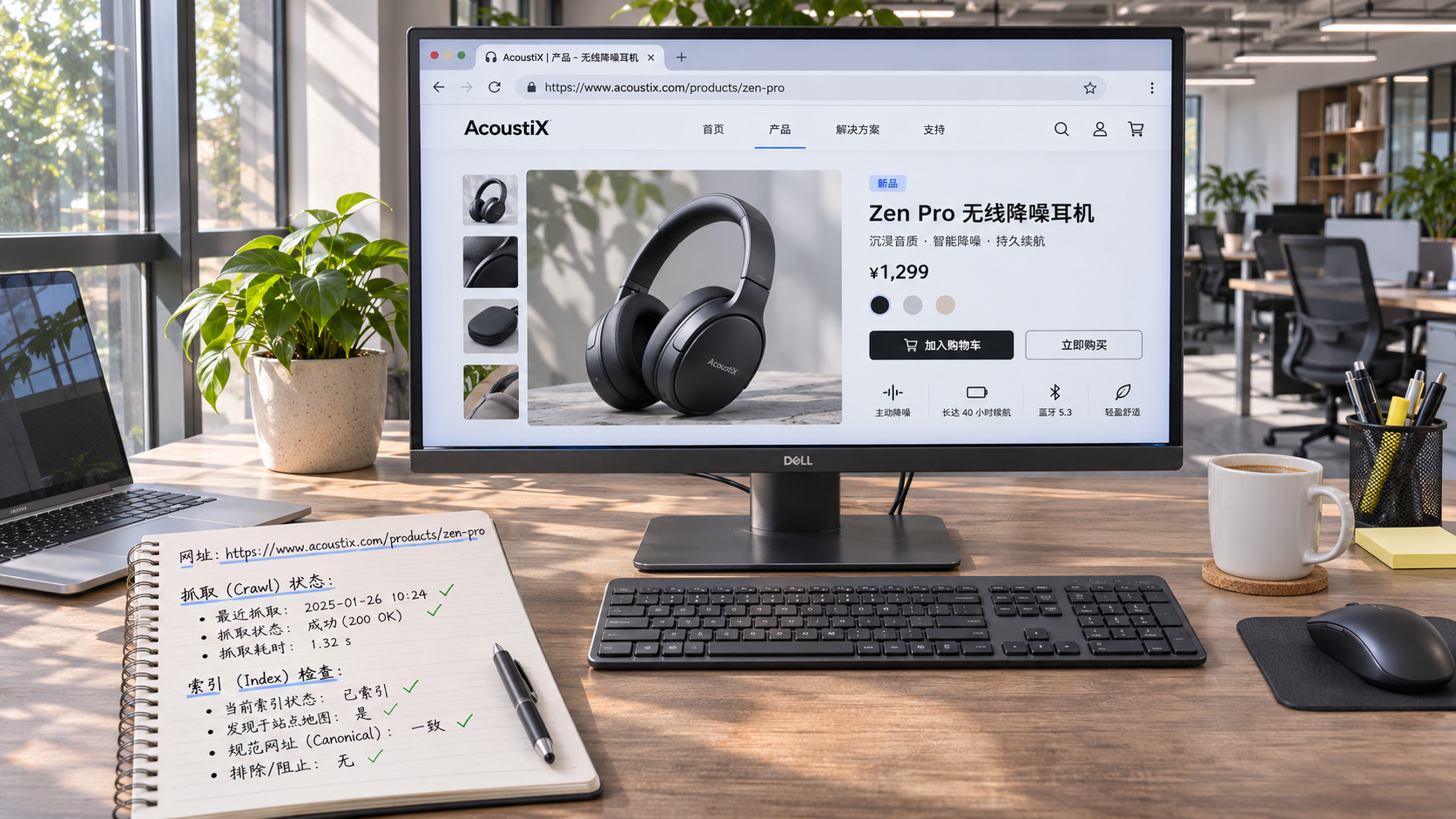
 How to troubleshoot when your website isn’t indexed by Google?
 How to Add Structured Data to Product Pages with JSON-LD
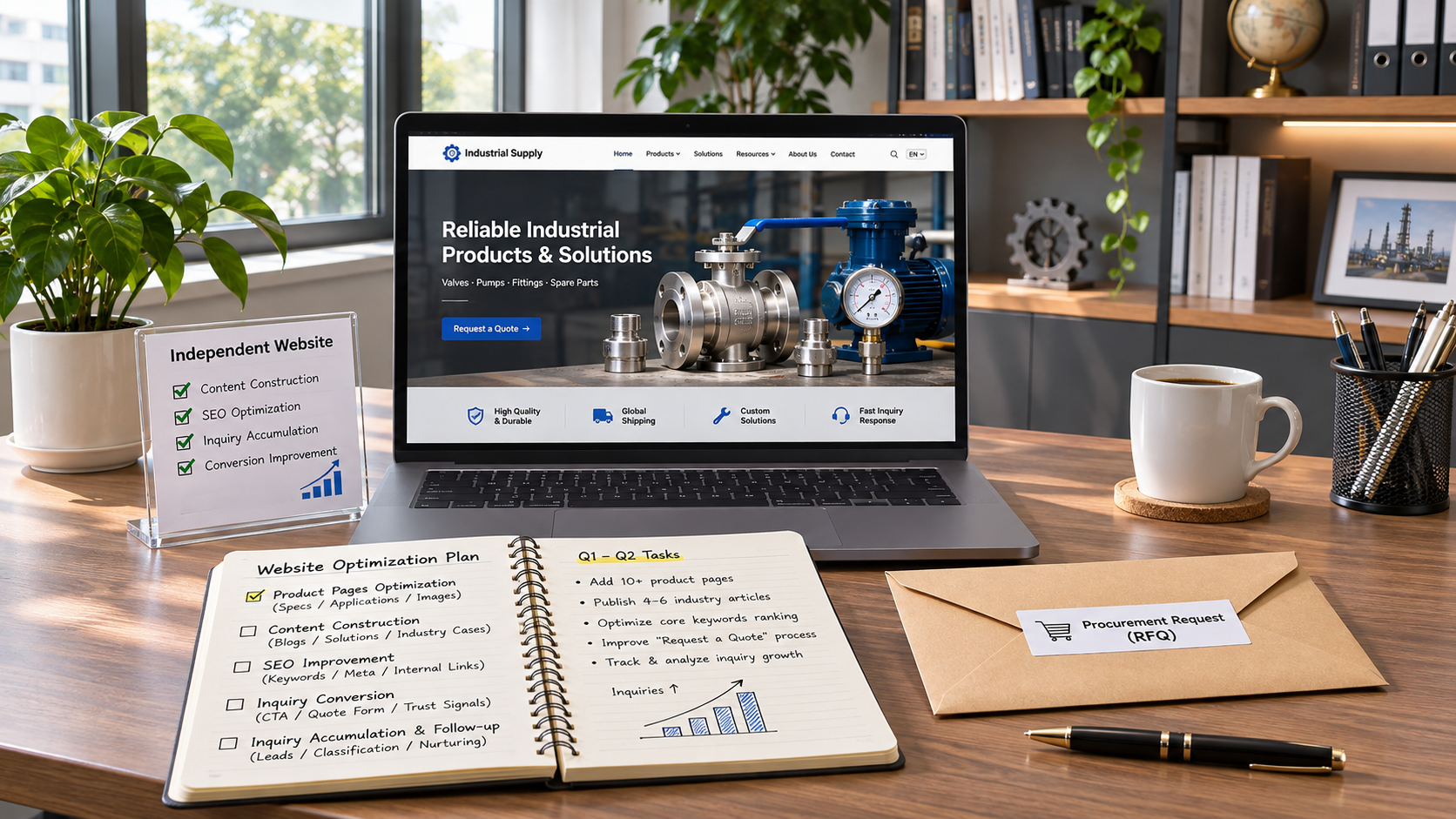
 How Long Does It Take to See an Increase in Inquiries from SEO for Your Website?

{item.title}
Related Products
 Yiyingbao SaaS Intelligent Website Building and Marketing SystemYiyingbao SaaS Intelligent Website Building and Marketing System, AI-powered no-code website building, rapid creation of multilingual B2B international websites in 10 minutes, global server acceleration, AI-powered SEO optimization, helping businesses connect efficiently with global markets. The perfect integration of technology and operation makes building an international trade website remarkably simple
 AI+SEM Intelligent Advertising Marketing SystemAI+SEM drives intelligent ad creation, empowering full-funnel precision advertising marketing. The system automatically generates weekly/monthly reports, AI recommends keywords and target countries, monitors core metrics in real-time with intelligent alerts, and enables one-click high-conversion ad solutions to help quickly acquire customers and improve ROI.
 AI+SEO Dual-Engine System Optimization ServicesYiyingbao’s AI+SEO dual-engine optimization system helps foreign trade enterprises acquire high-quality organic traffic through AI-powered keyword research, content generation, and comprehensive technical optimization, significantly improving search rankings and conversion rates.
 AI+SNS Social Media Marketing SystemYingbao AI+SNS Social Media Marketing System - Precision social capture for the social media era. Supports one-click content synchronization across major platforms like Facebook and LinkedIn. AI intelligently rewrites posts for enhanced relevance. 24/7 AI customer service and user profiling analysis empower businesses to efficiently expand into global markets.
 AI+SEO营销解决方案易营宝AI+SEO营销解决方案,通过AI批量写作、智能生成TDK、精准关键词扩词等功能,全面优化网站SEO效果,提升流量与转化率。助力企业构建高效智能网站新生态。
 AI+SEM Advertising Marketing SolutionsAI+SEM Advertising Marketing Solution leverages AI technology to deeply empower SEM ad campaigns. It automatically generates weekly/monthly reports using AI, presenting account data across multiple dimensions for comprehensive insights into campaign performance and trends. The system precisely recommends keywords and target countries, intelligently generates high-conversion ad copy, and enables one-click activation of efficient campaign plans to help businesses rapidly acquire customers. Simultaneously, it monitors core metrics in real time, intelligently identifies abnormal fluctuations, and issues timely alerts to ensure stable, high-return advertising results.
 Domain Name ServicesEasyWin provides professional domain name services, including intelligent queries, one-stop registration, brand protection, and full lifecycle management, helping businesses build a digital brand image.
 EasyOperate B2C Cross-Border E-Commerce Platform & Independent WebsiteEasyStore B2C Cross-border E-commerce Independent Store is an intelligent website building and cross-border e-commerce integrated solution independently developed by EasyStore Information Technology (Beijing) Co., Ltd. The system is specially designed for small and medium-sized as well as large export enterprises, integrating 'website building, operation, marketing, advertising, and conversion' into one, helping enterprises quickly establish cross-border e-commerce independent stores to achieve brand globalization and global sales growth.
The platform supports multiple languages, multiple currencies, and multi-channel marketing, with built-in AI intelligent translation and SEO optimization systems, suitable for mainstream markets such as Southeast Asia, Europe and America, Latin America, and the Middle East, assisting Chinese manufacturing enterprises in efficiently deploying international e-commerce strategies. SSL证书易营宝提供专业SSL安全证书服务,包括单域名和泛域名证书,确保网站数据传输加密、身份验证和完整性保护,助力企业建立安全可信的在线业务环境。









