









- General Administration of Customs Issues New Rules on Import and Export Cosmetic Labeling, Effective December 1Nov 26, 2026View details
- U.S. to Announce Section 301 Investigation Findings on 16 Economies, Potentially Proposing New TariffsNov 26, 2026View details
- Hapag-Lloyd’s $4.2 billion acquisition of ZIM faces a closing delay; ZIM reports third-quarter net profit of $830 millionNov 24, 2026View details
- SCFI falls for a third straight week to 3,503.78 points, with blank sailings on trans-Pacific routes rising to 10Nov 24, 2026View details
- Lazada 11.11 Mega Sale: LazMall Contributes Nearly Two-Thirds of GMVNov 23, 2026View details
- Shein’s European Revenue Falls 16% as Tighter Rules on Low-Value Direct Shipments Take EffectNov 23, 2026View details
What are the common characteristics of content cited in AI search? From source credibility to information verifiability
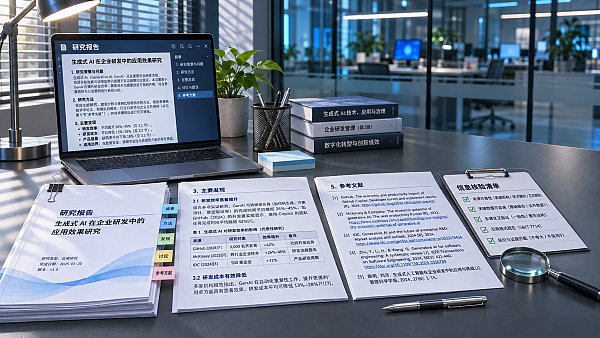
Want to understand the key factors behind “ai搜索 被引用 獲得” (earning citations in AI search)? This article examines the common characteristics of content cited by AI search, focusing on source credibility, content quality, and verifiability. For businesses, the key question is not only “How can we get a webpage mentioned?” but also: when readers follow a citation to the page, can they find clear and sufficient supporting evidence?
Citations in AI search are not the same as traditional search rankings
Traditional search typically displays a list of webpages for readers to compare. AI search may synthesize information from multiple sources to generate an answer and then provide some citation links. A business page being found, its content being used to generate an answer, and its link being shown to readers are separate stages and should not be treated as equivalent.
Platforms differ in how they discover, retrieve, and cite webpages, and answers to the same question may also vary depending on how it is phrased, the language used, or the timing. A high search ranking therefore does not guarantee a citation; appearing in a citation once does not mean it will happen consistently in the future. To assess whether content is reliable, readers should still refer to the original page rather than relying only on a generated summary.
Credible sources can answer “Who says so, and on what basis?”
For a business website, credibility cannot be established simply by writing “professional supplier” on a page. Readers need to know who published the content, whether the author or reviewer is knowledgeable in the relevant field, and whether the website provides clear company information and contact details. If an article discusses a specific product or process, stating whether the information comes from testing, project materials, or published literature also helps readers assess its applicability.
For example, an article about selecting industrial equipment should, when citing a performance figure, explain the test conditions, applicable models, and data source. A specification without operating context may not be useful for comparison, even if the number appears precise. When discussing regulations, certifications, or standards, the applicable region and version should also be stated, and readers should be advised to verify current requirements.
Third-party coverage, industry materials, and a company’s own statements can complement one another, but they should not be conflated. A company can cite its own technical documentation, while clearly distinguishing which conclusions are based on its own testing and which come from external sources. If a citation link is broken or the source does not support the claim, the content should be revised promptly.
Useful content can often be broken down into verifiable answers
People conducting research usually ask specific questions: Under what conditions does a method apply? Where does the data come from? What are the limitations of the conclusion? Content that addresses these questions does not need to be the longest, but it should provide the necessary context in the relevant section rather than scattering key assumptions across multiple pages.
For example, the article Research on Optimizing the Application of Activity-Based Costing in Coal Mining Enterprises presents a clearly defined research topic on cost accounting. To assess the value of the material, readers should also verify the author, research subject, methodology, and data sources. The title alone is not enough to treat its findings as applicable to all coal mining enterprises.
Likewise, when a company publishes technical content, it can present conclusions together with their limitations. For example, when describing a costing method, explain how cost objects are defined, where activity data comes from, and which management conditions may affect implementation. This makes it less likely that readers who see only one section will mistake a limited finding for a general rule.
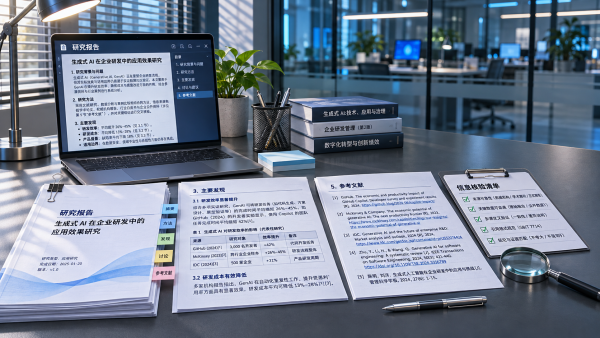
Clear headings, accurate terminology, and readable paragraphs help people and search systems understand a page, but structure cannot replace evidence. Repeatedly stacking question-style headings without providing methods, conditions, or sources still leaves readers’ questions unanswered.
Whether information can be verified matters more than how definitive it sounds
Verifiable information generally gives readers a path to the original material. When citing external statistics, identify the publishing organization, report title, and publication date. When using internal company data, explain the basis of the calculations and distinguish recorded facts from estimates. If data has no public basis, it is better to qualify the claim than to present it as a definite figure.
Timeliness is another factor that is easy to overlook. Regulations, product specifications, platform features, and market information all change. Keeping the publication date and the date of substantive updates on the page, and noting the period to which older content applies, is more useful than simply changing the date. If it is unclear whether information is still valid, readers should be clearly advised to verify it again.
It is also important to watch for circular citations: several articles may appear to corroborate one another while actually repeating the same unverified source. Following links back to the original report, official document, or primary research is generally more reliable than counting how many webpages repeat the same claim.
Make content accessible and clear to readers in different markets
Even well-researched content may be difficult for search systems and readers to use if the page cannot be accessed properly. Businesses can check whether a login is required, whether key text appears only in images, whether links are broken, and how the website’s access settings affect relevant crawlers. Specific support should be confirmed against each platform’s published technical documentation; allowing crawling does not guarantee indexing or citation.
Multilingual websites also need to account for differences in context. Directly translating a Chinese product description into another language may omit details that local buyers care about, such as units of measurement, delivery terms, or regulatory context. Different language versions should maintain consistent core facts while adapting terminology and adding necessary explanations for the target market. Conclusions about local standards should not be carried over from other regions without verification.
This is also where website and marketing services need to work together. 易营宝 provides intelligent website building, multilingual websites, search optimization, and GEO services. For companies expanding overseas, it is worth considering not only whether a page can go live, but also who reviews the technical materials, how each language version is maintained, and whether company information is consistent across the website, search, and social media.
How to monitor citations without treating a single result as conclusive
A small-scale review can be conducted using realistic questions: record the platform used, question language, exact wording, and query date; observe whether the answer cites a company page, whether the citation supports the relevant claim, and whether the link opens. Repeating the check for important topics at different times is more informative than taking a screenshot once.
If a page does not appear, do not immediately conclude that the problem is content quality: the platform may use other sources, or the result may be related to access, indexing, or how the question was phrased. A more reliable approach is to first check technical accessibility, then assess whether the content actually answers the question and whether its evidence is traceable. Addressing these issues one by one is generally more reliable than looking for a technique that guarantees a citation.
Related Articles
 How Long Does AI Search Optimization Take to Show Results? What Factors Affect the Timeline?
 Google, ChatGPT, and other platforms are starting to provide promo codes directly in search results
 How do the optimization priorities of AI SEO and traditional SEO differ?


Related Products
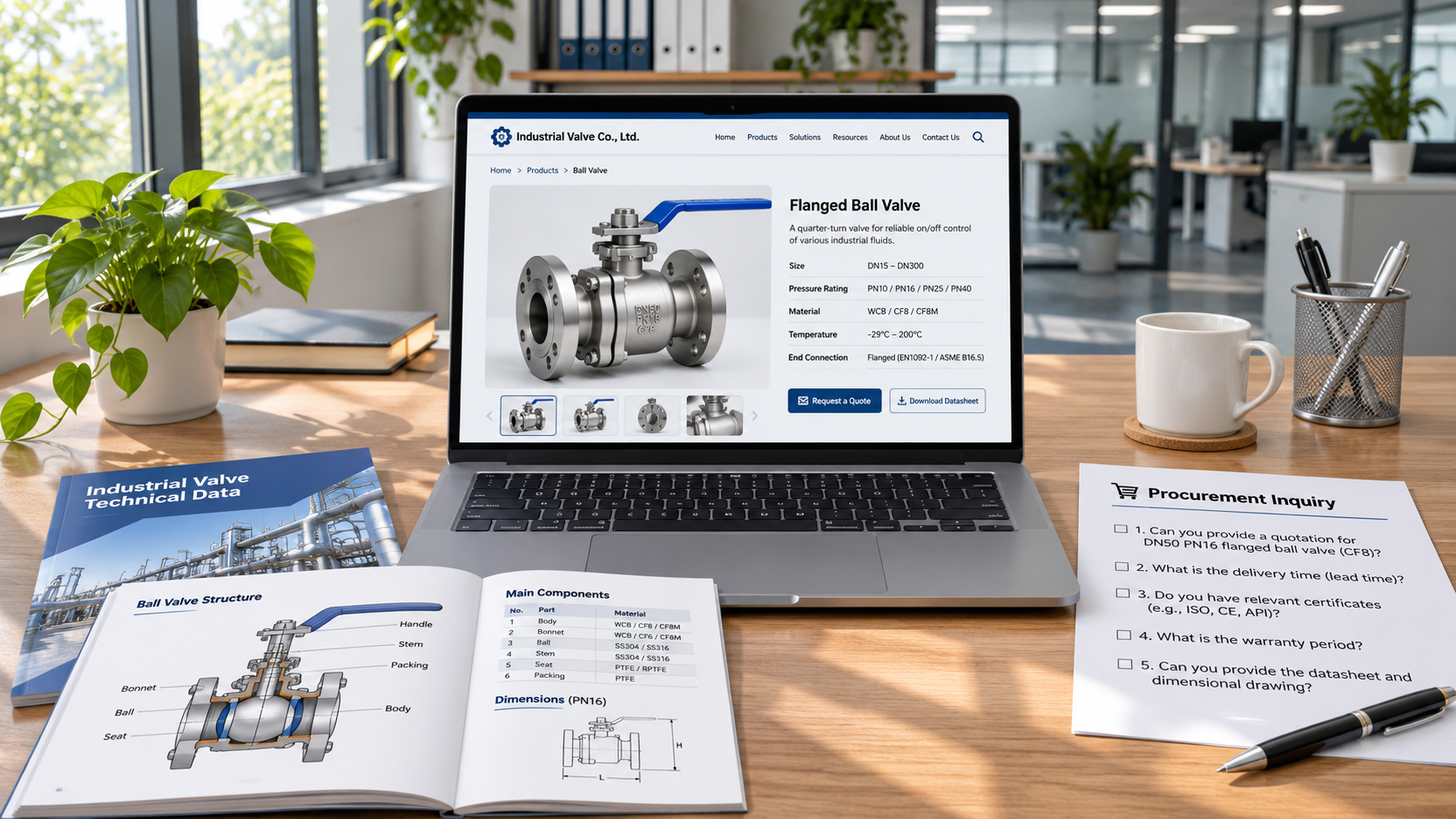
 Yiyingbao SaaS Intelligent Website Building and Marketing SystemYiyingbao SaaS Intelligent Website Building and Marketing System, AI-powered no-code website building, rapid creation of multilingual B2B international websites in 10 minutes, global server acceleration, AI-powered SEO optimization, helping businesses connect efficiently with global markets. The perfect integration of technology and operation makes building an international trade website remarkably simple
 AI+SEM Intelligent Advertising Marketing SystemAI+SEM drives intelligent ad creation, empowering full-funnel precision advertising marketing. The system automatically generates weekly/monthly reports, AI recommends keywords and target countries, monitors core metrics in real-time with intelligent alerts, and enables one-click high-conversion ad solutions to help quickly acquire customers and improve ROI.
 AI+SEO Dual-Engine System Optimization ServicesYiyingbao’s AI+SEO dual-engine optimization system helps foreign trade enterprises acquire high-quality organic traffic through AI-powered keyword research, content generation, and comprehensive technical optimization, significantly improving search rankings and conversion rates.
 AI+SNS Social Media Marketing SystemYingbao AI+SNS Social Media Marketing System - Precision social capture for the social media era. Supports one-click content synchronization across major platforms like Facebook and LinkedIn. AI intelligently rewrites posts for enhanced relevance. 24/7 AI customer service and user profiling analysis empower businesses to efficiently expand into global markets.
 AI+SEO营销解决方案易营宝AI+SEO营销解决方案,通过AI批量写作、智能生成TDK、精准关键词扩词等功能,全面优化网站SEO效果,提升流量与转化率。助力企业构建高效智能网站新生态。
 AI+SEM Advertising Marketing SolutionsAI+SEM Advertising Marketing Solution leverages AI technology to deeply empower SEM ad campaigns. It automatically generates weekly/monthly reports using AI, presenting account data across multiple dimensions for comprehensive insights into campaign performance and trends. The system precisely recommends keywords and target countries, intelligently generates high-conversion ad copy, and enables one-click activation of efficient campaign plans to help businesses rapidly acquire customers. Simultaneously, it monitors core metrics in real time, intelligently identifies abnormal fluctuations, and issues timely alerts to ensure stable, high-return advertising results.
 Domain Name ServicesEasyWin provides professional domain name services, including intelligent queries, one-stop registration, brand protection, and full lifecycle management, helping businesses build a digital brand image.
 EasyOperate B2C Cross-Border E-Commerce Platform & Independent WebsiteEasyStore B2C Cross-border E-commerce Independent Store is an intelligent website building and cross-border e-commerce integrated solution independently developed by EasyStore Information Technology (Beijing) Co., Ltd. The system is specially designed for small and medium-sized as well as large export enterprises, integrating 'website building, operation, marketing, advertising, and conversion' into one, helping enterprises quickly establish cross-border e-commerce independent stores to achieve brand globalization and global sales growth.
The platform supports multiple languages, multiple currencies, and multi-channel marketing, with built-in AI intelligent translation and SEO optimization systems, suitable for mainstream markets such as Southeast Asia, Europe and America, Latin America, and the Middle East, assisting Chinese manufacturing enterprises in efficiently deploying international e-commerce strategies. SSL证书易营宝提供专业SSL安全证书服务,包括单域名和泛域名证书,确保网站数据传输加密、身份验证和完整性保护,助力企业建立安全可信的在线业务环境。









