









- China-Europe Railway Express and CIIE Hold Business Matchmaking Event, Focusing on Cross-Border E-commerce B2B ExportsNov 07, 2026View details
- China’s Ministry of Commerce Responds to Additional Charges on Low-Value Imports Imposed by the EUNov 06, 2026View details
- Two Internet Development Reports Released at the 2026 World Internet ConferenceNov 05, 2026View details
- Internet Business Revenue of Enterprises Above the Designated Size Reached RMB 1.716 Trillion in the First Three Quarters, with Profits Up 17.6%Nov 05, 2026View details
- Shopify's Third-Quarter Revenue and GMV Fall Short of Expectations, Sending Shares Tumbling Before the Market OpensNov 04, 2026View details
- Temu Sellers See a Decline in Traffic as the Platform’s Traffic Allocation ShiftsNov 04, 2026View details
How AI Generative Search Optimization Works: How Content Is Retrieved, Cited, and Presented
How does generative search optimization affect whether content is discovered and cited? When users ask a question, generative search may first look for relevant sources, then synthesize information to organize an answer. The webpage rankings businesses are familiar with still matter, but whether a page can be accessed, whether its content supports a specific question, and whether its citations are clear can also affect its visibility in an answer. Understanding these steps is more actionable than simply trying to “get AI to recommend your brand.”
What happens between a user’s question and the generated answer
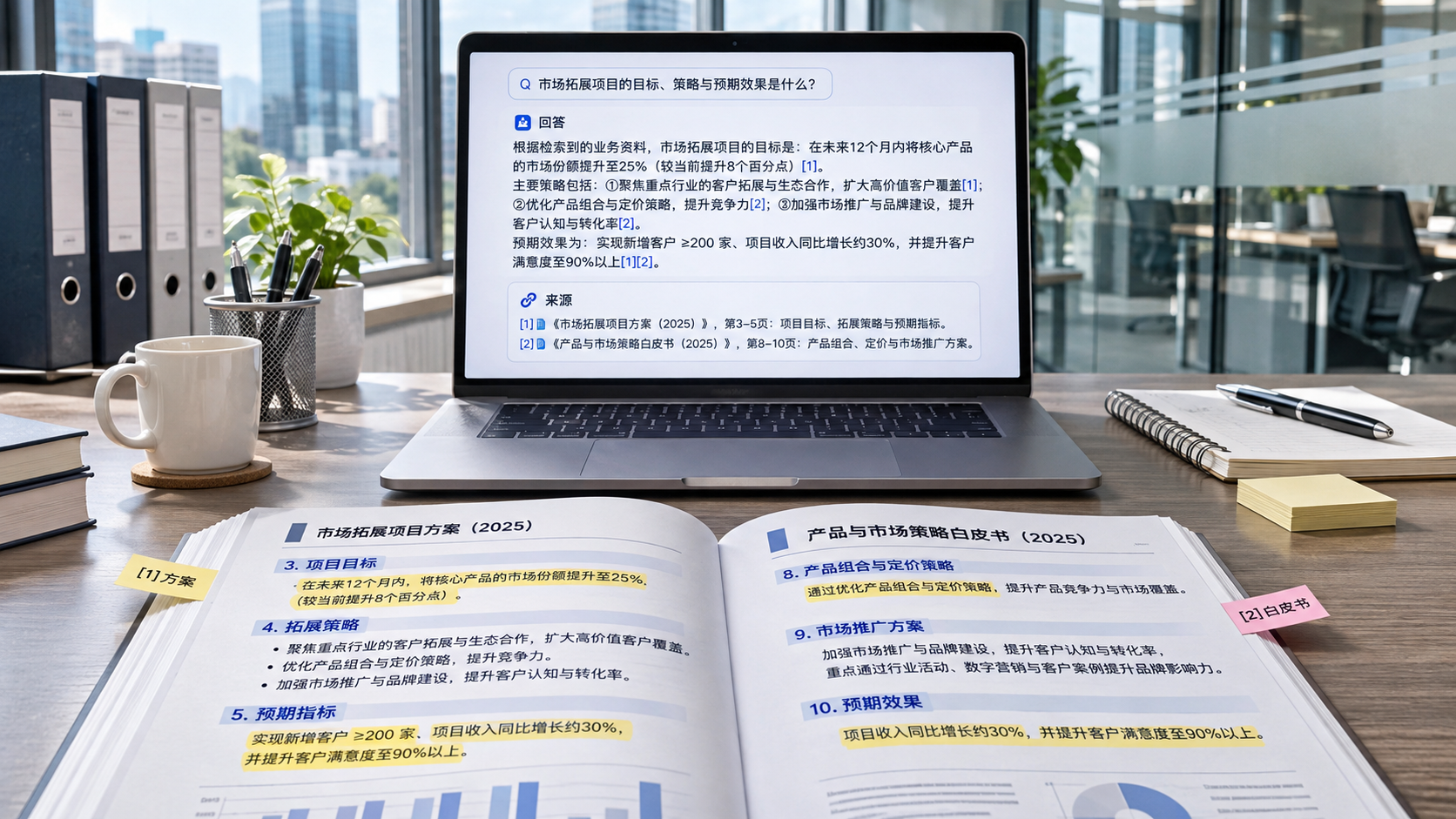
Implementation varies from one product to another. A common workflow is for a system to understand the question, rewrite or break down the query if necessary, retrieve candidate content from sources such as search indexes, select material that can be used to answer the question, and then generate an answer with or without source citations. Some systems may also answer directly based on existing knowledge; they do not search the web in real time for every question.
Suppose an overseas procurement professional asks, “How should I choose after-sales service for food packaging equipment?” The system might look separately for information about equipment maintenance, spare-parts supply, and cross-border service. Even if a company’s page does not repeat this exact question, it may still be a relevant source if it clearly explains the scope of service, response procedures, and applicable regions. By contrast, promotional copy that says only “we provide high-quality after-sales service” is unlikely to support a specific answer.
Being crawled, entering the candidate pool, being used to generate an answer, and ultimately appearing as a citation are separate steps. A page being indexed by a search engine does not mean it will necessarily be used in a generative answer; likewise, an answer mentioning a particular point does not necessarily mean the page receives a visible link.
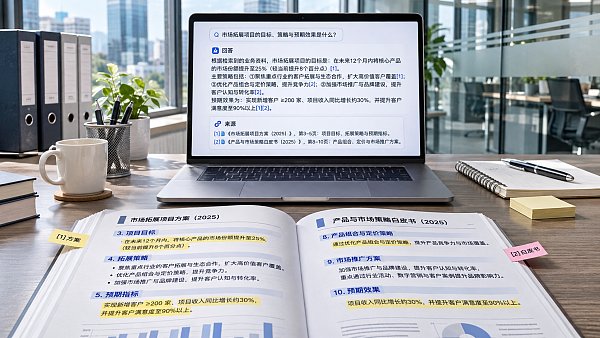
The prerequisites for retrieval: the page must be accessible and its information understandable
Basic website technical issues can become obstacles before copy does. For example, important content placed only in images, pages that require users to log in, or a page whose main text is blank when scripts fail to load can all make it harder for machines to retrieve information. Companies can start by checking that pages return normally, that their main content can be read as text, and that access rules do not restrict relevant crawlers.
Multilingual websites should also pay attention to how language versions correspond to one another. Pages intended for different markets should ideally use clear, stable URLs and have language annotations configured correctly. Avoid mixing multiple languages in the same passage or using automatic redirects that impede access. Crawling and indexing rules vary by platform, and allowing access is only one necessary condition; it is not a guarantee of display.
Some companies ask whether they should allow all AI crawlers. This decision should take platform purposes and data strategies into account: crawling for search discovery and data collection for model training are not necessarily the same thing. Check each platform’s published crawler documentation before deciding whether to allow, restrict, or block access, rather than applying a one-size-fits-all configuration.
What kind of content is more likely to be used as a basis for citations
Generative search needs more than relevant terms; it also needs facts and context that support an answer. A product page that specifies operating conditions, the rationale for material selection, delivery scope, and maintenance requirements usually provides more informational value than one that repeatedly emphasizes that a product is “professional” or “advanced.” When providing performance specifications, also explain the test conditions or source of the information; figures without context can mislead readers even if they are cited.
Content organization also affects how easily information can be understood. Placing a complete question under a semantically clear heading and answering it in the following paragraphs is easier to verify than scattering the conclusions across multiple carousels and expandable modules. Pages should retain necessary context: for example, “suitable for outdoor use” should specify the applicable conditions rather than presenting a conclusion stripped of context.
Source information is also worth maintaining. The author’s or company’s identity, update date, contact information, and sources for cited material can help readers assess whether the content is trustworthy. They do not guarantee a citation, but they can reduce questions such as “Who said this, and when?” Structured data can help search systems understand the entities on a page, but adding it correctly does not guarantee that the page will be displayed or cited.
Content that crosses disciplines requires particular care about its boundaries. For example, a page may cite Strategies for Applying Budget Performance Management in the Financial Management of Public Institutions as further reading when discussing another specialist topic, but that does not prove that a company understands overseas marketing. The key to whether a link is natural is whether it helps the current reader learn more about a related question.
Why a brand may still lack visibility after being cited
Generative answers typically condense information from multiple sources. A paragraph on a page may contribute only part of an answer. The placement of source links, whether a brand name is displayed, and whether users expand the citations all depend on how a particular product presents them. Sometimes an answer accurately summarizes a page’s content, but readers may not visit the original site; in other cases, the system may provide a citation whose content does not fully match the answer.
This means optimization should not focus solely on whether the brand “appears.” A more useful way to evaluate results is to select a set of real business questions and record the answers across different platforms, languages, and phrasings: Is the brand described accurately? Where do the source links lead? Has the scope of product suitability been overstated? Answers to the same question may change over time and vary by region and context, so a single test is only one observation.
Where companies should start instead of rushing to produce a batch of AI articles
For export-oriented manufacturers, organizing questions that sales and customer service teams answer repeatedly is usually more practical than generating generic industry articles in bulk. Examples include how to confirm lead times, whether spare parts can be ordered separately, and which operating conditions different configurations suit. Add answers verified by business staff to the relevant product or support pages, then build context by linking related pages to one another.
Websites, search optimization, and marketing channels should not operate in isolation either. Yiyingbao provides services including intelligent website building, multilingual websites, search optimization, and overseas marketing. From a content management perspective, this kind of integrated work requires connecting website technology, business information, and channel feedback. Questions that frequently arise in ads or on social media can be used to enrich website content in turn, but paid advertising does not itself guarantee citations in organic search or generative answers.
For measurement, combine impression, click, and page-visit data provided by search platforms with source information from inquiries. Some AI visits may be difficult to attribute clearly, and citation volume may not correspond to the number of qualified customers. Start by selecting important pages and high-value questions, then regularly review visits, information accuracy, and changes in citations before making adjustments. This is more reliable than promising a fixed ranking or citation outcome.
Related Articles
 How Will the Rise of AI Search Affect the Direction of Website Development for Export Businesses?
 November 2026: GEO Vendor Selection Decision Map for Mid-Sized and Large Consumer Brands Released
 How AI Generative Search Optimization Works: How Content Is Retrieved, Cited, and Presented

Related Products
 Yiyingbao SaaS Intelligent Website Building and Marketing SystemYiyingbao SaaS Intelligent Website Building and Marketing System, AI-powered no-code website building, rapid creation of multilingual B2B international websites in 10 minutes, global server acceleration, AI-powered SEO optimization, helping businesses connect efficiently with global markets. The perfect integration of technology and operation makes building an international trade website remarkably simple
 AI+SEM Intelligent Advertising Marketing SystemAI+SEM drives intelligent ad creation, empowering full-funnel precision advertising marketing. The system automatically generates weekly/monthly reports, AI recommends keywords and target countries, monitors core metrics in real-time with intelligent alerts, and enables one-click high-conversion ad solutions to help quickly acquire customers and improve ROI.
 AI+SEO Dual-Engine System Optimization ServicesYiyingbao’s AI+SEO dual-engine optimization system helps foreign trade enterprises acquire high-quality organic traffic through AI-powered keyword research, content generation, and comprehensive technical optimization, significantly improving search rankings and conversion rates.
 AI+SNS Social Media Marketing SystemYingbao AI+SNS Social Media Marketing System - Precision social capture for the social media era. Supports one-click content synchronization across major platforms like Facebook and LinkedIn. AI intelligently rewrites posts for enhanced relevance. 24/7 AI customer service and user profiling analysis empower businesses to efficiently expand into global markets.
 AI+SEO营销解决方案易营宝AI+SEO营销解决方案,通过AI批量写作、智能生成TDK、精准关键词扩词等功能,全面优化网站SEO效果,提升流量与转化率。助力企业构建高效智能网站新生态。
 AI+SEM Advertising Marketing SolutionsAI+SEM Advertising Marketing Solution leverages AI technology to deeply empower SEM ad campaigns. It automatically generates weekly/monthly reports using AI, presenting account data across multiple dimensions for comprehensive insights into campaign performance and trends. The system precisely recommends keywords and target countries, intelligently generates high-conversion ad copy, and enables one-click activation of efficient campaign plans to help businesses rapidly acquire customers. Simultaneously, it monitors core metrics in real time, intelligently identifies abnormal fluctuations, and issues timely alerts to ensure stable, high-return advertising results.
 Domain Name ServicesEasyWin provides professional domain name services, including intelligent queries, one-stop registration, brand protection, and full lifecycle management, helping businesses build a digital brand image.
 EasyOperate B2C Cross-Border E-Commerce Platform & Independent WebsiteEasyStore B2C Cross-border E-commerce Independent Store is an intelligent website building and cross-border e-commerce integrated solution independently developed by EasyStore Information Technology (Beijing) Co., Ltd. The system is specially designed for small and medium-sized as well as large export enterprises, integrating 'website building, operation, marketing, advertising, and conversion' into one, helping enterprises quickly establish cross-border e-commerce independent stores to achieve brand globalization and global sales growth.
The platform supports multiple languages, multiple currencies, and multi-channel marketing, with built-in AI intelligent translation and SEO optimization systems, suitable for mainstream markets such as Southeast Asia, Europe and America, Latin America, and the Middle East, assisting Chinese manufacturing enterprises in efficiently deploying international e-commerce strategies. SSL证书易营宝提供专业SSL安全证书服务,包括单域名和泛域名证书,确保网站数据传输加密、身份验证和完整性保护,助力企业建立安全可信的在线业务环境。









