









- Which customer acquisition channels will be affected by cross-border marketing trends in 2026?Sep 06, 2026View details
- Which homogenization risks should be considered in an analysis of the AI-powered website building industry?Aug 30, 2026View details
- How Will AI Marketing Trends 2026 Change Advertising Budget AllocationAug 28, 2026View details
- Is the EV SSL certificate market shrinking or upgrading? How should companies assess certificate procurement?Aug 11, 2026View details
- Why the old AMP SEO 2020 practices no longer work and what has changed in current optimization prioritiesAug 02, 2026View details
- How to Choose Topics for an Industry News Section to Attract More Organic Search TrafficJul 29, 2026View details
How Can Cross-Border E-Commerce Website Development Services Reduce Cart Abandonment?
The reason cross-border e-commerce standalone website development services are receiving increasing attention is not because websites “look more professional,” but because many abandoned orders often occur at several key points, including the page experience, purchasing process, and sense of trust. A user’s willingness to add a product to the shopping cart does not mean they are willing to complete the payment. What truly causes orders to be lost is often not the price itself, but hesitation at checkout, delays during page transitions, incompatible payment methods, or insufficient trust in the brand.
For cross-border sellers, abandoned orders are not an isolated issue but a comprehensive reflection of the standalone website’s overall capabilities. Page response speed, mobile adaptation, currency display, shipping cost transparency, payment success rate, and the clarity of after-sales information all jointly determine whether users will give up at the “final step.” Many companies focus more on acquiring traffic in the early stages, concentrating their budgets on advertising and traffic generation while overlooking the refinement of the on-site conversion journey. As a result, traffic increases without a corresponding improvement in sales.
The real value of cross-border e-commerce standalone website development services lies not in simply building a website, but in reducing every potential point of user loss based on the customer’s purchasing journey. For end consumers, purchasing decisions are often made quickly, especially on mobile devices, where every additional step may increase the probability of exiting. A page that takes several extra seconds to load, too many payment page redirects, inconsistent promotional information, or unclear delivery commitments may all cause users to close the page immediately.
High Abandonment Rates Often Do Not Mean “No Demand,” but Rather “Trust Has Not Been Established”
Many sellers tend to interpret an abandoned order as meaning that “the user no longer wants to buy,” but the actual situation is more complex. Cross-border transactions inherently involve uncertainty: consumers cannot see the physical product, cannot verify the brand face to face, and are more sensitive to payment security, delivery times, and return policies on overseas websites. For new users, any doubt during the checkout process may be amplified into a risk assessment.
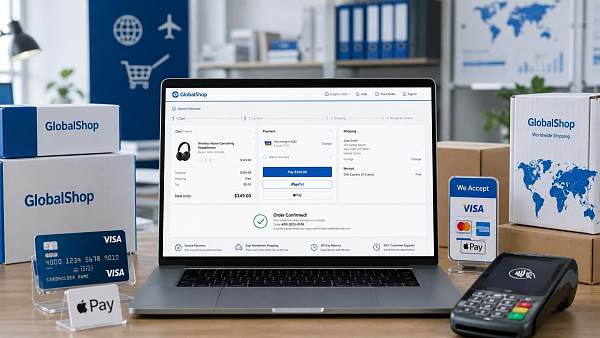
This is why trust signals are not decorative elements in standalone website development services, but conversion components. Clear return and exchange policies, genuine contact information, verifiable payment badges, material and size details on product pages, customer reviews, and usage images can all influence whether users continue. This is especially true for high-value products, non-standard products, and categories with long repurchase cycles, where users rely more heavily on this information to reduce decision-making costs.
If a website emphasizes visual effects but lacks these key explanations, users may stop at the final step even when they are interested. For businesses, such abandoned orders are difficult to resolve simply by increasing advertising spend, because the problem is not traffic quality but the website’s ability to support conversions.
Reducing Abandoned Orders Is Not Simply About “Optimizing Pages,” but About Restructuring the Purchasing Journey
Truly effective standalone website development generally examines the checkout journey from several perspectives: loading speed, information clarity, payment convenience, device experience, and after-sales expectations. These are not separate “optimization items,” but an interconnected chain in which each factor affects the others.
Page loading speed determines whether users are willing to stay. Cross-border users are distributed across different countries and network environments. If a website has not properly optimized static resources, compressed images, or accelerated global access, the browsing experience may fluctuate significantly. For mobile users, an excessively slow first-screen loading speed can easily reduce the likelihood of entering the purchasing process.
The payment process determines whether users can complete a transaction smoothly. Payment preferences vary greatly across markets: some regions favor credit cards, while others rely more on local wallets or installment payments. If a standalone website supports only a limited number of payment methods or has a high payment failure rate, the abandonment rate will generally increase significantly. For sellers, payment is not simply a matter of being able to pay; it must match the actual habits of the target market.
Information transparency is also crucial. If shipping costs, taxes, and estimated delivery times appear only at the final step, users may feel that they have been “charged extra at the last minute,” which is another common reason for abandoned orders. Providing shipping and tax information earlier can instead improve final conversions, because users have already formed realistic expectations before placing an order.
Mobile Experiences Often Reveal Problems More Easily Than PC Experiences
In actual operations, many abandoned-order problems on cross-border e-commerce standalone websites are more apparent on mobile devices. The reasons are simple: mobile screens are smaller, interactions are more fragmented, and attention is more easily interrupted. Users may browse products while commuting, resting, or using social media. Once the checkout process becomes too long, they may abandon it.
Therefore, development services that only provide “responsive adaptation” are not enough. More important is the interaction design for mobile devices: Are the buttons sufficiently clear? Are the forms too long? Does coupon entry interfere with the main process? Does address entry support automatic recognition? Does the payment page require multiple redirects? These details may seem insignificant, but they directly affect completion rates.
Some websites appear complete on computers, but on mobile devices, product images may be too large, copy may be crowded, and the checkout entrance may not be obvious, forcing users to zoom in and out repeatedly to complete an operation. This experience can cause users who are already close to purchasing to drop off at the final step. Such problems are particularly common among cross-border sellers whose traffic mainly comes from social media and short videos, because this traffic is highly dependent on mobile devices.
The Value of Standalone Website Development Services Lies in “Reducing Losses,” Not in “Adding More Features”
When choosing website development services, many companies are easily attracted by feature lists, such as multilingual support, membership systems, marketing pop-ups, automated emails, and coupon tools. However, from the perspective of reducing abandoned orders, more features are not necessarily better. What truly matters is whether these features serve the conversion journey.
For example, a pop-up that appears too early may interrupt browsing. Overly complex coupon rules may increase the likelihood of abandonment. Requiring users to register as members before checkout may also cause some of them to exit directly. For end consumers, the smoother the purchasing process, the better. Any additional barrier may result in lost sales.
Therefore, standalone website development services should focus more on “reducing friction” than on “piling on capabilities.” Determining which fields must be completed, which information can be collected later, which steps can be combined, and which content should be displayed earlier can have a greater impact on final order volume than adding another new feature.
From a Business Perspective, Reducing Abandoned Orders Brings More Than One-Time Sales—it Improves Long-Term Efficiency
If only individual orders are considered, optimizing abandoned orders may seem to mean simply increasing the conversion rate slightly. However, for cross-border businesses, it affects overall return on investment. Every abandoned order represents advertising click costs, content production costs, and website operating costs that have failed to generate an effective return.
For companies that have begun building a brand or are preparing to expand into new markets, reducing abandoned orders can also improve data analysis. Once the conversion journey becomes cleaner, businesses can more easily determine whether the problem lies with traffic, products, pricing, or payment. If the website experience itself is confusing, much of the operational data will be affected by noise, causing subsequent advertising and product-selection decisions to become distorted.
From the perspective of repeat purchases, the first ordering experience determines whether users are willing to stay. Smooth payment, clear order confirmation, visible after-sales policies, and timely delivery notifications directly affect subsequent repeat purchases and word-of-mouth sharing. If cross-border e-commerce standalone website development services can connect these processes, they will reduce not only abandoned orders but also hidden losses in subsequent operations.
When Choosing Development Services, Do Not Ask Only “Can It Be Done?”—Also Ask “Do They Understand Conversion?”
When selecting a service provider, many companies first consider design style and development capabilities. However, if the goal is to reduce abandoned orders, they should pay more attention to whether the provider understands cross-border purchasing behavior. A genuinely experienced service team will typically consider several questions: What payment methods are preferred in the target market? What obstacles concern users most? What information should be displayed earlier on the checkout page? Is the key mobile path short enough?
If a service provider focuses only on template-based development and visual appeal while lacking an understanding of overseas user habits and on-site conversion logic, the resulting website may be “attractive but difficult to sell through.” In contrast, solutions that combine on-site data, advertising sources, and the habits of target countries are often closer to actual business needs.
For end consumers, the website experience ultimately becomes a feeling of whether the process is “smooth and easy to use.” For businesses, that feeling translates into conversion rate. A standalone website that can reduce abandoned orders does not necessarily need to be the most complex, but it must be smoother, clearer, and more trustworthy.
The focus of cross-border e-commerce standalone website development services is no longer limited to getting a website up and running. It is about shortening the purchasing journey and reducing uncertainty. Truly effective development solutions optimize speed, payment, trust, and the mobile experience together as part of the same process. For cross-border sellers, the return on this investment is not limited to an increase in current orders; it also improves long-term conversion efficiency, brand credibility, and the foundation for repeat purchases.
Related Articles


Related Products
 Yiyingbao SaaS Intelligent Website Building and Marketing SystemYiyingbao SaaS Intelligent Website Building and Marketing System, AI-powered no-code website building, rapid creation of multilingual B2B international websites in 10 minutes, global server acceleration, AI-powered SEO optimization, helping businesses connect efficiently with global markets. The perfect integration of technology and operation makes building an international trade website remarkably simple
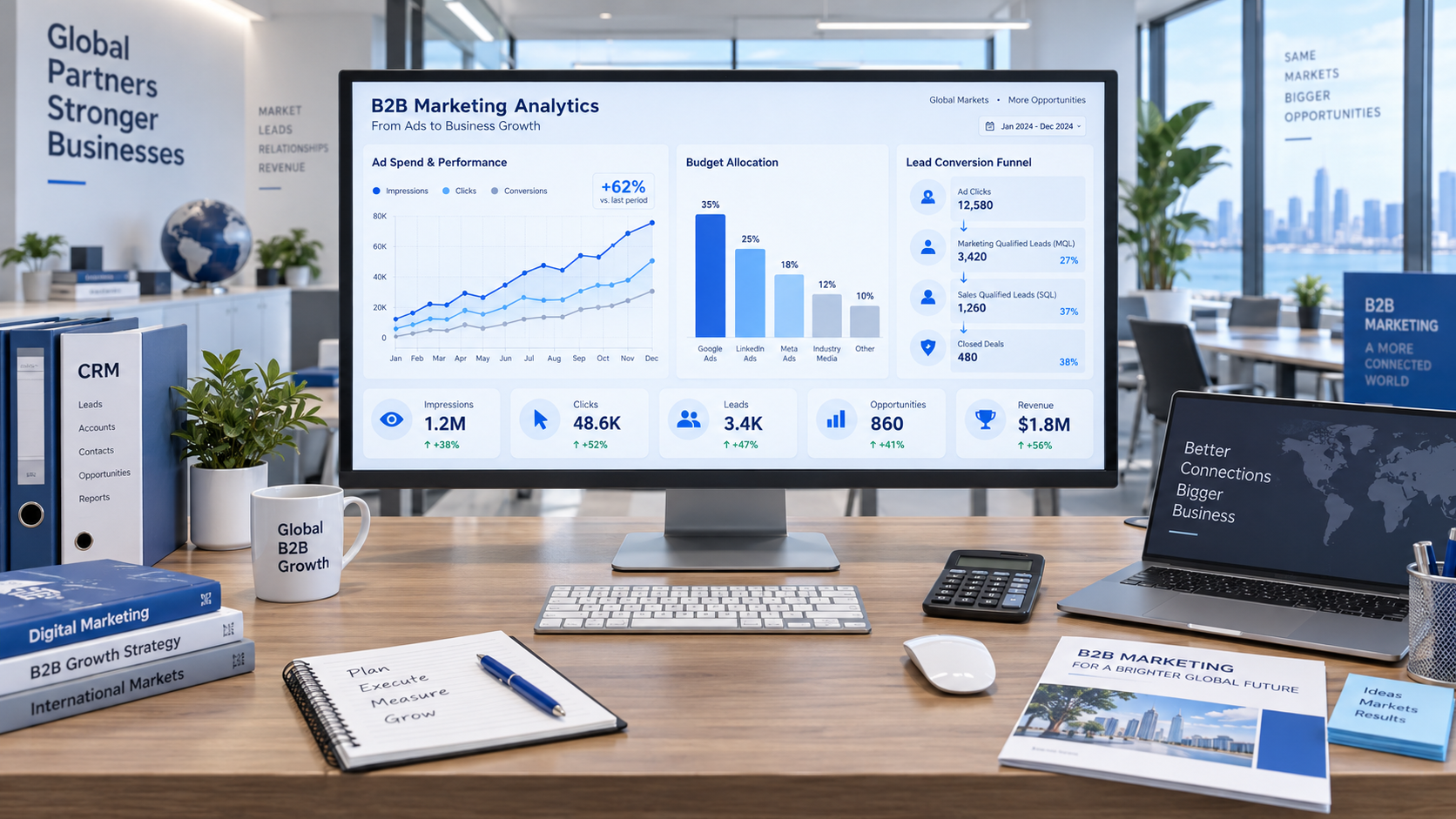
 AI+SEM Intelligent Advertising Marketing SystemAI+SEM drives intelligent ad creation, empowering full-funnel precision advertising marketing. The system automatically generates weekly/monthly reports, AI recommends keywords and target countries, monitors core metrics in real-time with intelligent alerts, and enables one-click high-conversion ad solutions to help quickly acquire customers and improve ROI.
 AI+SEO Dual-Engine System Optimization ServicesYiyingbao’s AI+SEO dual-engine optimization system helps foreign trade enterprises acquire high-quality organic traffic through AI-powered keyword research, content generation, and comprehensive technical optimization, significantly improving search rankings and conversion rates.
 AI+SNS Social Media Marketing SystemYingbao AI+SNS Social Media Marketing System - Precision social capture for the social media era. Supports one-click content synchronization across major platforms like Facebook and LinkedIn. AI intelligently rewrites posts for enhanced relevance. 24/7 AI customer service and user profiling analysis empower businesses to efficiently expand into global markets.
 AI+SEO营销解决方案易营宝AI+SEO营销解决方案,通过AI批量写作、智能生成TDK、精准关键词扩词等功能,全面优化网站SEO效果,提升流量与转化率。助力企业构建高效智能网站新生态。
 AI+SEM Advertising Marketing SolutionsAI+SEM Advertising Marketing Solution leverages AI technology to deeply empower SEM ad campaigns. It automatically generates weekly/monthly reports using AI, presenting account data across multiple dimensions for comprehensive insights into campaign performance and trends. The system precisely recommends keywords and target countries, intelligently generates high-conversion ad copy, and enables one-click activation of efficient campaign plans to help businesses rapidly acquire customers. Simultaneously, it monitors core metrics in real time, intelligently identifies abnormal fluctuations, and issues timely alerts to ensure stable, high-return advertising results.
 Domain Name ServicesEasyWin provides professional domain name services, including intelligent queries, one-stop registration, brand protection, and full lifecycle management, helping businesses build a digital brand image.
 EasyOperate B2C Cross-Border E-Commerce Platform & Independent WebsiteEasyStore B2C Cross-border E-commerce Independent Store is an intelligent website building and cross-border e-commerce integrated solution independently developed by EasyStore Information Technology (Beijing) Co., Ltd. The system is specially designed for small and medium-sized as well as large export enterprises, integrating 'website building, operation, marketing, advertising, and conversion' into one, helping enterprises quickly establish cross-border e-commerce independent stores to achieve brand globalization and global sales growth.
The platform supports multiple languages, multiple currencies, and multi-channel marketing, with built-in AI intelligent translation and SEO optimization systems, suitable for mainstream markets such as Southeast Asia, Europe and America, Latin America, and the Middle East, assisting Chinese manufacturing enterprises in efficiently deploying international e-commerce strategies. SSL证书易营宝提供专业SSL安全证书服务,包括单域名和泛域名证书,确保网站数据传输加密、身份验证和完整性保护,助力企业建立安全可信的在线业务环境。









