









- The U.S. has ended the $800 de minimis exemption for non-postal shipments; express courier packages must be formally declared.Nov 16, 2026View details
- ASEAN Signs Digital Economy Framework Agreement, Moving Toward Harmonized Cross-Border E-Commerce RulesNov 15, 2026View details
- Shenzhen Becomes the First City in Mainland China to Exceed RMB 5 Trillion in Foreign TradeNov 15, 2026View details
- Fujian Announces the First Batch of Provincial-Level Cross-Border E-Commerce Industrial Parks and Key Brands for CultivationNov 14, 2026View details
- Amazon Global Store Announces the Launch of the 2026 Black Friday Global Shopping SeasonNov 14, 2026View details
- CCTV.com Examines APEC’s Role in China’s Foreign TradeNov 12, 2026View details
Who owns the optimized content after an SEO subscription is canceled?
After cancelling an SEO subscription, optimized content does not necessarily all belong to the client, nor does cancelling automatically make it the service provider’s property. Copyright ownership, post-termination usage rights, and whether files and accounts can actually be handed over should be checked separately. Having paid for the service and having the content published do not, by themselves, prove that the company has acquired all rights.
When preparing to switch providers, a company may find that its articles are still viewable but cannot be exported, or that it has received the copy but lacks permission to continue using the images. This can directly affect website migration and ongoing operations. Before signing a procurement contract, specify “who owns the content” in terms of particular assets and delivery provisions, rather than relying only on a verbal assurance that “the content belongs to the client.”
First, distinguish between buying a service and acquiring content rights
SEO subscription fees may cover planning, writing, technical adjustments, and system use. Paying a monthly fee usually indicates that the parties have entered into a service transaction, but whether copyright is transferred and whether a licence continues to apply depend on the contract, the circumstances of creation, and applicable law. If the contract is unclear, do not assume that “whoever pays owns the copyright.”
Procurement teams need to distinguish among three questions: Can the company continue publishing the content? Can it modify the content and have a new provider maintain it? Can it migrate the content to another website? Even if the service provider retains copyright, it may grant a sufficiently broad, continuing licence. Conversely, even if some rights are assigned to the client under the agreement, the company may still be unable to take over without export files and backend access.
For cross-border business, also check the contract’s governing law and dispute resolution arrangements. Default rules may vary for commissioned works, employee-created works, and third-party licences. Important assets should not be protected by default rules alone.
Check rights asset by asset; don’t treat the entire website as a single piece of copy
Ownership cannot be determined merely by saying that content was “generated by a system,” even when AI tools were used. Ask the supplier to explain the delivery and usage arrangements, and agree on the sources of materials, risks relating to third-party rights, and responsibility for handling disputes. Avoid assurances that all generated content carries exclusive copyright.

Key contract wording worth revising
“The client may use the content during the service term” addresses only the subscription period. If the company wants to continue operating after cancellation, specify which paid-for and delivered content remains licensed for use after termination, and whether it may be modified, migrated, and maintained by a subsequent service provider.
- Define the deliverables: List articles, page copy, translations, and configuration files in an appendix, and identify any excluded third-party resources.
- Specify when rights take effect: State whether they take effect upon acceptance, after the relevant fees are paid in full, or at another point. Avoid letting a dispute over one item affect all previously delivered content.
- Set out handover obligations: Specify export formats, delivery deadlines, the scope of assistance, and any additional fees. Do not simply state “provide necessary support.”
- Preserve the agreed uses: For multilingual websites, different domains, or future redesigns, confirm that the licence covers these uses.
A core requirement could be drafted as a proposed negotiation clause: “For deliverables listed in the appendix and paid for in full, the client may continue to use, modify, and migrate them within the agreed scope after termination of the service; any restrictions arising from third-party licences must be listed separately.” This is not a complete copyright assignment clause. If exclusive rights or an assignment of economic rights are required, the types and scope of rights must be specified further.
These arrangements are also part of supplier-exit risk management for foreign trade companies. Companies can incorporate the handover of content assets into procurement reviews in connection with topics such as Risk Management and Prevention for International Trade Enterprises, rather than waiting until a subscription is cancelled.
When purchasing website development and marketing as a package, also check whether you can take your assets with you
When the same supplier provides website development and SEO, content rights and system usage rights can easily become conflated. The company may be entitled to use the articles, while the website runs on a subscription-based system whose backend becomes inaccessible after cancellation. Owning the copy does not mean owning the website-building system, nor does it mean the supplier must deliver the platform’s source code.
Ask the supplier to demonstrate a content export and check whether the body text, images, page URLs, SEO fields, and links between language versions are preserved. Exporting article text alone is different from being able to rebuild the original pages. Confirm separately who controls the domain, hosting, analytics, and search management accounts, and how they will be transferred, so that receiving the content does not leave the company unable to operate the website.
If you are ready to cancel, hand over in this order
- Gather the contract, orders, acceptance records, and proof of payment. Create a list of delivered assets by page, marking missing and disputed items.
- Request a backup before backend access expires. Check that the files are readable, all images are present, and key configurations are documented.
- Confirm in writing the usage rights retained after termination, the expiry arrangements for third-party licences, and when hosting, maintenance, and other services will end.
- Have the new service provider verify the migration, then revoke the former supplier’s access as agreed. Handle disputed content separately.
Organic rankings may fluctuate after a subscription ends; this is separate from content ownership. Distinguish the effects of stopping ongoing optimization from those caused by page deletion, loss of hosting, or migration errors. The minimum procurement acceptance criteria should be that content agreed to be retained can still be used legally, files can be handed over, and key accounts remain under the company’s control—not that the service provider guarantees unchanged rankings.
Related Articles
 Are AI SEO Ranking Guarantees Reliable? Understand the Terms Before Signing
 AI-Generated Content Not Ranking Well? Common SEO Issues and How to Fix Them
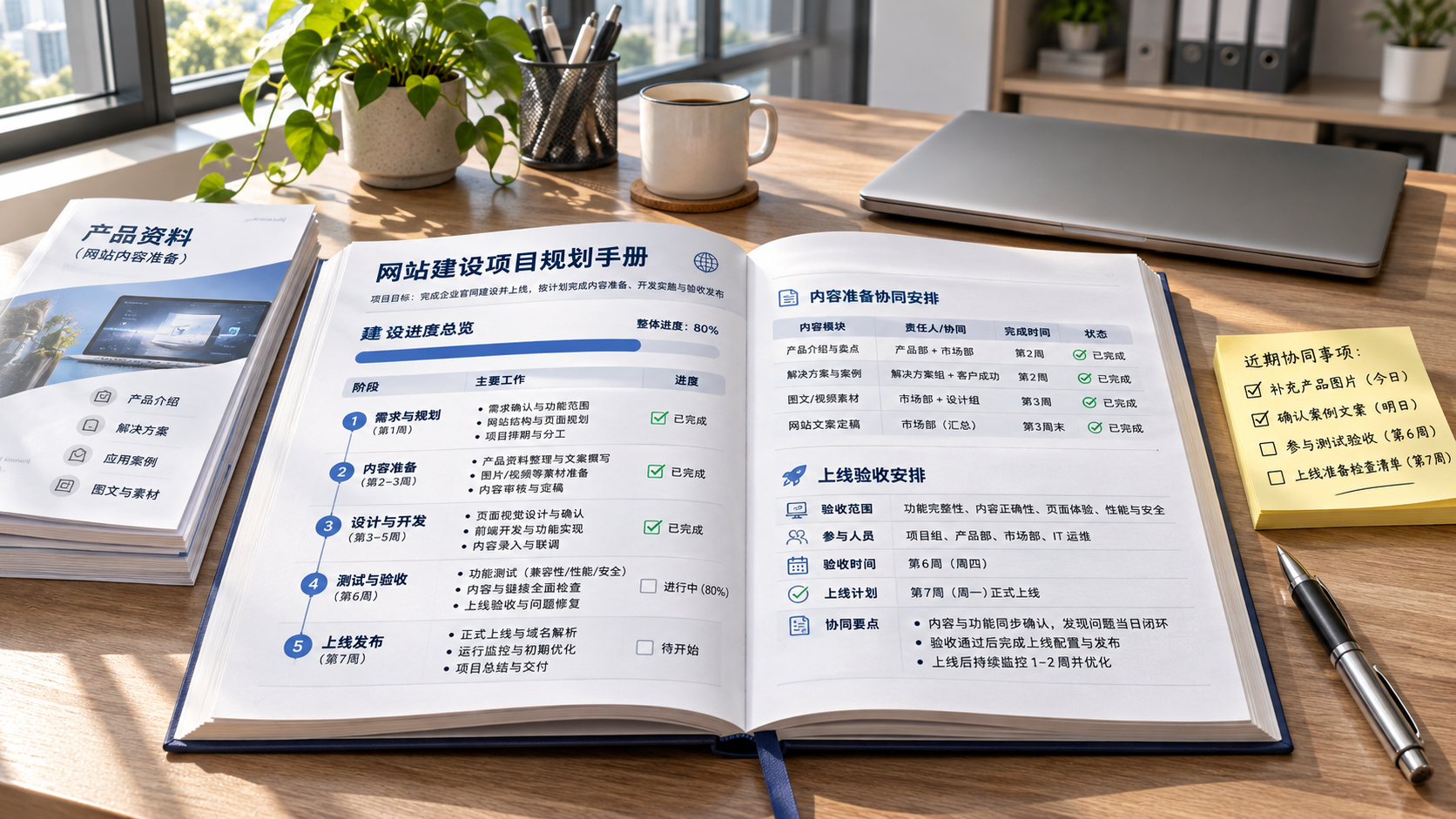
 How Long Does It Take to Build a Business Website? Timelines and Factors That Affect Them

Related Products
 Yiyingbao SaaS Intelligent Website Building and Marketing SystemYiyingbao SaaS Intelligent Website Building and Marketing System, AI-powered no-code website building, rapid creation of multilingual B2B international websites in 10 minutes, global server acceleration, AI-powered SEO optimization, helping businesses connect efficiently with global markets. The perfect integration of technology and operation makes building an international trade website remarkably simple
 AI+SEM Intelligent Advertising Marketing SystemAI+SEM drives intelligent ad creation, empowering full-funnel precision advertising marketing. The system automatically generates weekly/monthly reports, AI recommends keywords and target countries, monitors core metrics in real-time with intelligent alerts, and enables one-click high-conversion ad solutions to help quickly acquire customers and improve ROI.
 AI+SEO Dual-Engine System Optimization ServicesYiyingbao’s AI+SEO dual-engine optimization system helps foreign trade enterprises acquire high-quality organic traffic through AI-powered keyword research, content generation, and comprehensive technical optimization, significantly improving search rankings and conversion rates.
 AI+SNS Social Media Marketing SystemYingbao AI+SNS Social Media Marketing System - Precision social capture for the social media era. Supports one-click content synchronization across major platforms like Facebook and LinkedIn. AI intelligently rewrites posts for enhanced relevance. 24/7 AI customer service and user profiling analysis empower businesses to efficiently expand into global markets.
 AI+SEO营销解决方案易营宝AI+SEO营销解决方案,通过AI批量写作、智能生成TDK、精准关键词扩词等功能,全面优化网站SEO效果,提升流量与转化率。助力企业构建高效智能网站新生态。
 AI+SEM Advertising Marketing SolutionsAI+SEM Advertising Marketing Solution leverages AI technology to deeply empower SEM ad campaigns. It automatically generates weekly/monthly reports using AI, presenting account data across multiple dimensions for comprehensive insights into campaign performance and trends. The system precisely recommends keywords and target countries, intelligently generates high-conversion ad copy, and enables one-click activation of efficient campaign plans to help businesses rapidly acquire customers. Simultaneously, it monitors core metrics in real time, intelligently identifies abnormal fluctuations, and issues timely alerts to ensure stable, high-return advertising results.
 Domain Name ServicesEasyWin provides professional domain name services, including intelligent queries, one-stop registration, brand protection, and full lifecycle management, helping businesses build a digital brand image.
 EasyOperate B2C Cross-Border E-Commerce Platform & Independent WebsiteEasyStore B2C Cross-border E-commerce Independent Store is an intelligent website building and cross-border e-commerce integrated solution independently developed by EasyStore Information Technology (Beijing) Co., Ltd. The system is specially designed for small and medium-sized as well as large export enterprises, integrating 'website building, operation, marketing, advertising, and conversion' into one, helping enterprises quickly establish cross-border e-commerce independent stores to achieve brand globalization and global sales growth.
The platform supports multiple languages, multiple currencies, and multi-channel marketing, with built-in AI intelligent translation and SEO optimization systems, suitable for mainstream markets such as Southeast Asia, Europe and America, Latin America, and the Middle East, assisting Chinese manufacturing enterprises in efficiently deploying international e-commerce strategies. SSL证书易营宝提供专业SSL安全证书服务,包括单域名和泛域名证书,确保网站数据传输加密、身份验证和完整性保护,助力企业建立安全可信的在线业务环境。









