









- Amazon Reportedly Sends Exclusivity Warning Letters to Multiplatform SellersNov 03, 2026View details
- New TikTok Shop Cross-Border Returns Rules for Southeast Asia Take Effect on November 5Nov 03, 2026View details
- U.S. Tightens De Minimis Exemption Channel and Revises Section 321 Data PilotNov 03, 2026View details
- Amazon FBA Fuel and Logistics Surcharge in 10 European Countries to Increase to 2% on November 2Nov 02, 2026View details
- EU Customs Code reform to take effect on November 1, with new handling fees for direct-mail small parcelsNov 01, 2026View details
- EU Plans to Raise Tax on Incoming Small Parcels to €5Oct 31, 2026View details
Q3 marketing content for your standalone website isn’t ready. How should you adjust the launch sequence?
The Q3 Marketing Content for Your Independent Website Isn’t Ready: How Should You Adjust the Launch Order?
What should you do if your Q3 marketing plan for a cross-border e-commerce website is delayed because the content isn’t ready? Project leads can adjust the launch order according to business priorities, publishing core pages first and filling in the remaining content in stages. The key is not to push every task back, but to distinguish between content that determines whether customers can complete a purchase or submit an inquiry and content that can be refined after the site is live.
Quarterly deadlines often involve the website, product, design, translation, and advertising teams at the same time. A late product document can hold up pages, ad assets, and sales messaging all at once. In this situation, what needs to be rescheduled is the dependency chain, not just the dates on the Gantt chart.
First, Determine: Is the Delay About Content or Conditions for Closing a Sale?
Mark each outstanding item as either “blocks launch” or “can be added later.” Make this determination based on whether customers can understand the product and take the next step, and whether the company can deliver on its promises. For example, if pricing or the quoting process, key specifications, delivery scope, or contact details have not been confirmed, the page should not be used as a promotional landing page, even if its design is complete.
For a B2C store, also check inventory, shipping costs, payment, delivery, and returns and exchanges. Don’t rush to meet a deadline only for users to discover at checkout that they can’t make a purchase. For a B2B lead-generation site, confirm the core product information, applications, inquiry form, and sales contact. If complex specifications have not been finalized, you can clearly state that customers should confirm them with the sales team, but don’t fill in the gaps with unverified data.
By contrast, some industry articles, additional product lines, language versions for secondary markets, and social media assets can usually be scheduled for the second phase. This depends on keeping unfinished content out of the navigation, advertising claims, and purchase path so that customers don’t click through to empty pages.
Plan the Initial Launch Around a Complete Conversion Path
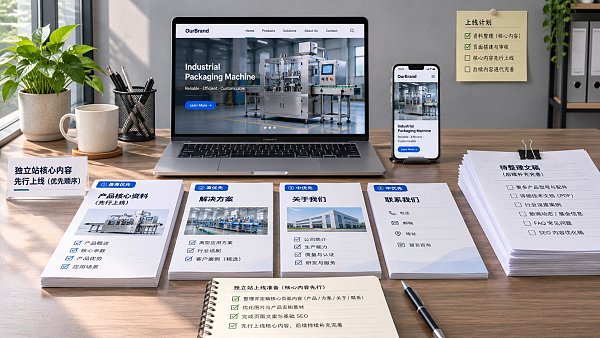
The initial set of pages doesn’t need to cover the entire business, but it should serve a clear goal: guiding target customers from their first visit to submitting an inquiry or placing an order. You can focus on one key market, a group of featured products, and one primary traffic channel, and get the corresponding path working first, rather than launching multiple site versions at once with insufficient content.
For example, if a company plans to promote a particular type of industrial equipment, the initial content could include the homepage, a product or solutions page, an About Us page, a contact and inquiry page, and any necessary business-related information. The product page should explain what the equipment is used for, its key specifications and applicable conditions, and how to request a quote. Models whose specifications are still being confirmed can be held back. For a cross-border e-commerce store, prioritize listing products with verified inventory, prices, and delivery terms rather than focusing on the number of products.
Before launch, test the site along a real user journey: open the landing page on a mobile device, check the images and buttons, submit a test form or place a test order, then verify that notifications are delivered, data is recorded, and the sales or customer service team knows how to follow up. A page loading successfully does not mean the marketing journey is ready to use.
Break Content Into Deliverable Batches Instead of Waiting for Everything to Be Finished
When adjusting the schedule, identify the business owner, information provider, reviewer, dependencies, and final confirmation date for each content item. The product team is responsible for factual accuracy, the marketing team for messaging, and legal or relevant business personnel for reviewing applicable external claims. Don’t ask designers to guess when information is missing.
One practical approach is to organize the work into batches: the first batch covers core conversion pages and essential information; the second adds detailed specifications, FAQs, and supporting downloads for priority products; the third expands into industry content, multilingual pages, and promotional assets for other markets. Define acceptance criteria for each batch instead of simply marking it “copy complete”: the content is delivered only when the page is accessible, the information has been reviewed, links work, and the responsible person has signed off.
For multilingual projects, avoid treating machine-translated copy as final. Product names, units of measurement, delivery terms, and after-sales commitments should be reviewed by people familiar with both the target market and the product. If review resources aren’t available for a language version, delay its publication; don’t mix unfinished translations or placeholder text into pages that are already live.
Match the Promotion Schedule to Page Readiness; Don’t Use Traffic to Test Whether the Project Is Ready
There’s no need to wait until the entire site is complete to start advertising, social media, and search optimization, but the scope of promotion should match the content that has been delivered. While featured pages are still awaiting approval, you can prepare accounts, audiences, keywords, and assets. Once the pages pass review, start testing with a controlled budget. Product specifications, prices, and promotional terms in ads must match the landing pages and the company’s actual ability to fulfill orders.
Search traffic takes time to build, so the initial public pages should also have clear titles, accessible body content, and sensible internal links. Check that they haven’t been inadvertently set to prevent indexing. Submitting a sitemap helps search engines discover pages, but doesn’t guarantee that they will be indexed or rank. Rather than publishing large volumes of similar placeholder content, hold back pages that aren’t ready.
When different teams handle the website and marketing, common gaps include campaigns going live while no one is receiving form submissions, or ad claims not matching the page. EasyYingbao provides services including intelligent website building, SEO, advertising, and social media. For projects that require coordinating multiple workstreams, it’s important to identify handoff owners and acceptance criteria for each step in the schedule, rather than merely confirming whether a page has been delivered.
Set Aside Time After Launch for Review and Follow-Up Deliverables
After the initial launch, project leads should regularly review page traffic, form submissions, the order process, and customer feedback, and cross-check them against sales records. If traffic is coming in but there are few inquiries, first check whether the traffic is relevant, the page provides enough information, and the form is working. If inquiries are coming in but not progressing, investigate the notification and follow-up process. Don’t conclude that a channel is ineffective based on data from just one day.
Set firm due dates for delayed content, too. Assign an owner, target date, and escalation process to every follow-up task. If key information remains unavailable, narrow the promotional scope or adjust the promises accordingly. An effective change to the launch order should make clear to the team what can go live first, which risks must be resolved beforehand, and when the next batch will be reviewed and accepted.
Related Articles
 Q3 marketing content for your standalone website isn’t ready. How should you adjust the launch sequence?
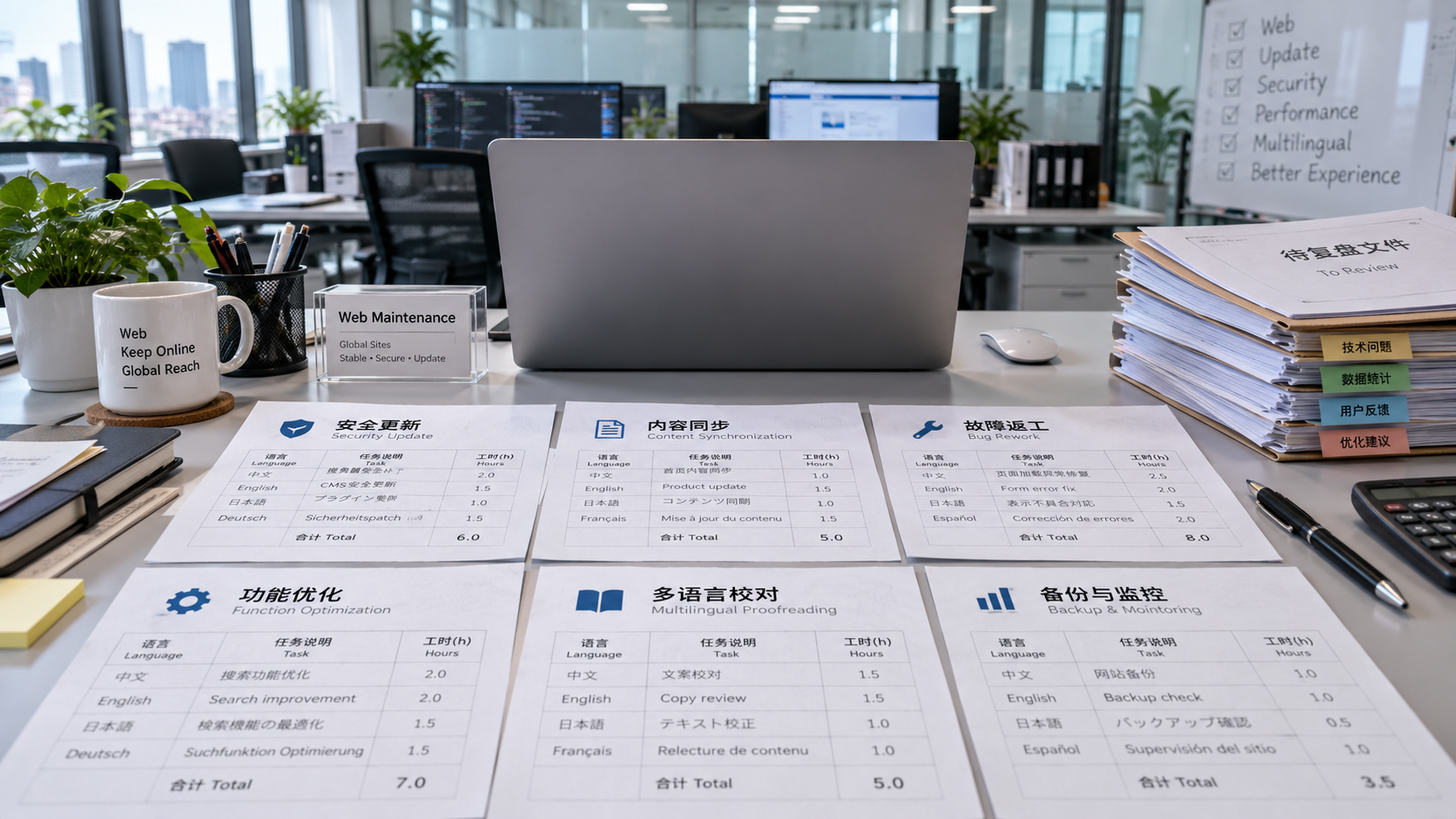
 Is It Normal for Multilingual Website Maintenance to Take Up 35% of the Technical Team’s Time?
 Overseas customers report that websites load slowly in some regions. How can we identify the cause?

Related Products
 Yiyingbao SaaS Intelligent Website Building and Marketing SystemYiyingbao SaaS Intelligent Website Building and Marketing System, AI-powered no-code website building, rapid creation of multilingual B2B international websites in 10 minutes, global server acceleration, AI-powered SEO optimization, helping businesses connect efficiently with global markets. The perfect integration of technology and operation makes building an international trade website remarkably simple
 AI+SEM Intelligent Advertising Marketing SystemAI+SEM drives intelligent ad creation, empowering full-funnel precision advertising marketing. The system automatically generates weekly/monthly reports, AI recommends keywords and target countries, monitors core metrics in real-time with intelligent alerts, and enables one-click high-conversion ad solutions to help quickly acquire customers and improve ROI.
 AI+SEO Dual-Engine System Optimization ServicesYiyingbao’s AI+SEO dual-engine optimization system helps foreign trade enterprises acquire high-quality organic traffic through AI-powered keyword research, content generation, and comprehensive technical optimization, significantly improving search rankings and conversion rates.
 AI+SNS Social Media Marketing SystemYingbao AI+SNS Social Media Marketing System - Precision social capture for the social media era. Supports one-click content synchronization across major platforms like Facebook and LinkedIn. AI intelligently rewrites posts for enhanced relevance. 24/7 AI customer service and user profiling analysis empower businesses to efficiently expand into global markets.
 AI+SEO营销解决方案易营宝AI+SEO营销解决方案,通过AI批量写作、智能生成TDK、精准关键词扩词等功能,全面优化网站SEO效果,提升流量与转化率。助力企业构建高效智能网站新生态。
 AI+SEM Advertising Marketing SolutionsAI+SEM Advertising Marketing Solution leverages AI technology to deeply empower SEM ad campaigns. It automatically generates weekly/monthly reports using AI, presenting account data across multiple dimensions for comprehensive insights into campaign performance and trends. The system precisely recommends keywords and target countries, intelligently generates high-conversion ad copy, and enables one-click activation of efficient campaign plans to help businesses rapidly acquire customers. Simultaneously, it monitors core metrics in real time, intelligently identifies abnormal fluctuations, and issues timely alerts to ensure stable, high-return advertising results.
 Domain Name ServicesEasyWin provides professional domain name services, including intelligent queries, one-stop registration, brand protection, and full lifecycle management, helping businesses build a digital brand image.
 EasyOperate B2C Cross-Border E-Commerce Platform & Independent WebsiteEasyStore B2C Cross-border E-commerce Independent Store is an intelligent website building and cross-border e-commerce integrated solution independently developed by EasyStore Information Technology (Beijing) Co., Ltd. The system is specially designed for small and medium-sized as well as large export enterprises, integrating 'website building, operation, marketing, advertising, and conversion' into one, helping enterprises quickly establish cross-border e-commerce independent stores to achieve brand globalization and global sales growth.
The platform supports multiple languages, multiple currencies, and multi-channel marketing, with built-in AI intelligent translation and SEO optimization systems, suitable for mainstream markets such as Southeast Asia, Europe and America, Latin America, and the Middle East, assisting Chinese manufacturing enterprises in efficiently deploying international e-commerce strategies. SSL证书易营宝提供专业SSL安全证书服务,包括单域名和泛域名证书,确保网站数据传输加密、身份验证和完整性保护,助力企业建立安全可信的在线业务环境。









