









- Eight Departments, Including the Ministry of Commerce, Issue the 15th Five-Year Plan for the Development of Trade in ServicesNov 27, 2026View details
- General Administration of Customs Issues New Rules on Import and Export Cosmetic Labeling, Effective December 1Nov 26, 2026View details
- U.S. to Announce Section 301 Investigation Findings on 16 Economies, Potentially Proposing New TariffsNov 26, 2026View details
- Hapag-Lloyd’s $4.2 billion acquisition of ZIM faces a closing delay; ZIM reports third-quarter net profit of $830 millionNov 24, 2026View details
- SCFI falls for a third straight week to 3,503.78 points, with blank sailings on trans-Pacific routes rising to 10Nov 24, 2026View details
- Lazada 11.11 Mega Sale: LazMall Contributes Nearly Two-Thirds of GMVNov 23, 2026View details
Are AI-written product descriptions effective? Efficiency improvements and risk boundaries for bulk product launches
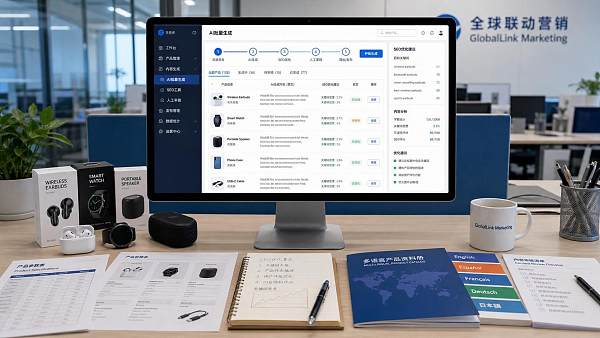
AI-Written Product Descriptions: Why Have They Become a Common Tool for Bulk Product Launches?
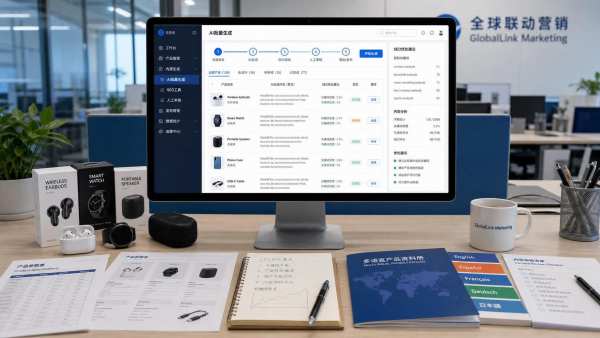
The reason AI-written product descriptions are frequently discussed is very straightforward: once the number of products grows, content production immediately becomes a bottleneck. This is especially true when independent websites, multilingual sites, cross-border e-commerce stores, and advertising landing pages are being developed at the same time. Writing each description manually makes it difficult to keep up with the pace of new product launches.
However, “easy to use” does not mean “fully automated and worry-free.” Its real value is not only in faster generation, but in handing repetitive tasks such as basic descriptions, selling point organization, specification rewriting, and language style consistency to the system first, while reserving human effort for conversion-oriented messaging and risk review.
In an integrated website and marketing scenario, AI-written product descriptions also affect search indexing, page dwell time, ad review, and brand consistency. If the only goal is draft generation speed, more time is often spent on revisions later.
A more common way to assess it is to see it as an accelerator in the content production chain, rather than the endpoint that replaces the entire editorial process. This understanding is actually closer to real-world results.
In Which Scenarios Can AI-Written Product Descriptions Significantly Improve Efficiency?
If the product structure is clear, parameters are complete, and selling points are relatively standardized, AI-written product descriptions are usually very useful. For categories with a large number of SKUs and highly repetitive information, such as fashion accessories, household goods, industrial standard components, and electronic peripherals, the efficiency improvement is the most obvious.
For companies building overseas websites, this efficiency is reflected not only in “faster writing,” but also in “faster synchronization.” When one product needs an official website detail page, an e-commerce listing page, ad material descriptions, and social media captions, generating basic text in a unified way can greatly reduce repeated back-and-forth revisions.
When combined with intelligent website building and an SEO system, the value becomes even more evident. Platforms like 易营宝, which have long served overseas growth scenarios, already cover website building, SEO, advertising, and social media operations. Content does not exist in isolation; it needs to enter page structures, search layouts, and advertising workflows. If AI-written product descriptions can work together with website templates, keyword planning, and language version management, efficiency gains will be more stable.
- Bulk product launches, requiring dozens to hundreds of descriptions to be generated in a single day.
- The same product needs to be published simultaneously across multiple languages and channels.
- Existing parameter sheets, attribute tables, and keyword databases can be fed directly into the system.
- Pages need to go online quickly first, followed by secondary optimization.
Conversely, if a product relies heavily on professional explanations, compliance commitments, or complex technical descriptions, the AI-generated draft can only serve as a base draft and should not be published directly.
When Speed Increases, Will Content Quality Decline Instead?
This is also the issue many people care about most when searching for AI-written product descriptions. The answer is not a simple yes or no. It depends on whether input quality, rule settings, and human review can keep up.
If the source material contains only a product name and a few parameters, AI will most likely produce content that “looks decent but feels empty.” It may appear complete, but it lacks real selling points, and the sentence patterns can easily become homogenized. Such pages may go online in the short term, but they are not beneficial for SEO or conversion in the long run.
In contrast, if product attributes, application scenarios, differentiators, prohibited expressions, and keyword directions have already been prepared in advance, AI-written product descriptions are more like a structured editor, quickly organizing content into a publishable version.
The following assessment table is suitable for review before bulk product launches:
The meaning of the table is very clear: AI-written product descriptions are best suited for producing “qualified content at scale,” rather than naturally generating “high-conversion premium content.” These two should not be confused.
What Risk Boundaries Truly Require Attention?
Many problems do not arise from generation speed, but from trusting the results by default. The common risks of AI-written product descriptions mainly fall into four categories, all of which are directly related to website operations and marketing promotion.
- Inaccurate information: writing in functions, materials, or certifications that do not exist.
- Homogenized expression: similar sentence patterns across many pages, affecting indexing quality.
- Keyword imbalance: forcing keywords into the text for SEO, making it read unnaturally.
- Platform risks: exaggerated promises, sensitive words, or non-compliant efficacy descriptions.
In actual use, website content is also seen simultaneously by advertising systems, search engines, and users. If a description is overloaded for the sake of clicks, it may later affect ad review and may also lead to a higher bounce rate.
Therefore, it is better to move risk boundaries forward to the rule-setting stage instead of fixing them after launch. A more effective approach is to first define prohibited words, fields that must be retained, the allowed scope of rewriting, and review checkpoints, and then allow AI to participate in content generation.
How Should the Content Workflow Be Built If SEO, Conversion, and Publishing Efficiency All Matter?
A more reliable workflow is not “generate and publish,” but “structured input, layered generation, and tiered review.” Only in this way can bulk product launches avoid becoming faster but more chaotic.
Content can first be divided into three layers. The first layer is factual information, such as model, material, size, and use. The second layer is sales messaging, such as application scenarios and advantage descriptions. The third layer is SEO expansion, including long-tail keywords, related questions, and page summaries.
If the website itself also serves a lead generation function, this workflow is even more worth refining. Platforms like 易营宝, which cover intelligent website building, SEO optimization, ad placement, and multi-channel marketing at the same time, emphasize system collaboration because product descriptions are not just copy. They affect page structure, search entry points, ad landing experiences, and subsequent data review.
More practical implementation suggestions include:
- Build a product information field database first, and then call on AI to write product descriptions.
- Manage general templates and key category templates separately.
- Keep in-depth manual editing for high-value pages instead of fully automating everything.
- After launch, monitor indexing, dwell time, and conversion, then adjust the prompts accordingly.
One Final Practical Question: Should You Use It, and How Can You Make a More Reliable Judgment?
If the goal is simply to solve the problem of “not having enough time to write,” AI-written product descriptions are worth using. If you expect them to directly replace brand messaging, professional review, and SEO strategy, that expectation will usually fall short.
A more reliable standard is to see whether it can satisfy three things at the same time: whether content generation speed improves significantly, whether page quality remains stable, and whether later rework is reduced. If it only speeds up one step while shifting review and revision pressure to the later stage, overall efficiency has not truly improved.
For businesses that need long-term coordination across overseas official websites, independent sites, and marketing content, AI-written product descriptions are more suitable as one part of a broader system. They are best considered together with website building, SEO, advertising, and social media content, rather than purchasing a standalone writing tool and then forcing it into the workflow.
To conclude briefly: during bulk product launches, AI-written product descriptions can indeed improve efficiency, but only if the applicable scope, review rules, and content standards are clearly defined in advance. The next step worth taking is not to keep debating whether it is useful, but to first organize existing SKU materials, determine which pages can be automatically generated and which pages require in-depth manual editing, and then verify the results through a small-scale test. This kind of judgment is usually more valuable than looking only at generation speed.
Related Articles
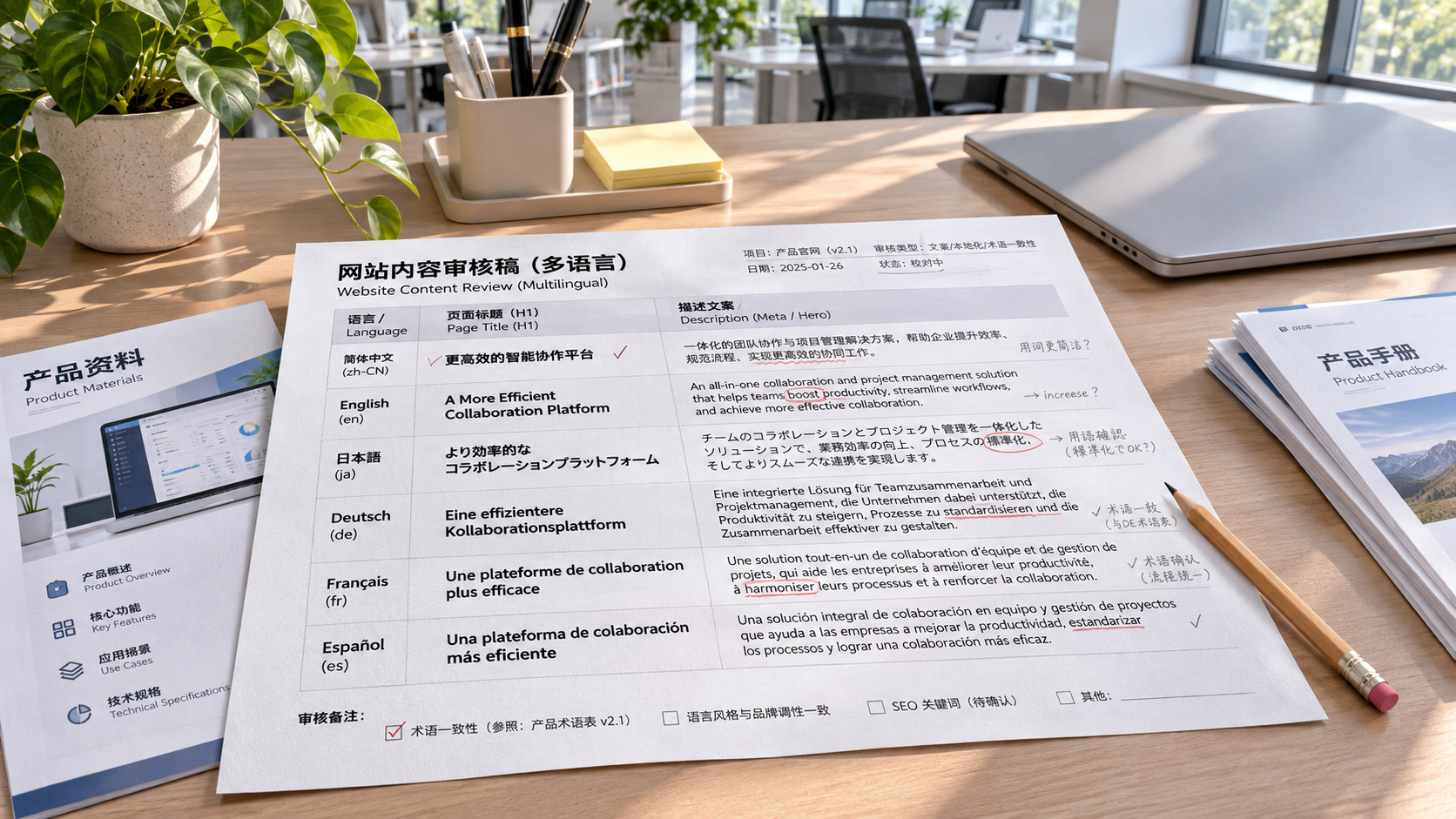
 Are the Multilingual TDKs Generated by Yiyingbao AI Website Builder Reliable?
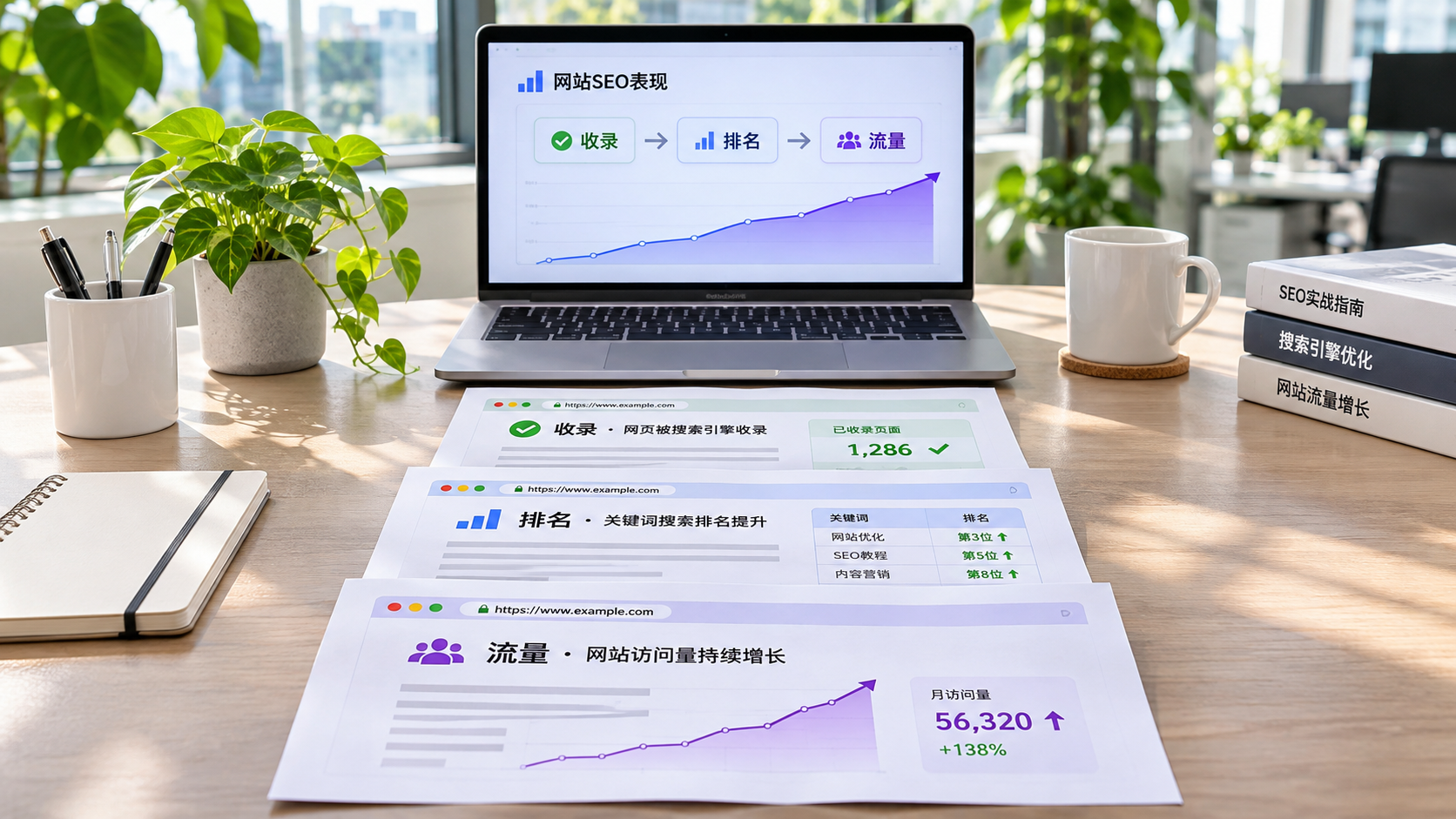
 What Is Search Engine Optimization? Beginners Should First Understand the Relationship Between Indexing, Rankings, and Traffic
 How can you verify the accuracy of product copy generated by an AI website builder?

Related Products
 Yiyingbao SaaS Intelligent Website Building and Marketing SystemYiyingbao SaaS Intelligent Website Building and Marketing System, AI-powered no-code website building, rapid creation of multilingual B2B international websites in 10 minutes, global server acceleration, AI-powered SEO optimization, helping businesses connect efficiently with global markets. The perfect integration of technology and operation makes building an international trade website remarkably simple
 AI+SEM Intelligent Advertising Marketing SystemAI+SEM drives intelligent ad creation, empowering full-funnel precision advertising marketing. The system automatically generates weekly/monthly reports, AI recommends keywords and target countries, monitors core metrics in real-time with intelligent alerts, and enables one-click high-conversion ad solutions to help quickly acquire customers and improve ROI.
 AI+SEO Dual-Engine System Optimization ServicesYiyingbao’s AI+SEO dual-engine optimization system helps foreign trade enterprises acquire high-quality organic traffic through AI-powered keyword research, content generation, and comprehensive technical optimization, significantly improving search rankings and conversion rates.
 AI+SNS Social Media Marketing SystemYingbao AI+SNS Social Media Marketing System - Precision social capture for the social media era. Supports one-click content synchronization across major platforms like Facebook and LinkedIn. AI intelligently rewrites posts for enhanced relevance. 24/7 AI customer service and user profiling analysis empower businesses to efficiently expand into global markets.
 AI+SEO营销解决方案易营宝AI+SEO营销解决方案,通过AI批量写作、智能生成TDK、精准关键词扩词等功能,全面优化网站SEO效果,提升流量与转化率。助力企业构建高效智能网站新生态。
 AI+SEM Advertising Marketing SolutionsAI+SEM Advertising Marketing Solution leverages AI technology to deeply empower SEM ad campaigns. It automatically generates weekly/monthly reports using AI, presenting account data across multiple dimensions for comprehensive insights into campaign performance and trends. The system precisely recommends keywords and target countries, intelligently generates high-conversion ad copy, and enables one-click activation of efficient campaign plans to help businesses rapidly acquire customers. Simultaneously, it monitors core metrics in real time, intelligently identifies abnormal fluctuations, and issues timely alerts to ensure stable, high-return advertising results.
 Domain Name ServicesEasyWin provides professional domain name services, including intelligent queries, one-stop registration, brand protection, and full lifecycle management, helping businesses build a digital brand image.
 EasyOperate B2C Cross-Border E-Commerce Platform & Independent WebsiteEasyStore B2C Cross-border E-commerce Independent Store is an intelligent website building and cross-border e-commerce integrated solution independently developed by EasyStore Information Technology (Beijing) Co., Ltd. The system is specially designed for small and medium-sized as well as large export enterprises, integrating 'website building, operation, marketing, advertising, and conversion' into one, helping enterprises quickly establish cross-border e-commerce independent stores to achieve brand globalization and global sales growth.
The platform supports multiple languages, multiple currencies, and multi-channel marketing, with built-in AI intelligent translation and SEO optimization systems, suitable for mainstream markets such as Southeast Asia, Europe and America, Latin America, and the Middle East, assisting Chinese manufacturing enterprises in efficiently deploying international e-commerce strategies. SSL证书易营宝提供专业SSL安全证书服务,包括单域名和泛域名证书,确保网站数据传输加密、身份验证和完整性保护,助力企业建立安全可信的在线业务环境。









