









- Levanta’s Inaugural China Summit Held in Shenzhen, Focusing on AI and Cross-Border Brand GrowthOct 20, 2026View details
- The October Edition of the 2026 GGE Shenzhen Cross-Border E-Commerce Expo OpensOct 20, 2026View details
- Dongguan’s foreign trade imports and exports reached RMB 1.29 trillion in the first three quarters, a record high for the same periodOct 20, 2026View details
- Liaoning Holds Province-Wide Meeting to Advance Cross-Border E-Commerce, Emphasizing the Need to Explore Differentiated Development PathsOct 20, 2026View details
- Advanced Manufacturing Seizes Global Opportunities as Guangdong’s Q3 Foreign Trade Surpasses RMB 3 Trillion for the First TimeOct 20, 2026View details
- Can the average annual growth rate reflect real opportunities in overseas markets?Oct 07, 2026View details
How Much Technical Staff Do Foreign Trade Companies Need for Digital Marketing?
How Much Technical Staffing Is Needed for Digital Marketing in Foreign Trade Enterprises?
How much technical manpower should foreign trade enterprises invest in marketing digitalization? The answer depends on their capabilities in website building, customer acquisition, and data operations. With integrated AI tools, enterprises can reduce repetitive development and accelerate overseas growth.
When many foreign trade enterprises begin digital marketing, their first concern is not the budget, but whether their technical team is sufficient. To manage multilingual websites, Google SEO, advertising, social media operations, and data analysis, is it necessary to hire a full team of developers, operators, and data personnel?
Overall, small and medium-sized foreign trade enterprises typically do not need to build a large in-house technical team. After choosing a mature integrated website-building and marketing platform, one to three internal staff members can handle daily coordination. More specialized technical personnel are needed only when operations are complex, channel scale is large, or system integration requirements are high.
What truly determines the scale of investment is not the length of the feature list, but which capabilities an enterprise plans to retain in-house and which it will accomplish through platforms, service providers, or automation tools. Managers should first define their growth objectives and then work backward to determine staffing and investment methods.
First Determine: Should the Enterprise Build Capabilities In-House or Use Mature Capabilities?
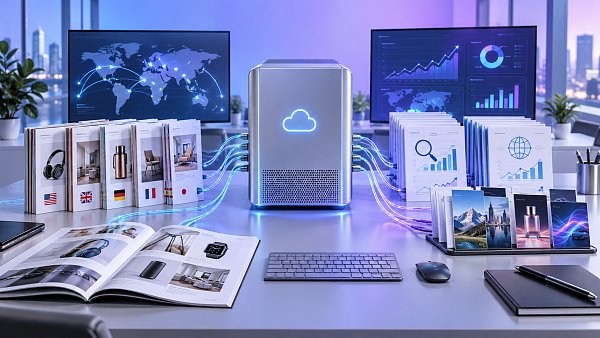
When discussing how much technical manpower foreign trade enterprises need for marketing digitalization, the first distinction is between “building systems in-house” and “using systems.” If an enterprise develops its official website, online store, data dashboards, and automated workflows from scratch, technical investment will increase significantly, along with timelines and maintenance costs.
However, for most enterprises focused on overseas inquiries, brand presentation, or cross-border retail, marketing systems are not their core products. A more practical approach is to use mature SaaS platforms and focus technical efforts on work closer to business results, such as content, customers, product information, and market decisions.
For example, page frameworks for multilingual websites, mobile adaptation, form tracking, basic SEO structure, server security, and indexing configuration previously often required repeated work by developers. Today, cloud-based intelligent website-building systems can standardize these common capabilities and reduce repetitive development.
Enterprises still need someone internally responsible for marketing digitalization, but this role does not necessarily need to be a programmer. A more common arrangement is for the foreign trade manager to define market direction, business staff to provide product and customer information, marketing specialists to handle content, promotion, and lead follow-up, and the platform to provide underlying technical capabilities.
Staffing Requirements Vary Significantly Across Different Development Stages
For foreign trade factories in the startup stage, the usual goal is to establish a credible overseas official website and obtain their first inquiries. Such enterprises can have one marketing or foreign trade staff member coordinate website materials, product content, and lead handling, while using a website-building platform and service support to go live, without needing a dedicated development team.
When an enterprise begins deploying Google SEO, Google Ads, and overseas social media, it is recommended to assign one to two marketing execution personnel. One person can be responsible for content, website updates, and basic SEO, while the other can manage advertising accounts, creative coordination, inquiry quality reviews, and coordination with the sales team.
After entering the stage of multi-market, multilingual, or multi-site operations, staffing needs will increase accordingly. At this point, enterprises typically need a marketing manager, content and SEO personnel, advertising specialists, and an operations role that can coordinate product information, CRM, and data reports, but they may still not need a large number of developers.
Only when an enterprise needs to integrate with ERP, CRM, PIM, or inventory systems, or has complex cross-border store rules, membership systems, and customized transaction processes, is it appropriate to assign internal technical personnel or establish a long-term technical partnership team. Such investment should be supported by both business complexity and expected returns.
Which Tasks Require People, and Which Can Be Handled by Tools?
Product positioning, target market selection, pricing strategy, customer profiles, and sales follow-up cannot be fully delegated to technical tools. They directly determine what the website should say, who advertisements should target, and whether leads are worth following up. They require continuous participation from people familiar with the products and market.
In contrast, page building, template application, site speed testing, meta tag recommendations, initial keyword screening, first drafts of ad copy, creative size adaptation, and basic data aggregation are better suited to AI and platform automation, thereby reducing reliance on specialized technical manpower.
It is important to note that automation does not mean operating without people. AI can improve the efficiency of content production and data processing, but it cannot determine whether a market is worth entering for an enterprise, nor can it identify high-value buyers for the sales team. Tools improve efficiency, while people make decisions and validate them.
Therefore, foreign trade enterprises should avoid interpreting “digitalization” as hiring more IT personnel. A more reasonable goal is to enable limited staff to collaborate around the same website, promotion, and data system, reducing repeated transfer of materials, repeated page revisions, and unanswered leads.
Assess Technical Staffing Investment by Customer Acquisition Cost, Not the Number of Positions
When budgeting, managers should not calculate only employee salaries or service fees. They should also account for go-live speed, system maintenance, trial-and-error costs, and opportunity costs. A website that takes six months to develop may miss peak product seasons, trade show milestones, or market opportunities, even if its development cost is manageable.
In contrast, a marketing website that can go live quickly and be continuously optimized is more likely to become a long-term asset. Once a website is indexed by Google, continuously updating high-quality product pages, industry content, and case study pages can gradually generate organic traffic and reduce reliance on individual advertising campaigns.
Advertising also requires attention to the entire funnel rather than just cost per click. If landing pages load slowly, product information is incomplete, or the form experience is poor, even highly professional advertising personnel will struggle to consistently improve inquiry quality. Technical foundations and marketing execution must work together within the same process.
Enterprises are advised to allocate resources based on “customer acquisition goals”: first estimate the number of qualified inquiries needed each month, sales conversion rates, and acceptable customer acquisition costs, then determine the priorities for website building, SEO, advertising, and social media. This makes it easier to assess whether adding personnel is truly necessary.
How Can an Integrated Platform Reduce the Technical Burden on Foreign Trade Enterprises?
The fragmentation of website, SEO, advertising, and social media tools is a major reason why enterprises consume technical manpower. Business staff need to export data from multiple back-end systems, developers repeatedly handle tracking codes, and marketers find it difficult to determine which channel a customer came from, resulting in high collaboration costs.
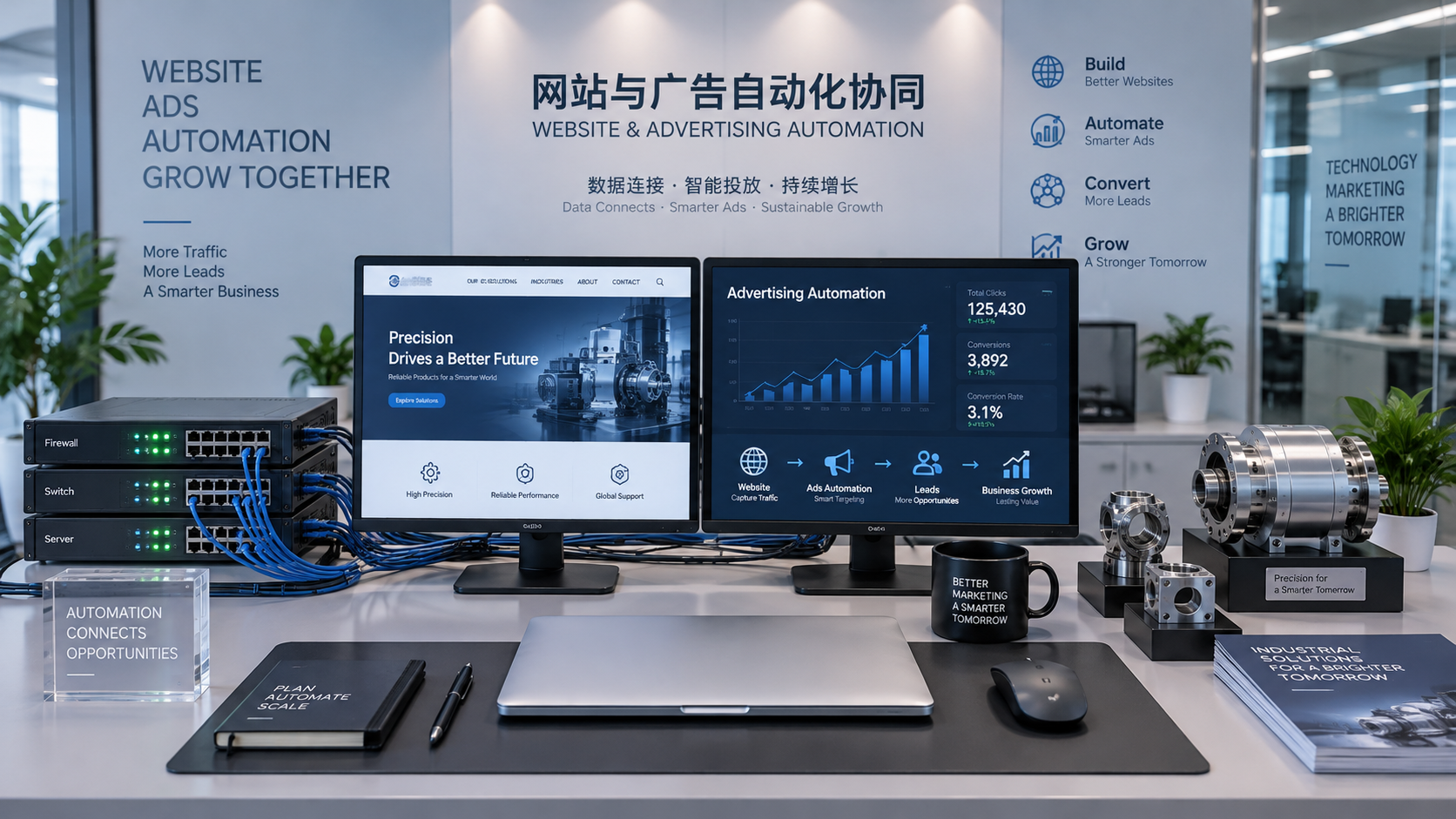
After an integrated marketing platform brings intelligent website building, multilingual content management, SEO optimization, advertising landing pages, and data tracking into one system, enterprises can publish sites and test channels more quickly. They can also more easily adjust keywords, pages, and campaign strategies based on inquiry data.
Taking the AI intelligent website building, cross-border e-commerce store, AI advertising marketing, and AI+SEO/GEO optimization capabilities provided by Easy Marketing Pro as an example, enterprises can build independent websites for different overseas markets within a unified framework and direct traffic from Google Search, advertising, and social media to trackable pages.
The value of this model does not lie in replacing all personnel, but in preventing marketing staff from being slowed down by underlying technical issues. Teams can spend more time improving product information, creating trust-building content, analyzing customer needs, and improving sales response efficiency. These are the key elements of foreign trade growth.
Foreign Trade Enterprises Can Determine Their Staffing Plans in Three Steps
Step one: outline channel objectives for the next twelve months. Does the enterprise aim to obtain B2B inquiries, build a brand website, expand cross-border retail, or enter new language markets? The clearer the goals, the easier it is to identify which aspects require long-term internal responsibility and which are suitable for external support.
Step two: review the business capabilities of existing personnel. If the team understands products, customers, and markets but lacks development experience, it should prioritize platforms with low technical barriers. If it already has a mature advertising team, it should focus on strengthening website conversion, data attribution, and content operations.
Step three: first validate the process in one market or with one product line. Use a small-scale project to test website launch speed, content production efficiency, advertising lead quality, and sales follow-up results, then decide whether to add specialists, expand language versions, or invest in custom development. This will make risks more manageable.
Conclusion: Technical Manpower Should Serve Growth, Not Become a Barrier to Growth
There is no single answer to how much technical manpower foreign trade enterprises need to invest in marketing digitalization. For most enterprises, the focus is not on establishing a complete technical department, but on using mature platforms to productize common technical capabilities, allowing a small number of internal staff to focus on markets, content, leads, and customer conversion.
When an enterprise’s multilingual sites, SEO, advertising, social media operations, and data analysis can form a closed loop, technical investment can truly translate into greater efficiency in acquiring overseas customers. Starting with verifiable goals, using platforms to lower foundational barriers, and gradually adding specialized personnel according to business scale generally aligns better with the logic of return on investment.
Related Articles
Related Products
 Yiyingbao SaaS Intelligent Website Building and Marketing SystemYiyingbao SaaS Intelligent Website Building and Marketing System, AI-powered no-code website building, rapid creation of multilingual B2B international websites in 10 minutes, global server acceleration, AI-powered SEO optimization, helping businesses connect efficiently with global markets. The perfect integration of technology and operation makes building an international trade website remarkably simple
 AI+SEM Intelligent Advertising Marketing SystemAI+SEM drives intelligent ad creation, empowering full-funnel precision advertising marketing. The system automatically generates weekly/monthly reports, AI recommends keywords and target countries, monitors core metrics in real-time with intelligent alerts, and enables one-click high-conversion ad solutions to help quickly acquire customers and improve ROI.
 AI+SEO Dual-Engine System Optimization ServicesYiyingbao’s AI+SEO dual-engine optimization system helps foreign trade enterprises acquire high-quality organic traffic through AI-powered keyword research, content generation, and comprehensive technical optimization, significantly improving search rankings and conversion rates.
 AI+SNS Social Media Marketing SystemYingbao AI+SNS Social Media Marketing System - Precision social capture for the social media era. Supports one-click content synchronization across major platforms like Facebook and LinkedIn. AI intelligently rewrites posts for enhanced relevance. 24/7 AI customer service and user profiling analysis empower businesses to efficiently expand into global markets.
 AI+SEO营销解决方案易营宝AI+SEO营销解决方案,通过AI批量写作、智能生成TDK、精准关键词扩词等功能,全面优化网站SEO效果,提升流量与转化率。助力企业构建高效智能网站新生态。
 AI+SEM Advertising Marketing SolutionsAI+SEM Advertising Marketing Solution leverages AI technology to deeply empower SEM ad campaigns. It automatically generates weekly/monthly reports using AI, presenting account data across multiple dimensions for comprehensive insights into campaign performance and trends. The system precisely recommends keywords and target countries, intelligently generates high-conversion ad copy, and enables one-click activation of efficient campaign plans to help businesses rapidly acquire customers. Simultaneously, it monitors core metrics in real time, intelligently identifies abnormal fluctuations, and issues timely alerts to ensure stable, high-return advertising results.
 Domain Name ServicesEasyWin provides professional domain name services, including intelligent queries, one-stop registration, brand protection, and full lifecycle management, helping businesses build a digital brand image.
 EasyOperate B2C Cross-Border E-Commerce Platform & Independent WebsiteEasyStore B2C Cross-border E-commerce Independent Store is an intelligent website building and cross-border e-commerce integrated solution independently developed by EasyStore Information Technology (Beijing) Co., Ltd. The system is specially designed for small and medium-sized as well as large export enterprises, integrating 'website building, operation, marketing, advertising, and conversion' into one, helping enterprises quickly establish cross-border e-commerce independent stores to achieve brand globalization and global sales growth.
The platform supports multiple languages, multiple currencies, and multi-channel marketing, with built-in AI intelligent translation and SEO optimization systems, suitable for mainstream markets such as Southeast Asia, Europe and America, Latin America, and the Middle East, assisting Chinese manufacturing enterprises in efficiently deploying international e-commerce strategies. SSL证书易营宝提供专业SSL安全证书服务,包括单域名和泛域名证书,确保网站数据传输加密、身份验证和完整性保护,助力企业建立安全可信的在线业务环境。









