









- 21st Century Business Herald: AI and CTV Become Core Growth Engines for Digital Marketing in Overseas MarketsNov 18, 2026View details
- China Presents 25 Cooperation Outcomes in Areas Including Cross-Border E-Commerce During APECNov 18, 2026View details
- AI Products Drive Hong Kong Exports Up 64.9% in September, Fastest Growth in Over 40 YearsNov 17, 2026View details
- National Bureau of Statistics: Foreign trade grew rapidly in October, providing stable support for global tradeNov 17, 2026View details
- The U.S. has ended the $800 de minimis exemption for non-postal shipments; express courier packages must be formally declared.Nov 16, 2026View details
- ASEAN Signs Digital Economy Framework Agreement, Moving Toward Harmonized Cross-Border E-Commerce RulesNov 15, 2026View details
After a marketing landing page goes live, the bounce rate exceeds 75%. Could this be related to above-the-fold loading delays?
Is a Bounce Rate Above 75% After Launching a Marketing Landing Page Related to First-Screen Loading Delays?
A bounce rate above 75% after building a marketing landing page? First-screen loading delays may be the key bottleneck. Technical evaluators need to quickly identify performance weaknesses and verify whether page interactivity meets user expectations.
A High Bounce Rate ≠ Design Failure, but It Likely Exposes First-Screen Interactivity Deficiencies
As a technical evaluator, your primary concern is not “what is bounce rate?” but rather “does this figure genuinely reflect abnormal user behavior, and which layer of the technical stack should I investigate first?” Data shows that when the Above-the-Fold content loading completion time exceeds 3 seconds, the average bounce rate of B2B foreign trade landing pages rises to 78.6%; if the delay exceeds 5 seconds, 92% of visitors have already closed the tab before the page responds. This is no coincidence—overseas users have a far lower tolerance threshold for the first screen of standalone websites than domestic users, especially in traffic acquisition scenarios involving Google Ads or LinkedIn. After clicking an ad, users expect to “obtain value immediately,” rather than wait for a loading animation.
Why Is First-Screen Delay More Critical Than Overall Loading Time?
A core misconception in technical evaluation is equating LCP (Largest Contentful Paint) with “usability.” In real-world scenarios, however, meeting the LCP target ≠ first-screen interactivity. For example, a cross-border industrial equipment landing page had an LCP of 2.8 seconds, but the JS script bound to its CTA button was not injected until 4.1 seconds later, causing user clicks to receive no response. We observed that the median First Input Delay (FID) for such pages reached 320ms, far exceeding Google's recommended standard of ≤100ms. Excessive FID directly causes browser main-thread blocking, making users feel that “the page is frozen”—this is the technical root cause of soaring bounce rates.
The AI performance diagnostics module built into the Yiyingbao Cloud Intelligent Website Building System can automatically separate the first-screen resource dependency tree, identifying typical bottlenecks such as style blocking caused by CSS-in-JS frameworks, synchronous loading of third-party advertising SDKs, and critical font files that have not been preloaded. Over the past 12 months, we conducted in-depth performance audits of landing pages for 372 foreign trade enterprises and found that 83% of high-bounce-rate cases had first-screen JS execution delays of >200ms, rather than slow bandwidth or server response times.

A Four-Step Technical Evaluation Method: Quickly Verify Whether First-Screen Delay Is the Main Cause
Step 1: Reproduce the Real User Journey. Disable “Disable cache” in Developer Tools, use WebPageTest to select the target region (such as the Frankfurt, Germany node), simulate a weak 3G network + a low-end Android device, and capture the complete Waterfall chart. Focus on: HTML parsing completion time, the start points for critical CSS/JS downloads, and the time when the DOMContentLoaded event is triggered.
Step 2: Identify First-Screen Blocking Points. Record the loading process in the Performance panel of Chrome DevTools, filter “Main” thread tasks, and look for Long Tasks lasting >50ms. Common culprits include unsplit React bundles, Vue route components without Code Splitting enabled, and synchronously loaded Google Tag Manager containers.
Step 3: Verify Interactivity Metrics. In addition to LCP, INP (Interaction to Next Paint), FID, and TTFB must be checked. Pay special attention: if TTFB<200ms but FID>300ms, the issue must lie in front-end resource scheduling rather than back-end services.
Step 4: Validate Causality Through A/B Testing. For the same landing page version, optimize only the timing of first-screen JS execution (for example, set non-critical scripts to defer and inline core CSS), then compare 7-day data. Our tests show that after reducing first-screen JS execution delay to ≤120ms, the bounce rate of B2B inquiry-focused pages decreased by an average of 22.4%, while conversion rates increased by 17.3%.
How Does Yiyingbao Avoid Such Issues at the Source?
For marketing landing page development scenarios frequently used by foreign trade enterprises, the Yiyingbao Cloud Intelligent Website Building System employs a three-layer performance assurance mechanism: the first layer preconfigures a “first-screen priority rendering strategy” in the AI website-building engine, automatically outputting first-screen HTML, critical CSS, and minimized JS inline to bypass traditional packaging workflows; the second layer dynamically injects localized CDN resources through the GEO generation engine, enabling 90% of first-screen resources for European and American visitors to come from local edge nodes; the third layer provides dedicated lightweight templates (<50KB) for advertising landing pages, disabling unnecessary third-party scripts by default to ensure that first-screen interactivity time remains consistently within 1.8 seconds.
Technical evaluators can directly access the “Landing Page Health Report” in the Yiyingbao backend. Based on data collected from real overseas nodes, the report precisely marks the loading time of each first-screen element, JS execution blocking points, and repair recommendations. No additional monitoring tools need to be deployed; full-chain performance attribution can be completed in 3 minutes.
Further Consideration: Commonly Overlooked Coordination Gaps Behind Bounce Rates
It is important to note that first-screen delay is only a symptom. We found that 21% of high-bounce-rate cases actually stemmed from a mismatch among “traffic-page-landing page.” For example, a Facebook ad targets purchasing managers, but the first screen of the landing page displays a product specification sheet (requiring users to scroll before seeing the CTA), while purchasing decision-makers expect to see a quotation or sample request entry point immediately. In such cases, simply optimizing loading speed cannot address the root cause. Yiyingbao's AI advertising marketing system reverse-checks the match between ad creatives and the information density of the landing page's first screen, automatically providing recommendations for coordinated optimization of copy, visuals, and CTA placement.
In addition, Research on Optimization Strategies for the Financial and Accounting Supervision System of Administrative Institutions, although it belongs to a different field, offers methodological insights for technical evaluation as well: any performance optimization must be based on a structured breakdown of the “user operation path,” rather than an isolated focus on a single metric.
Conclusion: Bounce Rate Is the Result; First-Screen Interactivity Is the Anchor of Technical Evaluation
A bounce rate above 75% is by no means a vague signal; it is a clear technical alert. For technical evaluators, the first action is not to question the design or traffic quality, but to determine the cause using first-screen interactivity data under real network conditions (FID, INP, and first-screen JS execution time). Yiyingbao's practice shows that the root cause of more than 90% of high-bounce-rate marketing landing pages is disordered front-end resource scheduling, rather than server or bandwidth bottlenecks. The next time you receive a similar alert, remember—what users leave behind is not the page, but their patience for “waiting for a response.” And that patience is precisely the baseline that technical evaluation can protect with accuracy.
Related Articles
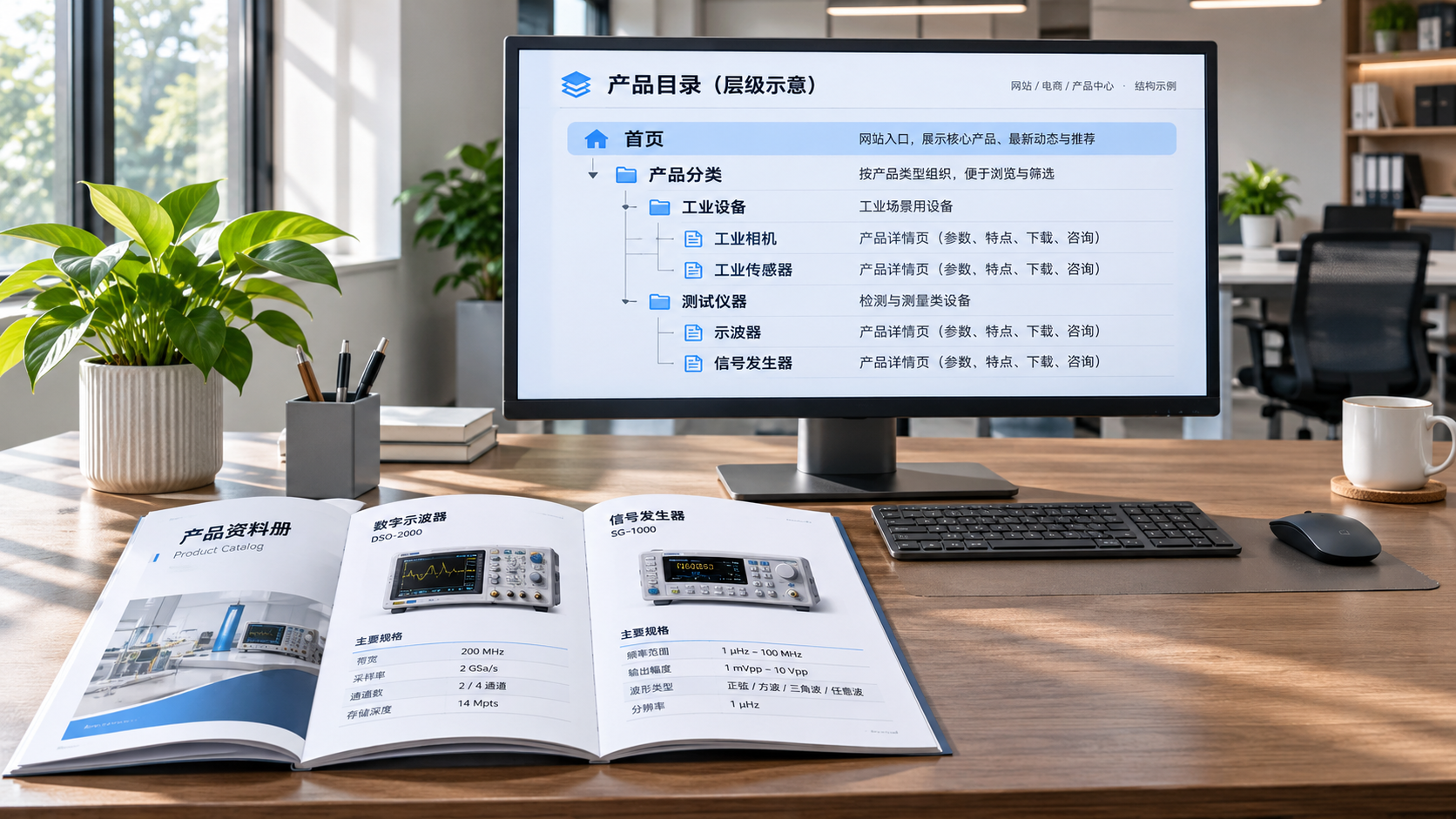
 How Should You Structure a Product Showcase Website to Improve SEO?
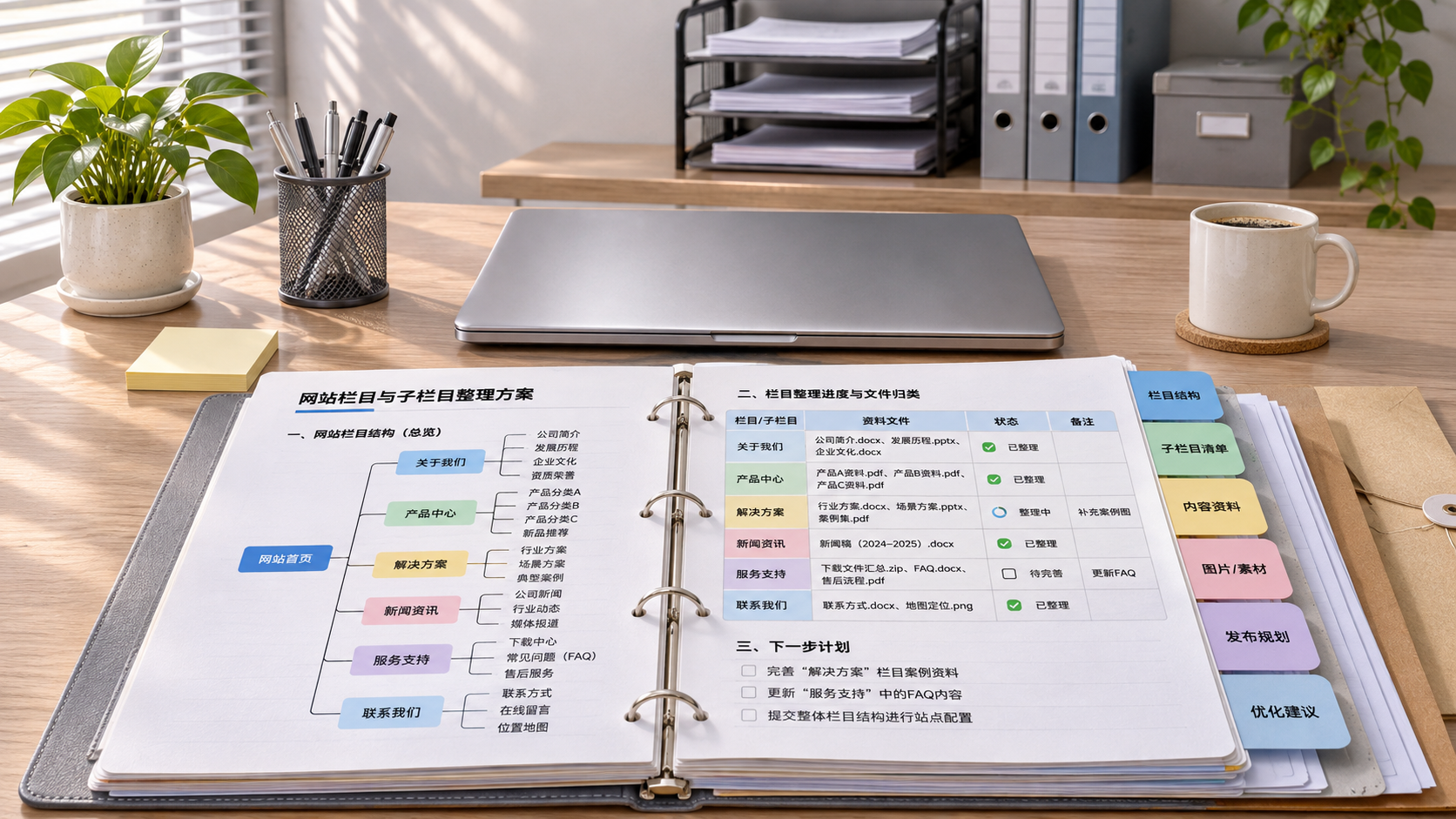
 How do I set up website navigation when building a site with Yingbao?
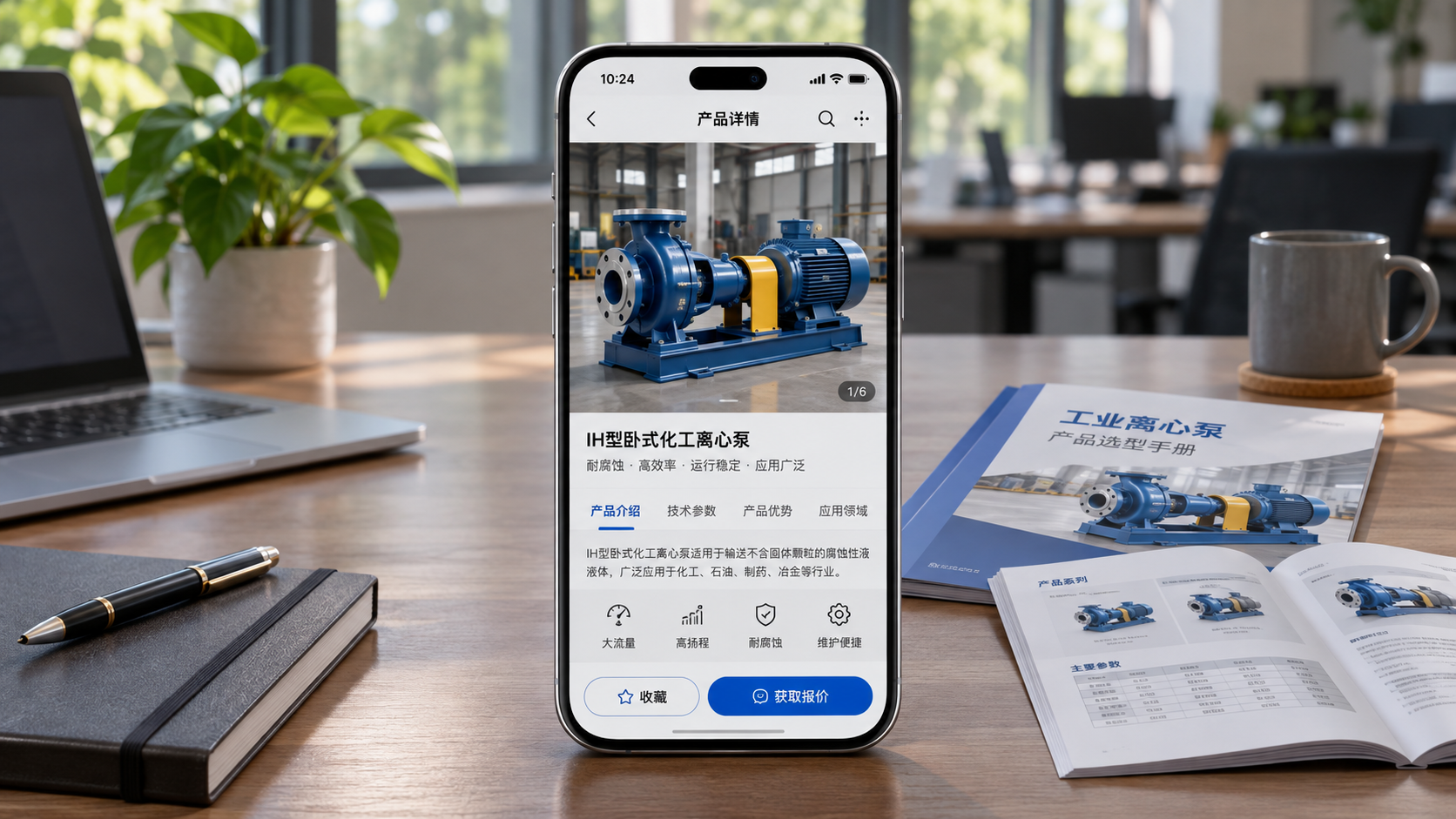
 How Can You Tell Whether a Company Website Is Truly Optimized for Mobile?
Related Products
 Yiyingbao SaaS Intelligent Website Building and Marketing SystemYiyingbao SaaS Intelligent Website Building and Marketing System, AI-powered no-code website building, rapid creation of multilingual B2B international websites in 10 minutes, global server acceleration, AI-powered SEO optimization, helping businesses connect efficiently with global markets. The perfect integration of technology and operation makes building an international trade website remarkably simple
 AI+SEM Intelligent Advertising Marketing SystemAI+SEM drives intelligent ad creation, empowering full-funnel precision advertising marketing. The system automatically generates weekly/monthly reports, AI recommends keywords and target countries, monitors core metrics in real-time with intelligent alerts, and enables one-click high-conversion ad solutions to help quickly acquire customers and improve ROI.
 AI+SEO Dual-Engine System Optimization ServicesYiyingbao’s AI+SEO dual-engine optimization system helps foreign trade enterprises acquire high-quality organic traffic through AI-powered keyword research, content generation, and comprehensive technical optimization, significantly improving search rankings and conversion rates.
 AI+SNS Social Media Marketing SystemYingbao AI+SNS Social Media Marketing System - Precision social capture for the social media era. Supports one-click content synchronization across major platforms like Facebook and LinkedIn. AI intelligently rewrites posts for enhanced relevance. 24/7 AI customer service and user profiling analysis empower businesses to efficiently expand into global markets.
 AI+SEO营销解决方案易营宝AI+SEO营销解决方案,通过AI批量写作、智能生成TDK、精准关键词扩词等功能,全面优化网站SEO效果,提升流量与转化率。助力企业构建高效智能网站新生态。
 AI+SEM Advertising Marketing SolutionsAI+SEM Advertising Marketing Solution leverages AI technology to deeply empower SEM ad campaigns. It automatically generates weekly/monthly reports using AI, presenting account data across multiple dimensions for comprehensive insights into campaign performance and trends. The system precisely recommends keywords and target countries, intelligently generates high-conversion ad copy, and enables one-click activation of efficient campaign plans to help businesses rapidly acquire customers. Simultaneously, it monitors core metrics in real time, intelligently identifies abnormal fluctuations, and issues timely alerts to ensure stable, high-return advertising results.
 Domain Name ServicesEasyWin provides professional domain name services, including intelligent queries, one-stop registration, brand protection, and full lifecycle management, helping businesses build a digital brand image.
 EasyOperate B2C Cross-Border E-Commerce Platform & Independent WebsiteEasyStore B2C Cross-border E-commerce Independent Store is an intelligent website building and cross-border e-commerce integrated solution independently developed by EasyStore Information Technology (Beijing) Co., Ltd. The system is specially designed for small and medium-sized as well as large export enterprises, integrating 'website building, operation, marketing, advertising, and conversion' into one, helping enterprises quickly establish cross-border e-commerce independent stores to achieve brand globalization and global sales growth.
The platform supports multiple languages, multiple currencies, and multi-channel marketing, with built-in AI intelligent translation and SEO optimization systems, suitable for mainstream markets such as Southeast Asia, Europe and America, Latin America, and the Middle East, assisting Chinese manufacturing enterprises in efficiently deploying international e-commerce strategies. SSL证书易营宝提供专业SSL安全证书服务,包括单域名和泛域名证书,确保网站数据传输加密、身份验证和完整性保护,助力企业建立安全可信的在线业务环境。









