









- Which customer acquisition channels will be affected by cross-border marketing trends in 2026?Sep 06, 2026View details
- Which homogenization risks should be considered in an analysis of the AI-powered website building industry?Aug 30, 2026View details
- How Will AI Marketing Trends 2026 Change Advertising Budget AllocationAug 28, 2026View details
- Is the EV SSL certificate market shrinking or upgrading? How should companies assess certificate procurement?Aug 11, 2026View details
- Why the old AMP SEO 2020 practices no longer work and what has changed in current optimization prioritiesAug 02, 2026View details
- How to Choose Topics for an Industry News Section to Attract More Organic Search TrafficJul 29, 2026View details
How Long Does It Take to See Results from SEO for an International Trade Website?
When many companies build an overseas independent website for the first time, the question they ask first is often not “How should we do it?” but “How long does it take for SEO optimization of a foreign trade website to show results?” Let’s start with the conclusion: if the website foundation is sound and execution is consistent, initial changes can usually be seen within 3 to 6 months. For example, pages may begin to be indexed, some keywords may enter the first few pages, and organic traffic may gradually increase. If the goal is to generate leads consistently, the common timeframe is usually 6 to 12 months. This is not a generic statement; it is determined by the operating pattern of foreign trade SEO itself.
The problem is that many people interpret “results” too narrowly. Some focus on keyword rankings, some on the number of inquiries, and others only look at the traffic curve. In real projects, however, SEO results usually appear in stages: indexing first, then rankings, followed by traffic, and finally inquiries and orders. If the first two stages have not yet developed and you rush to conclude that SEO is ineffective, your judgment is likely to be inaccurate.
How long does it take for foreign trade website SEO optimization to show results? First clarify what “results” you want
This must be clarified first. Although companies may all be doing SEO, their expectations of the results can vary greatly.
If you simply want Google to crawl the website normally and for key pages to begin receiving exposure, signs may appear within 1 to 3 months. If you want important product keywords to rank prominently and continuously generate qualified inquiries, it generally will not happen that quickly. In particular, B2B foreign trade websites, manufacturing websites, and multilingual websites naturally take longer to build content and establish trust than ordinary information websites.
SEO can be understood as a process of accumulation rather than something like advertising where you “invest today and get results tomorrow.” It is more like building a customer acquisition system that can deliver value over the long term. The early stage focuses on foundational work, while the later stage is when the compounding benefits begin to appear.
Simply put: SEO for a foreign trade website is not about how long it takes to “start showing activity,” but how long it takes to “start generating stable growth.” The former may take several weeks to several months, while the latter usually takes more than six months.
Why do some websites change within three months while others show no improvement after six months?
The main difference is not whether content is being produced, but the starting point and the method used.
The first situation is that the website foundation is already weak. For example, the structure is disorganized, loading speed is slow, the mobile experience is poor, page titles and content are duplicated, product pages contain almost no text, and there is no clear internal linking structure. Even if such a website starts publishing articles, it is difficult for search engines to provide positive feedback quickly. The issue is not that content has not been published, but that the underlying foundation has not been properly established.
The second situation is high industry competition. In foreign trade industries such as machinery and equipment, building materials, electronic components, and chemical raw materials, many keywords are already dominated by established websites. Competitors also have long-term accumulations of backlinks, case study pages, technical documents, and industry content. It is simply unrealistic for a new website to overtake them in the short term.
The third situation is an incorrect strategy. The most common problem in foreign trade SEO is not a lack of effort, but choosing the wrong direction. Many companies focus on highly competitive broad terms from the beginning, such as “industrial valve” and “CNC machine supplier.” However, their website authority, content depth, and page volume are insufficient, so after several months it appears that nothing has happened. In reality, a more reasonable approach is usually to first target long-tail keywords, product-specific keywords, application-scenario keywords, and location-based keywords.
Another underestimated factor is an inconsistent update frequency. SEO is highly affected by a pattern of “fishing for three days and taking two weeks off.” Search engines continuously observe a website’s activity, content consistency, and topical focus. If execution is inconsistent, results will naturally be delayed.
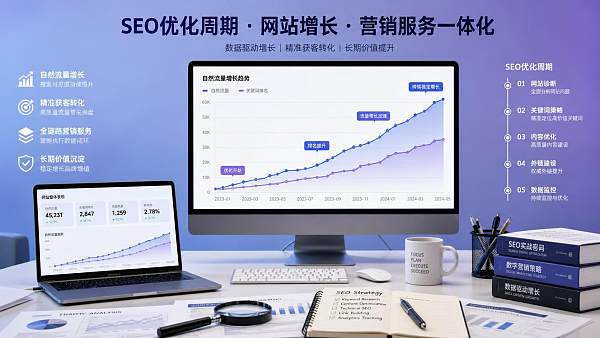
Based on the pace of common projects, foreign trade SEO generally goes through the following stages
Month 1: The main tasks are technical audits, keyword planning, page organization, and filling content gaps. Visible changes are usually limited at this stage, but the work is critical. If issues involving robots, sitemap, canonical, 404 pages, redirects, page indexing status, multilingual tags, and URL structure are not handled properly, much of the subsequent content work may be wasted.
Months 2 to 3: Indexing begins to increase, some long-tail keywords receive impressions, and certain pages may obtain very low rankings. At this stage, checking Search Console is more meaningful than looking at inquiries, because it shows whether search engines have begun to understand the theme of your website.
Months 4 to 6: If the strategy has remained on track, the website will usually enter the first observable stage. Some product pages may begin to generate stable traffic, while blogs or solution pages may receive clicks. Brand keywords and some non-brand keywords may also begin to improve. Inquiries may not increase sharply at this point, but the website will shift from receiving “almost no visitors” to obtaining “real search traffic.”
After 6 months: This is when the website gets closer to the results many companies want: consistent lead generation. The prerequisite is that your website content does not stop at simply “introducing the company,” but genuinely covers the questions buyers search for, such as specifications, applications, certifications, delivery times, comparisons, installation, common faults, and industry solutions.
If an established website is redesigned and already has some authority, results may sometimes appear faster. If the domain and website are both new, the timeframe is usually longer. This is simply the reality.
The speed at which results appear depends on more than the SEO team’s capabilities
Many business owners directly attribute slow results to the service provider’s capabilities. Sometimes this is correct, and sometimes it is not. SEO does depend on execution capabilities, but the speed at which a foreign trade website produces results often also depends on whether the company itself can provide sufficient information assets.
For example, do you have complete product information? Do you have real application scenarios? Can you provide English content, case studies, FAQs, certification documents, and pages demonstrating factory capabilities? If these materials are unavailable and the work consists only of superficially changing a few titles and publishing several generic articles, the results will not be ideal.
Consider multilingual websites as another example. Many companies assume that the more language versions they have, the better. In reality, if every language version contains only a few pages of thin content and the translation quality is average, search performance may not improve. Rather than launching more than a dozen language versions, it is better to develop the languages of the primary markets in greater depth first.
This is also why many companies now prefer integrated teams that combine “website development + SEO + advertising” instead of assigning website development, content, technology, and promotion to several different providers. The reason is simple: SEO is not something added afterward; it should be considered from the website development stage. Platforms such as 易营宝, which have long focused on overseas independent websites and digital marketing, are relatively suitable for companies that want to advance website structure, indexing foundations, multilingual planning, and subsequent promotion within one integrated framework. At the very least, this helps avoid the awkward situation of discovering only after the website is completed that it is unsuitable for optimization.
Several common misconceptions can directly delay SEO results
Misconception 1: A website will rank as soon as it goes live.
A new website needs to be discovered, crawled, understood, and evaluated. Google does not immediately assign rankings simply because you have published content, especially for commercial keywords.
Misconception 2: Only the homepage needs to be optimized.
The pages that generate SEO traffic for foreign trade websites are often not the homepage, but product pages, category pages, industry solution pages, and knowledge content pages. The homepage carries the brand and core positioning; it cannot cover every keyword.
Misconception 3: The more articles, the better.
If content is unrelated to the business or consists merely of generic topics written to meet a word count, it will provide limited help in generating inquiries. Foreign trade SEO places greater emphasis on whether a page matches purchasing intent rather than on the quantity of content alone.
Misconception 4: Once rankings improve, inquiries will definitely increase.
That is not necessarily the case. Poor page conversion performance, unclear forms, insufficient trust elements, or inquiry entry points that are too deeply buried may all result in “traffic without conversions.” Therefore, when evaluating SEO results, you should not focus only on rankings; you should also examine the conversion path.
If you want to see results faster, prioritize the following tasks
First, conduct a website audit to make sure technical problems are not holding the site back. At a minimum, check indexing status, crawl errors, page speed, mobile experience, internal duplication, broken links, and basic tag settings.
Second, do not target only broad keywords from the beginning. Start by building coverage around product model keywords, use-case keywords, problem-based keywords, and location-based keywords. Use keywords that are easier to rank for as breakthrough points.
Third, write content for purchasing decision-makers, not for search engines. Content such as “How to choose this type of equipment,” “Differences between various materials,” “What operating conditions is it suitable for,” and “How to interpret certification standards” is often more useful than generic company news.
Fourth, improve the inquiry conversion process. This includes clear CTAs, easy-to-complete forms, visible contact information, credible company information, and the presentation of case studies and qualifications. Otherwise, even if SEO generates more traffic, the final results will be reduced.
Fifth, do not focus on only one channel. During the early stages of SEO, many foreign trade companies also use Google Ads or social media traffic acquisition to compensate for the initial traffic gap with short-term channels. This combination is more consistent with the realities of business operations.
When is it not advisable to make “fast results” the goal of SEO?
If your most urgent need is to obtain inquiries this quarter or test the market immediately, SEO may not be the only priority. Its strength lies in long-term growth, not immediate orders. For new brands, new websites, and highly competitive industries in particular, relying entirely on SEO for short-term emergency results carries relatively high risks.
In this situation, a more practical approach is usually to build a solid website foundation first, then use advertising to validate products and markets while establishing SEO coverage at the same time. Once you know which products, regions, and search terms generate better conversions, you can concentrate resources on the directions most worthwhile for long-term development.
Conversely, if you already have clearly defined products and a stable supply chain and are prepared to develop overseas markets continuously, SEO is well worth investing in. Once the foundation is firmly established, it is often more resilient to fluctuations than simply purchasing traffic.
A more practical evaluation standard
Instead of continuing to ask “How long does it take for foreign trade website SEO optimization to show results?”, you should ask: What normal signals should I see after three months, and what metrics should I use after six months to determine whether continued investment is worthwhile?
A reasonable observation sequence is: whether indexing is increasing, whether target keywords are beginning to receive impressions, whether key pages are entering the rankings, whether organic traffic is becoming more relevant, and finally whether the quality of inquiries has improved. When this sequence is understood correctly, your expectations for SEO will also become more realistic.
Therefore, the answer to how long it takes for foreign trade website SEO optimization to show results is not a fixed number. In most cases, initial changes can be seen within 3 to 6 months, while the true value is more likely to become apparent within 6 to 12 months. The speed depends on the website foundation, industry competition, content quality, and consistency of execution. What you should truly be concerned about is not that SEO is slow, but that the direction is wrong and the foundation is weak while you believe you are already doing SEO.
Frequently Asked Questions
1. Is it normal for a new foreign trade website to have no inquiries after three months of SEO?
Yes. After three months, indexing, exposure, and growth in some keywords are more common; inquiries usually lag behind traffic.
2. Is an English-only website enough?
Not necessarily. It depends on your target markets. If your core customers are concentrated in non-English-speaking regions, multilingual content can be valuable, provided that content quality and website structure can support it.
3. Which should be done first, SEO or Google Ads?
If you need short-term customer acquisition, advertising can be launched first. If you are considering long-term costs and sustained traffic, SEO should be implemented at the same time.
4. Is foreign trade SEO more effective when more articles are published?
No. Pages closely related to purchasing intent are more valuable than a larger quantity of inaccurate content.
Image Placeholder Checklist
Suggested position: Place it between “Why do some websites change within three months while others show no improvement after six months?” and “Based on the pace of common projects, foreign trade SEO generally goes through the following stages.”
Image content: An illustration of the result timeline for foreign trade website SEO, showing typical milestones at 1 month, 3 months, 6 months, and 12 months.
Alt text: Illustration of the result timeline and key stages of foreign trade website SEO optimization
Suggested Internal Link Anchor Text
- How to build a foreign trade independent website: Suggest linking to the website development service page or website development guide page
- Google SEO optimization solutions: Suggest linking to the SEO service introduction page
- Key considerations for multilingual website development: Suggest linking to the multilingual website development topic page
- How to increase inquiries from a foreign trade website: Suggest linking to a conversion optimization or landing page optimization article
- How to coordinate Google Ads and SEO: Suggest linking to the advertising strategy page
Suggested External Authoritative Sources
- Official Google Search Central documentation
- Google Business Profile or Google’s official advertising and search quality guidelines
- B2B purchasing behavior or search trend reports published by industry research organizations
Related Articles



Related Products
 Yiyingbao SaaS Intelligent Website Building and Marketing SystemYiyingbao SaaS Intelligent Website Building and Marketing System, AI-powered no-code website building, rapid creation of multilingual B2B international websites in 10 minutes, global server acceleration, AI-powered SEO optimization, helping businesses connect efficiently with global markets. The perfect integration of technology and operation makes building an international trade website remarkably simple
 AI+SEM Intelligent Advertising Marketing SystemAI+SEM drives intelligent ad creation, empowering full-funnel precision advertising marketing. The system automatically generates weekly/monthly reports, AI recommends keywords and target countries, monitors core metrics in real-time with intelligent alerts, and enables one-click high-conversion ad solutions to help quickly acquire customers and improve ROI.
 AI+SEO Dual-Engine System Optimization ServicesYiyingbao’s AI+SEO dual-engine optimization system helps foreign trade enterprises acquire high-quality organic traffic through AI-powered keyword research, content generation, and comprehensive technical optimization, significantly improving search rankings and conversion rates.
 AI+SNS Social Media Marketing SystemYingbao AI+SNS Social Media Marketing System - Precision social capture for the social media era. Supports one-click content synchronization across major platforms like Facebook and LinkedIn. AI intelligently rewrites posts for enhanced relevance. 24/7 AI customer service and user profiling analysis empower businesses to efficiently expand into global markets.
 AI+SEO营销解决方案易营宝AI+SEO营销解决方案,通过AI批量写作、智能生成TDK、精准关键词扩词等功能,全面优化网站SEO效果,提升流量与转化率。助力企业构建高效智能网站新生态。
 AI+SEM Advertising Marketing SolutionsAI+SEM Advertising Marketing Solution leverages AI technology to deeply empower SEM ad campaigns. It automatically generates weekly/monthly reports using AI, presenting account data across multiple dimensions for comprehensive insights into campaign performance and trends. The system precisely recommends keywords and target countries, intelligently generates high-conversion ad copy, and enables one-click activation of efficient campaign plans to help businesses rapidly acquire customers. Simultaneously, it monitors core metrics in real time, intelligently identifies abnormal fluctuations, and issues timely alerts to ensure stable, high-return advertising results.
 Domain Name ServicesEasyWin provides professional domain name services, including intelligent queries, one-stop registration, brand protection, and full lifecycle management, helping businesses build a digital brand image.
 EasyOperate B2C Cross-Border E-Commerce Platform & Independent WebsiteEasyStore B2C Cross-border E-commerce Independent Store is an intelligent website building and cross-border e-commerce integrated solution independently developed by EasyStore Information Technology (Beijing) Co., Ltd. The system is specially designed for small and medium-sized as well as large export enterprises, integrating 'website building, operation, marketing, advertising, and conversion' into one, helping enterprises quickly establish cross-border e-commerce independent stores to achieve brand globalization and global sales growth.
The platform supports multiple languages, multiple currencies, and multi-channel marketing, with built-in AI intelligent translation and SEO optimization systems, suitable for mainstream markets such as Southeast Asia, Europe and America, Latin America, and the Middle East, assisting Chinese manufacturing enterprises in efficiently deploying international e-commerce strategies. SSL证书易营宝提供专业SSL安全证书服务,包括单域名和泛域名证书,确保网站数据传输加密、身份验证和完整性保护,助力企业建立安全可信的在线业务环境。









