









- General Administration of Customs Issues New Rules on Import and Export Cosmetic Labeling, Effective December 1Nov 26, 2026View details
- U.S. to Announce Section 301 Investigation Findings on 16 Economies, Potentially Proposing New TariffsNov 26, 2026View details
- Hapag-Lloyd’s $4.2 billion acquisition of ZIM faces a closing delay; ZIM reports third-quarter net profit of $830 millionNov 24, 2026View details
- SCFI falls for a third straight week to 3,503.78 points, with blank sailings on trans-Pacific routes rising to 10Nov 24, 2026View details
- Lazada 11.11 Mega Sale: LazMall Contributes Nearly Two-Thirds of GMVNov 23, 2026View details
- Shein’s European Revenue Falls 16% as Tighter Rules on Low-Value Direct Shipments Take EffectNov 23, 2026View details
How to Integrate Brand Positioning into Website Design: A Practical Guide to Visuals, Copy, and Conversion Paths
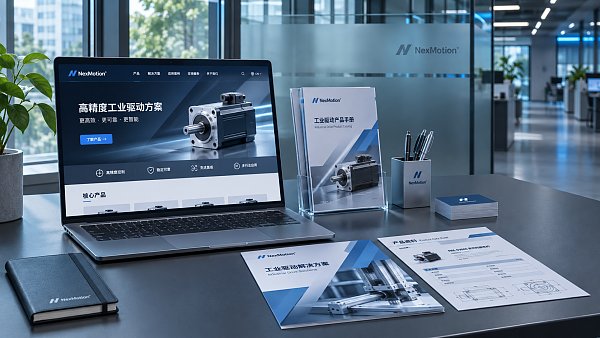
How can website design reflect brand positioning and drive project conversions? For project managers responsible for website development, the challenge is often not choosing an attractive template, but ensuring that design, content, and sales activities all serve the same goal. This article explores practical ways to implement brand-aligned website design, from visuals and copy to conversion paths.
Before work begins, translate brand positioning into project requirements
“Professional, reliable, and international” are often included in website development briefs, but they are difficult to use as direct guidance for design. At the start of a project, consider asking three questions: Who is the website primarily intended to serve? Why do customers choose us? What action do we most want visitors to take after visiting? Different answers will lead to different page priorities.
For example, buyers sourcing from overseas may be most interested in a manufacturing company’s product specifications, delivery capabilities, and communication efficiency. A brand selling to end consumers, on the other hand, needs to help visitors quickly understand product uses, prices, and how to buy. If both use the same “About Us + Product Showcase + Contact Us” structure, the website may go live, but it may not support business decisions.
In the project requirements document, clearly state the target markets, core customer groups, main products, brand promises, and primary conversion action, then list the evidence available to support each promise. For example, if you want to highlight customization capabilities, prepare information about the design process, available customization options, and technical communication methods. Claims you cannot currently substantiate should not be placed in the homepage headline.
Visual design is not just about changing colors; it helps customers see what matters
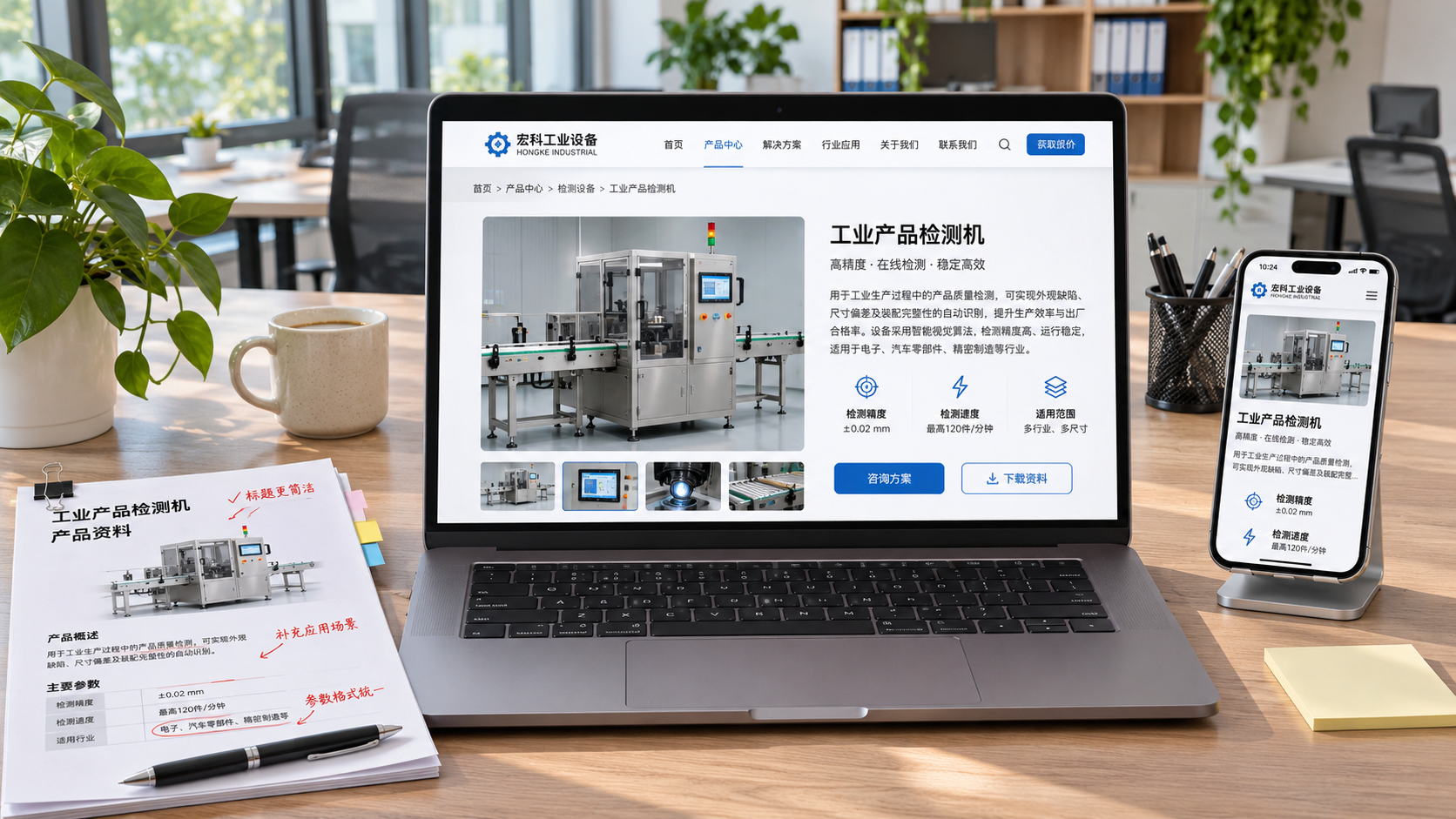
Brand colors, fonts, and image styles should be consistent, but consistency does not mean every page has to look the same. For engineering or industrial websites that emphasize reliable delivery, authentic images of production, inspection, and real-world applications are usually more persuasive than abstract technology-themed backgrounds. Whether images clearly show equipment, processes, or product details deserves higher priority than how striking they look.
Page hierarchy also communicates positioning. If technical specifications are hidden in multiple levels of menus, customers may find it difficult to tell whether the company truly values professional communication. For projects that require information to be checked repeatedly, make sure specification tables are easy to read and files are available to download, including on mobile devices. Keep decorative animations under control so they do not take up space or slow down access to content.
Visual imbalances are especially common on multilingual websites. Text length, reading habits, and the suitability of images can vary across languages, so designs should not be rigidly based on just one language. Before launch, check whether navigation labels wrap onto multiple lines, button text displays in full, and local customers can understand the icons and contact details.
Copy should answer buyers’ questions, not repeatedly praise the company
The homepage’s job is not to tell the company’s entire history, but to help the right visitors decide, “Does this company have the solution I’m looking for?” Instead of saying “We provide high-quality products and excellent service,” it is more useful to explain what the products are suited for, which needs they can address, and how customers can get more information.
Product pages should make brand promises tangible. If you emphasize responsive service, explain the steps involved in discussing requirements and confirming a solution. If you emphasize quality management, present verified inspection processes and supporting documentation. Have the relevant business team confirm the scope of any claims about certifications, delivery times, or service areas, so that conditions applicable to individual projects are not presented as promises to all customers.
Content topics also need clear boundaries. Companies that have undergone mergers or acquisitions may need to integrate their brands and service systems, and could refer to related topics such as Integration and Operational Optimization Strategies for Property Company Mergers and Acquisitions. However, if the website primarily sells industrial equipment, it should not publish large volumes of unrelated content simply to increase the number of articles. How closely content addresses customer questions matters more than whether every section is full.
Conversion paths should cater to visitors at different stages
Not every visitor is ready to request a quote as soon as they arrive at a website. Some are comparing suppliers, some just want to confirm technical specifications, and others are already looking for a quote for a specific project. The homepage can guide visitors to explore solutions, product pages can provide specification documents and an inquiry option, and dedicated landing pages can focus on the specific services promised in an ad.
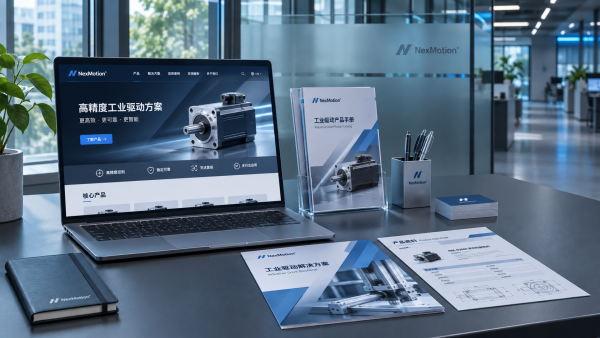
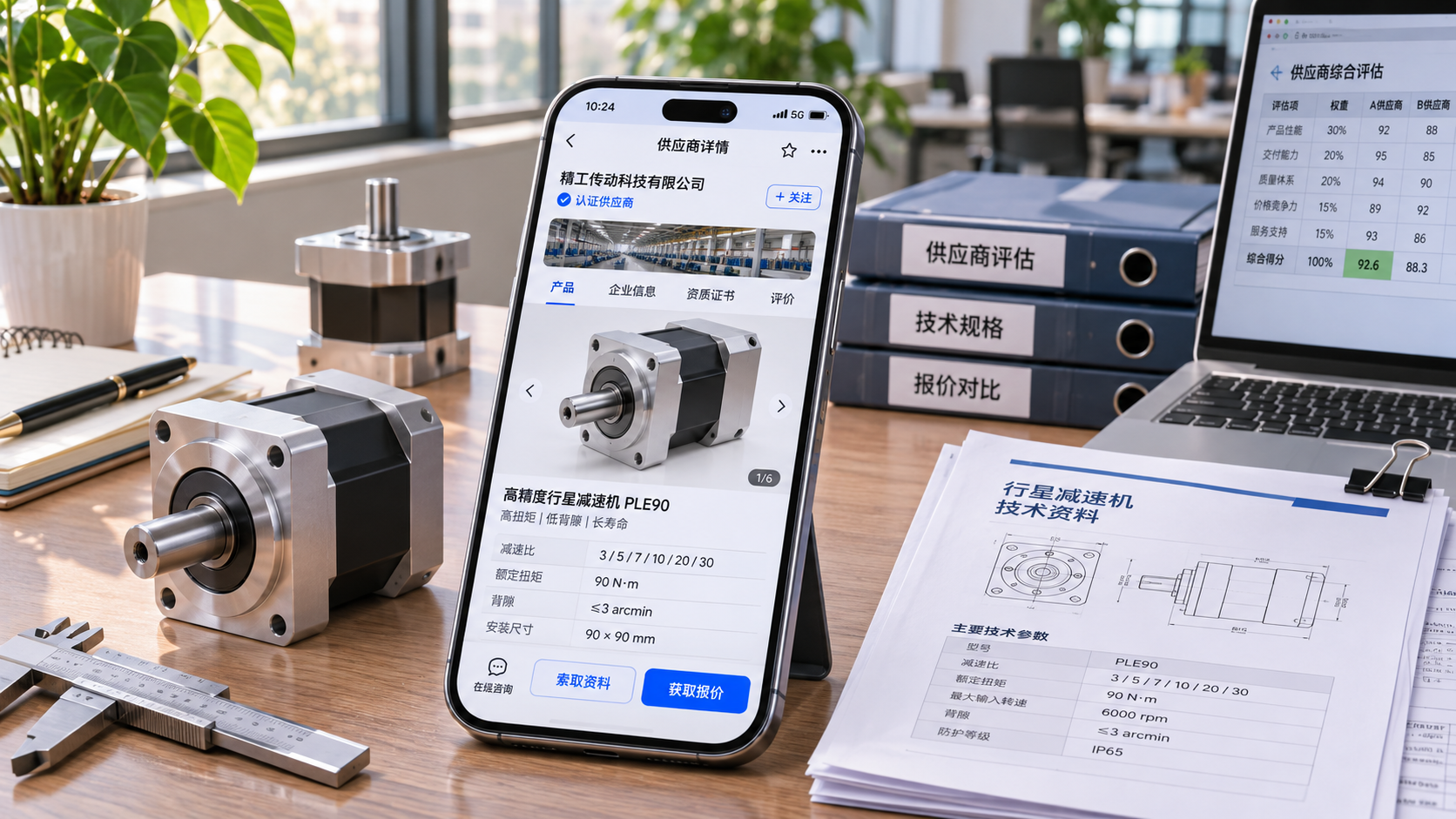
For example, when a visitor arrives at a product page from search results to make an overseas trade inquiry, they should be able to find the product’s applications, key specifications, relevant supporting documents, and a clear way to get in touch. A form can initially collect the visitor’s name, contact details, and a description of their requirements. Whether details such as model, quantity, or destination should be required depends on what the sales team actually needs. Too many fields can make the form burdensome to fill out, while too few may lead to repeated follow-up questions. Adjust the form based on lead quality.
Do not overlook the experience after submission. The form should clearly indicate whether submission succeeded or failed, leads should be sent to a designated email address or customer management system, and someone should be assigned to follow up. If the website promises a “fast response” but there is no internal process for receiving and assigning leads, that promise can become the start of customer disappointment.
Put website development, promotion, and delivery on the same project plan
A website launch is not the end of the project. Search promotion requires the page topic, title, and body copy to align. Ads need landing pages that continue the message about the products and promises made in the ads. For social media traffic, consider whether visitors can quickly find what matters on a mobile device. If the promotion team gets involved too late, the common result is a disconnect between ad promises and page content, leaving only last-minute changes as an option.
Platforms such as Yiyingbao, which offer smart website development, multilingual websites, and overseas marketing services, can coordinate page development, search optimization, and promotional entry points during the planning stage. When choosing this type of solution, still verify whether page content can be updated independently, how form leads can be exported, how multilingual versions are maintained, and who is responsible for future changes. This helps avoid having to reschedule every update after launch.
During acceptance testing, do not focus only on how closely the final website matches the design mockups. Walk through the main customer journey: enter from search results or an ad, view product information, switch languages, submit a form, and then confirm that sales has received the lead. After launch, review traffic sources, performance of key pages, and qualified inquiries. If traffic is high but inquiries are few, first check the page promises and form requirements. If inquiries are coming in but are not a good fit, revisit the promotional targeting and copy.
Related Articles
 How Can Global Server Deployment Reduce Latency for Overseas Users?
 Does a poor mobile experience on a B2B lead generation website affect conversions?
 What does website optimization typically involve?

Related Products
 Yiyingbao SaaS Intelligent Website Building and Marketing SystemYiyingbao SaaS Intelligent Website Building and Marketing System, AI-powered no-code website building, rapid creation of multilingual B2B international websites in 10 minutes, global server acceleration, AI-powered SEO optimization, helping businesses connect efficiently with global markets. The perfect integration of technology and operation makes building an international trade website remarkably simple
 AI+SEM Intelligent Advertising Marketing SystemAI+SEM drives intelligent ad creation, empowering full-funnel precision advertising marketing. The system automatically generates weekly/monthly reports, AI recommends keywords and target countries, monitors core metrics in real-time with intelligent alerts, and enables one-click high-conversion ad solutions to help quickly acquire customers and improve ROI.
 AI+SEO Dual-Engine System Optimization ServicesYiyingbao’s AI+SEO dual-engine optimization system helps foreign trade enterprises acquire high-quality organic traffic through AI-powered keyword research, content generation, and comprehensive technical optimization, significantly improving search rankings and conversion rates.
 AI+SNS Social Media Marketing SystemYingbao AI+SNS Social Media Marketing System - Precision social capture for the social media era. Supports one-click content synchronization across major platforms like Facebook and LinkedIn. AI intelligently rewrites posts for enhanced relevance. 24/7 AI customer service and user profiling analysis empower businesses to efficiently expand into global markets.
 AI+SEO营销解决方案易营宝AI+SEO营销解决方案,通过AI批量写作、智能生成TDK、精准关键词扩词等功能,全面优化网站SEO效果,提升流量与转化率。助力企业构建高效智能网站新生态。
 AI+SEM Advertising Marketing SolutionsAI+SEM Advertising Marketing Solution leverages AI technology to deeply empower SEM ad campaigns. It automatically generates weekly/monthly reports using AI, presenting account data across multiple dimensions for comprehensive insights into campaign performance and trends. The system precisely recommends keywords and target countries, intelligently generates high-conversion ad copy, and enables one-click activation of efficient campaign plans to help businesses rapidly acquire customers. Simultaneously, it monitors core metrics in real time, intelligently identifies abnormal fluctuations, and issues timely alerts to ensure stable, high-return advertising results.
 Domain Name ServicesEasyWin provides professional domain name services, including intelligent queries, one-stop registration, brand protection, and full lifecycle management, helping businesses build a digital brand image.
 EasyOperate B2C Cross-Border E-Commerce Platform & Independent WebsiteEasyStore B2C Cross-border E-commerce Independent Store is an intelligent website building and cross-border e-commerce integrated solution independently developed by EasyStore Information Technology (Beijing) Co., Ltd. The system is specially designed for small and medium-sized as well as large export enterprises, integrating 'website building, operation, marketing, advertising, and conversion' into one, helping enterprises quickly establish cross-border e-commerce independent stores to achieve brand globalization and global sales growth.
The platform supports multiple languages, multiple currencies, and multi-channel marketing, with built-in AI intelligent translation and SEO optimization systems, suitable for mainstream markets such as Southeast Asia, Europe and America, Latin America, and the Middle East, assisting Chinese manufacturing enterprises in efficiently deploying international e-commerce strategies. SSL证书易营宝提供专业SSL安全证书服务,包括单域名和泛域名证书,确保网站数据传输加密、身份验证和完整性保护,助力企业建立安全可信的在线业务环境。









