









- Which customer acquisition channels will be affected by cross-border marketing trends in 2026?Sep 06, 2026View details
- Which homogenization risks should be considered in an analysis of the AI-powered website building industry?Aug 30, 2026View details
- How Will AI Marketing Trends 2026 Change Advertising Budget AllocationAug 28, 2026View details
- Is the EV SSL certificate market shrinking or upgrading? How should companies assess certificate procurement?Aug 11, 2026View details
- Why the old AMP SEO 2020 practices no longer work and what has changed in current optimization prioritiesAug 02, 2026View details
- How to Choose Topics for an Industry News Section to Attract More Organic Search TrafficJul 29, 2026View details
After the European site revamp, inquiries have not rebounded; what should be checked technically first
If inquiries from your European site have not rebounded after a redesign, do not rush to increase the budget. You should first investigate technical issues such as how to reduce the hreflang error rate on multilingual sites and how to keep access latency at global nodes within 100ms, before judging whether European inquiry volume can return to growth after the redesign.
For foreign trade companies, manufacturing factories, and global brand teams, a European site redesign often involves template replacement, URL adjustments, language version expansion, and form process restructuring. A better-looking page does not mean that traffic, rankings, and inquiries will recover simultaneously within 2—8 weeks.
What truly affects inquiries is usually not a single design issue, but technical crawlability, language and region recognition, page loading speed, conversion funnel stability, and whether ads and SEO are working together. Especially in markets such as German, French, and Italian, incorrect mapping can directly consume high-intent traffic.
Start with indexing and language mapping: the underlying issues most easily overlooked after a redesign
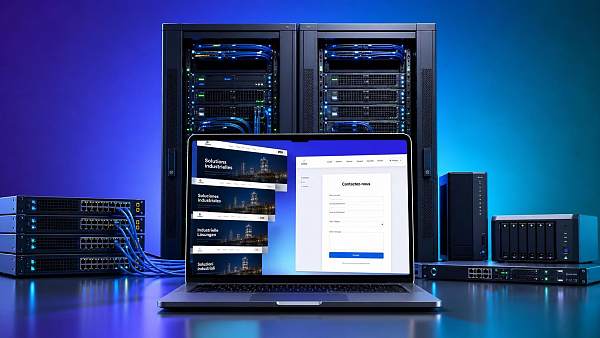
After a European site redesign, if inquiries do not rebound, the first step is not to increase ad spend, but to check whether search engines can still correctly understand your page structure. It is generally recommended to conduct a technical review on day 7, day 14, and day 30 after the redesign, focusing on indexing, crawling, and language distribution.
hreflang configuration errors often drag down European traffic earlier than content quality issues
Many companies are concerned about how to reduce the hreflang error rate on multilingual sites. In essence, you must first identify the type of error. Common issues include incorrect language codes, missing country codes, missing self-references, incomplete reciprocal references, and mistakenly mixing the generic German version with the Germany-specific version.
If a site has 6 language versions and 1200 pages, even if only 8%—12% of hreflang relationships are abnormal, Google may distribute the wrong pages to the wrong markets. For example, German users may land on English pages, while French users may land on Spanish pages, causing a clear decline in conversion rates.
4 items to check first
- Whether language and country codes comply with standards, such as de-DE, fr-FR, and it-IT.
- Whether each page has self-references and bidirectional links, rather than one-way declarations.
- Whether the canonical tag conflicts with hreflang, avoiding all pages pointing to the English main site.
- Whether the sitemap is split by language dimension to reduce crawl confusion.
The table below is suitable for the first round of technical checks after a redesign. It can help teams quickly determine issue priorities and avoid focusing only on surface-level traffic fluctuations.
If two or more of the above 4 items show abnormalities, fix the technical issues first before discussing content expansion and budget increases. Otherwise, new traffic brought in by ads will continue landing on the wrong pages, and inquiry recovery usually takes 3—6 weeks longer.
URLs, forms, and tracking after a redesign often directly affect inquiry data that “seems normal”
Many teams mistakenly believe that “no rebound” means insufficient traffic, but in reality, inquiry tracking may also be broken. For example, failed redirects after form submission, thank-you pages not triggering, and missing WhatsApp button parameters can all make the sales team perceive fewer leads, while the root cause in the backend comes from the technical workflow.
It is recommended to check at least 6 touchpoints: form submission, email delivery rate, CRM synchronization, phone clicks, live chat, and ad conversion feedback. A B2B site redesign may involve 10—30 template files. Any change in a button path may silently consume high-value inquiries.
Next, look at speed and access stability: whether European users can open the site smoothly
The second key point is speed. Many companies begin asking how to keep access latency at global nodes within 100ms. This goal is not always absolutely achievable across all regions worldwide, but for major European markets, reducing the time to first-screen interactivity to 2.5 seconds—3.5 seconds is usually more meaningful for business than simply pursuing theoretical latency.
After a European site redesign, speed drops usually come from 3 types of issues
- The new template introduces too many JS and tracking scripts, increasing first-screen requests from 60 to more than 120.
- Images are not compressed in WebP or AVIF format, increasing single-page resources from 2MB to more than 6MB.
- Node deployment is unreasonable, and European users are still routed back to Asian servers, significantly increasing TTFB.
If the time to first byte in core markets such as Germany, France, and the Netherlands remains above 800ms for a long time, the mobile bounce rate often rises. For a B2B inquiry site, every additional 1 second of waiting on a landing page may have a knock-on effect on form page entry rates and contact method click-through rates.
Execution order for speed optimization
In the first stage, reduce resource size by compressing images, merging scripts, and delaying non-core components; in the second stage, optimize CDN nodes and caching strategies; in the third stage, handle database queries, dynamic APIs, and third-party scripts. Significant improvement can usually be seen within 5—10 working days.
The table below is more suitable for technical and marketing teams to use together. It directly corresponds to the troubleshooting logic of “why page speed drags down conversions.”
If traffic changes little after the site redesign but inquiries drop significantly, speed and form page performance are often high-probability causes. This is especially true in industries where mobile traffic in Europe accounts for 40%—70%, where you cannot focus only on desktop display effects.
After technical troubleshooting is complete, then discuss whether SEO and advertising are out of balance
Many companies also ask at the same time: is SEO or Google Ads better for foreign trade customer acquisition, and is it more cost-effective to outsource Google Ads operations or manage them in-house? In fact, during the recovery period after a European site redesign, this is not an either-or choice. The first step is to distinguish which is more serious: “technical bleeding” or “insufficient ad spend.”
Slow SEO recovery does not mean ads can definitely make up for it
If organic rankings fluctuate due to a redesign, the recovery period is usually 2—8 weeks, and highly competitive core keywords may take longer. If the Google Ads budget is directly increased at this time, but the landing page has language mismatch, slow speed, and unstable forms, the cost per click will rise, and the cost per inquiry may also increase accordingly.
Take the German market as an example. Many teams focus on how to achieve a 3% CTR for Google Ads in the German market. The real prerequisite is not simply changing ad copy, but ensuring a high level of consistency among keywords, ad messaging, German landing page titles, and form promises. Otherwise, CTR may improve, but the conversion rate may not keep up.
3 core actions for advertising and site alignment
- Create independent ad groups by language to avoid forcing English creatives into German and French traffic.
- Keep the above-the-fold value proposition on landing pages consistent with the ad promise to reduce bounce.
- Connect conversion feedback to the ad delivery system, ensuring at least a valid data closed loop can be seen within 7 days.
For multi-market companies, how to coordinate multilingual creatives for overseas advertising is also an important factor in recovery efficiency. It is recommended to manage them through a 3-layer approach of “master information architecture + localized rewriting + market-difference review,” rather than translating items manually and separately one by one.
If the team is concerned about whether the multilingual content production cycle can be shortened from 7 days to 2 days, the answer usually depends on whether content templates, a terminology database, a page component library, and an approval workflow are in place. AI-driven production methods can significantly accelerate the process, but only if brand terms, industry terms, prohibited expressions, and country-version rules are standardized first.
AI systems are suitable for improving efficiency, but manual verification points must be established
Many companies continue to ask: can an AI advertising system automatically optimize multilingual ads, and can an AI advertising system reduce the manpower required for multilingual ad delivery? In practical applications, AI is suitable for batch keyword expansion, creative variant generation, budget allocation suggestions, and conversion data attribution, but it should not completely replace market strategy judgment.
A more stable approach is to put AI into 80% of repetitive processes, such as multilingual title generation, landing page A/B version synchronization, negative keyword expansion, and audience segmentation, while humans review the 20% of key information, including promise wording, pricing logic, compliance terms, and market cultural differences.
When implementing the project, companies are advised to use a “4-step method” to judge whether inquiries can return to growth
Whether European inquiry volume can return to growth after a redesign should not be judged by instinct, but by whether the data chain has been reconnected. For integrated website + marketing service projects, it is more advisable to advance website building, SEO, advertising, content, and tracking within the same execution checklist.
Step 1: Confirm the technical baseline
First fix hreflang, canonical, 301, sitemap, speed, and form issues. This stage usually takes 3—10 days. Prioritize issues that can cause indexing confusion and conversion loss, rather than modifying copy details first.
Step 2: Restore the authority of core pages
Repair internal links around core European product pages, industry pages, and inquiry pages to ensure that the top 20% of the most important pages recover first. For B2B websites, these pages often contribute more than 60% of valid leads.
Step 3: Use ads to validate page conversion
During the SEO recovery period, Google Ads can be used for small-scale validation. For example, launch 3—5 groups of keywords in each key language market first, and observe CTR, bounce rate, form conversion rate, and valid inquiry quality, avoiding full-scale budget expansion from the start.
Step 4: Establish a continuous optimization rhythm
It is recommended to review technical abnormalities on a weekly basis, ad conversions every two weeks, and organic traffic recovery monthly. After continuous observation for 30—60 days, decide whether to expand markets, languages, and budgets. This is more stable than blindly increasing investment.
For companies that need to manage website building, SEO, Google Ads, and multilingual content at the same time, choosing an integrated service is more conducive to troubleshooting and collaboration. 易营宝 has long served foreign trade companies, manufacturing factories, cross-border e-commerce sellers, and global brand teams. Based on AI website building, SEO optimization, ad delivery, and multilingual content systems, it can help companies more quickly identify the real bottlenecks after a redesign.
If you are trying to determine why inquiries have still not improved after your European site redesign, it is recommended to first conduct a joint check of the technical and conversion workflows before deciding where to allocate the budget. If you want site diagnostics, SEO, and advertising coordination solutions better suited to the European market, feel free to contact us now to obtain customized solutions and troubleshooting recommendations.
Related Articles


Related Products
 Yiyingbao SaaS Intelligent Website Building and Marketing SystemYiyingbao SaaS Intelligent Website Building and Marketing System, AI-powered no-code website building, rapid creation of multilingual B2B international websites in 10 minutes, global server acceleration, AI-powered SEO optimization, helping businesses connect efficiently with global markets. The perfect integration of technology and operation makes building an international trade website remarkably simple
 AI+SEM Intelligent Advertising Marketing SystemAI+SEM drives intelligent ad creation, empowering full-funnel precision advertising marketing. The system automatically generates weekly/monthly reports, AI recommends keywords and target countries, monitors core metrics in real-time with intelligent alerts, and enables one-click high-conversion ad solutions to help quickly acquire customers and improve ROI.
 AI+SEO Dual-Engine System Optimization ServicesYiyingbao’s AI+SEO dual-engine optimization system helps foreign trade enterprises acquire high-quality organic traffic through AI-powered keyword research, content generation, and comprehensive technical optimization, significantly improving search rankings and conversion rates.
 AI+SNS Social Media Marketing SystemYingbao AI+SNS Social Media Marketing System - Precision social capture for the social media era. Supports one-click content synchronization across major platforms like Facebook and LinkedIn. AI intelligently rewrites posts for enhanced relevance. 24/7 AI customer service and user profiling analysis empower businesses to efficiently expand into global markets.
 AI+SEO营销解决方案易营宝AI+SEO营销解决方案,通过AI批量写作、智能生成TDK、精准关键词扩词等功能,全面优化网站SEO效果,提升流量与转化率。助力企业构建高效智能网站新生态。
 AI+SEM Advertising Marketing SolutionsAI+SEM Advertising Marketing Solution leverages AI technology to deeply empower SEM ad campaigns. It automatically generates weekly/monthly reports using AI, presenting account data across multiple dimensions for comprehensive insights into campaign performance and trends. The system precisely recommends keywords and target countries, intelligently generates high-conversion ad copy, and enables one-click activation of efficient campaign plans to help businesses rapidly acquire customers. Simultaneously, it monitors core metrics in real time, intelligently identifies abnormal fluctuations, and issues timely alerts to ensure stable, high-return advertising results.
 Domain Name ServicesEasyWin provides professional domain name services, including intelligent queries, one-stop registration, brand protection, and full lifecycle management, helping businesses build a digital brand image.
 EasyOperate B2C Cross-Border E-Commerce Platform & Independent WebsiteEasyStore B2C Cross-border E-commerce Independent Store is an intelligent website building and cross-border e-commerce integrated solution independently developed by EasyStore Information Technology (Beijing) Co., Ltd. The system is specially designed for small and medium-sized as well as large export enterprises, integrating 'website building, operation, marketing, advertising, and conversion' into one, helping enterprises quickly establish cross-border e-commerce independent stores to achieve brand globalization and global sales growth.
The platform supports multiple languages, multiple currencies, and multi-channel marketing, with built-in AI intelligent translation and SEO optimization systems, suitable for mainstream markets such as Southeast Asia, Europe and America, Latin America, and the Middle East, assisting Chinese manufacturing enterprises in efficiently deploying international e-commerce strategies. SSL证书易营宝提供专业SSL安全证书服务,包括单域名和泛域名证书,确保网站数据传输加密、身份验证和完整性保护,助力企业建立安全可信的在线业务环境。









