









- Which customer acquisition channels will be affected by cross-border marketing trends in 2026?Sep 06, 2026View details
- Which homogenization risks should be considered in an analysis of the AI-powered website building industry?Aug 30, 2026View details
- How Will AI Marketing Trends 2026 Change Advertising Budget AllocationAug 28, 2026View details
- Is the EV SSL certificate market shrinking or upgrading? How should companies assess certificate procurement?Aug 11, 2026View details
- Why the old AMP SEO 2020 practices no longer work and what has changed in current optimization prioritiesAug 02, 2026View details
- How to Choose Topics for an Industry News Section to Attract More Organic Search TrafficJul 29, 2026View details
- Digital Marketing Shenzhen Market Insights: Why Are Companies Expanding Overseas Looking for Growth Teams in Shenzhen?Jul 31, 2026View details
- Can Zhejiang foreign trade independent websites still be developed today? Look at changes in traffic and lead generationJul 28, 2026View details
Does a poor mobile experience on a B2B lead generation website affect conversions?
Does a Poor Mobile Experience on a B2B Lead Generation Website Affect Conversions?
Introduction: Does a poor mobile experience on a B2B lead generation website affect conversions? When overseas buyers visit via mobile phones, issues such as slow loading, difficult-to-complete forms, and incomplete product information often do more than reduce the browsing experience—they may directly result in lost inquiries.
Why Does a Poor Mobile Experience Directly Affect B2B Inquiry Conversions?
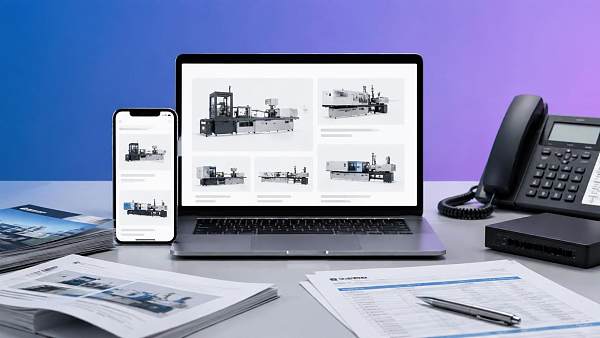
The answer is yes. For companies that rely on overseas search, Google Ads, and social media promotion to acquire customers, mobile is no longer an auxiliary channel but an important entry point for buyers to initially screen suppliers. If a website is difficult to use, users generally will not wait or repeatedly try again.
Although the final B2B purchasing decision may be made on a desktop computer, the first interaction with a brand, viewing an advertising landing page, and searching for product specifications often take place on a mobile phone. In particular, when overseas customers are commuting, attending trade shows, traveling for business, or working in fragmented scenarios, the proportion of mobile visits increases significantly.
If a mobile page takes three to five seconds to load, users may leave before they even see the product advantages. Text that is too small, misaligned images, and difficult-to-find navigation can all quickly give buyers the first impression that “this company is not professional enough.”
Unlike B2C consumers, B2B customers may not place an order immediately, but they will assess whether a supplier is worth further communication. A website that does not allow users to smoothly browse products, cases, certifications, and contact details will weaken trust and reduce users’ willingness to submit an inquiry.
Which Mobile Issues Are Most Likely to Make Overseas Buyers Abandon an Inquiry?
Loading speed is the most fundamental and easily overlooked issue. Uncompressed high-resolution images, autoplay videos, excessive scripts, and slow server response all extend the initial screen loading time. For advertising traffic, every moment of waiting means wasted actual customer acquisition costs.
The second type of issue is a confusing information hierarchy. Desktop sites can accommodate complex navigation and large amounts of content, but when directly scaled down to mobile screens, product categories, core selling points, application scenarios, and contact details can easily become crowded together, making it difficult for users to quickly determine whether the page matches their needs.
The form experience directly determines whether a lead is captured. Too many fields, difficult-to-click dropdown options, abnormal verification codes, and obscured submit buttons can all interrupt conversions. B2B inquiry forms should prioritize collecting contact details, requirement information, and product interest rather than requesting excessive information at once.
Some websites can be opened on mobile phones but are not designed with mobile action entry points in mind. For example, WhatsApp, email, phone, and online consultation buttons may not be prominent, or floating buttons may block the main content. Customers may want to get in touch but cannot find a path, and the result is still lost business opportunities.
How Can You Determine Whether Website Issues Are Already Affecting Business Results?
Companies should not judge whether their mobile site is adequate simply because “it can be opened on a phone.” Instead, they should analyze traffic and conversion data. First, compare mobile and desktop bounce rates, average time on site, key page viewing depth, and inquiry submission rates.
If mobile traffic accounts for a high proportion but the mobile inquiry rate is significantly lower than the desktop rate, and a high proportion of users leave quickly after clicking an ad, focus should be placed on investigating landing page speed, above-the-fold information, and the form process rather than simply increasing the advertising budget.
User behavior from different sources should also be observed. Google organic search users pay more attention to content relevance and page speed; advertising users care more about above-the-fold selling points and call-to-action buttons; social media users generally need shorter, more intuitive product introductions and more convenient instant communication methods.
Companies can also simulate the access journey of real overseas buyers: enter the website from search results on a mobile phone, find a particular product, review specifications, certifications, and factory capabilities, and then try to send an inquiry. If any step requires thought or waiting, conversions will be affected.
What Should Be Prioritized for a High-Converting Mobile B2B Website?
The first step is improving above-the-fold efficiency. After entering a page, customers should be able to see the product name, applicable scenarios, core advantages, and a clear contact entry point within a short time. The above-the-fold area does not need to be filled with company introductions; instead, it should help users quickly confirm, “Is this the supplier I am looking for?”
The second step is restructuring how product information is presented. Mobile product pages should highlight key purchasing information such as models, materials, dimensions, performance, application industries, and customization capabilities. Complex parameters can be displayed in collapsible modules or clear groupings to prevent users from repeatedly searching through long pages.
The third step is lowering the barrier to submitting inquiries. Form fields should be kept concise, submit buttons should be sufficiently prominent, and multiple contact methods such as email, WhatsApp, and online chat should be provided. For products with high unit prices and long decision-making cycles, sample requests, catalog downloads, or quotation consultation entry points can be added.
The fourth step is strengthening trust signals. Overseas buyers pay attention to factory strength, qualification certificates, production processes, cooperation cases, export markets, and after-sales capabilities. On mobile, this content should be organized into easy-to-browse modules rather than hidden in multi-level menus or lengthy company introductions.
How Can You Measure Whether Investment in Mobile Optimization Is Worthwhile?
Mobile optimization should not be understood as merely adjusting page styles, but as a foundational investment in improving customer acquisition efficiency. For companies continuously running Google Ads, managing SEO, or conducting overseas social media marketing, website conversion capability determines whether front-end traffic can be converted into sales opportunities.
When measuring return on investment, companies can focus on inquiry volume, qualified inquiry rate, cost per lead, and sales follow-up efficiency. Even if traffic remains unchanged, as long as mobile form submission and contact rates improve, overall customer acquisition costs will decrease accordingly.
For manufacturing companies with complex products and multiple target markets, the mobile experience of multilingual websites is particularly important. Customers in different regions have varying network environments, reading habits, and commonly used communication tools, and a unified desktop-oriented approach often cannot meet actual access needs.
Yingbao provides AI-powered website building, multilingual website development, SEO optimization, and overseas marketing services. It can systematically optimize website speed, page structure, content presentation, and inquiry paths, enabling search, advertising, and social media traffic to more effectively generate overseas business opportunities.
Conclusion
A poor mobile experience on a B2B lead generation website does indeed affect conversions, and the impact is often reflected in silent losses where customers leave without providing any feedback. Slow loading speed, difficult-to-find information, hard-to-complete forms, and unclear contact entry points all increase the likelihood that buyers will abandon communication.
Companies should start from real user access paths and conversion data, prioritizing solutions to issues that affect the above-the-fold area, product browsing, and inquiry submission. Mobile is not an additional option after a website goes live; it is a critical part of the overseas digital marketing funnel for engaging customers, building trust, and acquiring inquiries.
Related Articles
Related Products
 Yiyingbao SaaS Intelligent Website Building and Marketing SystemYiyingbao SaaS Intelligent Website Building and Marketing System, AI-powered no-code website building, rapid creation of multilingual B2B international websites in 10 minutes, global server acceleration, AI-powered SEO optimization, helping businesses connect efficiently with global markets. The perfect integration of technology and operation makes building an international trade website remarkably simple
 AI+SEM Intelligent Advertising Marketing SystemAI+SEM drives intelligent ad creation, empowering full-funnel precision advertising marketing. The system automatically generates weekly/monthly reports, AI recommends keywords and target countries, monitors core metrics in real-time with intelligent alerts, and enables one-click high-conversion ad solutions to help quickly acquire customers and improve ROI.
 AI+SEO Dual-Engine System Optimization ServicesYiyingbao’s AI+SEO dual-engine optimization system helps foreign trade enterprises acquire high-quality organic traffic through AI-powered keyword research, content generation, and comprehensive technical optimization, significantly improving search rankings and conversion rates.
 AI+SNS Social Media Marketing SystemYingbao AI+SNS Social Media Marketing System - Precision social capture for the social media era. Supports one-click content synchronization across major platforms like Facebook and LinkedIn. AI intelligently rewrites posts for enhanced relevance. 24/7 AI customer service and user profiling analysis empower businesses to efficiently expand into global markets.
 AI+SEO营销解决方案易营宝AI+SEO营销解决方案,通过AI批量写作、智能生成TDK、精准关键词扩词等功能,全面优化网站SEO效果,提升流量与转化率。助力企业构建高效智能网站新生态。
 AI+SEM Advertising Marketing SolutionsAI+SEM Advertising Marketing Solution leverages AI technology to deeply empower SEM ad campaigns. It automatically generates weekly/monthly reports using AI, presenting account data across multiple dimensions for comprehensive insights into campaign performance and trends. The system precisely recommends keywords and target countries, intelligently generates high-conversion ad copy, and enables one-click activation of efficient campaign plans to help businesses rapidly acquire customers. Simultaneously, it monitors core metrics in real time, intelligently identifies abnormal fluctuations, and issues timely alerts to ensure stable, high-return advertising results.
 Domain Name ServicesEasyWin provides professional domain name services, including intelligent queries, one-stop registration, brand protection, and full lifecycle management, helping businesses build a digital brand image.
 EasyOperate B2C Cross-Border E-Commerce Platform & Independent WebsiteEasyStore B2C Cross-border E-commerce Independent Store is an intelligent website building and cross-border e-commerce integrated solution independently developed by EasyStore Information Technology (Beijing) Co., Ltd. The system is specially designed for small and medium-sized as well as large export enterprises, integrating 'website building, operation, marketing, advertising, and conversion' into one, helping enterprises quickly establish cross-border e-commerce independent stores to achieve brand globalization and global sales growth.
The platform supports multiple languages, multiple currencies, and multi-channel marketing, with built-in AI intelligent translation and SEO optimization systems, suitable for mainstream markets such as Southeast Asia, Europe and America, Latin America, and the Middle East, assisting Chinese manufacturing enterprises in efficiently deploying international e-commerce strategies. SSL证书易营宝提供专业SSL安全证书服务,包括单域名和泛域名证书,确保网站数据传输加密、身份验证和完整性保护,助力企业建立安全可信的在线业务环境。









