









- Which customer acquisition channels will be affected by cross-border marketing trends in 2026?Sep 06, 2026View details
- Which homogenization risks should be considered in an analysis of the AI-powered website building industry?Aug 30, 2026View details
- How Will AI Marketing Trends 2026 Change Advertising Budget AllocationAug 28, 2026View details
- Is the EV SSL certificate market shrinking or upgrading? How should companies assess certificate procurement?Aug 11, 2026View details
- Why the old AMP SEO 2020 practices no longer work and what has changed in current optimization prioritiesAug 02, 2026View details
- How to Choose Topics for an Industry News Section to Attract More Organic Search TrafficJul 29, 2026View details
SABER platform upgrade in the Middle East, Saudi Arabia/UAE independent websites need to embed the e-SABER real-time certification widget
On August 14, 2026, the Gulf Standards Organization (GSO) announced an AI-driven upgrade to the SABER platform, requiring all independent websites exporting to GCC countries to embed the official e-SABER certification status widget on their homepage. According to the updated requirements, product models, batches, and certification validity periods can now be queried in real-time, with the relevant certification status directly displayed on the site's front end.
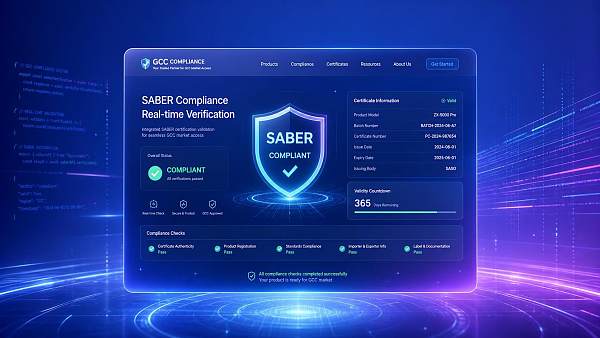
Based on current information, this change is not just an adjustment in how certification is displayed, but rather a shift in positioning compliance information at the transaction entry point. For companies engaged in Middle East B2B business, the homepage of their independent site is no longer just a page for brand display and inquiry collection, but also serves the function of presenting certification status. Whether the certification is visible and whether the information is real-time may directly impact buyers' efficiency in screening suppliers.
Notably, the summary mentions that this widget has been integrated with Google Search Console and Gemini business plugins, and that click-through rates for sites without the widget in Middle East B2B searches have dropped by over 42%. This indicates that search visibility, page credibility, and certification presentation methods are becoming more tightly linked. For businesses, the issue is no longer just "whether they have certification," but "whether the certification can be instantly recognized by the system and displayed during the search and access process."
Such changes typically first affect three types of entities: first, export companies that rely on independent sites for customer acquisition; second, service providers responsible for Middle East market operations and site construction; and third, technical teams providing support for certification, compliance, and page display. If a site fails to embed the widget as required, the short-term impact may first manifest in search clicks, inquiry conversion, and buyer trust building, rather than being a simple page redesign issue.
For companies already operating in the Middle East market, what deserves more attention going forward is not the single technical integration itself, but whether the synchronization mechanism between certification data and site content is stable, whether the display of different product models and batches is accurate, and whether the homepage information affects overseas buyers' assessment of supply chain compliance. Based on the information provided in this report, the relevant impacts should continue to be observed in conjunction with subsequent official announcements, company announcements, and standards organization documents.
Related Articles



Related Products
 Yiyingbao SaaS Intelligent Website Building and Marketing SystemYiyingbao SaaS Intelligent Website Building and Marketing System, AI-powered no-code website building, rapid creation of multilingual B2B international websites in 10 minutes, global server acceleration, AI-powered SEO optimization, helping businesses connect efficiently with global markets. The perfect integration of technology and operation makes building an international trade website remarkably simple
 AI+SEM Intelligent Advertising Marketing SystemAI+SEM drives intelligent ad creation, empowering full-funnel precision advertising marketing. The system automatically generates weekly/monthly reports, AI recommends keywords and target countries, monitors core metrics in real-time with intelligent alerts, and enables one-click high-conversion ad solutions to help quickly acquire customers and improve ROI.
 AI+SEO Dual-Engine System Optimization ServicesYiyingbao’s AI+SEO dual-engine optimization system helps foreign trade enterprises acquire high-quality organic traffic through AI-powered keyword research, content generation, and comprehensive technical optimization, significantly improving search rankings and conversion rates.
 AI+SNS Social Media Marketing SystemYingbao AI+SNS Social Media Marketing System - Precision social capture for the social media era. Supports one-click content synchronization across major platforms like Facebook and LinkedIn. AI intelligently rewrites posts for enhanced relevance. 24/7 AI customer service and user profiling analysis empower businesses to efficiently expand into global markets.
 AI+SEO营销解决方案易营宝AI+SEO营销解决方案,通过AI批量写作、智能生成TDK、精准关键词扩词等功能,全面优化网站SEO效果,提升流量与转化率。助力企业构建高效智能网站新生态。
 AI+SEM Advertising Marketing SolutionsAI+SEM Advertising Marketing Solution leverages AI technology to deeply empower SEM ad campaigns. It automatically generates weekly/monthly reports using AI, presenting account data across multiple dimensions for comprehensive insights into campaign performance and trends. The system precisely recommends keywords and target countries, intelligently generates high-conversion ad copy, and enables one-click activation of efficient campaign plans to help businesses rapidly acquire customers. Simultaneously, it monitors core metrics in real time, intelligently identifies abnormal fluctuations, and issues timely alerts to ensure stable, high-return advertising results.
 Domain Name ServicesEasyWin provides professional domain name services, including intelligent queries, one-stop registration, brand protection, and full lifecycle management, helping businesses build a digital brand image.
 EasyOperate B2C Cross-Border E-Commerce Platform & Independent WebsiteEasyStore B2C Cross-border E-commerce Independent Store is an intelligent website building and cross-border e-commerce integrated solution independently developed by EasyStore Information Technology (Beijing) Co., Ltd. The system is specially designed for small and medium-sized as well as large export enterprises, integrating 'website building, operation, marketing, advertising, and conversion' into one, helping enterprises quickly establish cross-border e-commerce independent stores to achieve brand globalization and global sales growth.
The platform supports multiple languages, multiple currencies, and multi-channel marketing, with built-in AI intelligent translation and SEO optimization systems, suitable for mainstream markets such as Southeast Asia, Europe and America, Latin America, and the Middle East, assisting Chinese manufacturing enterprises in efficiently deploying international e-commerce strategies. SSL证书易营宝提供专业SSL安全证书服务,包括单域名和泛域名证书,确保网站数据传输加密、身份验证和完整性保护,助力企业建立安全可信的在线业务环境。









