









- China’s Ministry of Commerce Responds to Additional Charges on Low-Value Imports Imposed by the EUNov 06, 2026View details
- Two Internet Development Reports Released at the 2026 World Internet ConferenceNov 05, 2026View details
- Internet Business Revenue of Enterprises Above the Designated Size Reached RMB 1.716 Trillion in the First Three Quarters, with Profits Up 17.6%Nov 05, 2026View details
- Shopify's Third-Quarter Revenue and GMV Fall Short of Expectations, Sending Shares Tumbling Before the Market OpensNov 04, 2026View details
- Temu Sellers See a Decline in Traffic as the Platform’s Traffic Allocation ShiftsNov 04, 2026View details
- UK Regulator Requires E-Commerce Businesses to Clearly Display Total Prices Including Mandatory Delivery ChargesNov 04, 2026View details
Does Website Security Affect SEO? Ranking Consequences of Attacks, Slowdowns, and Certificate Issues
Does Website Security Affect SEO? Start with the Three Types of Risks Search Engines Care About Most
Does website security affect SEO? The answer is yes, and the impact is often earlier and more serious than many companies expect.
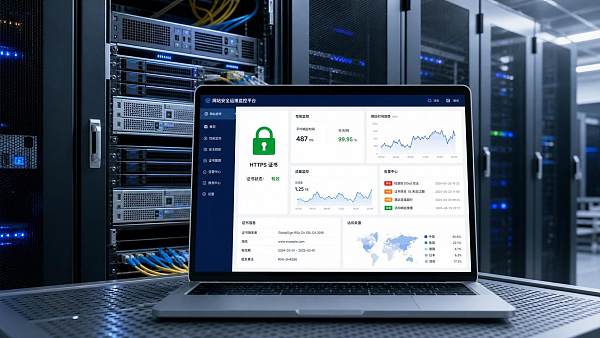
When search engines evaluate a site, they do not look only at content and backlinks. They also consider whether access is stable, whether pages are trustworthy, and whether users can browse safely.
Once malicious code is injected, page loading speed continues to decline, or certificate configuration becomes abnormal, search systems may lower the trust score.
Judging from recent changes, security issues and performance issues are being tied more closely to search experience evaluation.
This also means that whether website security affects SEO is no longer a theoretical question, but a practical issue involving rankings, indexing, and conversions.
Common risks are mainly concentrated in three categories: being attacked, page slowdown, and certificate abnormalities. They affect crawling, indexing, and user behavior signals respectively.
- After an attack, redirects, malware injection, and content tampering may appear, which can trigger risk warnings.
- Page slowdown reduces crawling efficiency and also weakens the user experience.
- Certificate abnormalities affect browser trust and directly increase the bounce rate.
If a site is responsible for inquiries, lead collection, and brand presentation, these three types of issues usually do not appear in isolation. They often create a chain reaction.
After an Attack, Does Website Security Affect SEO? The Impact Often Starts with Indexing Abnormalities
After many sites are attacked, the first thing they notice is not page errors, but a sudden drop in traffic and a decrease in indexed pages.
The reason is straightforward. Attackers often use backdoor files, bulk injections, and hidden redirects to tamper with the output content of normal pages.
After search engines crawl abnormal content, they reassess the credibility of the domain. In severe cases, they may even suspend the display of some pages.
A more obvious signal is that formerly stable keywords begin to drop in position, and brand terms may also show abnormal titles or descriptions.
Does website security affect SEO? If a site is injected with black-hat links, gambling content, or impersonation content, the impact is usually immediate.
In actual business operations, the following situations deserve priority checks:
- Unfamiliar scripts have been inserted into the page source code.
- A large number of new links with no business relevance appear on the site.
- Mobile and desktop access results are inconsistent.
- The title shown in search results does not match the actual page title.
- Abnormal crawl paths or high-frequency requests appear in logs.
If an attack has been confirmed, the handling sequence is also critical. First block the entry point, then clean up the files, then submit for review, and finally restore indexing signals.
Simply deleting abnormal pages without fixing vulnerabilities often leads to repeated infections. This type of website security issue will cause cumulative damage to SEO.
Why Page Slowdown Drags Down Rankings: Security Incidents Often Break Performance First
Many people regard speed issues only as server configuration problems, but that is incomplete. Security abnormalities are often one of the root causes of page slowdown.
For example, malicious crawling, traffic attacks, resource hotlinking, and script injection can all lengthen site response times and even cause frequent timeouts.
When search engines repeatedly encounter slow responses, they reduce the number of pages crawled per unit of time, and the crawl budget is naturally compressed.
At this point, even if the content quality is good, new pages may remain unindexed for a long time, and update signals from old pages cannot be passed on in time.
Does website security affect SEO? From the performance perspective, the impact is reflected not only in rankings, but also in the overall slowdown of search visibility.
In addition, a decline in access speed directly affects user behavior. Shorter dwell time, a higher bounce rate, and interruptions in the conversion path all negatively affect page performance.
For corporate websites that rely on overseas customer acquisition, this type of impact is even more obvious, because cross-region access depends more heavily on stable infrastructure.
From this perspective, security and performance are not two separate charts, but continuous issues on the same line, and both ultimately transmit their effects to search performance.
Will Certificate Abnormalities Affect Search? Yes, and They Damage Trust First, Then Conversions
Expired certificates, domain mismatches, mixed content, and redirect configuration errors are all very common security configuration issues.
When users see a browser risk warning, their first reaction is usually not to wait for a fix, but to leave the page immediately.
This quickly pushes up the bounce rate, compresses conversion opportunities, and also makes search engines evaluate the display value of the page more cautiously.
Does website security affect SEO? Certificate abnormalities are among the most easily overlooked issues, yet they are also among the easiest for users to notice immediately.
Especially for multilingual sites, multi-region sites, and cross-border e-commerce stores, certificate chains, subdomain configurations, and redirect paths are more prone to omissions.
If http and https versions exist at the same time, they may also cause duplicate pages, diluted authority, and confusion in canonical tags.
On the surface, this type of issue is a security failure. In essence, it has already entered the scope of technical SEO and needs to be handled together.
How to Control Security Risks Before Ranking Losses Occur: A More Suitable Checklist for Business Websites
Rather than troubleshooting after rankings fluctuate, it is better to place website security and SEO within the same monitoring framework and issue early warnings in advance.
An effective approach is not about stacking tools, but about connecting anomaly detection, impact assessment, and repair closure into a complete loop.
Focus on the following items:
- Whether index volume, keyword rankings, and organic traffic are declining at the same time.
- Whether abnormal request peaks appear in server logs.
- Whether page loading time suddenly becomes slower, especially on core landing pages.
- Whether certificate validity periods, certificate chains, and automatic renewals are normal.
- Whether page source code, template files, and script references have been modified.
- Whether unauthorized plugins, weak passwords, outdated components, and open directories exist.
If a company website is also responsible for brand presentation, customer acquisition conversion, and overseas promotion, this kind of linked monitoring becomes even more necessary.
For platforms like 易营宝 that integrate website building, SEO optimization, ad placement, and multilingual operations, the advantage lies in connecting the technical foundation with marketing results.
Through collaboration among cloud-based intelligent website building, AI+SEO optimization, and overseas marketing systems, it becomes faster to identify the chain impact of security abnormalities on indexing, rankings, and conversions.
For companies expanding globally, this integrated capability is more important than isolated patching, because problems often span multiple stages, including website building, operations and maintenance, and promotion.
Returning to the original question: does website security affect SEO? Not only does it affect SEO, but the impact path is already very clear.
Attacks damage indexing trust, slowdown compresses crawling efficiency, and certificate abnormalities undermine the access experience. When the three overlap, ranking decline is only the surface symptom.
What truly needs to be done is to move security checks forward into website building, launch, and daily operations, so that problems are discovered, handled, and verified before they affect SEO.
Related Articles
 Is Your Website Platform for Export Businesses Secure? How to Check Access Permissions
 The EU Will Require Product Identification Codes for Low-Value Cross-Border Parcels Starting November 1
 How Can You Prevent Admin Account Takeovers on a SaaS Website Platform?



Related Products
 Yiyingbao SaaS Intelligent Website Building and Marketing SystemYiyingbao SaaS Intelligent Website Building and Marketing System, AI-powered no-code website building, rapid creation of multilingual B2B international websites in 10 minutes, global server acceleration, AI-powered SEO optimization, helping businesses connect efficiently with global markets. The perfect integration of technology and operation makes building an international trade website remarkably simple
 AI+SEM Intelligent Advertising Marketing SystemAI+SEM drives intelligent ad creation, empowering full-funnel precision advertising marketing. The system automatically generates weekly/monthly reports, AI recommends keywords and target countries, monitors core metrics in real-time with intelligent alerts, and enables one-click high-conversion ad solutions to help quickly acquire customers and improve ROI.
 AI+SEO Dual-Engine System Optimization ServicesYiyingbao’s AI+SEO dual-engine optimization system helps foreign trade enterprises acquire high-quality organic traffic through AI-powered keyword research, content generation, and comprehensive technical optimization, significantly improving search rankings and conversion rates.
 AI+SNS Social Media Marketing SystemYingbao AI+SNS Social Media Marketing System - Precision social capture for the social media era. Supports one-click content synchronization across major platforms like Facebook and LinkedIn. AI intelligently rewrites posts for enhanced relevance. 24/7 AI customer service and user profiling analysis empower businesses to efficiently expand into global markets.
 AI+SEO营销解决方案易营宝AI+SEO营销解决方案,通过AI批量写作、智能生成TDK、精准关键词扩词等功能,全面优化网站SEO效果,提升流量与转化率。助力企业构建高效智能网站新生态。
 AI+SEM Advertising Marketing SolutionsAI+SEM Advertising Marketing Solution leverages AI technology to deeply empower SEM ad campaigns. It automatically generates weekly/monthly reports using AI, presenting account data across multiple dimensions for comprehensive insights into campaign performance and trends. The system precisely recommends keywords and target countries, intelligently generates high-conversion ad copy, and enables one-click activation of efficient campaign plans to help businesses rapidly acquire customers. Simultaneously, it monitors core metrics in real time, intelligently identifies abnormal fluctuations, and issues timely alerts to ensure stable, high-return advertising results.
 Domain Name ServicesEasyWin provides professional domain name services, including intelligent queries, one-stop registration, brand protection, and full lifecycle management, helping businesses build a digital brand image.
 EasyOperate B2C Cross-Border E-Commerce Platform & Independent WebsiteEasyStore B2C Cross-border E-commerce Independent Store is an intelligent website building and cross-border e-commerce integrated solution independently developed by EasyStore Information Technology (Beijing) Co., Ltd. The system is specially designed for small and medium-sized as well as large export enterprises, integrating 'website building, operation, marketing, advertising, and conversion' into one, helping enterprises quickly establish cross-border e-commerce independent stores to achieve brand globalization and global sales growth.
The platform supports multiple languages, multiple currencies, and multi-channel marketing, with built-in AI intelligent translation and SEO optimization systems, suitable for mainstream markets such as Southeast Asia, Europe and America, Latin America, and the Middle East, assisting Chinese manufacturing enterprises in efficiently deploying international e-commerce strategies. SSL证书易营宝提供专业SSL安全证书服务,包括单域名和泛域名证书,确保网站数据传输加密、身份验证和完整性保护,助力企业建立安全可信的在线业务环境。









