









- Hapag-Lloyd’s $4.2 billion acquisition of ZIM faces a closing delay; ZIM reports third-quarter net profit of $830 millionNov 24, 2026View details
- SCFI falls for a third straight week to 3,503.78 points, with blank sailings on trans-Pacific routes rising to 10Nov 24, 2026View details
- Lazada 11.11 Mega Sale: LazMall Contributes Nearly Two-Thirds of GMVNov 23, 2026View details
- Shein’s European Revenue Falls 16% as Tighter Rules on Low-Value Direct Shipments Take EffectNov 23, 2026View details
- EU Low-Value Parcel Rules Impact Cargo Flows: Air Freight Volume from China to Europe Down 17% in OctoberNov 23, 2026View details
- Indonesia and the EU Sign Comprehensive Economic Partnership Agreement, 90.4% of Tariff Lines to Become Duty-Free ImmediatelyNov 23, 2026View details
The 2026 AI Marketing Conference was held in Shanghai, focusing on scaling Agent marketing.
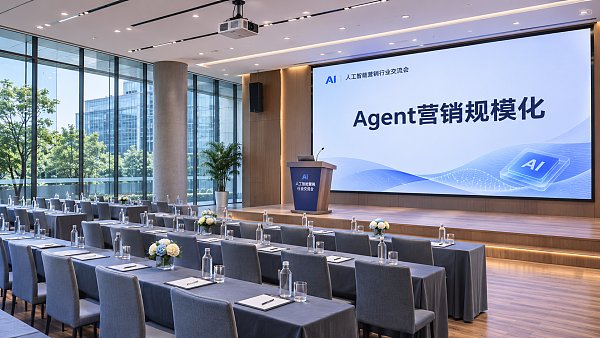
On November 25, 2026, the 2026 AI·Marketing Conference was held at Shanghai Tower. With “Making AI Deliver Real Results” as its theme, the conference focused on how Agent marketing can move from pilot applications to scaled deployment. It also brought together brand companies, industry organizations, and ecosystem partners to discuss topics including trusted data and GEO optimization of official website sources.
Based on the topics addressed at the conference, the discussion focused not only on whether Agents can be used in marketing, but also on how to expand their use from localized trials to broader business processes. This shift involves data, content, personnel collaboration, and performance evaluation, among other areas. The extent to which it can be implemented in practice remains to be seen in light of subsequent applications.

How Priorities Shift from Pilot Projects to Scaling
Pilot applications typically focus on relatively well-defined tasks, making it easier to set boundaries and assess results. Scaling means that the same capabilities need to accommodate a wider range of business needs, while also addressing data connections between different tasks, process management, and the division of responsibilities. The fact that an individual step can operate does not necessarily mean that the entire marketing process is ready for stable use.
For marketing teams, the first step is to clarify which tasks an Agent will handle, which steps still require human judgment, and how task results will feed into subsequent work. For example, in content processing and information organization, efficiency is not the only consideration; teams must also assess whether the output meets actual needs, whether the information can be traced, and how to review it if discrepancies arise. Requirements vary by task, so the scope of work suitable for an Agent must be determined in the context of the specific business.
The conference also included human-machine collaboration and the continuous evolution of organizational intelligence among its discussion objectives, drawing attention to organizational issues involved in scaling applications. Once tools are introduced into workflows, how responsibilities for review, adjustment, and decision-making are assigned will affect whether their use can be sustained. The information currently available about the conference outlines the topics under discussion but does not specify implementation plans or application results.
Why Discuss Trusted Data Alongside Official Website Sources?
The conference topics of trusted data and GEO optimization of official website sources relate to how marketing information is used, presented, and understood. Whether data can support reliable business decisions depends not only on the information itself, but also on its source, how it is updated, and how it is used. When an Agent is involved in processing information, these factors can further affect whether its output is easy to verify.
GEO optimization of official website sources focuses on how understandable and usable website information is in settings such as generative search. For brands, aspects to consider when exploring this topic include whether official website content is clear, whether key information is consistent, and whether content can be maintained promptly after updates. The impact of optimizing official website sources also depends on the specific application scenario and how relevant systems use the information; actual communication results cannot be inferred from the conference topics alone.
Discussing these two topics at the same conference helps clarify the conditions for applying Agent marketing by looking at the information sources. If the information provided lacks a clear basis, greater care is needed when generating, organizing, or distributing it downstream. However, the conference summary did not disclose relevant technical solutions, evaluation criteria, or practical results, so it does not establish that a unified approach has been developed.
Further Assessment Should Focus on Application Details
For brand companies, areas worth monitoring include the specific marketing tasks in which Agents are involved and whether their performance can be evaluated over continued use. For organizations and ecosystem partners involved in related services, coordination between data integration, content maintenance, and human review may be among the questions to address as discussions move toward practical applications.
The clear signal from this conference is that the path to scaling has become a topic of discussion. How these discussions will translate into specific practices remains to be seen through future public announcements of application plans, implementation progress, and performance evaluations—particularly how human-machine responsibilities and information quality are addressed in different business scenarios.
Related Articles
 The 2026 AI Marketing Conference was held in Shanghai, focusing on scaling Agent marketing.
 The 2026 Wuhan Commodity Trade Fair Opens, Focusing on Cross-Border E-Commerce and Digital Trade
 Hong Kong Science Park Hosts Hands-On GEO Seminar, Focusing on AI Search Visibility for SMEs


Related Products
 Yiyingbao SaaS Intelligent Website Building and Marketing SystemYiyingbao SaaS Intelligent Website Building and Marketing System, AI-powered no-code website building, rapid creation of multilingual B2B international websites in 10 minutes, global server acceleration, AI-powered SEO optimization, helping businesses connect efficiently with global markets. The perfect integration of technology and operation makes building an international trade website remarkably simple
 AI+SEM Intelligent Advertising Marketing SystemAI+SEM drives intelligent ad creation, empowering full-funnel precision advertising marketing. The system automatically generates weekly/monthly reports, AI recommends keywords and target countries, monitors core metrics in real-time with intelligent alerts, and enables one-click high-conversion ad solutions to help quickly acquire customers and improve ROI.
 AI+SEO Dual-Engine System Optimization ServicesYiyingbao’s AI+SEO dual-engine optimization system helps foreign trade enterprises acquire high-quality organic traffic through AI-powered keyword research, content generation, and comprehensive technical optimization, significantly improving search rankings and conversion rates.
 AI+SNS Social Media Marketing SystemYingbao AI+SNS Social Media Marketing System - Precision social capture for the social media era. Supports one-click content synchronization across major platforms like Facebook and LinkedIn. AI intelligently rewrites posts for enhanced relevance. 24/7 AI customer service and user profiling analysis empower businesses to efficiently expand into global markets.
 AI+SEO营销解决方案易营宝AI+SEO营销解决方案,通过AI批量写作、智能生成TDK、精准关键词扩词等功能,全面优化网站SEO效果,提升流量与转化率。助力企业构建高效智能网站新生态。
 AI+SEM Advertising Marketing SolutionsAI+SEM Advertising Marketing Solution leverages AI technology to deeply empower SEM ad campaigns. It automatically generates weekly/monthly reports using AI, presenting account data across multiple dimensions for comprehensive insights into campaign performance and trends. The system precisely recommends keywords and target countries, intelligently generates high-conversion ad copy, and enables one-click activation of efficient campaign plans to help businesses rapidly acquire customers. Simultaneously, it monitors core metrics in real time, intelligently identifies abnormal fluctuations, and issues timely alerts to ensure stable, high-return advertising results.
 Domain Name ServicesEasyWin provides professional domain name services, including intelligent queries, one-stop registration, brand protection, and full lifecycle management, helping businesses build a digital brand image.
 EasyOperate B2C Cross-Border E-Commerce Platform & Independent WebsiteEasyStore B2C Cross-border E-commerce Independent Store is an intelligent website building and cross-border e-commerce integrated solution independently developed by EasyStore Information Technology (Beijing) Co., Ltd. The system is specially designed for small and medium-sized as well as large export enterprises, integrating 'website building, operation, marketing, advertising, and conversion' into one, helping enterprises quickly establish cross-border e-commerce independent stores to achieve brand globalization and global sales growth.
The platform supports multiple languages, multiple currencies, and multi-channel marketing, with built-in AI intelligent translation and SEO optimization systems, suitable for mainstream markets such as Southeast Asia, Europe and America, Latin America, and the Middle East, assisting Chinese manufacturing enterprises in efficiently deploying international e-commerce strategies. SSL证书易营宝提供专业SSL安全证书服务,包括单域名和泛域名证书,确保网站数据传输加密、身份验证和完整性保护,助力企业建立安全可信的在线业务环境。









