









- Which customer acquisition channels will be affected by cross-border marketing trends in 2026?Sep 06, 2026View details
- Which homogenization risks should be considered in an analysis of the AI-powered website building industry?Aug 30, 2026View details
- How Will AI Marketing Trends 2026 Change Advertising Budget AllocationAug 28, 2026View details
- Is the EV SSL certificate market shrinking or upgrading? How should companies assess certificate procurement?Aug 11, 2026View details
- Why the old AMP SEO 2020 practices no longer work and what has changed in current optimization prioritiesAug 02, 2026View details
- How to Choose Topics for an Industry News Section to Attract More Organic Search TrafficJul 29, 2026View details
Foreign Trade Website Development Case Study: Why Manufacturing Companies Prioritize Lead Quality
In many manufacturing projects among foreign trade website development cases, companies initially tend to focus on how many inquiries the website can generate after launch. However, once they enter the evaluation stage, business personnel usually quickly discover that the number of inquiries does not directly equal business opportunities. Manufacturing foreign trade involves long sales cycles, high order values, and substantial communication costs. If most of the inquiries generated by the website come from leads with low relevance, low budgets, or limited decision-making authority, the team will not only struggle to convert them but may also be slowed down by a large volume of ineffective communication.
Therefore, for manufacturing companies, the core value of a website is not to maximize traffic, but to screen potential customers and retain inquiries with genuine purchasing potential. This is why more and more companies place greater emphasis on inquiry quality rather than superficial quantity when reviewing their website development investments.
Why Manufacturing Foreign Trade Websites Naturally Depend More on High-Quality Inquiries
Manufacturing differs from standardized retail. Many factory-based companies serve overseas customers with customized requirements, complex technical parameters, long delivery cycles, and numerous certification requirements. When a customer submits an inquiry, it does not mean that the deal has entered the closing stage; it is often only the beginning of supplier selection.
From a business evaluation perspective, a high-quality inquiry generally has several characteristics: clear requirements, strong product fit, a genuine purchasing scenario, and a clear contact identity. Ideally, it should also be possible to determine the customer's region, purchasing stage, and order potential. By contrast, many low-quality inquiries may leave only an email address, without even specifying the product model, application industry, or estimated quantity range. Such leads are difficult to support effective business decisions.
The greater emphasis manufacturing companies place on quality is based on very practical cost considerations:
- High processing costs for samples, solutions, and quotations;
- Frequent coordination between technical and sales teams;
- High communication barriers involving certifications, specifications, and delivery schedules;
- Actual sales cycles that may extend for several months or even longer.
If a website cannot help with preliminary screening at the front end, the back-end team will spend substantial time handling inquiries that may appear numerous, while the proportion that eventually progresses to quotation, sampling, and negotiation remains low.
“More Inquiries Mean an Effective Website” Is the Most Common Misjudgment in Manufacturing Website Development
When building an overseas corporate website, many companies tend to treat the website as an online business card combined with a form tool. They assume that marketing is effective as long as there is traffic, visitors, and submitted information. This assumption may be partially valid in fast-moving consumer goods or low-value industries, but it is not reliable in manufacturing.
There are three common types of misjudgment.
The first is treating broad clicks generated by advertising as valid demand. Certain promotional methods can indeed quickly generate form submissions, but if the people entering the page are not the target purchasing audience, even a large number of inquiries will have little chance of resulting in orders.
The second is treating the form submission rate as the core metric. An overly simple form may reduce the submission threshold, but it will also increase the proportion of ineffective leads. If a manufacturing website only pursues making it as easy as possible to submit contact information, it will often sacrifice subsequent screening efficiency.
The third is overlooking the fit between content and the customer's stage. Many websites contain only company introductions and product images, while lacking application scenarios, material descriptions, certification information, delivery capabilities, and case details. As a result, even customers with genuine needs cannot complete an effective evaluation and can only leave vague inquiries.
Among manufacturing foreign trade website development cases, websites that perform consistently well usually do not aim to “get everyone to make an inquiry,” but rather to “make the right people more willing to inquire, and encourage them to provide more specific information.”
High-Quality Inquiries Are Usually Not Created by Form Design Alone, but Screened Through the Overall Website Strategy
Many people attribute inquiry quality issues to whether a contact form should include more fields. This is only a small part of the issue. Inquiry quality is actually shaped by the design of the complete process before and after website development.
First, consider the traffic entry points. If the website mainly targets overly broad keywords or the advertising targeting is too general, visitor quality will be unstable from the outset. Manufacturing companies are better suited to developing content around niche product terms, application terms, process terms, and purchasing scenario terms, rather than simply pursuing high search volume.
Next, consider the information structure of the landing page. A website page that achieves both high conversion and high inquiry quality will often answer the questions that buyers care about most: What specifications can you produce? Which industries are they suitable for? What customization options are supported? Which standards do they meet? What are the delivery terms and minimum order quantity? Do you have experience with similar projects? The more complete the information, the more effectively it can filter out broad traffic and encourage genuine buyers to ask questions.
Only then should the conversion action itself be considered. A manufacturing website does not necessarily need to pursue an ultra-simple form. Instead, it may be more suitable to establish a tiered inquiry mechanism on key pages. For example, the general contact entrance can be concise, while core product pages, solution pages, or download pages can guide customers to provide information such as the application scenario, target quantity, region, and purchasing timeline. The value of leads obtained in this way is easier to assess later.
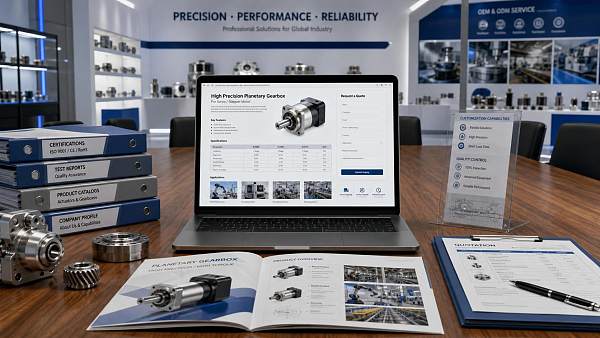
From a Business Evaluation Perspective, What Kind of Website Is More Likely to Generate Inquiries That Can Convert?
If a company is evaluating whether investment in a foreign trade website is worthwhile, it should focus not only on whether the pages “look good,” but also on whether the website can screen business opportunities. This capability is generally reflected in the following areas.
First, is the target market clearly addressed? Manufacturing companies often serve multiple regions at the same time, but different markets do not share the same priorities. European customers may be more concerned with compliance and certification, North American customers may place greater emphasis on application suitability and service responsiveness, while customers in the Middle East and Southeast Asia may focus more on delivery time, price, and communication efficiency. If a website does not provide market-specific messaging and instead uses uniform content for all customers, it will often struggle to reach genuine demand.
Second, does the product information support purchasing decisions? For buyers, more product parameters are not necessarily better. The information should support preliminary screening. Materials, processes, dimensions, performance, applicable industries, certification status, and delivery methods are more valuable than general claims such as “high quality” and “professional manufacturer.”
Third, does it demonstrate the company's genuine delivery capabilities? The problem with many manufacturing company websites is not a lack of content, but inaccurate information. Images that do not match the actual production lines, overly vague case studies, and certificates displayed without information about their validity period can all weaken the trust of overseas customers. High-quality inquiries are usually based on the customer's belief that the company is worth engaging with further.
Fourth, does the website balance search visibility and conversion? Some websites focus on presentation while neglecting indexing and have almost no organic search traffic; others focus on traffic while neglecting the persuasive power of their pages. Business evaluation cannot look at only one side. A truly effective manufacturing foreign trade website should be discoverable and should also encourage suitable customers to leave high-quality information.
Why Content Depth Is Often More Important Than the Number of Pages in Manufacturing Website Cases
When building a website, many companies easily fall into the misconception that the more complete the sections and the more pages there are, the more professional the website appears. In reality, for overseas customer acquisition in manufacturing, inquiry quality is often determined not by the total number of pages, but by whether key pages can resolve buyers' questions.
For example, for industrial components, one website may contain only product categories and several images, while a more mature website may add application industry descriptions, technical document downloads, frequently asked questions, production tolerance specifications, customization procedures, packaging and transportation methods, and even information about compatibility with particular equipment or standards. The latter may not have more pages, but it is more likely to attract customers who arrive with genuine projects.
This is also a typical pattern in manufacturing foreign trade website development cases: the closer the content is to the purchasing decision process, the higher the inquiry quality tends to be. This is because customers have already completed part of their own screening before submitting an inquiry.
What Does Improving Inquiry Quality Mean for a Company's Internal Operations?
From a management perspective, the value of high-quality inquiries is not limited to improving the conversion rate; they also improve internal collaboration efficiency.
Sales teams no longer need to spend substantial time responding to irrelevant inquiries, technical teams do not have to repeatedly participate in low-probability projects, and the quotation process becomes easier to standardize. Over the long term, this directly affects the company's confidence in investing in overseas marketing.
Many companies are not unwilling to continue operating an independent website. Rather, after experiencing an early stage in which they had traffic and inquiries but poor conversion, they lost patience with website development and promotion. The problem is often not the channels themselves, but the wrong evaluation criteria: if only the number of inquiries is considered, ineffective growth can easily be mistaken for effective growth.
For business evaluators, more appropriate metrics should include the proportion of traffic from target countries, the completeness of inquiry content, the rate of repeated follow-up, the quality of sample requests, the proportion entering the quotation stage, and the final order conversion cycle. Only when these data points are linked to website lead quality can it be determined whether website development is truly generating business value.
Which Low-Quality Customer Acquisition Traps Should Manufacturing Companies Avoid Most During Website Development?
One type of trap is blindly imitating competitors' pages. What a competitor's website can display does not mean it is suitable for the company's own customer structure. In particular, OEM, technology-oriented, and brand-oriented companies have very different customer needs. Copying a page style does not mean copying inquiry quality.
Another trap is separating the website from promotion. If the website is not structurally planned around subsequent SEO, advertising, and multilingual market expansion, repeated redesigns will often be required later, increasing costs and affecting data accumulation.
A further trap is ignoring mobile devices and response speed. Although manufacturing customers have complex decision-making processes, their first visit does not necessarily take place on a computer. Many overseas buyers first browse and save information on their phones before circulating it internally. If the mobile experience is poor, loading is slow, or the form is inconvenient, even high-intent customers may be lost.
During Business Evaluation, the More Important Question Is Not “How Much Does the Website Cost?” but “Can the Inquiry Structure Be Continuously Optimized?”
A manufacturing foreign trade website is not a one-time deliverable, but a customer acquisition asset that requires continuous optimization. In particular, as search environments, customer decision paths, and traffic channels continue to change, the long-term value of a website increasingly depends on its ability to use data feedback and iterate content.
This is also why integrated website and marketing service solutions are receiving attention. For many manufacturing companies, building the website is no longer the most difficult part. The challenge is how to use channels such as SEO, advertising, social media, and AI search visibility to direct the right traffic to the right pages and gradually improve lead quality. A website without ongoing optimization capabilities may launch quickly in the short term, but it will struggle to establish a stable source of business opportunities over the long term.
Returning to the question at the beginning of the article, why do manufacturing companies place greater emphasis on inquiry quality? Because the essence of manufacturing foreign trade is not a traffic business, but a business characterized by high costs, long cycles, and a strong reliance on trust. If a website cannot help companies screen customers in advance, reduce communication noise, and increase business opportunity density, even a large number of inquiries will be difficult to convert into genuine growth.
Therefore, when evaluating whether a manufacturing foreign trade website development case is successful, the most important factor is never how many messages appear in the backend, but how many of those messages come from the right market, reflect the right needs, and represent the right purchasing stage. Only a website that can generate this type of inquiry possesses genuine business value.
Related Articles
Related Products
 Yiyingbao SaaS Intelligent Website Building and Marketing SystemYiyingbao SaaS Intelligent Website Building and Marketing System, AI-powered no-code website building, rapid creation of multilingual B2B international websites in 10 minutes, global server acceleration, AI-powered SEO optimization, helping businesses connect efficiently with global markets. The perfect integration of technology and operation makes building an international trade website remarkably simple
 AI+SEM Intelligent Advertising Marketing SystemAI+SEM drives intelligent ad creation, empowering full-funnel precision advertising marketing. The system automatically generates weekly/monthly reports, AI recommends keywords and target countries, monitors core metrics in real-time with intelligent alerts, and enables one-click high-conversion ad solutions to help quickly acquire customers and improve ROI.
 AI+SEO Dual-Engine System Optimization ServicesYiyingbao’s AI+SEO dual-engine optimization system helps foreign trade enterprises acquire high-quality organic traffic through AI-powered keyword research, content generation, and comprehensive technical optimization, significantly improving search rankings and conversion rates.
 AI+SNS Social Media Marketing SystemYingbao AI+SNS Social Media Marketing System - Precision social capture for the social media era. Supports one-click content synchronization across major platforms like Facebook and LinkedIn. AI intelligently rewrites posts for enhanced relevance. 24/7 AI customer service and user profiling analysis empower businesses to efficiently expand into global markets.
 AI+SEO营销解决方案易营宝AI+SEO营销解决方案,通过AI批量写作、智能生成TDK、精准关键词扩词等功能,全面优化网站SEO效果,提升流量与转化率。助力企业构建高效智能网站新生态。
 AI+SEM Advertising Marketing SolutionsAI+SEM Advertising Marketing Solution leverages AI technology to deeply empower SEM ad campaigns. It automatically generates weekly/monthly reports using AI, presenting account data across multiple dimensions for comprehensive insights into campaign performance and trends. The system precisely recommends keywords and target countries, intelligently generates high-conversion ad copy, and enables one-click activation of efficient campaign plans to help businesses rapidly acquire customers. Simultaneously, it monitors core metrics in real time, intelligently identifies abnormal fluctuations, and issues timely alerts to ensure stable, high-return advertising results.
 Domain Name ServicesEasyWin provides professional domain name services, including intelligent queries, one-stop registration, brand protection, and full lifecycle management, helping businesses build a digital brand image.
 EasyOperate B2C Cross-Border E-Commerce Platform & Independent WebsiteEasyStore B2C Cross-border E-commerce Independent Store is an intelligent website building and cross-border e-commerce integrated solution independently developed by EasyStore Information Technology (Beijing) Co., Ltd. The system is specially designed for small and medium-sized as well as large export enterprises, integrating 'website building, operation, marketing, advertising, and conversion' into one, helping enterprises quickly establish cross-border e-commerce independent stores to achieve brand globalization and global sales growth.
The platform supports multiple languages, multiple currencies, and multi-channel marketing, with built-in AI intelligent translation and SEO optimization systems, suitable for mainstream markets such as Southeast Asia, Europe and America, Latin America, and the Middle East, assisting Chinese manufacturing enterprises in efficiently deploying international e-commerce strategies. SSL证书易营宝提供专业SSL安全证书服务,包括单域名和泛域名证书,确保网站数据传输加密、身份验证和完整性保护,助力企业建立安全可信的在线业务环境。









