I. What Is a Marketing-Oriented Foreign Trade Website?
A marketing-oriented foreign trade website is a website system designed around overseas customer acquisition, trust building, and inquiry conversion. Unlike a purely informational corporate website, its core objective is to enable visitors to quickly understand a company's capabilities, product advantages, delivery capacity, and cooperation process.
From a business perspective, this type of website typically serves foreign trade B2B companies, manufacturing factories, brands expanding overseas, and cross-border sellers. It must support both brand presentation and search traffic acquisition, advertising conversion, multilingual communication, and lead capture.
A qualified marketing-oriented foreign trade website project usually includes site architecture, product categorization, page copy, inquiry forms, mobile adaptation, page speed optimization, basic optimization, and data tracking, rather than simply completing the visual design of the pages.
For export-oriented companies, a website is essentially a long-term digital asset in overseas markets. It serves as the company's brand image while also undertaking the commercial tasks of capturing organic traffic, supporting advertising landing pages, directing social media traffic, and screening customers.
II. Technical Principles and Conversion Logic
The underlying logic of a marketing-oriented foreign trade website is to break down the overseas customer's decision-making journey into five stages—awareness, understanding, trust, communication, and conversion—and map each stage to the website structure and content design.
At the technical level, responsive architecture, multi-device compatibility, page loading speed, server node deployment, SSL security configuration, and the content management system determine whether a website can provide stable access and support continuous operation.
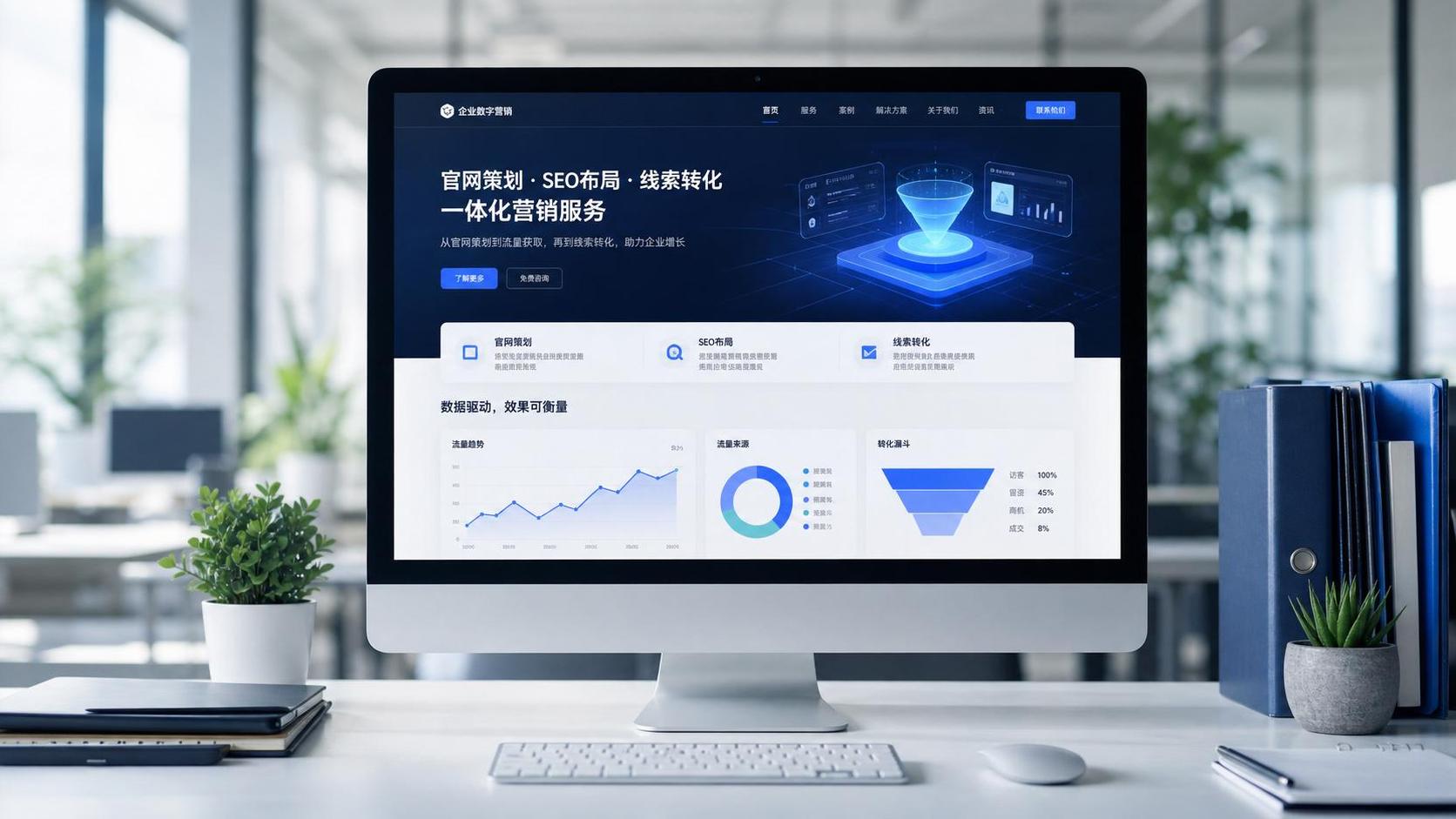
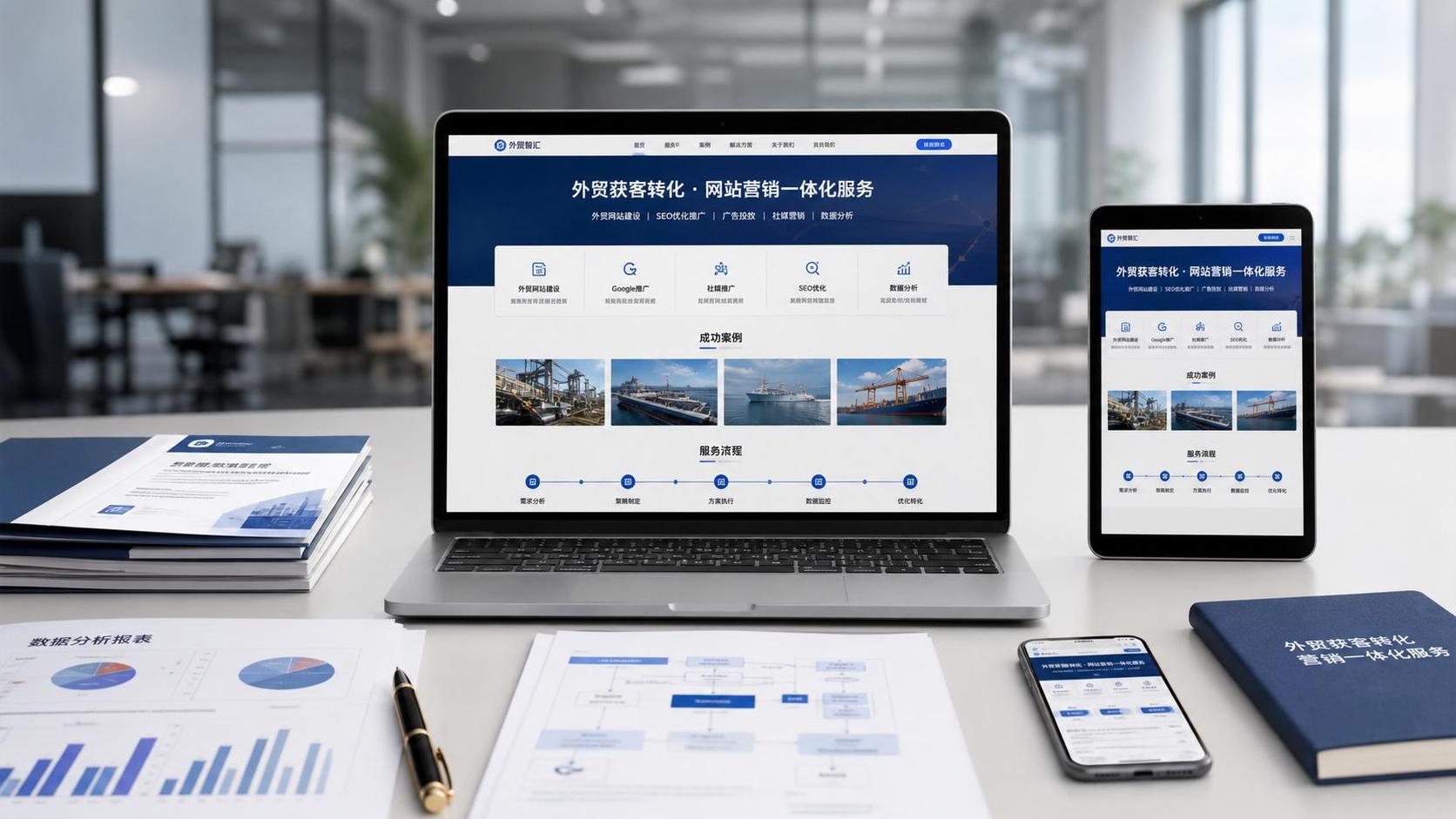
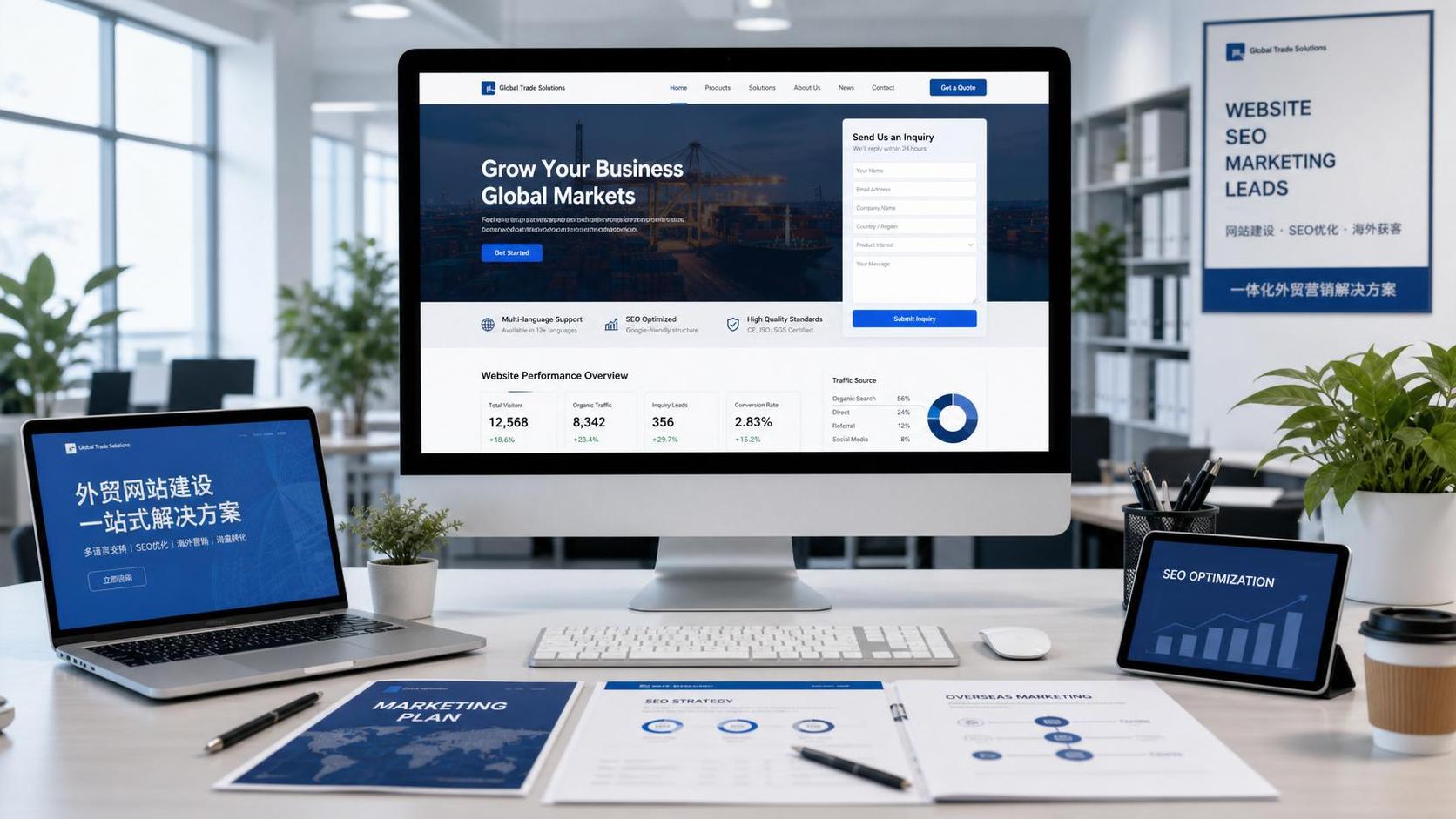
At the marketing level, the homepage establishes the first impression, category pages organize products and solutions, product detail pages answer procurement questions, articles and case study pages enhance professional credibility, and forms and instant communication entrances drive inquiries.
Yingyingbao uses AI-powered website building, multilingual content generation, SEO structural optimization, and a global acceleration network in coordination, enabling marketing-oriented foreign trade website development to go beyond simply launching a website and move closer to building a continuous customer acquisition system.
III. Main Types and Applicable Businesses
Marketing-oriented foreign trade websites currently available in the market can generally be divided into four types: B2B inquiry-oriented corporate websites, B2C branded independent websites, multilingual brand websites, and advertising landing page clusters. Different types have different requirements for content depth, conversion paths, and operational pace.
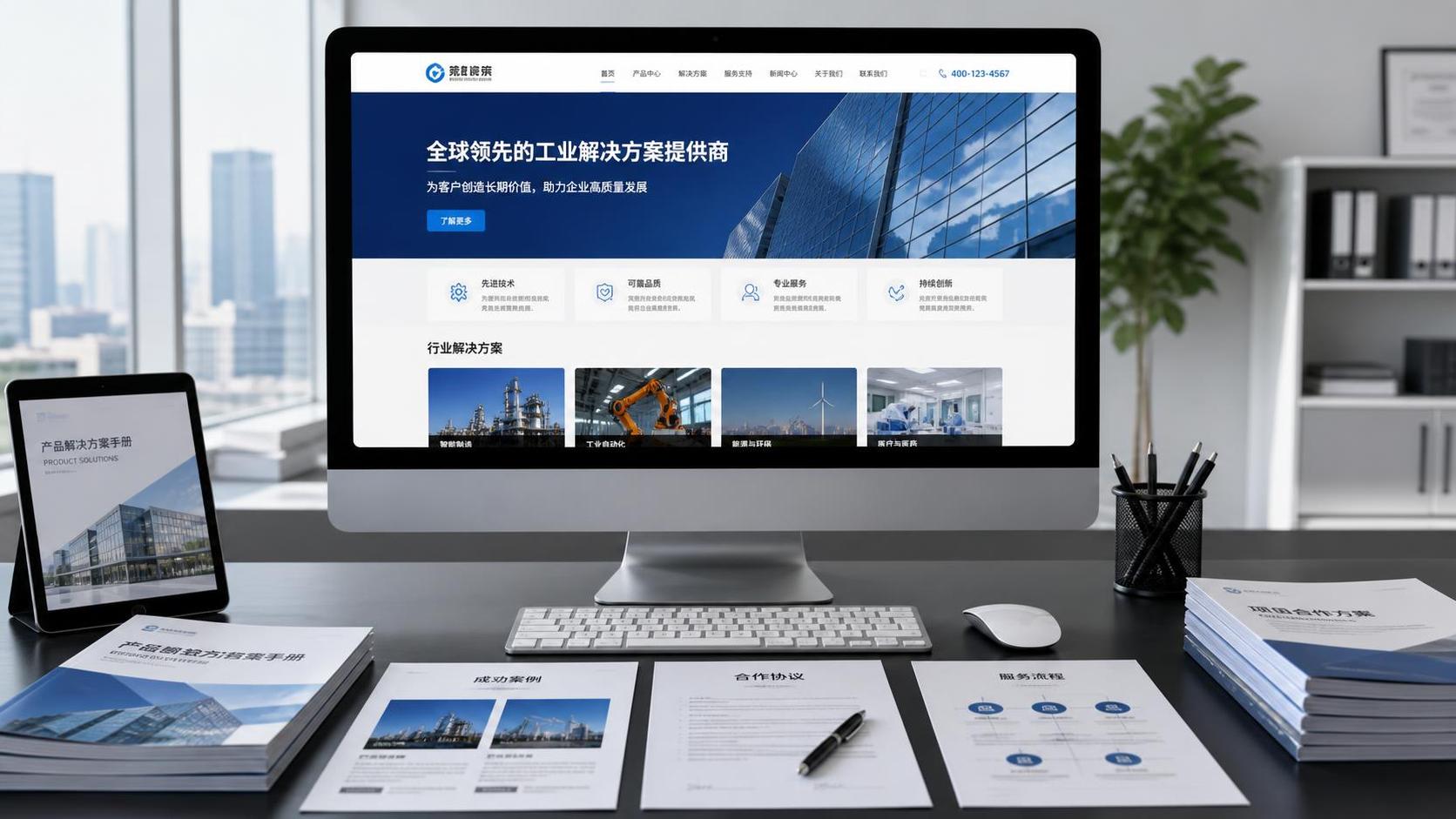
B2B inquiry-oriented corporate websites are more suitable for factories, OEM and ODM companies, equipment manufacturers, and industrial product suppliers. These websites emphasize company capabilities, manufacturing processes, certification information, project cases, product specifications, and convenient inquiry channels.
B2C branded independent websites are more suitable for cross-border sellers and brand owners. They require product categorization, shopping processes, specification management, review displays, and order conversion capabilities. Compared with marketplace stores, independent websites place greater emphasis on building brand assets and driving repeat purchases.
Multilingual brand websites are suitable for companies seeking to cover multiple national markets, while landing page clusters are more suitable for advertising scenarios. Before launching a marketing-oriented foreign trade website project, a company should first clarify whether its primary objective is inquiries, orders, or brand penetration.
IV. Why Are More and More Companies Attaching Importance to Marketing-Oriented Foreign Trade Websites?
Traditional foreign trade customer acquisition has long relied on trade shows, platforms, and business development by sales representatives. These channels can produce direct results, but their problems are also clear: channel costs are rising, customer ownership is unstable, leads are easily interrupted when advertising or exhibitions stop, and companies find it difficult to build an independent traffic pool.
The value of a marketing-oriented foreign trade website lies in consolidating company information, product materials, industry knowledge, customer cases, and communication channels on a platform that can be operated over the long term, allowing search, advertising, and social media traffic to ultimately converge on the same conversion hub.
Compared with traditional website development models that are fully customized but have long cycles and high maintenance requirements, Yingyingbao lowers the entry threshold for foreign trade companies through its AI-powered website building system, drag-and-drop editing, multilingual expansion, and content generation capabilities. This is more suitable for small and medium-sized companies seeking to launch quickly and iterate continuously.
For companies that need to balance brand presentation and customer acquisition growth, marketing-oriented foreign trade websites have evolved from an optional feature into basic infrastructure, especially as overseas customers increasingly rely on search and online verification.
V. Business Selection Criteria: How to Determine Whether a Solution Is Reliable
When evaluating marketing-oriented foreign trade website services, the first consideration should be whether the objectives are clear. If a service provider only discusses visual appeal without addressing keyword planning, product page logic, inquiry paths, and subsequent operations, the project will most likely end up as an informational website.
The second consideration is the technical foundation, including responsive compatibility, backend usability, page speed, security configuration, data tracking, global access stability, and multilingual expansion capabilities. These factors directly affect the customer experience and the results of subsequent promotion.
The third consideration is the ability to coordinate content and promotion. A good marketing-oriented foreign trade website project does not end when the website development team completes the build; instead, it should work continuously with SEO, advertising, social media, content updates, and conversion optimization. In this regard, Yingyingbao is closer to an integrated model combining website development with marketing operations.
The fourth consideration is industry knowledge. Procurement logic varies greatly across industries such as machinery, chemicals, new energy, medical products, and auto parts. Whether a service provider understands specification presentation, qualification communication, delivery capabilities, and the procurement decision-making chain determines whether the website is truly aligned with customers.
VI. Development Process, Quality Control, and Application Scenarios
A mature marketing-oriented foreign trade website development process usually includes requirements analysis, market and keyword research, information architecture design, page prototyping, visual presentation, copy organization, product entry, function configuration, testing and launch, and data integration.
Quality control focuses on three levels: whether the page clearly communicates the business value, whether access is stable and fast, and whether the conversion channels are complete and functional. With the proportion of mobile browsing continuing to rise, compatibility and form experience cannot be overlooked.
Based on responsive architecture, AI content generation, and global cloud node deployment, Yingyingbao supports the development of foreign trade corporate websites, product showcase websites, multilingual websites, independent online stores, and advertising landing pages, while facilitating subsequent integration with SEO, SEM, SNS, and GEO operations.
Looking at the industries covered by its cases, there is clear demand in fields including laser engraving machines, steel, chemicals, heavy-duty trucks, machinery, new energy, agriculture, medical products, and furniture. This shows that marketing-oriented foreign trade website development is not limited to a single industry but is widely applicable to digital customer acquisition scenarios for export-oriented companies.
VII. How to Evaluate Total Cost of Ownership and Return on Investment
From a procurement perspective, the total cost of ownership of a marketing-oriented foreign trade website includes not only the initial website development fee but also content production, multilingual maintenance, server and security costs, advertising landing page expansion, SEO operations, social media coordination, and internal communication costs.
Many companies compare only website development quotations in the early stage while ignoring the efficiency of subsequent modifications and promotional adaptability. As a result, although the website may be inexpensive, it can be difficult to update, get indexed, or use for advertising, making the actual cost higher. A truly reasonable evaluation should consider the combined investment and lead output over one to two years.
If the service system covers website development, SEO, advertising, social media, and operations at the same time, internal communication and switching costs for the company will decrease significantly. Yingyingbao's one-stop system is more suitable for teams seeking to shorten the launch cycle, reduce the coordination losses associated with outsourcing, and improve inquiry conversion efficiency.
Return evaluation can focus on four key indicators: the number of valid inquiries, inquiry quality, the proportion of organic traffic, and changes in customer acquisition costs. For B2B companies, as long as the website continues to generate high-intent customers, its long-term ROI is often better than that of promotion through a single channel.
VIII. Future Trends: From Website Development to a Continuous Growth System
Future marketing-oriented foreign trade website development will place increasing emphasis on multilingual capabilities, intelligent content, data tracking, and channel coordination. Companies will no longer be satisfied with simply having a website; instead, they will pay more attention to whether the website can form a stable growth loop.
On the one hand, search scenarios are expanding from traditional results pages to generative question-and-answer environments. Website content needs to be more structured and professional, as well as more suitable for understanding and citation. On the other hand, advertising and social media traffic are also placing increasingly higher demands on landing page quality.
Therefore, the next stage of marketing-oriented foreign trade website development is not merely an upgrade in website development technology. It involves the coordinated integration of AI website building, AI writing, multilingual localization, GEO planning, SEO operations, and advertising conversion optimization. The website will become the core hub of a company's overseas digital operations.
For companies planning to develop overseas markets over the medium to long term, building a marketing-oriented foreign trade website that can be iterated, promoted, and analyzed at an early stage is often more predictable than repeatedly changing channels. This is also why integrated services such as Yingyingbao's have attracted the attention of manufacturing and foreign trade companies.
 How to balance showcase and lead generation in cloud website development? Key points in corporate website planning analysisHow to balance showcase and lead generation in cloud website development? This article breaks down key points in corporate website planning from website positioning, content planning, SEO layout to conversion design, helping you build a marketing website that builds brand image and generates inquiries.
 How to Build Inquiry-Oriented Pages for Foreign Trade Marketing Websites? Column Structure and CTA Design ApproachHow to build inquiry-oriented pages for foreign trade marketing websites? This article focuses on column structure, trust building, and progressive CTA design, analyzing conversion approaches in different traffic scenarios to help enterprises improve valid inquiries and page-based customer acquisition efficiency.
 How to evaluate B2B foreign trade marketing-oriented website development services? Review these 5 capabilities before looking at casesHow to evaluate B2B foreign trade marketing-oriented website development services? Do not just look at cases and quotations, first review 5 key capabilities: foreign trade market understanding、SEO foundation、conversion content、multi-channel collaboration and data optimization, to help you choose the right website + marketing service provider that can truly drive inquiry growth.
 How to choose marketing website development services? Look at case studies, feature configuration, and inquiry conversion capabilitiesHow to choose marketing website development services? Don't just look at the price; pay more attention to case study match, feature configuration, SEO, and inquiry conversion capabilities. This article teaches you how to use an actionable checklist to quickly screen for service providers that can truly bring traffic, inquiries, and long-term growth.
 How to determine the column structure and content focus for machinery industry B2B foreign trade marketing websites?When building a B2B foreign trade marketing website for the machinery industry, you cannot focus only on page aesthetics; you should first establish the column structure. This article combines complete machines, components, and non-standard customization scenarios to break down column planning, content focus, and inquiry conversion logic, helping companies create a machinery industry website that generates more leads.
 Will AI search recommendation services affect SEO strategy?Will AI search recommendation services affect SEO strategy? Yes, and they have already begun changing the logic of website optimization. Starting from content structure, technical foundations, brand credibility, and multilingual strategies, this article helps businesses quickly assess whether their existing SEO is compatible with AI search and improve indexing, recommendations, and conversions.
 Which Industries Are Marketing Websites Suitable for? Start by Looking at the Sales CycleWhich industries are marketing websites suitable for? Don’t just look at industry categories. It is more important to consider the sales cycle, the complexity of customer decision-making, and the cost of building trust. This article explores scenarios such as foreign trade, manufacturing, and business services to help you determine whether a website can truly improve customer acquisition and conversion.
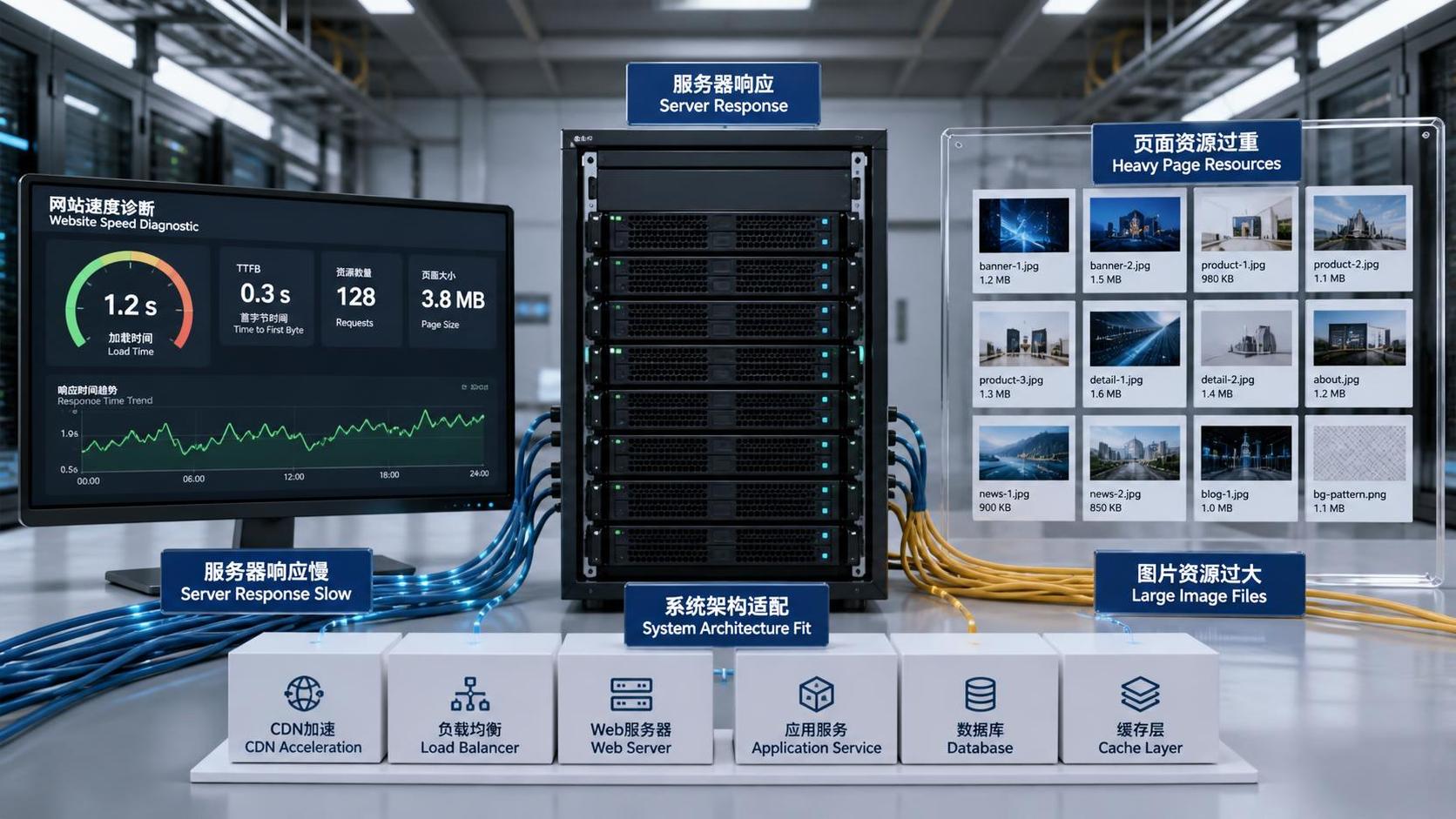
 The Three Most Common Reasons for Slow Foreign Trade Website DevelopmentWhy Do Foreign Trade Website Speed Issues Keep Recurring? This article breaks down three common causes: server locations, excessive page resources, and incompatible system architectures. Learn how to quickly identify the root cause of website sluggishness and improve the overseas browsing experience and inquiry conversions.