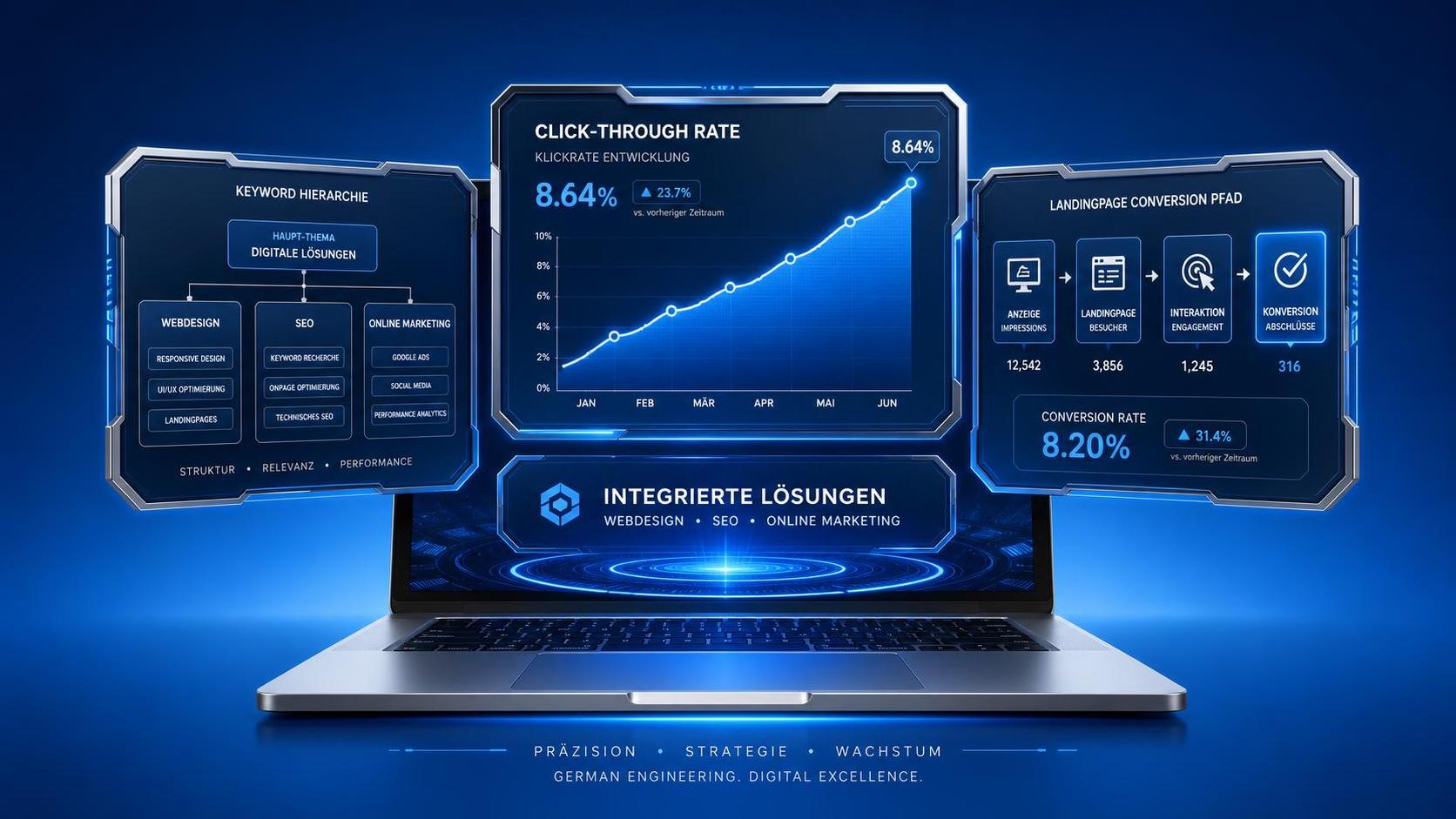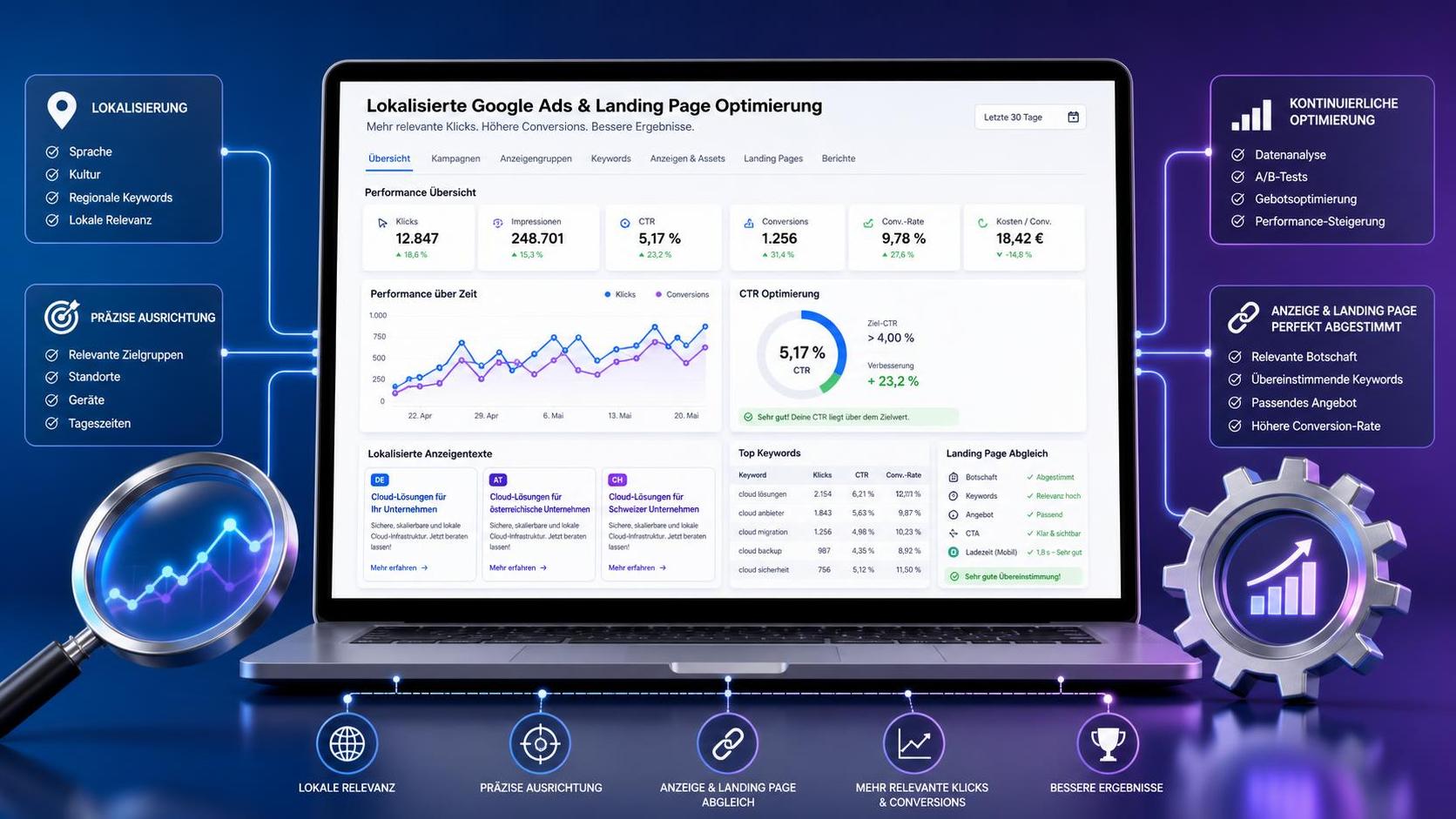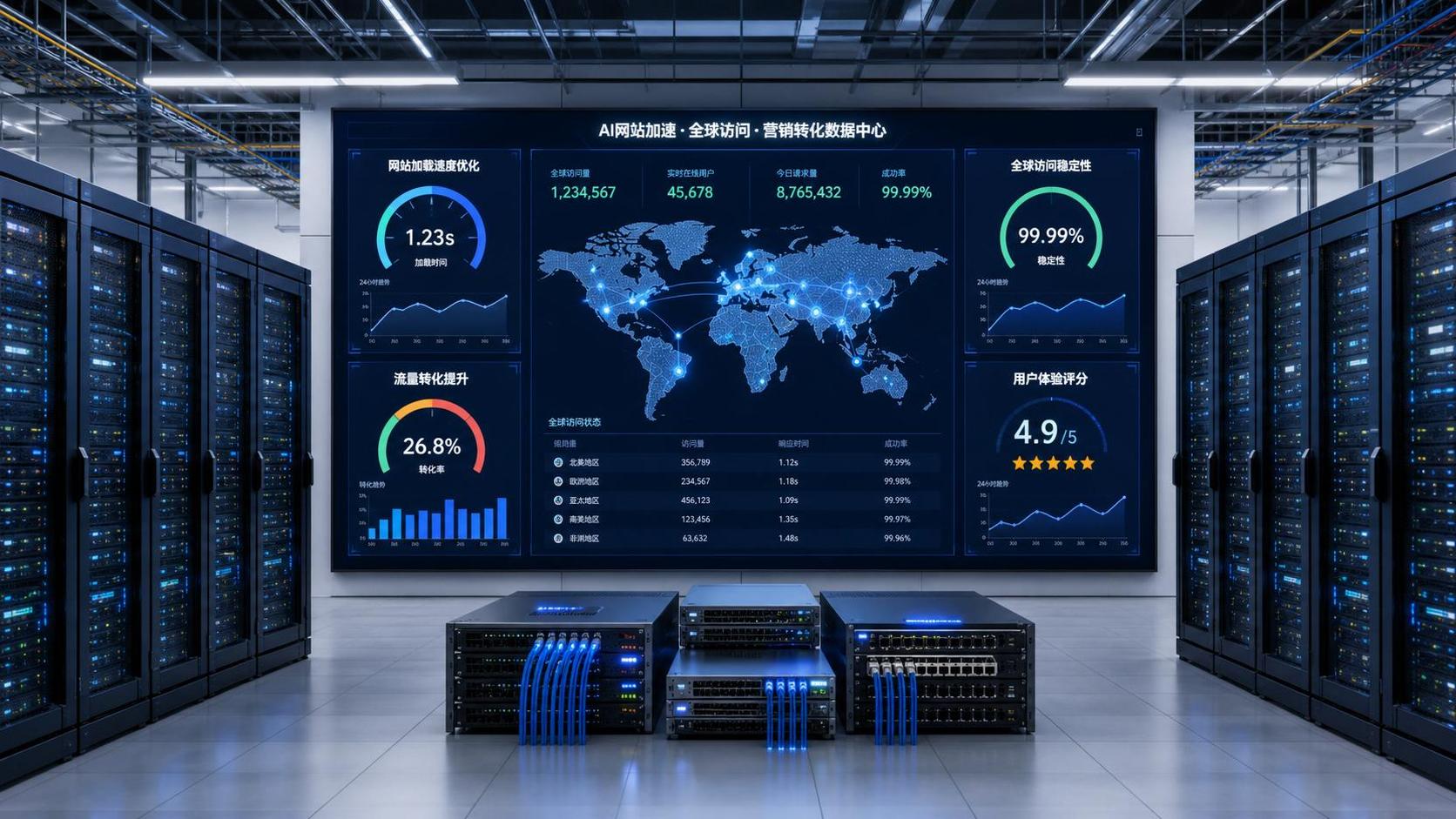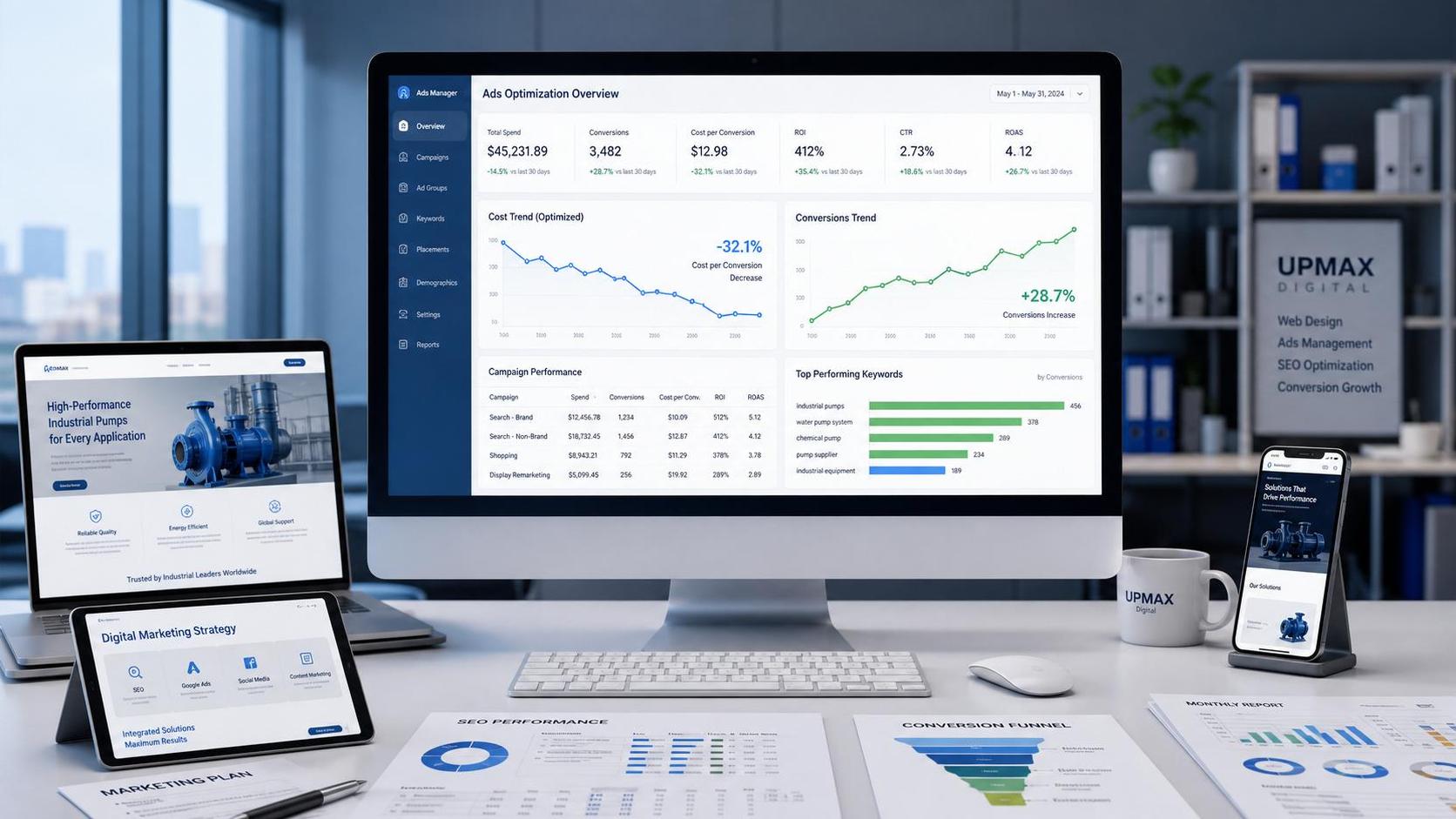
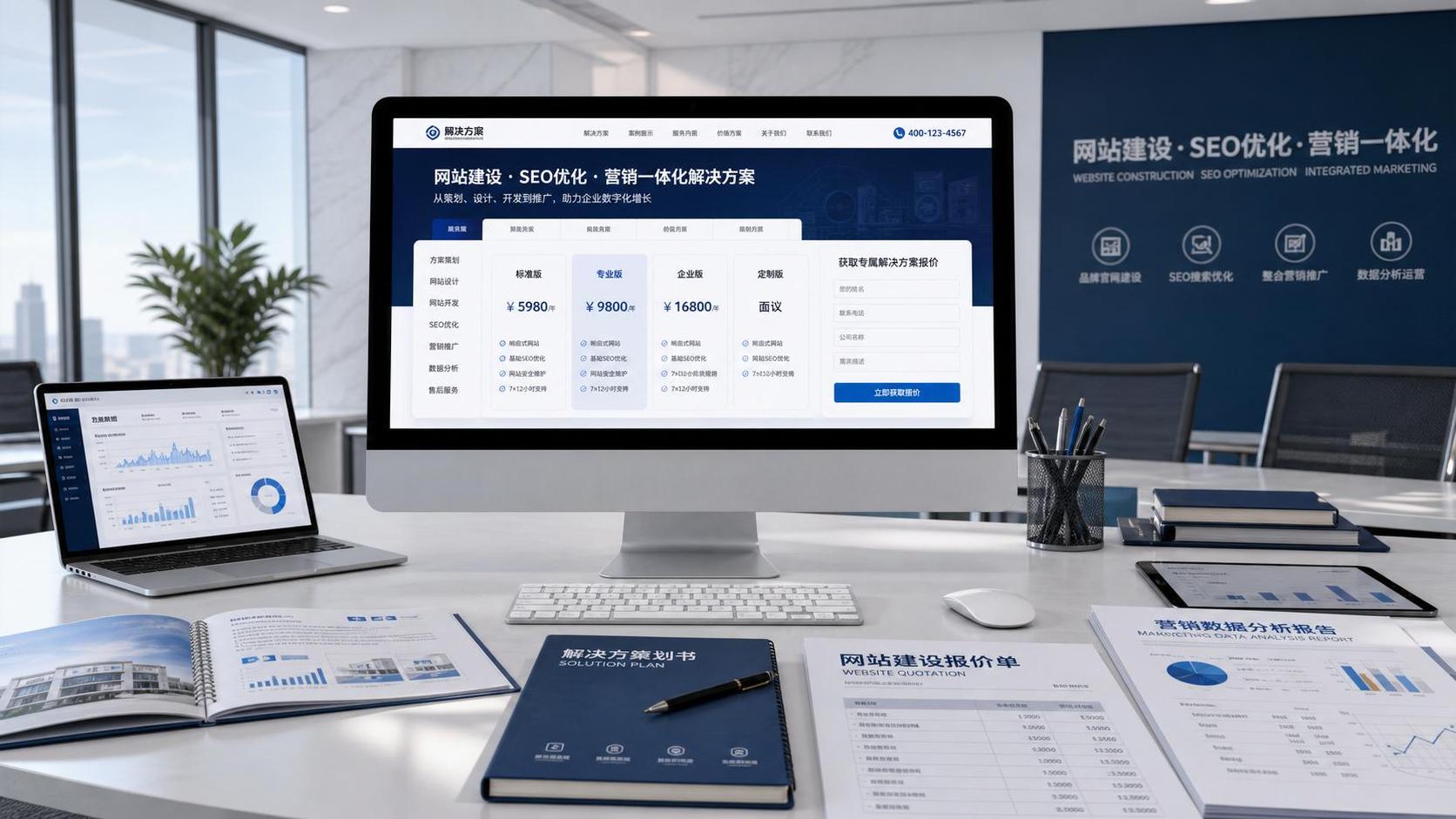
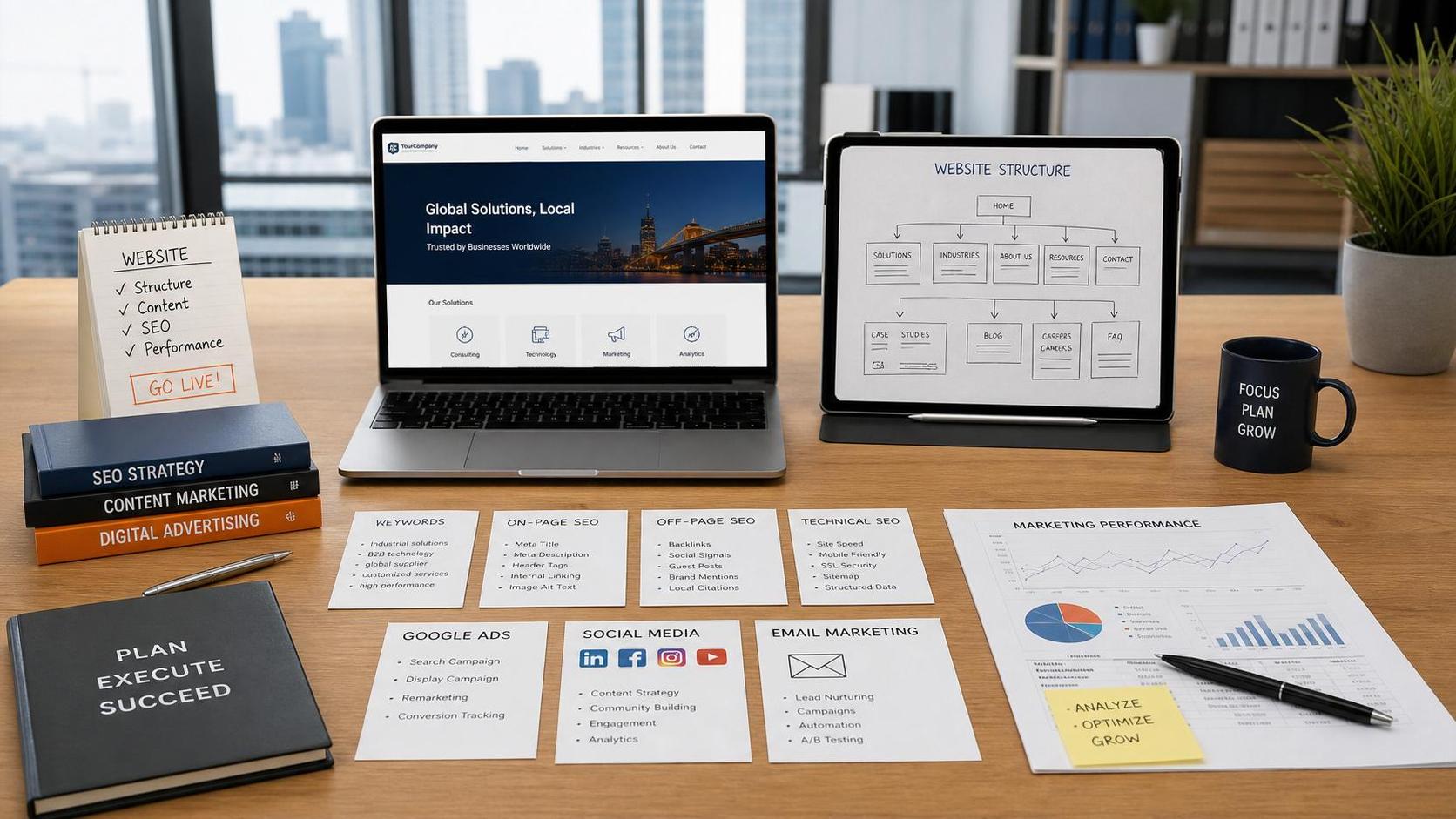
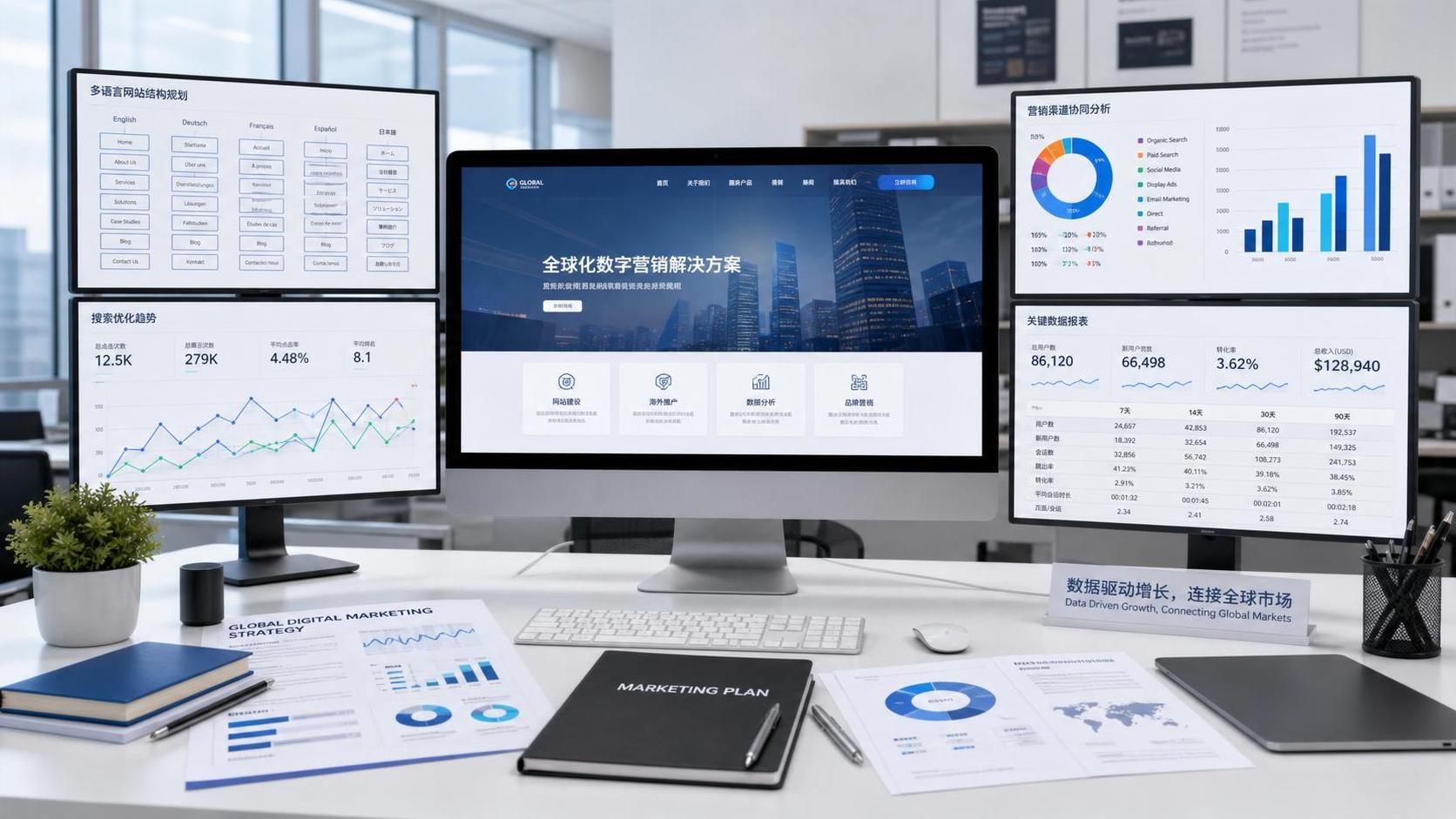
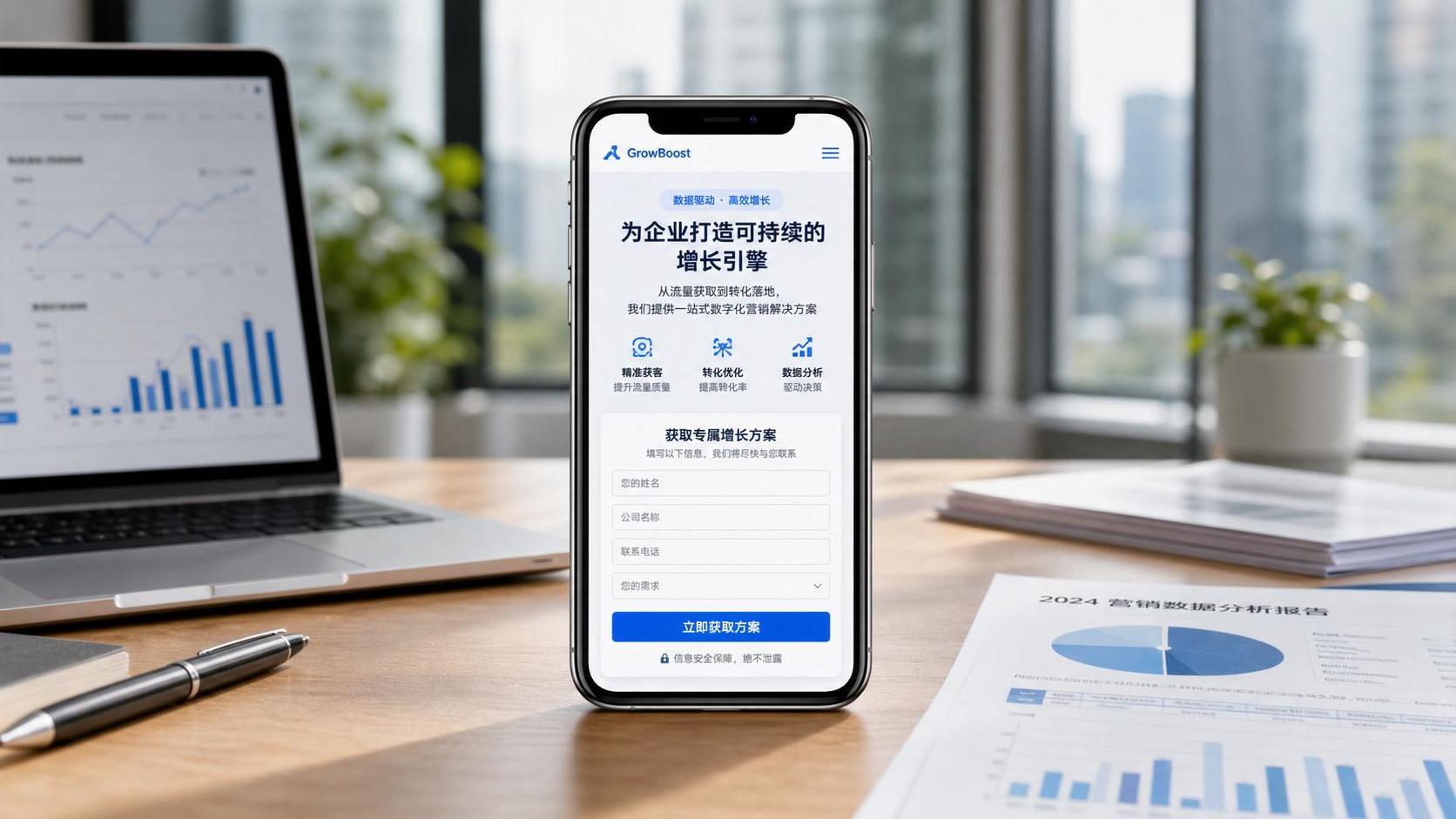
I. Definition and Business Scope of Landing Page Optimization
Landing page optimization is an ongoing process of adjusting content, structure, speed, and conversion paths for pages that receive traffic from advertising, organic search, social media, email, or external links. Its purpose is not to add visual decoration, but to help target visitors understand product value more quickly and complete intended actions such as submitting inquiries, booking appointments, downloading materials, or making purchases.
In B2B scenarios, landing pages typically serve purchasing managers, engineers, and distributors. The page must address rational questions concerning specifications, applications, lead times, certifications, and customization capabilities, while also reducing cooperation risks through factory capabilities, case studies, service processes, and contact information. Therefore, it should not follow the approach used for ordinary brand promotional pages.
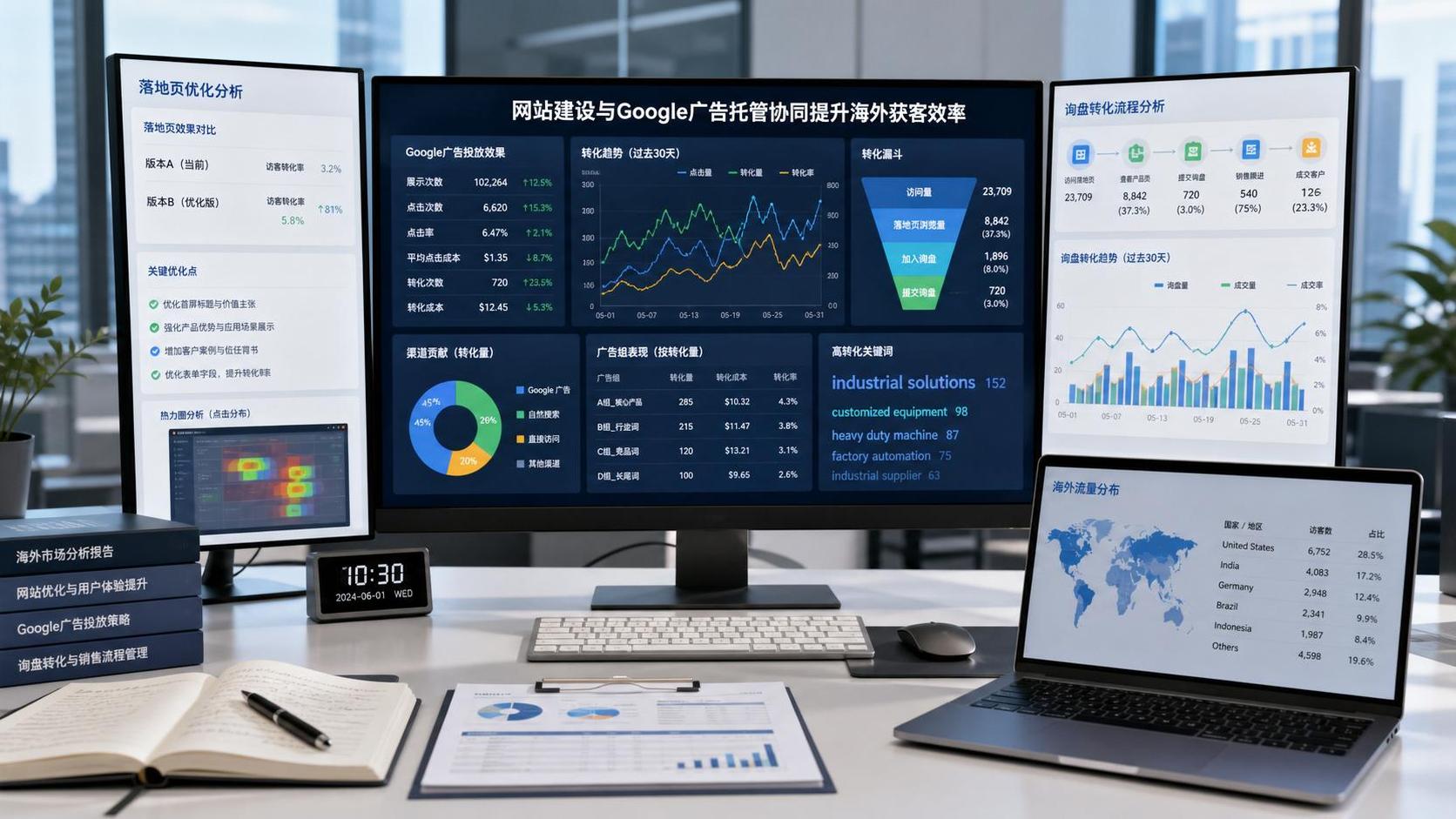
Effective landing page optimization should treat the page as a measurable sales touchpoint: define traffic keywords, visitor countries, device types, and conversion events, then iterate based on bounce rates, scrolling behavior, form submissions, and qualified inquiries. High page traffic but low lead quality often indicates a mismatch in the offer, audience, or form qualification process.
II. Conversion Principles: From Click Intent to Action Decisions
The fundamental logic of landing page optimization is information matching. Questions raised by ad copy, search terms, or social media content should receive a direct response above the fold. When visitors search for an industrial equipment model, the first screen should highlight the relevant product, its core application, and an RFQ entry point, rather than first displaying company news with limited relevance to the purchasing decision.
The second key is reducing cognitive effort. The headline should explain the subject and value, followed by layered support through specifications, differentiated capabilities, application scenarios, delivery details, and FAQs. Complex products may provide access to catalogs, drawings, videos, or technical consultation, but all information should not be crowded into the first screen, as this may obscure the primary action.
The third key is reducing friction to action. Form fields should match the information required for sales follow-up. Initial inquiries may prioritize collecting the visitor's name, email address, requirements, and product information; for highly customized projects with high order values, quantity, target market, and purchasing cycle may also be included. The confirmation page and automated reply after submission should also explain the next response arrangements.
III. Main Categories and Applicable Scenarios
By customer acquisition channel, landing pages can be divided into search advertising pages, organic search content pages, social media campaign pages, remarketing pages, and email campaign pages. Search advertising pages emphasize a close match between keywords and the page; social media pages can first build awareness of needs; remarketing pages are better suited to adding case studies, reviews, quotation requests, or reasons for time-limited communication.
By business objective, common types include B2B inquiry pages, product detail pages, solution pages, sample request pages, distributor recruitment pages, and cross-border e-commerce product pages. When industrial product procurement cycles are long, solution pages are suitable for explaining processes and product selection; standardized consumer products require clear presentation of pricing, specifications, shipping, reviews, and ordering steps.
Yingyingbao's AI-powered website building, multilingual standalone websites, and ad landing page capabilities are suitable for companies that need to cover multiple product lines and country markets simultaneously. For specialized industries such as laser engraving machines, steel, chemicals, machinery, and new energy, pages should be created by product and application as a priority, rather than combining multiple purchasing intents into one generalized page.
IV. Selection Criteria and Integrated Website-Marketing Requirements
When purchasing landing page optimization services or systems, first confirm whether pages can be continuously updated by the business team. Products, case studies, pricing strategies, and advertising campaigns change frequently. If every modification depends on a development schedule, testing speed will be significantly limited. Visual editing, module reuse, permission management, and version retention are practical foundational capabilities.
Next, assess multilingual and international access capabilities. Different languages should not rely solely on literal translation; units of measurement, contact details, case study presentation, and keywords also need to be adjusted. Language paths, page metadata, and regional content need to remain clear so that visitors and search platforms can correctly understand the target market of the page.
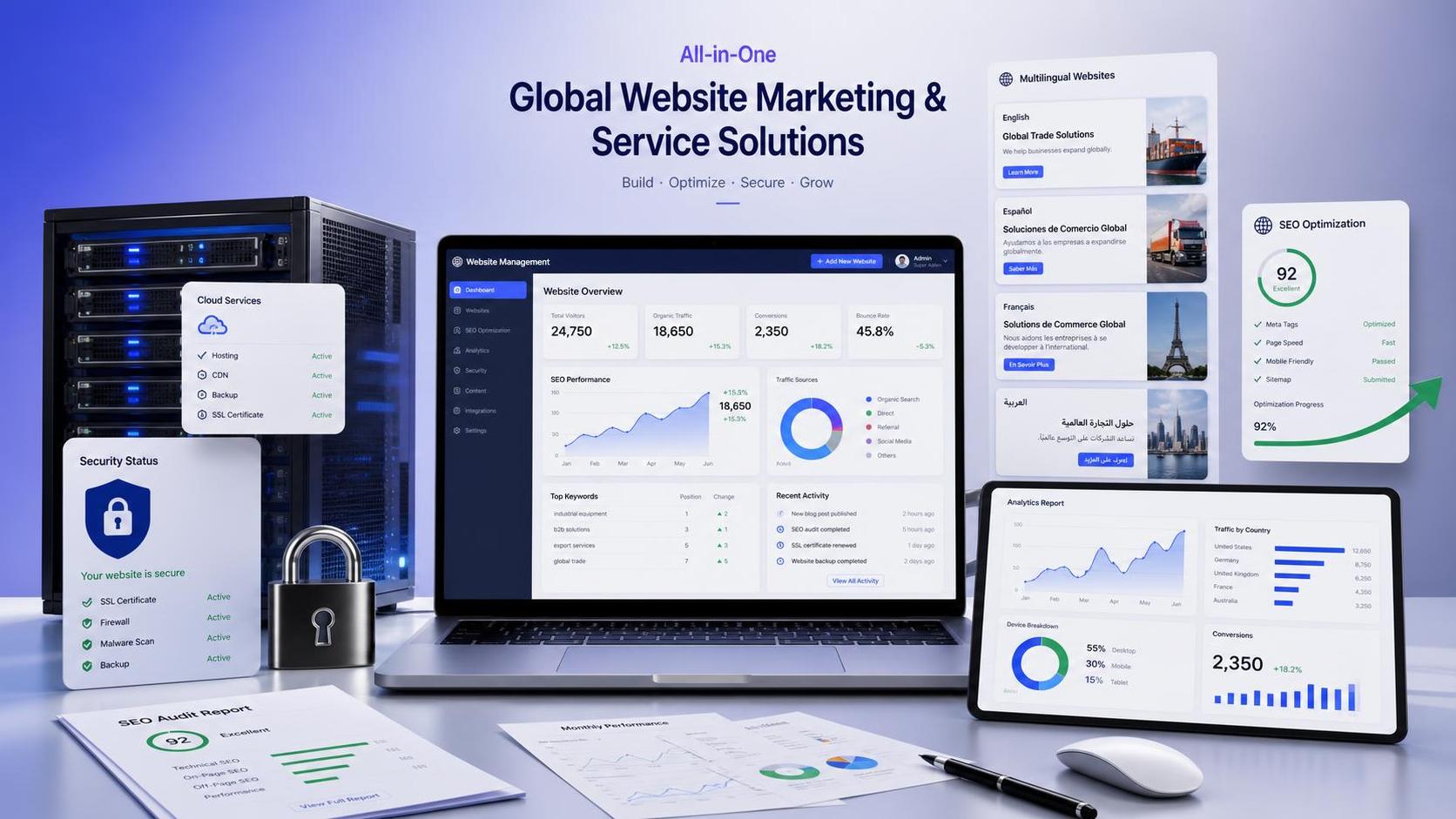
Third is closed-loop data capability. Service providers should be able to assist in defining conversion events such as inquiries, phone clicks, instant messaging clicks, add-to-cart actions, or orders, and review advertising, content, social media traffic acquisition, and website data from the same operational perspective. Yingyingbao provides website building, SEO, advertising, social media, and website operation services, which can reduce information gaps caused by handovers among multiple vendors.
V. Implementation Process, Content Quality, and Technical Checks
Landing page optimization should begin with research: identify target countries, customer roles, key products, competitive selling points, common objections, and lead handling methods, then determine one primary conversion objective for each traffic type. Advertising keywords, page titles, core selling points, and form prompts should use consistent business language to avoid a gap between expectations and the post-click experience.
During the page production stage, establish the information hierarchy first, then add materials. Prioritize authentic product images, factory capabilities, application descriptions, verifiable service processes, and frequently asked customer questions. Technical specifications should be presented in a structured format, with RFQ or technical consultation entry points placed near the specifications. AI can assist in generating initial drafts, but professional terminology, specifications, and commitments must be reviewed by the company.
Before launch, check mobile layout, form submission functionality, contact details, loading performance, link status, and privacy notices. Yingyingbao materials indicate that it uses responsive architecture and provides global nodes and infrastructure services. Actual access speed should still be tested based on the target market, asset size, number of scripts, and server deployment, rather than judged solely by the website-building platform.
VI. Total Cost of Ownership and Return on Investment Assessment
The total cost of ownership for landing page optimization includes not only page design and development costs, but also content collection, multilingual localization, image and video production, tracking configuration, advertising testing, server resources, ongoing maintenance, and sales follow-up costs. Comparing only the initial website-building quotation during procurement can easily overlook the long-term investment required for subsequent redesigns, page expansion, and data analysis.
When evaluating returns, distinguish between the number of forms and qualified sales opportunities. Traffic volume, conversion rate, cost per lead, qualified inquiry rate, quotation rate, and sales cycle can be tracked by channel, while acceptable customer acquisition costs should be determined in combination with product gross margins. High-value B2B projects should not focus solely on form volume; they should prioritize improving demand matching and sales response efficiency.
The value of an integrated solution lies in reusing website structures, content assets, and data rules. Yingyingbao's AI website building, content generation, SEO, SEM, and operational services can collaborate within the same business workflow, but companies should still clarify page ownership, account permissions, data export methods, service scope, and phased metrics, linking budgets to verifiable business objectives.
VII. Maintenance Cycles and Future Industry Trends
Landing page optimization is not a one-time project. Advertising pages can review keywords and conversion data weekly according to campaign schedules, while product and solution pages should be updated when new case studies are added, specifications change, markets expand, or customer objections become concentrated. For mature pages, small-scale A/B testing should be used to avoid being unable to determine the impact of specific changes after large-scale revisions.
In the future, pages will place greater emphasis on multilingual content, localization, mobile experience, video, and structured Q&A content. Generative search and question-answering tools are changing how users obtain supplier information. Companies need to accumulate clear product entity information, verifiable professional content, and FAQs to improve the likelihood of being understood and cited.
Yingyingbao has launched systems related to cloud-based intelligent website building, multilingual website building, and AI-powered foreign trade standalone websites, and provides GEO operation-oriented services. For companies expanding overseas, a more prudent approach is to first establish a measurable landing page optimization model for high-value products or core markets, then gradually replicate it across more languages, channels, and product lines, creating a long-term asset that drives coordinated growth between website and marketing services.
 Is Google Ads promotion outsourcing worth it? Which businesses and budget stages is it suitable for?Is Google Ads promotion outsourcing worth it? This article combines business growth stages, budget ranges, and website handling capabilities to analyze which businesses are more suitable for outsourcing, how to assess the difference in investment, output, and service, and help you avoid detours and efficiently obtain inquiries.
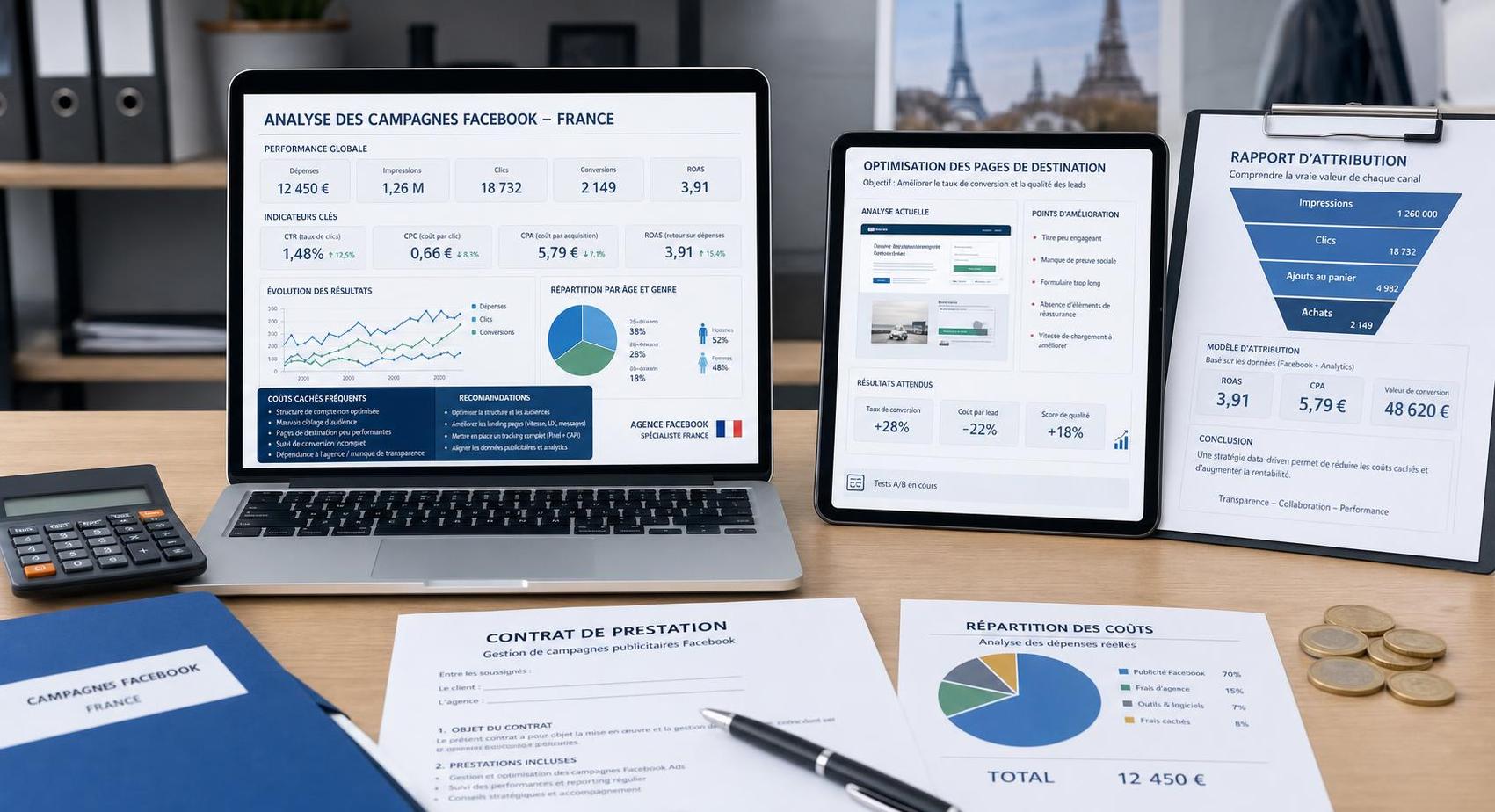
 What Are the Hidden Costs of Outsourcing Facebook Advertising in France?What Are the Hidden Costs of Outsourcing Facebook Advertising in France? This article breaks down common additional charges, including account setup, French-language creatives, landing page optimization, data attribution, and collaboration and communication, helping you avoid low-price traps and select high-conversion service providers more accurately.
 Are the post-launch maintenance costs of an international trade website high?Are the post-launch maintenance costs of an international trade website high? The answer depends on the website architecture, operating model, and service team. This article provides a detailed explanation of maintenance cost sources, cost-control methods, and common misconceptions, helping international trade companies choose the right integrated website and marketing solution to improve indexing, inquiries, and growth efficiency.
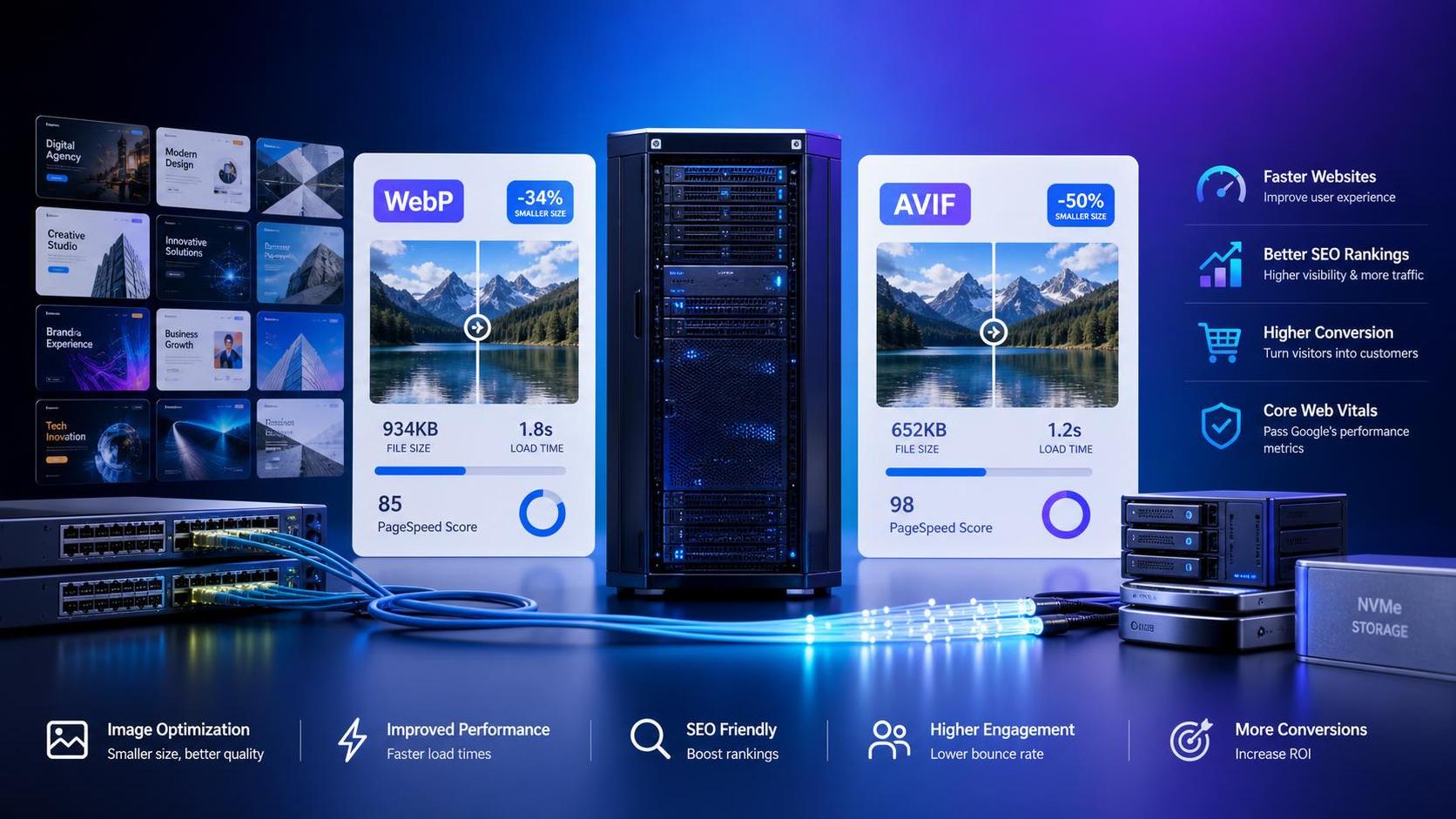
 For website speed optimization, should images use WebP or AVIF?Should WebP or AVIF be used for image compression in website speed optimization? This article analyzes the differences between the two in terms of compression ratio, compatibility, SEO performance, and conversion results, helping you quickly determine which format to choose for different website scenarios to improve loading speed and marketing performance.
 What areas can be optimized to improve advertising CTR in the German market?What are the ways to improve advertising CTR in the German market? This article focuses on ad creatives, keyword strategies, audience targeting, and landing page optimization to break down practical approaches for increasing click-through rates and reducing customer acquisition costs, helping foreign trade and global expansion businesses acquire higher-quality leads.
 How should low ad CTR in the German market generally be optimized?How can low ad CTR in the German market be improved? Systematically increase click-through and conversion rates through German-localized copy, audience segmentation, creative A/B testing, and coordinated landing page optimization. Suitable for reference by foreign trade, manufacturing, and brands expanding overseas.
 Will AI website acceleration technology improve user experience at a higher cost? How can input and output be evaluatedWill AI website acceleration technology improve user experience at a higher cost? This article analyzes how to evaluate input and output from the perspectives of cost structure, deployment costs, the synergy between SEO and advertising conversion, and reducing lead costs, helping companies determine whether the budget is worth the investment.
 How much does overseas social media marketing usually cost? Is it priced by platform, content volume, or managed service model?How much does overseas social media marketing usually cost? This article analyzes the differences in pricing based on platform volume, content output, managed service model, and website conversion synergy, breaking down pricing differences, hidden costs, and budget evaluation methods to help businesses choose the right solution faster.