









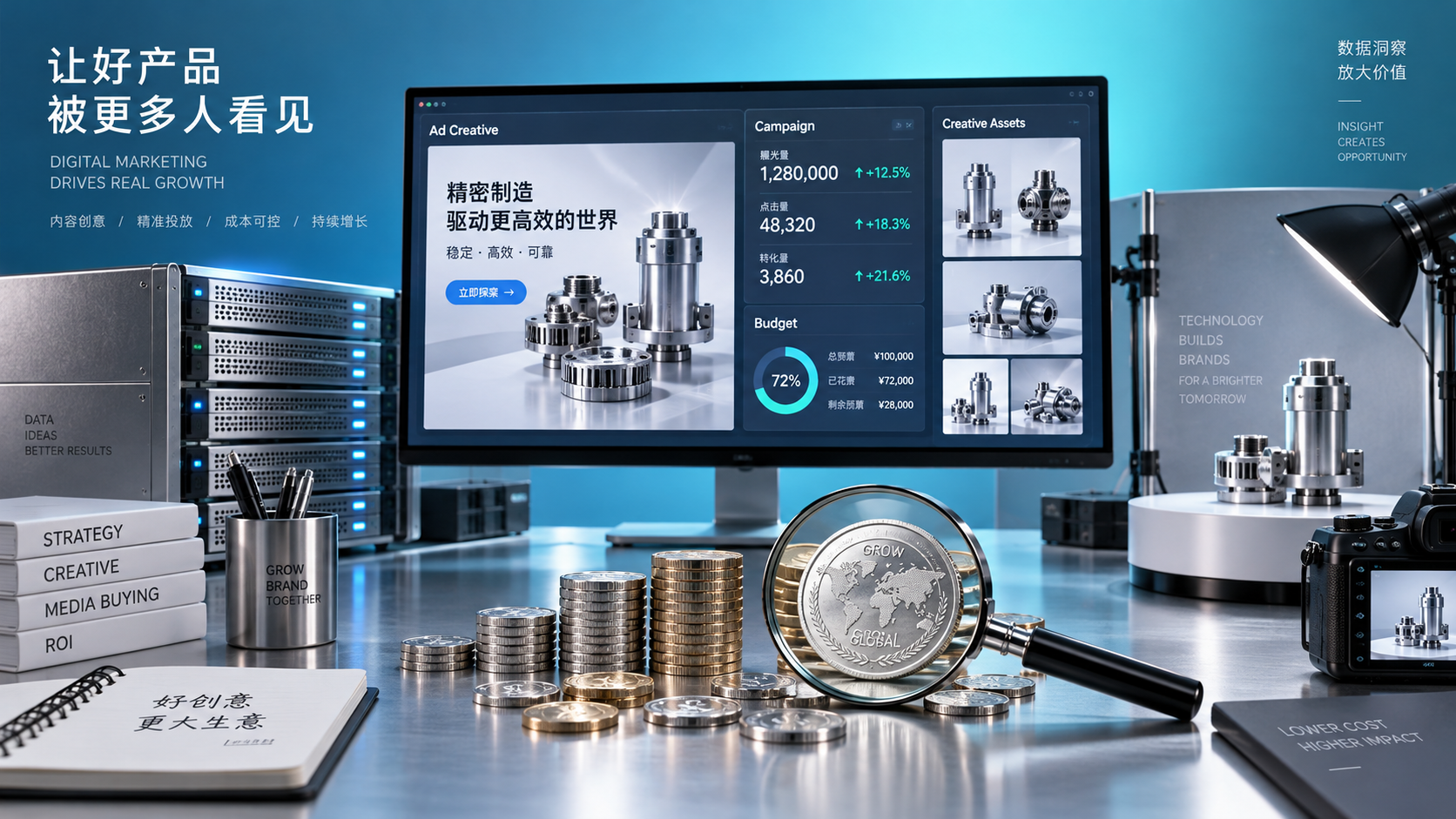
1. Industry Definition: What Problems Can Google Display Ads Solve?
Google Display Ads primarily use the Display Network to show image and responsive ads on websites, apps, and other placements. They enter the bidding process based on signals such as audience characteristics and content context, making them suitable for building brand awareness, reaching potential buyers, and re-engaging users who have visited an independent website.
For export businesses in machinery, industrial materials, and other sectors, buyers typically need to compare specifications, qualifications, and delivery capabilities. Display ads can maintain visibility throughout a longer decision-making cycle. However, a click does not indicate purchase intent; businesses should assess their value based on qualified inquiries and subsequent sales opportunities.
There is no single price for display advertising that applies to every industry. Costs are affected by the target country, level of competition, device, placement, and creative performance. Before setting a budget, clarify whether the goal is brand exposure, resource downloads, or sales inquiries, and avoid evaluating different objectives against the same metric.
2. Billing and Bidding: Distinguishing Payment Models from Optimization Goals
Common pricing models include cost per click and cost per thousand impressions. Cost-per-click billing is based on actual clicks, while viewable impression billing applies to impressions that meet viewability criteria. The available options depend on campaign settings. When comparing quotes, verify the billable event and measurement methodology.
Target cost per conversion is an optimization goal within a bidding strategy. It does not mean the platform charges for each inquiry, nor does it guarantee that every conversion will meet the target cost. The system adjusts bids based on estimated conversion probability, while the actual average cost is still affected by data quality, competition, and the learning process.
Ad auctions take multiple factors into account, including bids and quality, so increasing the budget does not directly guarantee more inquiries. If the landing page loads slowly, is not in the right language, or has a complicated form, customer acquisition costs may remain high even when clicks are inexpensive. The post-click experience should be reviewed first.
3. Main Formats and Selection: Decide Based on Creative, Audience, and Business Stage
Responsive display ads combine multiple images, logos, and text assets to fit different ad placements, making them suitable for ongoing creative testing. Uploaded image ads offer more control over visual presentation but require images in suitable dimensions. When choosing a format, consider design resources, brand guidelines, and the ability to maintain creatives.
Audience expansion can use interests, purchase intent, custom segments, and content targeting such as topics and placements. Remarketing targets people who have already visited or engaged with a site and is generally closer to a follow-up communication stage. Its performance still depends on audience size, visit quality, and product demand.
New websites should first validate their pages and tracking before gradually expanding their audiences. Websites with stable traffic can test remarketing. Industrial product creatives should showcase applications, key specifications, and delivery capabilities, while consumer product creatives can highlight use cases. Ad claims should match the information on the landing page.
4. Budget Allocation: Work Backward from Qualified Inquiry Targets
A budget can be estimated by multiplying the target number of qualified inquiries by the estimated cost per qualified inquiry. For example, if the goal is twenty qualified inquiries per month and the estimated cost per inquiry is RMB 500, the media budget would be RMB 10,000. This is only a planning example and should be adjusted based on actual testing; it is not an industry rate.
For a monthly display advertising budget of RMB 10,000, a business could initially allocate RMB 6,000 to testing audience expansion in core markets, RMB 2,000 to remarketing, and RMB 2,000 to testing creatives and landing pages. This allocation is only a starting point. If the remarketing audience is too small, the budget should be adjusted to avoid spending too much on a limited audience.
Most campaigns use an average daily budget, and daily spending may reach twice that amount. If the budget remains unchanged, the monthly billing limit is generally calculated by multiplying the daily budget by 30.4. Businesses should verify the applicable rules and billing statements, and allow for non-media expenses such as services, production, and taxes.
5. Use Cases and Quality Control: Prepare Your Website to Handle Ad Traffic
A machinery exporter can direct ads to the relevant product page, showcasing technical specifications, application materials, factory capabilities, and an inquiry form. Campaigns across multiple markets should use the appropriate languages and contact details. YiYingBao’s multilingual independent websites, marketing landing pages, and overseas access acceleration services can be used to build this conversion path.
Before launch, check mobile browsing, form submissions, inquiry notifications, and conversion tags, and distinguish button clicks from successful submissions. YiYingBao provides ad account management, budget allocation, data monitoring, and landing page optimization, helping businesses without dedicated teams manage these activities centrally.
When procuring advertising services, confirm account access, itemized media and service fees, data ownership, and reporting methodologies. Campaigns must also comply with platform advertising policies and the privacy and consent requirements of applicable markets. Acceptance should be based on functionality, tracking accuracy, and inquiry quality.
6. Performance Evaluation: From Cost per Click to Revenue
Google Display Ads should be evaluated at multiple levels: impressions, clicks, conversions, qualified inquiries, and sales. Click-through rate indicates how appealing the creative is, while conversion rate reflects landing page performance. Qualified inquiries should be assessed based on purchasing requirements, target market, contact authenticity, and sales team feedback.
Suppose media spend is RMB 10,000 and generates forty form submissions, ten of which meet sales criteria. The cost per form submission is RMB 250, and the cost per qualified inquiry is RMB 1,000. If an additional RMB 3,000 is spent on production and services, the cost per qualified inquiry based on total spending for the period is RMB 1,300.
Return on ad spend can be calculated by dividing attributed revenue by media spend. ROI should be assessed based on gross profit and total marketing costs. B2B sales cycles are long, so businesses should connect their CRM system and account for conversion delays, rather than attributing all subsequent orders directly to display ads.
7. Maintenance and Trends: Use Reliable Data to Support Ongoing Optimization
Regularly check for unusual spending, tracking failures, and irrelevant placements, and review changes in markets, creatives, and qualified inquiries. After adjusting budgets or bids, allow enough time to account for conversion delays. Frequent changes when data is insufficient make it harder to assess performance.
Automated bidding and creative combinations will continue to improve campaign efficiency, but optimization depends on the conversion signals businesses provide. Privacy requirements and tracking restrictions also make first-party data more important. Where applicable, businesses should improve consent management and feed back downstream results, such as qualified inquiries.
Businesses preparing to launch campaigns can provide YiYingBao with their target countries, product margins, historical inquiry data, and existing website to assess page readiness, tracking, and budget conditions. First, develop a test plan covering media spend, service scope, and review metrics, then decide whether to scale based on qualified inquiry performance.
