- EasyOperate Experience Test: Deployment Cycle, Stability, and Post-Sale Evaluation2025-12-17View details
- Guide to Choosing a Foreign Trade Website System: How to Evaluate Multilingual Website Capabilities2025-12-17View details
- From the perspective of quality control and security, experience the use of EasyStore: vulnerabilities, backups, and permission management2025-12-17View details
- Foreign Trade Marketing System in Action: 5 Key Configuration Points to Enhance Overseas Lead Conversion2025-12-17View details
- How to Choose a Smart Website Building Platform for Distributors: Recommended Smart Website Platforms and Profit-Sharing Models2025-12-17View details
- Complete Breakdown of Foreign Trade Independent Website Construction Solutions: 7 Key Steps from Selection to Launch That Project Managers Must Know2025-12-16View details
- Comparison of SaaS Costs for Foreign Trade Independent Websites: How was the annual 30,000 website construction plan selected?2025-12-17View details
- Comparison of SaaS Costs for Foreign Trade Independent Websites: How was the annual 30,000 website construction plan selected?2025-12-17View details
EasyOperate Experience Test: Deployment Cycle, Stability, and Post-Sale Evaluation

This in-depth evaluation thoroughly examines the user experience of EasyStore: deployment cycles, stability, post-sales support, and comparative analysis with competing intelligent website platforms, providing technical and procurement decision-making insights. Targeting users, technical evaluators, procurement specialists, and enterprise decision-makers, this analysis focuses on critical pain points including deployment speed, platform stability, performance metrics, security compliance, and post-sales responsiveness. When selecting intelligent website platforms or foreign trade website systems, enterprises prioritize not only feature stacks but also controllable launch timelines, multilingual site performance post-deployment, and vendors' troubleshooting capabilities with localized support. Grounded in empirical data and business scenarios, this report benchmarks EasyStore against industry competitors, offering actionable evaluation frameworks and procurement recommendations to expedite decision-making for technical teams and purchasers.

Deployment Cycle and Launch Process: From Requirements to First Version Go-Live Timeline
Regarding deployment cycles, EasyStore's intelligent website solution adopts modular delivery. For standard foreign trade scenarios, basic standalone templates with multilingual configuration typically complete within 7-14 business days. Deep customization or ERP/CRM integration, payment, and logistics channel connections may extend timelines to 4-8 weeks. Empirical data shows the platform's responsive template library and AI translation engine significantly reduce content adaptation time, achieving 92.7% translation accuracy with automatic language switching to minimize manual proofreading. The recommended deployment workflow includes requirement analysis, template selection with SEO presets, content migration with TDK optimization, domain/SSL configuration, and full-site performance testing. Teams prioritizing rapid trial operations can leverage standardized templates with AI keyword expansion and auto-generated TDK modules to control launch within two weeks while preserving multilingual SEO structures and reducing major revisions.
Stability and Performance Testing: Loading, Concurrency, and SEO Performance
Platform stability remains a top concern for enterprise users and QA teams. EasyStore demonstrates exceptional performance across monitoring nodes: leveraging global CDN and Google Cloud's distributed architecture, single sites achieve Google PageSpeed scores exceeding 90+ across regions, with 40% faster loading than traditional hosting. Daily request processing capacity exceeds 1 billion+ in concurrent scenarios, meeting surge traffic demands. Security features include automated SSL, DDoS protection, and compliance certifications tailored for foreign trade litigation requirements. For SEO, built-in AI keyword tools and auto-TDK generation ensure high semantic coverage and meta data quality at launch, combined with multilingual SEO strategies to rapidly establish indexing advantages in target markets. Stability testing indicates that complex custom plugins or unconventional third-party components require dedicated testing windows, with recommended SLA confirmation and rollback mechanisms with post-sales teams.
Post-Sales Support, Localization, and Compliance Assurance: Response Speed and Support Network
EasyStore operates via "HQ+regional partnership" model, with post-sales and localized services covering 30+ domestic provinces and overseas branches handling local compliance and payment integration. Case studies show standard tickets receive initial responses within 2 hours, with cross-team complex issue resolution typically within 48-72 hours. For touchpoints like supplier profiling, inquiry conversion, and ad placements, dedicated account managers and AI ad diagnostic tools provide real-time anomaly detection and optimization suggestions for Google Ads/Meta campaigns. Compliance-wise, the platform holds ISO 18587:2017 certifications and multiple core technology patents in ad algorithms and translation, ensuring traceable safeguards for overseas enterprises. Distributors and agents should quantify KPIs in SLAs (e.g., 99.9% uptime, response times, compensation mechanisms) to mitigate partnership friction.
Competitive Benchmarking and Procurement Recommendations: Selecting Among Intelligent Website Platforms
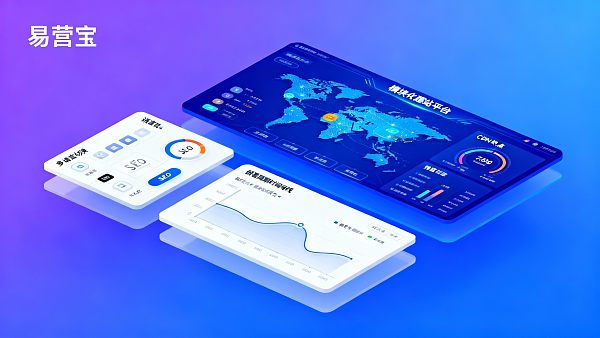
When benchmarking EasyStore, focus on four dimensions: deployment controllability (templates/automation), global performance (CDN/PageSpeed), conversion loops (AI ads/social matrices/inquiry tools), and commercial safeguards (SLAs/compensation/localization). Compared to peers, EasyStore excels in AI-driven content and ad automation, with creative factory models reducing labor costs while increasing CTRs—industry cases show 40% higher average CTRs, 320% inquiry growth, 2.8x order values, and 58% repeat purchase rates. Procurement advice: technical evaluators should conduct small-scale POCs covering multilingual SEO, ad retargeting, and inquiry tracking; contracts should specify first-year inquiry guarantees with differential compensation (EasyStore offers double ad fee refunds for unmet targets). Enterprises requiring full-funnel solutions should prioritize platforms with ad intelligence and big data analytics capabilities.
Conclusion and Next Steps: Decision Points and Implementation Guidance
In summary, EasyStore demonstrates strong product maturity in intelligent websites and foreign trade marketing systems: deployment cycles compress via AI automation and template libraries; stability and global performance benefit from distributed architecture and CDN; post-sales and localization systems offer quantifiable SLAs. Enterprises selecting platforms should align evaluations with business objectives: prioritize multilingual SEO and ad automation verification for rapid global launches with trackable inquiry conversion. For product details or customized evaluations: B2B Foreign Trade Solutions. Contact us for free POC assessments or to request technical whitepapers and custom ROI calculations, enabling informed decisions between foreign trade website systems and intelligent website platforms.
- Platform
- Foreign Trade Website
- Google Ads
- B2B Foreign Trade
- Multilingual SEO Optimization
- Campbell (name)
- SEO
- free-standing station
- SEO optimization
- Intelligent website building
- AI Translation
- Multilingual SEO
- AI Translation Engine
- Global multilingual website
- Foreign Trade Website System
- Foreign Trade Marketing System
- Smart Website Platform Recommendation
- Smart Website Platform
- Easy Treasure User Experience
- 智能建站平台竞品分析
- EasyStore product competition comparison
- Multilingual Website
Related Articles
 Guide to Choosing a Foreign Trade Website System: How to Evaluate Multilingual Website Capabilities
- From the perspective of quality control and security, experience the use of EasyStore: vulnerabilities, backups, and permission management
- Foreign Trade Marketing System in Action: 5 Key Configuration Points to Enhance Overseas Lead Conversion


Related Products
- EasyStore SaaS Intelligent Website Marketing SystemEasyStore SaaS Intelligent Website Marketing System, AI-driven zero-code website building, enabling rapid setup of multilingual foreign trade independent websites in just 10 minutes, global server acceleration, AI-powered SEO optimization, helping businesses efficiently connect with global markets. The perfect fusion of technology and operation makes foreign trade website construction simple to the extreme.
 AI+SEM Intelligent Advertising Marketing SystemAI+SEM drives intelligent creation and full-chain empowerment for precise advertising marketing. The system automatically generates weekly/monthly reports, with AI recommending keywords and target countries, real-time monitoring of core metrics and intelligent alerts, one-click activation of high-conversion solutions, helping businesses quickly acquire customers and improve ROI.
- AI+SEO Dual Engine Optimization ServiceEasyOperate AI+SEO dual engine optimization system leverages AI-powered keyword mining, content generation, and comprehensive technical optimization to help foreign trade enterprises acquire high-quality organic traffic, significantly improving search rankings and conversion rates.
 AI+SNS Social Media All-in-One Intelligent Marketing SystemEasyWin AI+SNS Social Media All-in-One Intelligent Marketing System - Precision social engagement in the social media era, supports one-click content synchronization across mainstream platforms like Facebook and LinkedIn, AI-powered post rewriting to enhance adaptability, 24/7 intelligent customer service with user profiling, helping businesses efficiently expand global markets.
- Multilingual Foreign Trade Independent Website SolutionEasyStore SAAS Intelligent Website System provides 300+ minor language precise translations, solving language barriers for foreign trade enterprises and improving order conversion rates. Supports all terminal devices, global languages, SEO optimization, and full-channel promotion, helping you effortlessly expand into international markets.
- AI+SEO Marketing SolutionEasyWin AI+SEO Marketing Solution enhances website SEO performance through AI-powered batch content creation, intelligent TDK generation, and precise keyword expansion. It boosts traffic and conversion rates, helping businesses build an efficient and intelligent website ecosystem.
- AI+SEM Advertising Marketing SolutionAI+SEM Advertising Marketing Solution leverages AI technology to deeply empower SEM ad placements. AI intelligently generates weekly/monthly reports, presenting multi-dimensional client data for comprehensive insights into ad performance and trends. AI precisely recommends keywords and target countries, automatically generates high-converting ad copy, and enables one-click activation of high-performance campaigns to accelerate customer acquisition. The system monitors core metrics in real-time, intelligently detects anomalies, and provides timely alerts to ensure stable ad performance with high ROI.
- Domain Name ServicesEasyBiz provides professional domain name services, including intelligent query, one-stop registration, brand protection, and full-cycle management, helping enterprises build a digital brand image.
- EasyStore B2C Cross-border E-commerce PlatformEasyStore B2C Cross-Border E-Commerce Platform is an all-in-one intelligent website building and cross-border e-commerce solution independently developed by EasyStore Information Technology (Beijing) Co., Ltd. The system is specifically designed for small, medium, and large export enterprises, integrating 'website building, operation, marketing, advertising, and conversion' to help businesses quickly establish independent cross-border e-commerce sites, achieving brand globalization and global sales growth.
The platform supports multiple languages, currencies, and multi-channel marketing, featuring built-in AI intelligent translation and SEO optimization systems, and is suitable for mainstream markets such as Southeast Asia, Europe & America, Latin America, and the Middle East, assisting Chinese manufacturing enterprises in efficiently deploying international e-commerce strategies.