









- What Does a Global Traffic Ecosystem Service Provider Do? What Are the Differences from a Single Advertising AgencyJul 16, 2026View details
- What should you focus on in the latest enterprise SaaS report? From renewal rates and delivery costs to overseas growth opportunitiesJul 12, 2026View details
- What signals are worth paying attention to in a cross-border marketing trend report? B2B companies should look at these 6 signalsJul 11, 2026View details
- How to Read a Cross-Border Marketing Trends Report? Five Key Dimensions for Evaluating Channel OpportunitiesJul 11, 2026View details
- Which channel has the highest ROI in the global traffic ecosystem? Comparative analysis of search, social media, and advertisingJul 10, 2026View details
- What multilingual website services are available in Sanya? Which model is more suitable for local businesses going global?Jul 08, 2026View details
- How to view the complete list of China SaaS companies in the top 100? Practical methods for screening website-building and marketing service providersJul 08, 2026View details
- How to view pricing in the global traffic ecosystem? Cost comparison of search, social media, and content channel advertisingJul 06, 2026View details
Europe–Asia route transit time cut to 12 days, with carbon fee pre-deduction implemented simultaneously
Since July 20, 2026, a change on the Shanghai–Rotterdam Asia–Europe trunk route has drawn close attention from international trade and supply chain professionals: the 2M+ONE alliance announced the deployment of new low-carbon container vessels, shortening the ocean transit time on this route from 15 days to 12 days, while adding an “EU CBAM carbon fee prepayment” of USD 180 per TEU. This means that schedule efficiency and compliance costs are advancing simultaneously along the same logistics chain, requiring direct trading companies, cross-border independent-store sellers, freight forwarders, and customs clearance service providers to reassess their quotation displays, delivery commitments, and destination-port customs clearance preparations.

Key Confirmed Information About This Route Adjustment
According to the information provided, the 2M+ONE alliance, formed by Maersk, Mediterranean Shipping Company, and Hapag-Lloyd, announced on July 18, 2026, that it would deploy new low-carbon container vessels on the Shanghai–Rotterdam trunk route starting July 20.
Two changes have been confirmed: first, the ocean transit time on this trunk route will be shortened to 12 days from the previous 15 days; second, an “EU CBAM carbon fee prepayment” of USD 180 per TEU will be charged simultaneously.
Regarding this fee, the available information clearly indicates that the amount will be reconciled at the destination port during customs clearance based on actual emissions data, with any overpayment refunded or shortfall collected. At the same time, exporters need to state this fee arrangement in advance on the quotation sheets of their independent stores.
Which Business Processes Will Be Affected by the Shorter Transit Time and Carbon Fee Prepayment?
For Direct Exporters, Quotation Logic Needs to Be Adjusted Accordingly
The analysis shows that shortening direct transit time from 15 days to 12 days will first affect delivery commitments and sales quotation structures for the European market. For direct trading companies and cross-border sellers, the shorter transit time will help reduce order fulfillment cycles, but the additional carbon fee prepayment will also directly enter the bill-of-lading costs or the front-end quotation display process. More importantly, this fee is not a one-time fixed settlement amount; instead, it will be subject to subsequent adjustment based on the actual emissions data recorded during customs clearance at the destination port.
For Supply Chain Service Providers, Documentation and Communication Responsibilities Need to Be Addressed Earlier
From an industry perspective, the changes faced by freight forwarders, booking service providers, customs declaration teams, and customs clearance coordinators involve more than adding a new fee item. They also require earlier information disclosure and customer communication. Since the available information clearly states that exporters must list this fee on their independent-store quotation sheets, quotation wording, fee descriptions, and settlement notices throughout the service chain need to be more consistent. Otherwise, misunderstandings may arise during order acceptance, payment, or customs clearance.
For Manufacturing and Procurement, Delivery Schedules May Need to Be Reorganized
The three-day reduction in transit time may affect factory shipping schedules, procurement replenishment cycles, and delivery-time planning for orders bound for Europe. This is particularly relevant for manufacturers that ship according to fixed departure windows. They must consider not only the fulfillment flexibility created by improved transit efficiency, but also the impact of the additional fee on gross-margin calculations, customer cost allocation, and contract wording.
For Businesses Involving European Destination Ports, Uncertainty During Customs Clearance Remains
The carbon fee prepayment will ultimately be reconciled at the destination port based on actual emissions data, meaning that the final fee amount will not be completely fixed at the time of shipment. For businesses involved in European customs clearance, port delivery, or last-mile coordination, the key issues to monitor are how to handle actual emissions data during customs clearance and how to connect the front-end prepayment with back-end adjustments.
Operational Details That Require Close Attention
First, Ensure That Quotation Displays Are Accurate
The most direct requirement currently known is that exporters must list the “EU CBAM carbon fee prepayment” in advance on their independent-store quotation sheets. This means that external quotations must not only update the freight transit time; they must also clearly explain the nature of the additional fee, its billing unit, and the possibility of a subsequent refund or additional charge. This helps prevent customers from misunderstanding it as an ordinary fixed freight surcharge.
Distinguish Between “Prepayment” and “Final Settlement”
The key issue with the fee arrangement described in this information is not whether a charge applies, but that it is a “prepayment.” For businesses, front-end collection and back-end customs clearance reconciliation are not the same action. In practice, greater attention should be paid to whether the sales, customer service, finance, and logistics teams have established consistent wording for this difference, thereby avoiding disputes during payment collection, account reconciliation, or customer complaint handling.
Verify Whether Contracts and Fulfillment Commitments Match the New Schedule
Shortening the route from 15 days to 12 days may appear to be merely an improvement in transport efficiency, but it will affect shipping commitments, delivery milestones, and internal stocking arrangements for some orders. Businesses should consider whether they need to adjust delivery-period descriptions, shipping schedules, and internal warehouse allocation procedures, rather than interpreting the change simply as “faster arrival at the port.”
Continue Monitoring Subsequent Regulatory Wording
At this stage, the fee standard, implementation date, and refund-or-collection principle have been clarified. However, businesses still need to continue tracking subsequent official wording, alliance notices, and supplementary requirements from customers during implementation. In particular, when customs clearance reconciliation, the basis for fee adjustments, and customer notification templates are involved, further details will directly affect implementation costs.
Signals Released by This Information
As an observation rather than a predetermined conclusion, this information appears to represent a specific instance in which the Asia–Europe route is incorporating both “low-carbon transport capacity” and “the front-loading of carbon-related fees” into commercial operations at the same time. On the one hand, the shorter schedule indicates that route efficiency remains a key competitive focus. On the other hand, the addition of the “EU CBAM carbon fee prepayment” shows that improved transport efficiency has not replaced compliance cost management; both are now entering international trade quotation and delivery systems in parallel.
From an industry perspective, this should not yet be interpreted as a standardized practice adopted by all routes and shipping companies. Nevertheless, it is sufficient to remind relevant businesses that future international logistics solution assessments cannot focus solely on vessel schedules and ocean freight rates. Carbon-related charging mechanisms, customs clearance settlement methods, and front-end information disclosure requirements must also be incorporated into the evaluation.
How Should This Adjustment Be Understood at This Stage?
Taken together, this is not simply a shipping update reflecting “faster transportation,” nor is it merely a matter of adding a new fee. It is more appropriately understood as an operational change in which the Asia–Europe trunk route is advancing transport efficiency and carbon cost management simultaneously. In the short term, businesses need to coordinate quotations, documentation, communication, and fulfillment. In the medium term, whether this will develop into a more widespread market practice remains subject to continued observation.
Basis of This Article and Directions for Further Verification
This article was generated based on the information title, event date, and event summary provided by the user. The information used includes: the relevant alliance announced the adjustment on July 18, 2026; new low-carbon container vessels will operate on the Shanghai–Rotterdam trunk route starting July 20; the transit time will be shortened from 15 days to 12 days; an “EU CBAM carbon fee prepayment” of USD 180 per TEU will be charged; the fee will be reconciled at the destination port during customs clearance based on actual emissions data, with any overpayment refunded or shortfall collected; and the fee must be listed in advance on independent-store quotation sheets.
This type of information generally also requires ongoing verification against official announcements, corporate notices, industry association information, reports from authoritative media, and relevant standards or regulatory documents. Since no specific official source links were provided in the input, this article does not extend its confirmation to broader background information. Further attention should be paid to whether the fee implementation procedures, the basis for customs clearance reconciliation, and relevant wording are subsequently updated.
Related Articles
 Attention! Builders' must-see: Yibingbao AI components updated, design efficiency directly doubled!
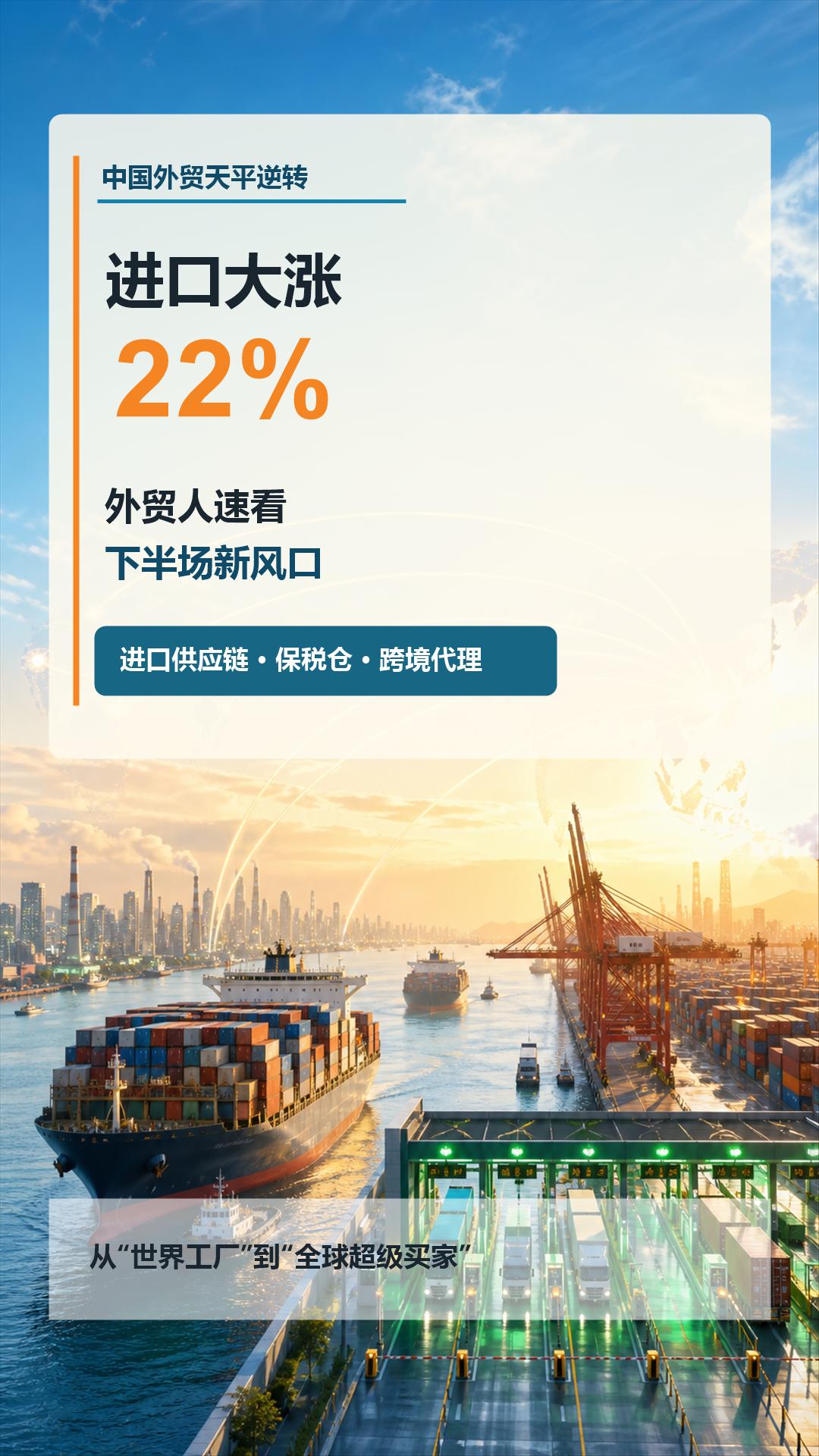
 China's foreign trade sees a turnaround: imports surge by 22%! Foreign trade professionals should quickly take note of the new trends in the second half of the year
 What Does a Global Traffic Ecosystem Service Provider Do? What Are the Differences from a Single Advertising Agency


Related Products
 EasyCamp SaaS Smart Website Marketing SystemE-Yingbao SaaS Smart Website Marketing System: AI-powered, zero-code website building. Rapidly launch multilingual independent e-commerce sites in just 10 minutes. Global server acceleration and AI-driven SEO optimization empower businesses to efficiently connect with global markets. The seamless integration of technology and user-friendly operation makes building e-commerce sites incredibly simple.
 AI+SEM Intelligent Advertising Marketing SystemAI+SEM drives intelligent ad creation, empowering full-funnel precision advertising marketing. The system automatically generates weekly/monthly reports, AI recommends keywords and target countries, monitors core metrics in real-time with intelligent alerts, and enables one-click high-conversion ad solutions to help quickly acquire customers and improve ROI.
 AI+SEO Dual Engine Optimization ServiceEasyWin AI+SEO Dual Engine Optimization System leverages AI-powered keyword mining, content generation, and comprehensive technical optimization to help foreign trade enterprises acquire high-quality organic traffic, significantly improving search rankings and conversion rates.
 AI+SNS Social Media Marketing SystemYingbao AI+SNS Social Media Marketing System - Precision social capture for the social media era. Supports one-click content synchronization across major platforms like Facebook and LinkedIn. AI intelligently rewrites posts for enhanced relevance. 24/7 AI customer service and user profiling analysis empower businesses to efficiently expand into global markets.
 AI+SEO营销解决方案易营宝AI+SEO营销解决方案,通过AI批量写作、智能生成TDK、精准关键词扩词等功能,全面优化网站SEO效果,提升流量与转化率。助力企业构建高效智能网站新生态。
 AI+SEM Advertising Marketing SolutionsAI+SEM Advertising Marketing Solution leverages AI technology to deeply empower SEM ad campaigns. It automatically generates weekly/monthly reports using AI, presenting account data across multiple dimensions for comprehensive insights into campaign performance and trends. The system precisely recommends keywords and target countries, intelligently generates high-conversion ad copy, and enables one-click activation of efficient campaign plans to help businesses rapidly acquire customers. Simultaneously, it monitors core metrics in real time, intelligently identifies abnormal fluctuations, and issues timely alerts to ensure stable, high-return advertising results.
 Domain Name ServicesEasyWin provides professional domain name services, including intelligent queries, one-stop registration, brand protection, and full lifecycle management, helping businesses build a digital brand image.
 EasyOperate B2C Cross-Border E-Commerce Platform & Independent WebsiteEasyStore B2C Cross-border E-commerce Independent Store is an intelligent website building and cross-border e-commerce integrated solution independently developed by EasyStore Information Technology (Beijing) Co., Ltd. The system is specially designed for small and medium-sized as well as large export enterprises, integrating 'website building, operation, marketing, advertising, and conversion' into one, helping enterprises quickly establish cross-border e-commerce independent stores to achieve brand globalization and global sales growth.
The platform supports multiple languages, multiple currencies, and multi-channel marketing, with built-in AI intelligent translation and SEO optimization systems, suitable for mainstream markets such as Southeast Asia, Europe and America, Latin America, and the Middle East, assisting Chinese manufacturing enterprises in efficiently deploying international e-commerce strategies. SSL证书易营宝提供专业SSL安全证书服务,包括单域名和泛域名证书,确保网站数据传输加密、身份验证和完整性保护,助力企业建立安全可信的在线业务环境。









