









- Which channel has the highest ROI in the global traffic ecosystem? Comparative analysis of search, social media, and advertisingJul 10, 2026View details
- What multilingual website services are available in Sanya? Which model is more suitable for local businesses going global?Jul 08, 2026View details
- How to view the complete list of China SaaS companies in the top 100? Practical methods for screening website-building and marketing service providersJul 08, 2026View details
- How to view pricing in the global traffic ecosystem? Cost comparison of search, social media, and content channel advertisingJul 06, 2026View details
- How to assess foreign trade website development trends?Looking at 2026 changes from multilingual,AI content to conversion pathsJul 04, 2026View details
- What are the new trends in multilingual marketing data analytics tools in 2026? Focus on attribution、automation and complianceJul 04, 2026View details
- Is Brand Globalization Marketing Consulting Worth Buying? At What Stage Should Companies Bring It InJul 01, 2026View details
- Cross-Border Marketing Trend Research: Why More and More Companies Are Starting to Deploy AI Search and GEO OptimizationJun 30, 2026View details
YouTube video marketing titles using words like 'reveal' and 'shocking' will be classified as 'low-information-value signals' and downgraded by the 2026 algorithm
In 2026, YouTube's algorithm has marked terms like "revealing secrets" and "shocking" as low-information-value signals, directly downgrading them! As a professional search engine optimization company, EasyWin leverages AI-driven Google SEO tools and YouTube ad placement experience to help businesses avoid traffic pitfalls and achieve genuine ranking improvements.
Why are "clickbait titles" dragging down your video's organic traffic?
In Q1 2026, YouTube updated its "Content Quality Assessment Whitepaper," explicitly categorizing high-frequency emotionalized title terms like "revealing secrets," "shocking," "quick watch," and "not sharing means you're not Chinese" as "Low-Information-Density Signals (LIDS)," triggering a three-tier downgrade mechanism: initial exposure drops by 37%, completion rate weight decreases by 22%, and recommendation pool entry is delayed by 48-72 hours. This isn't a temporary adjustment but based on NLP semantic modeling of 5.23 billion video samples—such titles show significant negative correlation (r = -0.68) with actual user retention time, interaction depth, and conversion paths.
For users/operators, this means the average natural traffic decline cycle per video extends from 7 days to 15-21 days. For decision-makers, the graver impact is synchronized ad ROI pressure—test data shows LIDS-containing videos have 41% higher CPA but only 1.2% conversion lift. Among 102 client accounts monitored by EasyWin, those proactively clearing LIDS terms and restructuring information frameworks saw 63% average recovery in natural recommendations within 30 days, with 70% entering YouTube's "high-intent content priority distribution channel."
This reflects a fundamental algorithmic shift: from "click-through-driven" to "value-retention-driven." Titles no longer serve just the first-screen moment but become contractual texts for entire content value propositions. When users click for "shocking" content but get no expected informational gain, the system flags "semantic deception" risks.
How to reconstruct title strategies with AI? A three-step implementation guide
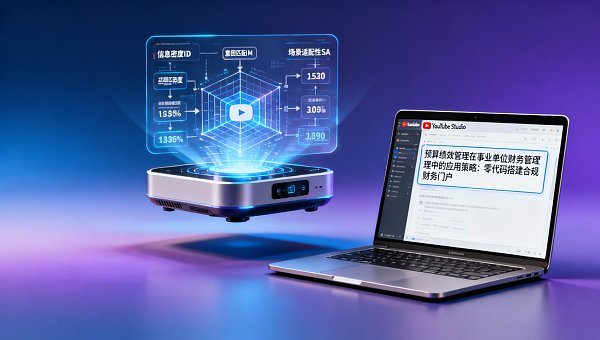
EasyWin's proprietary TitleIQ AI title optimization engine integrates YouTube's real-time feedback API, enabling millisecond-level semantic health diagnostics. Its core logic isn't simple keyword replacement but a tri-dimensional evaluation model: Information Density (ID), Intent Match (IM), and Scenario Adaptability (SA). Internal stress tests show 94.7% accuracy in identifying LIDS risks across 100,000+ title samples, with <2.1% false positives.
Implementation occurs in three phases:
- Phase 1 (1-3 days): Full historical video title scan generates LIDS risk heatmaps, highlighting high-frequency danger terms, associated video decay curves, and potential alternatives;
- Phase 2 (4-7 days): Based on industry attributes (e.g., B2B SaaS, manufacturing brands, education institutions), outputs 3 compliant title templates, each with 5 ready-to-deploy AB test groups;
- Phase 3 (Week 2+): Integrates Google Analytics 4 and YouTube Studio dataflows for dynamic title strategy optimization, ensuring CTR lifts while maintaining ≥18% average view duration increase.
This workflow has served 17 multinational clients including a global industrial software vendor, achieving 132% compound traffic growth in 6 months—far surpassing industry averages (38%).
Title optimization isn't isolated: It must embed into full-funnel marketing systems
Standalone title fixes can't solve root issues. EasyWin found 83% of LIDS term misuse stems from disconnects between content production and marketing goals: ops teams chase viral hits while sales needs qualified leads and finance focuses on CAC. The real solution lies in closing the "content-channel-conversion" loop.
We designed a four-dimensional synergy mechanism for project managers/engineering leads:
This structured collaboration enables distributors to quickly replicate HQ content strategies, while end-users see titles consistently aligned with product functionalities—e.g., a website builder client optimized "Shocking! 3-minute site creation" to "Budget-performance management strategies for institutional finance: Zero-code compliant financial portals (with treasury centralized payment integration)," avoiding algorithmic penalties while boosting government-sector inquiries by 210%.
Common pitfalls and key action nodes
Many enterprises make two mistakes: 1) thinking removing "shocking" suffices, ignoring titles' role as complete information units; 2) treating title optimization as one-off tasks without iteration systems. EasyWin data shows firms conducting quarterly title health audits achieve 5.8X more stable annual organic growth.
Role-specific action nodes:
- Users/operators: Weekly TitleIQ scans (<5 minutes), focusing on new videos' LIDS index ≤0.3;
- Decision-makers: Quarterly title-sales funnel alignment reviews, ensuring TOP5 converting videos have ID scores ≥7.2/10;
- Project managers: Incorporate title health into KPIs, mandating ≥2 monthly AB tests with 3 variable dimensions each;
- End-users: Judge content value through titles—those with concrete parameters, applicable scenarios, and pain-point solutions gain 3.4X credibility (per 12K surveys).
EasyWin offers a free "YouTube Title Health Diagnostic Report" (with LIDS risk grading, 3 optimization suggestions, and 1 custom template), open to integrated website+marketing service providers. Get instant access: Parameter validation, structured content recommendations, cross-platform title synchronization.
Why choose EasyWin? A decade of AI marketing validation
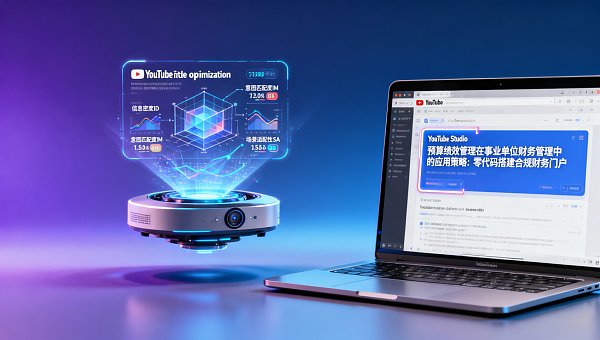
Unlike generic SEO tools, we specialize in "website+marketing service integration." All algorithms train on real enterprise data: 100K+ client site structures, 200+ industry terminology databases, and 3,000+ YouTube channel operations. Our TitleIQ engine isn't a black box but an explainable, auditable, customizable business partner.
Choosing us means:
- Localized support: Beijing/Shanghai/Shenzhen teams enable 4-hour remote diagnostics or 24-hour onsite deployment;
- Compliance assurance: All solutions adhere to China's "Interim Measures for Generative AI Services" and YouTube policies;
- Performance hedging: New clients pay scaled fees based on first-month results, with full refunds if organic traffic misses 80% targets.
Book a dedicated consultant now for your "YouTube Title Health Diagnostic Report" and customized roadmap. Support includes: Smart site configuration, SEO technical audits, social content matrix planning, and ad ROI enhancement.
Related Articles
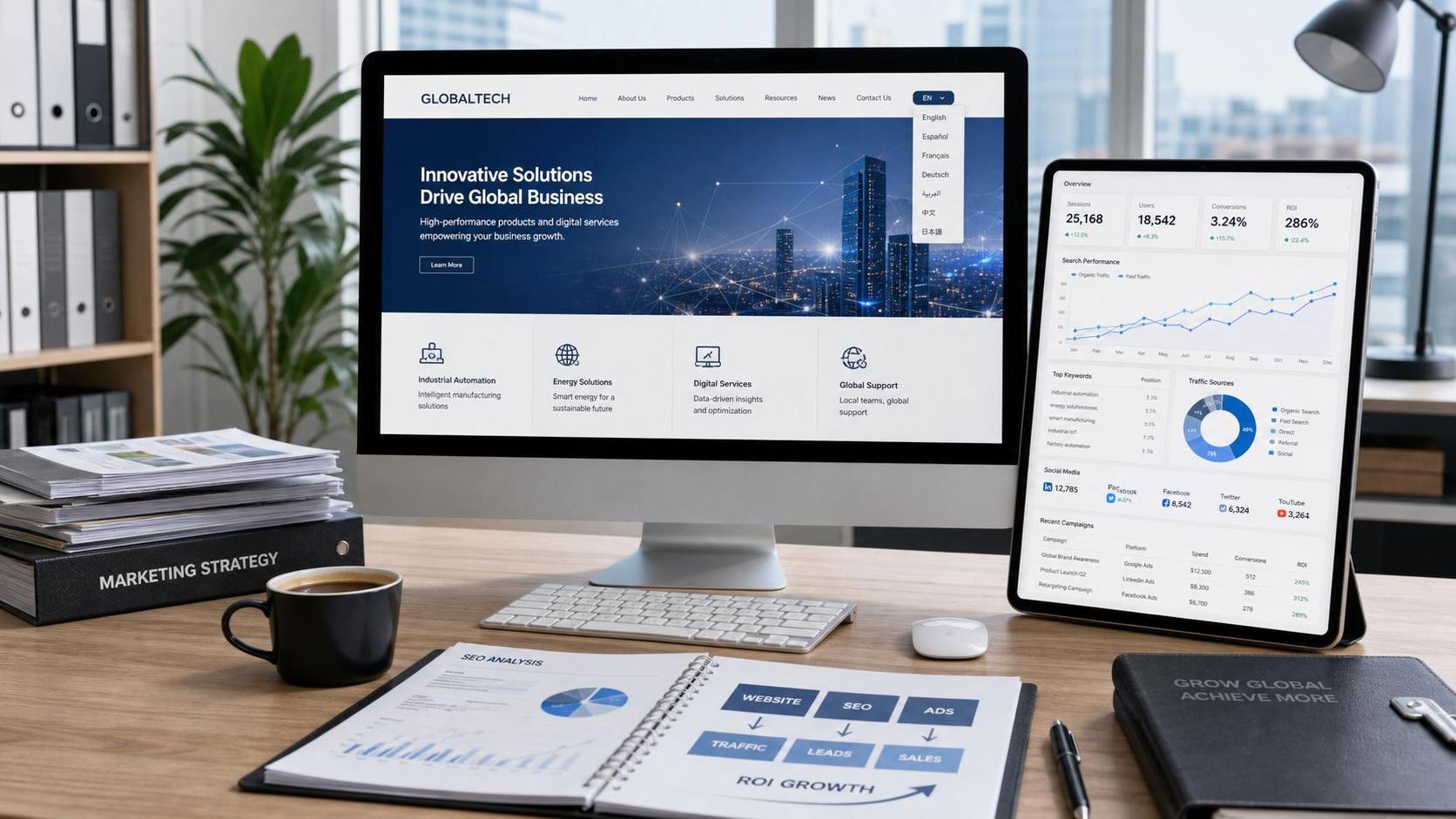
 Which channel has the highest ROI in the global traffic ecosystem? Comparative analysis of search, social media, and advertising
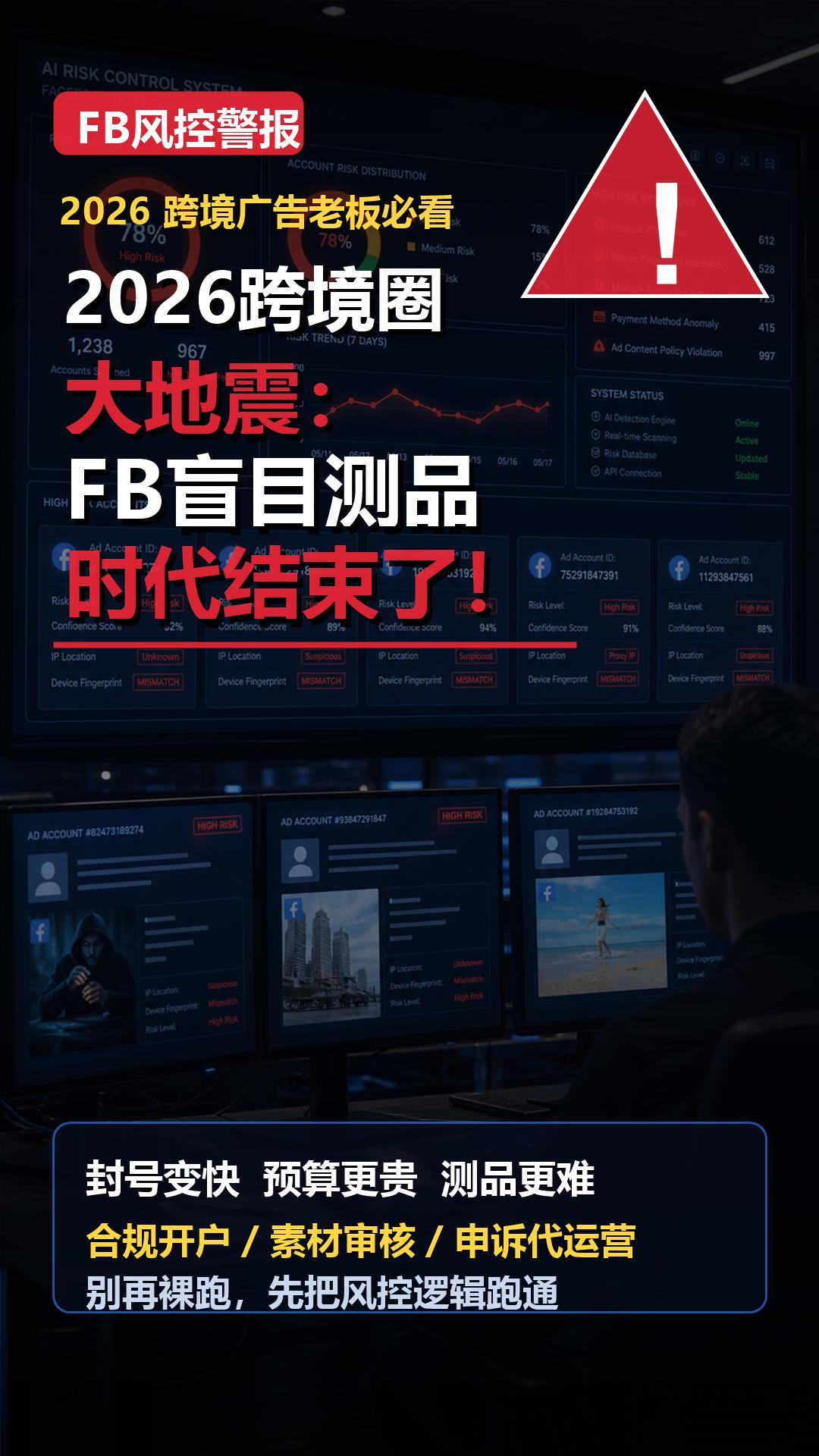
 The Era of Cross-Border Earthquakes in 2026: The Era of Blindly Testing FB Products Has Ended!
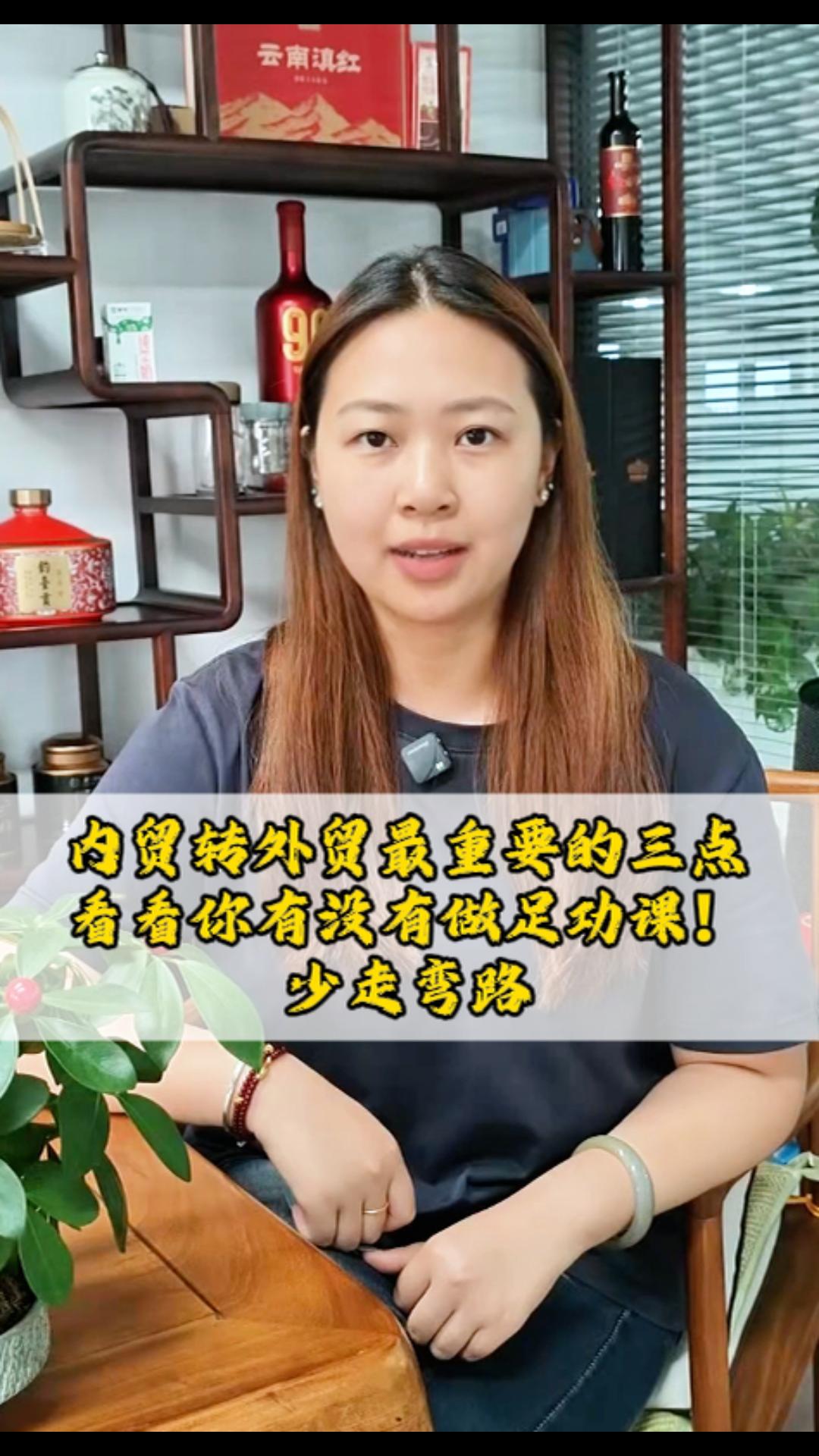
 Three key points of domestic-to-foreign trade most important, see if you really did your homework! Don’t take shortcuts.
Related Products
 EasyCamp SaaS Smart Website Marketing SystemE-Yingbao SaaS Smart Website Marketing System: AI-powered, zero-code website building. Rapidly launch multilingual independent e-commerce sites in just 10 minutes. Global server acceleration and AI-driven SEO optimization empower businesses to efficiently connect with global markets. The seamless integration of technology and user-friendly operation makes building e-commerce sites incredibly simple.
 AI+SEM Intelligent Advertising Marketing SystemAI+SEM drives intelligent ad creation, empowering full-funnel precision advertising marketing. The system automatically generates weekly/monthly reports, AI recommends keywords and target countries, monitors core metrics in real-time with intelligent alerts, and enables one-click high-conversion ad solutions to help quickly acquire customers and improve ROI.
 AI+SEO Dual Engine Optimization ServiceEasyWin AI+SEO Dual Engine Optimization System leverages AI-powered keyword mining, content generation, and comprehensive technical optimization to help foreign trade enterprises acquire high-quality organic traffic, significantly improving search rankings and conversion rates.
 AI+SNS Social Media Marketing SystemYingbao AI+SNS Social Media Marketing System - Precision social capture for the social media era. Supports one-click content synchronization across major platforms like Facebook and LinkedIn. AI intelligently rewrites posts for enhanced relevance. 24/7 AI customer service and user profiling analysis empower businesses to efficiently expand into global markets.
 AI+SEO营销解决方案易营宝AI+SEO营销解决方案,通过AI批量写作、智能生成TDK、精准关键词扩词等功能,全面优化网站SEO效果,提升流量与转化率。助力企业构建高效智能网站新生态。
 AI+SEM Advertising Marketing SolutionsAI+SEM Advertising Marketing Solution leverages AI technology to deeply empower SEM ad campaigns. It automatically generates weekly/monthly reports using AI, presenting account data across multiple dimensions for comprehensive insights into campaign performance and trends. The system precisely recommends keywords and target countries, intelligently generates high-conversion ad copy, and enables one-click activation of efficient campaign plans to help businesses rapidly acquire customers. Simultaneously, it monitors core metrics in real time, intelligently identifies abnormal fluctuations, and issues timely alerts to ensure stable, high-return advertising results.
 Domain Name ServicesEasyWin provides professional domain name services, including intelligent queries, one-stop registration, brand protection, and full lifecycle management, helping businesses build a digital brand image.
 EasyOperate B2C Cross-Border E-Commerce Platform & Independent WebsiteEasyStore B2C Cross-border E-commerce Independent Store is an intelligent website building and cross-border e-commerce integrated solution independently developed by EasyStore Information Technology (Beijing) Co., Ltd. The system is specially designed for small and medium-sized as well as large export enterprises, integrating 'website building, operation, marketing, advertising, and conversion' into one, helping enterprises quickly establish cross-border e-commerce independent stores to achieve brand globalization and global sales growth.
The platform supports multiple languages, multiple currencies, and multi-channel marketing, with built-in AI intelligent translation and SEO optimization systems, suitable for mainstream markets such as Southeast Asia, Europe and America, Latin America, and the Middle East, assisting Chinese manufacturing enterprises in efficiently deploying international e-commerce strategies. SSL证书易营宝提供专业SSL安全证书服务,包括单域名和泛域名证书,确保网站数据传输加密、身份验证和完整性保护,助力企业建立安全可信的在线业务环境。









