Which Industries Are Suitable for LinkedIn Lead Generation in Foreign Trade
LinkedIn lead generation for foreign trade is not limited to only a few industries。For business decision-makers,choosing the right market segment and strategy is what enables B2B leads to convert continuously。
Conclusion first:Industries with high order value,long decision-making chains,and strong trust requirements are more suitable

When companies search for “which industries are suitable for LinkedIn lead generation in foreign trade”,they are essentially not looking for a platform introduction,but trying to determine whether their own industry is worth investing budget,team resources,and time in。
Overall,the higher the order value,the longer the procurement cycle,and the more B2B businesses require multiple roles to participate in decision-making,the more suitable they are for building relationships,nurturing trust,and generating inquiries through LinkedIn。
If a company sells standardized low-priced products,and customers place orders mainly based on price and instant comparison,LinkedIn can still be used for brand exposure,but it may not be the most efficient primary lead generation channel。
Which industries are most suitable for LinkedIn lead generation in foreign trade?
The first category is industrial manufacturing and machinery equipment,such as automation equipment,CNC machine tools,packaging machinery,components,and industrial consumables。These products are highly professional,and buyers value supply capabilities and case study endorsements。
The second category includes new energy,electronics and electrical equipment,and high-end materials。Overseas customers usually need to evaluate qualifications,production capacity,certifications,and delivery stability,and LinkedIn is suitable for continuously reaching procurement,engineering,and management teams。
The third category includes industries related to construction,building materials,interior design,and engineering services。Project-based businesses place greater emphasis on brand image,project cases,and solution capabilities,and social media content can help companies enter customers’ field of view in advance。
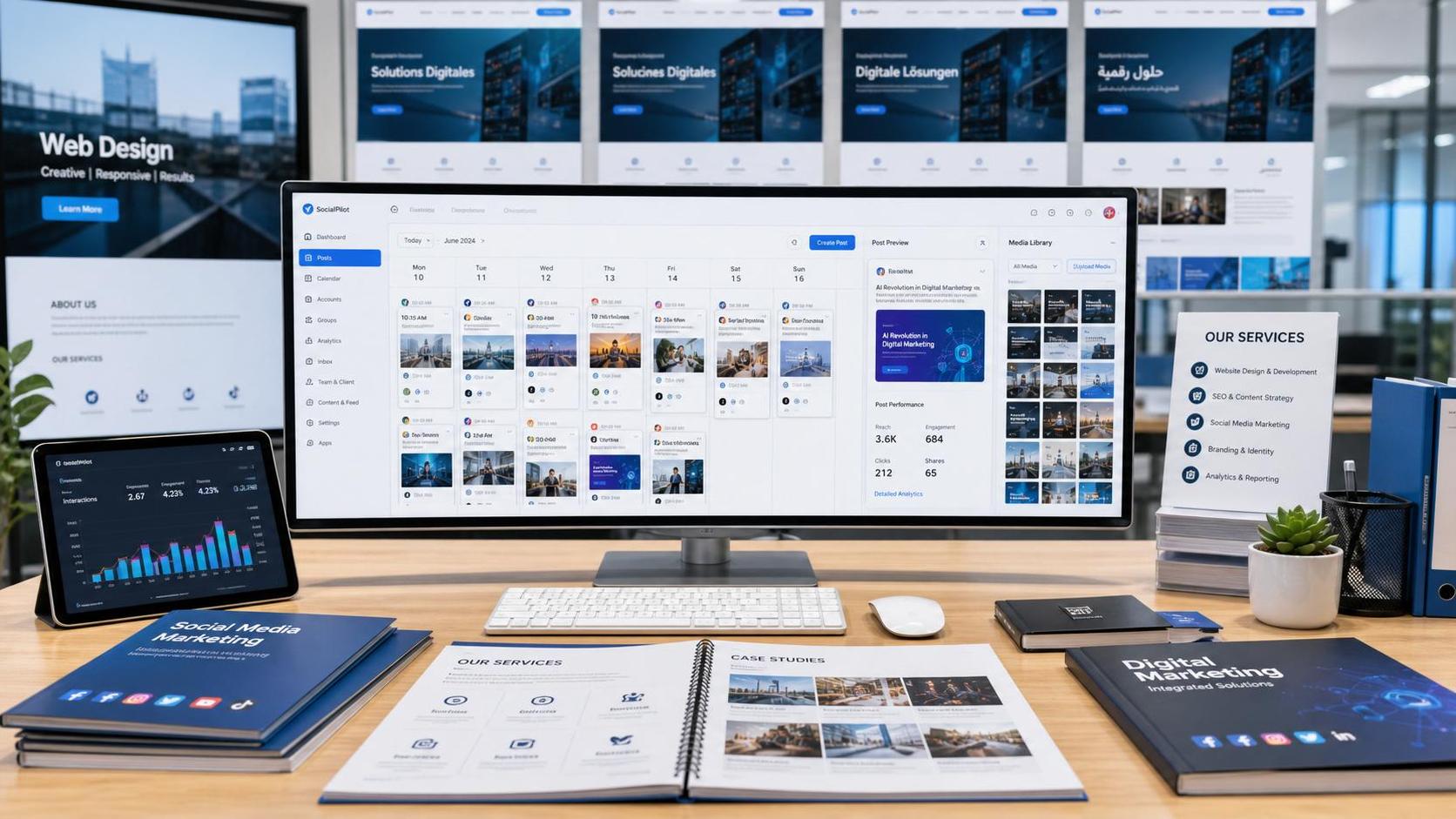
For example,when design,decoration,and construction companies showcase overseas projects,if their official websites use high-end visual templates such as Interior Design,Renovation,Architecture,they can work together with LinkedIn content to improve persuasiveness in business discussions。
The fourth category includes software,SaaS,IT services,and digital marketing services。Target customers are usually active on LinkedIn,and decision-makers are willing to evaluate suppliers’ professionalism through industry insights,case studies,and white papers。
The fifth category includes medical devices,laboratory equipment,testing and certification,logistics and supply chain,and professional consulting services。These industries have high trust thresholds,making them suitable for using expert content and targeted communication to drive lead maturity。
Business decision-makers should focus on three evaluation criteria
To determine whether an industry is suitable for LinkedIn lead generation in foreign trade,companies should not only look at whether peers are doing it,but should assess whether target customers on the platform are identifiable,reachable,and communicable。
First,see whether the customer profile is clear。If a company can clearly define job titles,countries,industries,company sizes,and procurement roles,the value of LinkedIn’s precise filtering will be amplified。
Second,see whether closing deals requires trust accumulation。Any industry where customers need to review factory strength,certifications,case experience,and team professionalism before making a deal is suitable for long-term LinkedIn content operations。
Third,see whether profit can support customer acquisition costs。LinkedIn lead generation is not a one-time mass distribution of business cards,but a combination of content,accounts,outreach,communication,and conversion。Products with low gross margins require cautious calculation。
Which industries should not use LinkedIn as the only lead generation channel?
If a company mainly deals in low-order-value consumer goods,short-cycle impulse purchases,or customers are more accustomed to placing orders through e-commerce platforms and search ads,LinkedIn should not bear all lead generation pressure。
Some foreign trade product categories with severe homogenization and intense price competition also cannot rely solely on adding connections and sending product images to obtain stable inquiries。At this point,SEO,independent websites,trade shows,and advertising should be combined。
There are also some industries where key buyers are not active on LinkedIn,or procurement is concentrated in local channels and agency systems。Companies need to first verify the target audience instead of blindly expanding their teams。
LinkedIn is suitable not for “posting ads”,but for managing the decision-making chain
Many companies achieve poor results in LinkedIn lead generation for foreign trade not because their industries are unsuitable,but because they treat the platform as a mass messaging tool and ignore the real decision-making path of overseas B2B customers。
From seeing a company to initiating an inquiry,overseas customers usually go through awareness,interest,evaluation,comparison,and internal discussion。The value of LinkedIn lies in continuously influencing these key touchpoints。
Companies should publish content around customer pain points,such as project cases,application scenarios,selection recommendations,quality control,delivery processes,and industry trends,instead of repeatedly pushing product catalogs every day。
For managers,LinkedIn is more like a long-term asset-building channel。Account influence,accumulated content,customer relationships,and official website landing pages jointly determine the final conversion rate。
What supporting capabilities do companies need to see results?
First is positioning capability。Companies need to clarify their primary markets,core customers,and differentiated selling points。Otherwise,even if they obtain a large number of contacts,it will be difficult to turn them into high-quality business opportunities。
Second is content capability。Decision-makers are willing to follow suppliers with judgment,experience,and case studies,rather than sales accounts that only display specifications and quotations。
Third is conversion support capability。After customers enter the official website from LinkedIn,they should be able to quickly see qualifications,case studies,solutions,team strength,and form entry points,reducing trust loss。
Finally,data capability。Companies need to continuously track connection rates,reply rates,content engagement,inquiry quality,and deal cycles,and use data to optimize combinations of industries,countries,and job titles。
How should input-output be evaluated more reasonably?
LinkedIn lead generation for foreign trade is not suitable for evaluation only by short-term inquiry volume。Especially in industries such as machinery,engineering,and software,an effective lead may take several weeks or even several months to convert。
More reasonable metrics include the number of target customer connections,effective conversations,meeting appointments,sample or solution requests,and the opportunity value after entering the CRM。
If a company has a relatively high order value,even generating only a small number of high-quality opportunities each month may cover investments in content,operations,and tools,while also bringing long-term customer assets。
However,companies should also set a trial operation cycle,usually recommended to be at least three to six months,and verify through a small-scale market test before deciding whether to expand the team and budget。
Summary:Evaluate industry logic first,then design the lead generation system
The industries suitable for LinkedIn lead generation in foreign trade are not determined by the platform itself,but jointly determined by customer profiles,decision-making methods,trust thresholds,and profit structures。
For business decision-makers,the most important question is not “whether to use LinkedIn”,but what role it should play in the overall overseas marketing system。
If a company operates in a high-order-value,professional,project-based,or long decision-making chain market segment,LinkedIn is worth using as an important channel for brand influence,customer outreach,and opportunity nurturing。
If a company wants to continuously convert leads into orders,it also needs to combine LinkedIn with independent websites,SEO,content marketing,and data-driven operations to form a replicable growth loop。