









- What stages does the cross-border services ecosystem include? How do website building, promotion, payment, and compliance work togetherJun 22, 2026View details
- How will email marketing costs change in 2026Jun 22, 2026View details
- The China-US tariff arrangement has reached a preliminary consensus, and the trade association will be establishedJun 15, 2026View details
- Should overseas brand marketing start with ads or contentJun 21, 2026View details
- What determines B2C cross-border e-commerce website development costs? A breakdown of features, interfaces, and deployment methodsJun 17, 2026View details
- China-Morocco zero-tariff access, a breakthrough in the cost of Moroccan goods exports to ChinaJun 11, 2026View details
What’s the difference between full-site translation and machine translation? How should you choose before launching a multilingual website
Before a multilingual website goes live, what technical evaluators care about most is usually not “how fast the translation is,” but whether the site-wide translation solution will affect indexing, page structure, system maintenance, and subsequent conversions. In simple terms, machine translation is suitable for low-risk, low-value, and frequently updated content, while a website truly intended to acquire overseas customers is better served by site-wide translation for long-term SEO and brand communication tasks.
When users search for “site-wide translation” and focus on this kind of title, their core intent is often to determine the technical differences between the two approaches, the launch risks, and the applicable boundaries. For technical evaluators, the most important things are not the language itself, but the URL strategy, page indexability, content quality, template adaptation, subsequent operating costs, and whether multi-region expansion is supported.
If a company is preparing to build a multilingual official website, a foreign trade independent site, or an overseas marketing site, it cannot rely solely on the initial budget when choosing a solution. Once the language architecture, translation workflow, and publishing mechanism are chosen incorrectly, not only will SEO performance be limited later, but content revisions, version synchronization, and the reuse of advertising landing pages will also become very passive.
The difference between site-wide translation and machine translation is not just whether it is “accurate enough”
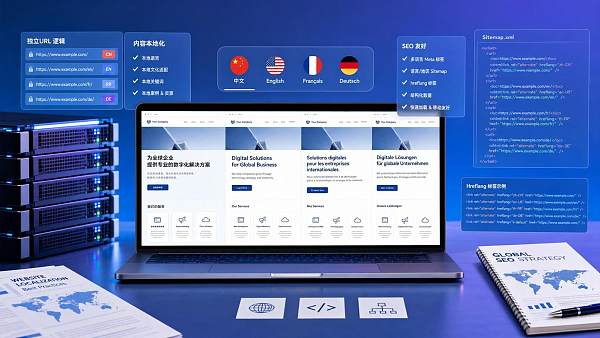
When many teams build a multilingual website for the first time, they interpret site-wide translation as “translating every page once,” and machine translation as “calling an API to automatically generate foreign-language pages.” But from a technical implementation perspective, the difference between the two is far more than the source of the text; it is reflected in the entire website delivery logic.
Machine translation usually emphasizes speed and batch processing, making it suitable for generating large volumes of page content in a short time. It is commonly found in plugin-based solutions or script-layer coverage solutions. The front end displays the translation results, but the underlying information architecture, keyword layout, metadata, and localized expression are often not optimized in sync.
Site-wide translation is closer to “multilingual site development.” It not only handles body copy, but also titles, descriptions, navigation, buttons, forms, image ALT text, structured data, and search expression differences across different language markets, with the goal of ensuring that each language version has independent readability, indexability, and convertibility.
Therefore, for technical evaluators, the real question is not “which is cheaper, human or machine,” but whether the final website deliverable is just a temporary translation layer or a multilingual asset that can be operated long term. These two options determine the difficulty of subsequent SEO, ad coordination, and system maintenance.
Why technical evaluators should first look at SEO and system compatibility
From a business perspective, the goal of a multilingual website is to acquire overseas traffic and inquiries; from a technical perspective, the first thing to ensure is that search engines can stably crawl, identify, and distinguish different language versions. If only the front-end text is switched, but search engines cannot access independent pages, the value of multilingual support will drop significantly.
Common problems with machine translation solutions are non-independent URLs, incomplete source code content, language versions that rely on JS dynamic rendering, or missing hreflang tags. In this case, even if the page appears to support multiple languages, it may only be visible to users and not search-engine friendly, ultimately affecting organic indexing and keyword rankings.
A site-wide translation solution is more suitable for pairing with an independent language directory, subdomain, or country-site strategy. It also facilitates unified configuration of canonical, hreflang, sitemaps, and multilingual meta tags. For companies planning to do Google SEO, ad landing pages, and regional content matrices, these foundational capabilities are critical.
In addition, system compatibility is equally important. During technical evaluation, it is necessary to confirm whether the translation solution supports CMS field-level management, batch publishing, version rollback, template variable translation, and form data mapping. Otherwise, once there is more content, translation and development will constrain each other, and every subsequent revision will add communication costs.
What scenarios are machine translation suitable for, and in which scenarios is the risk high
Machine translation is not unusable; it just needs to be used in the right place. If a company needs to quickly test a new market, or if the site contains a large amount of help documentation, parameter descriptions, or information listings, and these pages have relatively little impact on brand expression and deal conversion, machine translation can significantly improve launch efficiency.
For projects with a large SKU count, frequent page updates, and heavy manual maintenance pressure, machine translation also has practical value. Especially in the early validation stage, using automatic translation to establish basic coverage first, and then gradually switching high-value pages to human optimization, is a compromise many teams adopt.
However, the high-risk scenarios are also very clear, such as the homepage, core product pages, solution pages, inquiry pages, industry landing pages, and key pages that need to carry Google Ads and SEO traffic. If these pages rely only on machine translation, common problems include inconsistent terminology, stiff wording, artificial sales points, and ultimately lower conversions.
Technical evaluators also need to note that different industries have different tolerance levels for language accuracy errors. In manufacturing, B2B equipment, healthcare, chemicals, software services, and other fields, terminology errors not only affect the user experience, but may also cause misunderstandings. In such cases, the value of site-wide translation is not only “more natural,” but also reducing business risk.
Where site-wide translation is truly expensive, and whether it is worth the investment
Many companies feel that site-wide translation is costly mainly because it is not just translating text, but rebuilding content, structure, and market expression together. Its cost lies in early-stage planning, keyword localization, page-by-page proofreading, template adaptation, semantic consistency, and subsequent content collaboration, rather than simple per-word charges.
From a long-term perspective, this investment is often more suitable for companies that treat the website as a customer-acquisition channel. Once multilingual pages have independent SEO capabilities, they can continuously accumulate indexing and rankings, rather than relying on a one-time ad spend. For companies with long-term overseas expansion plans, this kind of investment is usually closer to asset building.
If a company also needs to balance the official brand website, inquiry site, cross-border store, and advertising landing pages, a more complete multilingual system will improve reuse efficiency. After technically unifying templates, components, and translation rules, the marginal cost of adding new languages, new country sites, or event pages will gradually decrease instead of repeatedly starting from scratch.
This is similar to the digital transformation logic discussed in many industry studies: the initial investment is high, but once the underlying architecture is rational, the efficiency of subsequent growth improves. Themes like the real challenges and strategies for promoting innovation and development in financial technology companies also emphasize that technical capabilities only truly become sustainable value when they are integrated into business processes.
Before a multilingual website goes live, technical evaluation can be judged along these 5 dimensions
First, check whether the pages are independently indexable. No matter which site-wide translation solution is used, it is necessary to confirm whether each language has stable URLs, crawlable source code, and complete metadata. If language content depends on script coverage or client-side rendering, SEO performance is usually unstable.
Second, check whether the translation supports field-level management. The technical team needs to know whether titles, descriptions, body copy, buttons, breadcrumbs, image alt text, and structured data can each be maintained separately. Only when field segmentation is clear can subsequent content updates, A/B testing, and multilingual optimization be easily executed.
Third, check whether it supports localization rather than word-for-word translation. Effective site-wide translation should allow different languages to rewrite titles, replace keywords, and adjust CTAs, rather than mechanical one-to-one mapping. Search habits, expression preferences, and trust triggers vary by country.
Fourth, check whether the update mechanism is smooth. After the original site content is updated, how are multilingual versions synchronized? Are they automatically marked for translation, or fully overwritten? Can machine drafts be distinguished from human final versions? These issues determine subsequent operating efficiency and directly affect the coordination between technical and content teams.
Fifth, check whether it can support the marketing chain. If the website still needs to connect with SEO, Google Ads, social media traffic, or AI search visibility optimization later, then the language versions should ideally connect with landing pages, form tracking, event systems, and conversion statistics to avoid the translation system becoming an isolated module.
A more stable approach: site-wide translation for core pages, layered handling for long-tail content
For most companies, the best solution is not an either-or choice, but a layered approach. For homepages, product pages, solution pages, about us, case pages, and high-intent landing pages, it is recommended to use a site-wide translation approach for deep localization to ensure that both SEO foundations and conversion expression are in place.
For content such as news, FAQ, help centers, and low-traffic directory pages, machine translation can be used first to establish coverage, and then data can be used to determine which pages are worth further human optimization. This both controls costs and avoids slowing down the overall launch schedule by trying to perfect everything at once.
If the technical platform itself supports AI website building, SEO rule configuration, and unified multilingual management, this hybrid model becomes easier to implement. Especially for foreign trade companies, manufacturing factories, and cross-border brands, the need is not only for launch speed, but also for subsequent promotion and continuous operations, making a layered solution more realistic.
From this perspective, site-wide translation is not a single “translation service,” but part of website internationalization. It is interconnected with site architecture, SEO strategy, ad landing page support, and the content operations system. The earlier this is clarified during technical evaluation, the lower the rework cost later.
Conclusion: First determine the website goal, then decide the depth of site-wide translation
If your multilingual website is only a display project, with frequent content updates and a limited budget, machine translation can serve as a starting solution; but if the website is responsible for overseas customer acquisition, brand building, and search growth, then site-wide translation is usually more worth the investment, especially for core pages that must be done well first.
For technical evaluators, the most practical criterion is not “which is more advanced,” but whether it can support independent indexing, stable maintenance, flexible expansion, and continuous conversion. Evaluating site-wide translation within the framework of SEO, system architecture, and operational collaboration usually leads to a much clearer conclusion.
Ultimately, a suitable multilingual solution should balance efficiency and quality at the same time: low-value content pursues broad coverage, high-value pages pursue localized expression, and the underlying system ensures publishability, optimizability, and scalability. Only after this kind of website goes live will it truly have the opportunity to serve the global market, rather than merely adding a few language versions.
Related Articles
Related Products
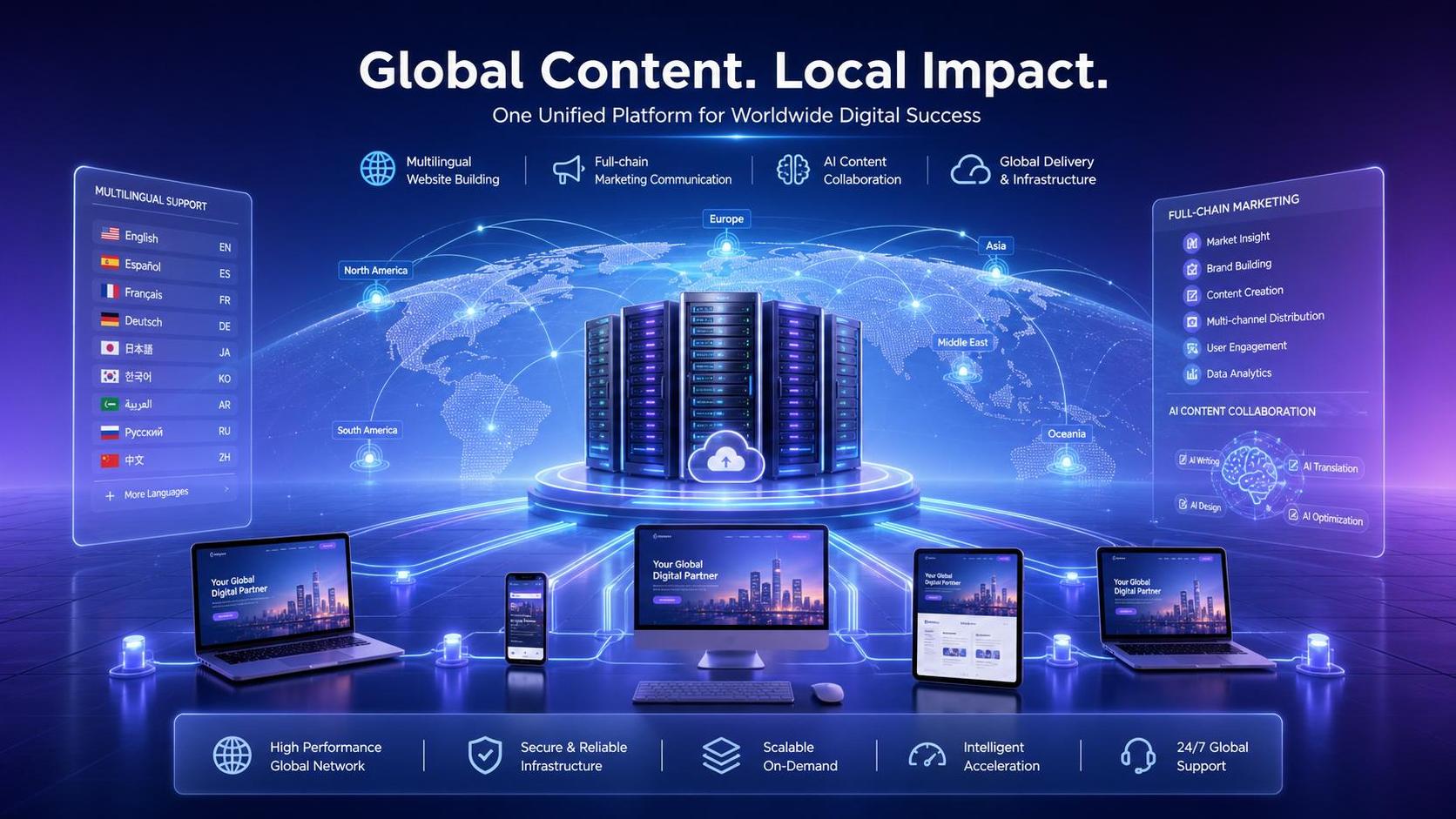
 EasyCamp SaaS Smart Website Marketing SystemE-Yingbao SaaS Smart Website Marketing System: AI-powered, zero-code website building. Rapidly launch multilingual independent e-commerce sites in just 10 minutes. Global server acceleration and AI-driven SEO optimization empower businesses to efficiently connect with global markets. The seamless integration of technology and user-friendly operation makes building e-commerce sites incredibly simple.
 AI+SEM Intelligent Advertising Marketing SystemAI+SEM drives intelligent ad creation, empowering full-funnel precision advertising marketing. The system automatically generates weekly/monthly reports, AI recommends keywords and target countries, monitors core metrics in real-time with intelligent alerts, and enables one-click high-conversion ad solutions to help quickly acquire customers and improve ROI.
 AI+SEO Dual Engine Optimization ServiceEasyWin AI+SEO Dual Engine Optimization System leverages AI-powered keyword mining, content generation, and comprehensive technical optimization to help foreign trade enterprises acquire high-quality organic traffic, significantly improving search rankings and conversion rates.
 AI+SNS Social Media Marketing SystemYingbao AI+SNS Social Media Marketing System - Precision social capture for the social media era. Supports one-click content synchronization across major platforms like Facebook and LinkedIn. AI intelligently rewrites posts for enhanced relevance. 24/7 AI customer service and user profiling analysis empower businesses to efficiently expand into global markets.
 AI+SEO营销解决方案易营宝AI+SEO营销解决方案,通过AI批量写作、智能生成TDK、精准关键词扩词等功能,全面优化网站SEO效果,提升流量与转化率。助力企业构建高效智能网站新生态。
 AI+SEM Advertising Marketing SolutionsAI+SEM Advertising Marketing Solution leverages AI technology to deeply empower SEM ad campaigns. It automatically generates weekly/monthly reports using AI, presenting account data across multiple dimensions for comprehensive insights into campaign performance and trends. The system precisely recommends keywords and target countries, intelligently generates high-conversion ad copy, and enables one-click activation of efficient campaign plans to help businesses rapidly acquire customers. Simultaneously, it monitors core metrics in real time, intelligently identifies abnormal fluctuations, and issues timely alerts to ensure stable, high-return advertising results.
 Domain Name ServicesEasyWin provides professional domain name services, including intelligent queries, one-stop registration, brand protection, and full lifecycle management, helping businesses build a digital brand image.
 EasyOperate B2C Cross-Border E-Commerce Platform & Independent WebsiteEasyStore B2C Cross-border E-commerce Independent Store is an intelligent website building and cross-border e-commerce integrated solution independently developed by EasyStore Information Technology (Beijing) Co., Ltd. The system is specially designed for small and medium-sized as well as large export enterprises, integrating 'website building, operation, marketing, advertising, and conversion' into one, helping enterprises quickly establish cross-border e-commerce independent stores to achieve brand globalization and global sales growth.
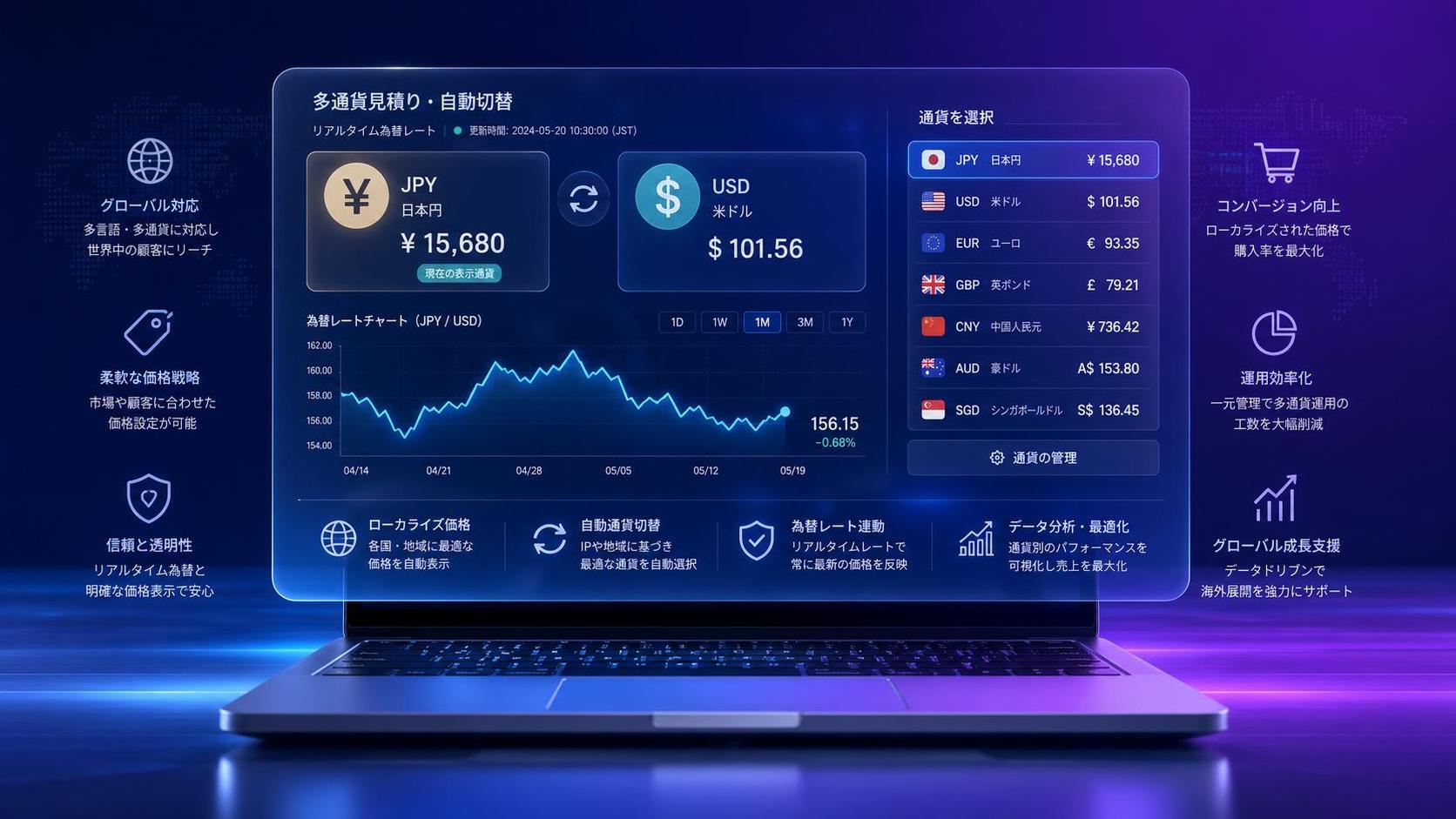
The platform supports multiple languages, multiple currencies, and multi-channel marketing, with built-in AI intelligent translation and SEO optimization systems, suitable for mainstream markets such as Southeast Asia, Europe and America, Latin America, and the Middle East, assisting Chinese manufacturing enterprises in efficiently deploying international e-commerce strategies. SSL证书易营宝提供专业SSL安全证书服务,包括单域名和泛域名证书,确保网站数据传输加密、身份验证和完整性保护,助力企业建立安全可信的在线业务环境。









