









- Which channel has the highest ROI in the global traffic ecosystem? Comparative analysis of search, social media, and advertisingJul 10, 2026View details
- What multilingual website services are available in Sanya? Which model is more suitable for local businesses going global?Jul 08, 2026View details
- How to view the complete list of China SaaS companies in the top 100? Practical methods for screening website-building and marketing service providersJul 08, 2026View details
- How to view pricing in the global traffic ecosystem? Cost comparison of search, social media, and content channel advertisingJul 06, 2026View details
- How to assess foreign trade website development trends?Looking at 2026 changes from multilingual,AI content to conversion pathsJul 04, 2026View details
- What are the new trends in multilingual marketing data analytics tools in 2026? Focus on attribution、automation and complianceJul 04, 2026View details
Default content title displayed here
In the German-language website development and manufacturing industry, the first steps are to ensure users can "understand" the website and "be willing to contact" it.
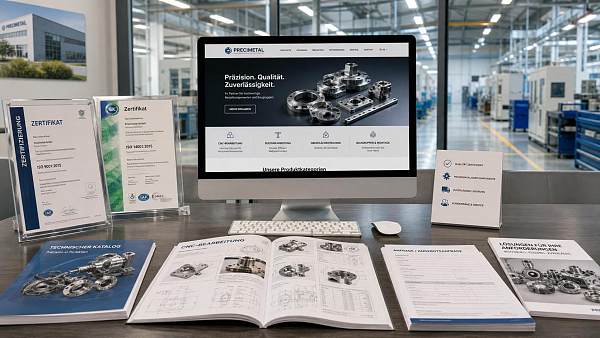
In the manufacturing industry, the challenges of building German-language websites are never just about translation. The German market places greater emphasis on the rigor of technical expression, the clarity of page structure, the completeness of qualification and responsibility information, and the sense of stability, trustworthiness, and traceability after submitting an inquiry.
Many manufacturing companies have strong product capabilities, but receive few inquiries after launching their German-language websites. The problem often lies not with the products themselves, but with the website failing to clearly demonstrate their professional capabilities and delivery reliability. For integrated website and marketing services, this step directly impacts subsequent SEO, advertising, and lead conversion efficiency.
In practical applications, even within the German-language website development and manufacturing industry, different industry chains, sales methods, and certification requirements will lead to completely different page focuses. The judgment logic differs between manufacturing standard parts, complete equipment, and custom processing; simply copying a generic template usually yields limited results.
In actual implementation, why are the requirements so different across different business scenarios?
The core of German-language website development for the manufacturing industry is not simply replacing Chinese content with German, but rather pre-programming the purchasing decision-making process onto the page. German clients prefer to verify information first, then compare details, and only then decide whether to proceed with communication.
If a website targets long-term partnerships, the focus will be on stable supply, consistent processes, certification, and traceability. If the website primarily features project-based equipment, the pages will need to explain operating condition compatibility, delivery procedures, installation and commissioning, and after-sales support. Different business scenarios naturally lead to different information hierarchies on the website.
This is also a common misconception among many manufacturing companies when building German-language websites. Focusing solely on the homepage's visual appeal without understanding the actual decision-making process will result in insufficient conversion of traffic into effective inquiries, even with ongoing Google SEO optimization.
In high-frequency business scenarios, the focus of the page is usually different.
Standardized parts and accessories prioritize parameter retrieval efficiency.
A common problem in German-language website development for the manufacturing industry is that while there's a lot of content, it's difficult to find what you're looking for. If information such as model number, size, tolerance, material, and applicable standards are scattered across different pages, visitors will quickly leave.
A more suitable approach is to link product categories, downloadable materials, application industries, and common alternative models. This page serves both SEO indexing and facilitates quick filtering, reducing the cost of repeatedly confirming basic information via email.
For both complete equipment and production line solutions, greater emphasis is placed on the accuracy of the operating condition descriptions.
When building a German-language website for equipment in the manufacturing industry, simply listing configuration options is not very meaningful. A more common approach is to consider the equipment's suitability for different production capacity ranges, environmental conditions, levels of automation, and whether it supports future expansion.
Therefore, the page should incorporate case study logic, but it shouldn't simply display a few on-site photos. It needs to clearly define the project background, technological challenges, modification results, delivery timeline, and maintenance methods to make the technical capabilities truly perceptible.
In customized processing and OEM cooperation, building trust is more important than traffic.
In this type of scenario, German-language website development for the manufacturing industry must first answer two questions: Can we provide stable support, and can we maintain long-term cooperation? The page needs to demonstrate the factory's capabilities, rather than simply stating "customization supported."
For example, the more specific the information, such as minimum order quantity, sampling cycle, equipment list, testing process, surface treatment, packaging specifications, and export experience, the more conducive it is to subsequent communication and entering the substantive stage.
In different scenarios, the key points for judging the manufacturing industry in German website construction can be directly compared.
If you don't differentiate between scenarios in the early stages, website content can easily be distributed evenly. The following comparison is more suitable for determining page priorities and allocating marketing resources.
Localization is not a matter of rhetoric, but a matter of designing information responsibility.
In the German-language website development industry, localization is the most easily underestimated aspect. Many pages appear to be in German, but the terminology doesn't conform to industry norms, and the sentence structure leans towards Chinese logic, resulting in a situation where "you can understand it, but you don't want to continue reading."
More crucially, there's the issue of accountability. Missing or poorly placed company information, contact details, address, qualifications, privacy policy, and sources of downloadable materials directly undermine trust. The German market generally has a higher sensitivity to compliance and transparency.
This is why website building and promotion shouldn't be separated when creating an integrated website and marketing service. Page structure, terminology database, SEO keyword layout, form paths, and ad landing page logic should all be designed together. Platforms like YiYingBao, which have long focused on multilingual website building and overseas marketing, excel because they integrate website building, optimization, and conversion within the same framework, rather than patching flaws after launch.
These details are most prone to misjudgment and have the highest cost of correction later.
- Treating German website development as a translation project neglects keyword research and page redesign.
- Only product parameters are displayed, without explaining the application environment, delivery method, and after-sales service boundaries.
- It only focuses on the homepage, neglecting the connection between product pages, case study pages, download pages, and inquiry pages.
- They only considered the speed of deployment and did not prepare strategies for German content maintenance and new page additions in advance.
- Using the same expression across all markets ignores the decision-making habits and trust thresholds in the German region.
In practice, the above issues won't immediately cause a website to become ineffective, but they will gradually lower indexing quality, ad scores, and inquiry conversion rates. By the time it's time to do SEO fixes, add case studies, and refactor forms, the overall cost is often higher than having a well-structured plan from the beginning.
If you want to truly use your German-language website for customer acquisition, I suggest following these steps:
For German-language websites in the manufacturing industry to balance brand building, search engine indexing, and conversion rates, a preliminary review is essential before implementation. The key is not more content, but rather that each page serves a clear objective.
- First, divide the business scenarios and clarify the main content lines of standard products, equipment solutions, and customized cooperation.
- Establish a German terminology list to standardize product names, process terms, certification terms, and the naming of downloaded materials.
- Complete the trust page, including company information, certificates, case studies, delivery process, and frequently asked questions.
- Let product pages handle SEO, case study pages handle persuasion, and form pages handle conversion.
- Simultaneously consider subsequent Google SEO, advertising landing pages, and AI search visibility, and avoid turning the website into an isolated display page.
Ultimately, the German-language website development industry isn't about the number of pages, but about translating real business capabilities into an information structure that the German market is willing to trust. First, clearly define the scenarios, terminology, trust points, and conversion paths. Then, assess the website development cycle, content preparation volume, and promotion pace. This will lead to more stable growth and make it easier to amplify the return on investment.
Related Articles
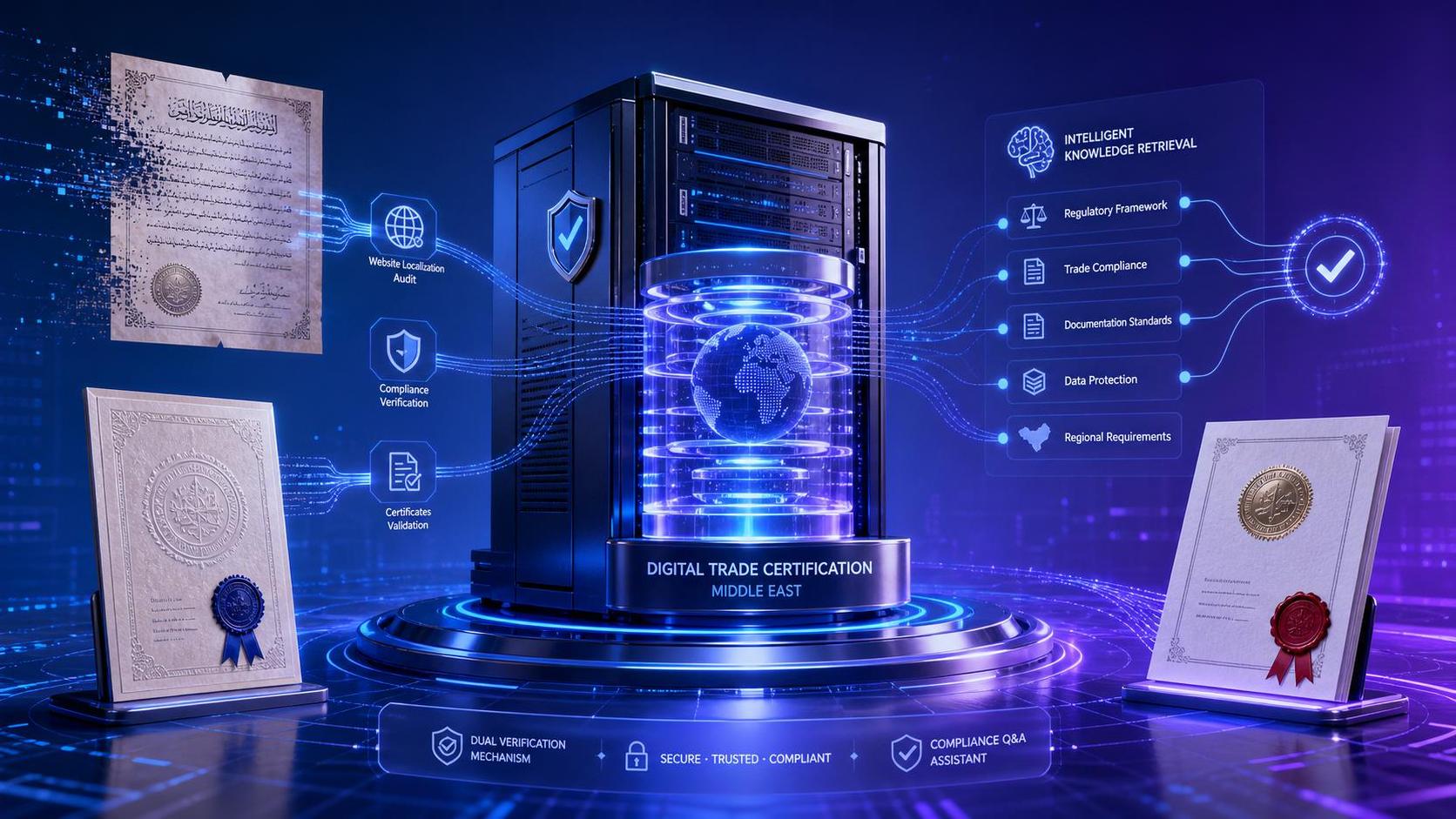
 GCC Digital Trade Partner Certification, Precondition for Independent Site Dual Verification and Listing
 SEAEC unified API gateway enabled, ASEAN six-country independent site payments and tax interface entered into hard constraints
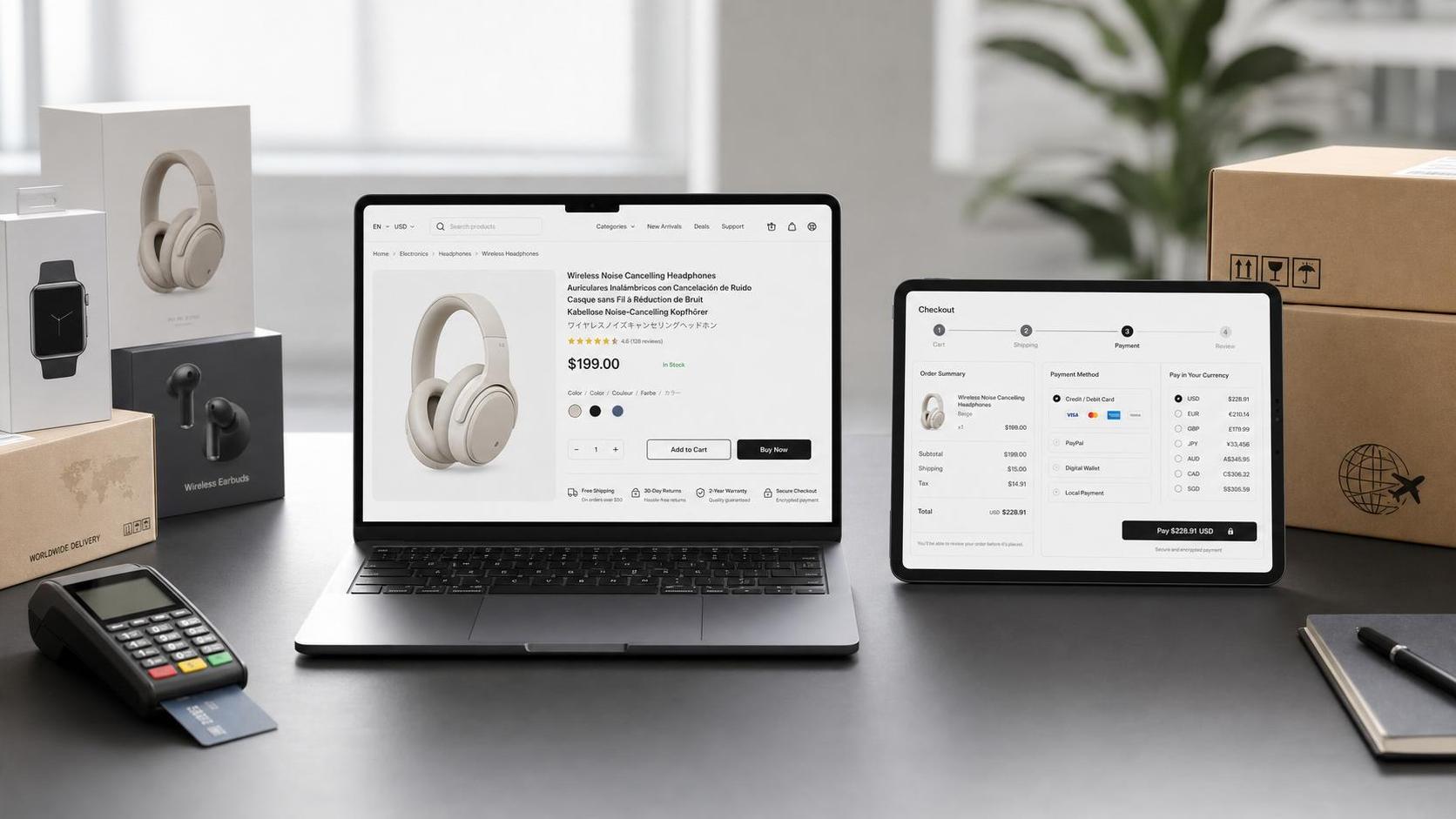
 How to plan multilingual B2C cross-border e-commerce store development? Key points for products, payment, and localized user experience

Related Products
 EasyCamp SaaS Smart Website Marketing SystemE-Yingbao SaaS Smart Website Marketing System: AI-powered, zero-code website building. Rapidly launch multilingual independent e-commerce sites in just 10 minutes. Global server acceleration and AI-driven SEO optimization empower businesses to efficiently connect with global markets. The seamless integration of technology and user-friendly operation makes building e-commerce sites incredibly simple.
 AI+SEM Intelligent Advertising Marketing SystemAI+SEM drives intelligent ad creation, empowering full-funnel precision advertising marketing. The system automatically generates weekly/monthly reports, AI recommends keywords and target countries, monitors core metrics in real-time with intelligent alerts, and enables one-click high-conversion ad solutions to help quickly acquire customers and improve ROI.
 AI+SEO Dual Engine Optimization ServiceEasyWin AI+SEO Dual Engine Optimization System leverages AI-powered keyword mining, content generation, and comprehensive technical optimization to help foreign trade enterprises acquire high-quality organic traffic, significantly improving search rankings and conversion rates.
 AI+SNS Social Media Marketing SystemYingbao AI+SNS Social Media Marketing System - Precision social capture for the social media era. Supports one-click content synchronization across major platforms like Facebook and LinkedIn. AI intelligently rewrites posts for enhanced relevance. 24/7 AI customer service and user profiling analysis empower businesses to efficiently expand into global markets.
 AI+SEO营销解决方案易营宝AI+SEO营销解决方案,通过AI批量写作、智能生成TDK、精准关键词扩词等功能,全面优化网站SEO效果,提升流量与转化率。助力企业构建高效智能网站新生态。
 AI+SEM Advertising Marketing SolutionsAI+SEM Advertising Marketing Solution leverages AI technology to deeply empower SEM ad campaigns. It automatically generates weekly/monthly reports using AI, presenting account data across multiple dimensions for comprehensive insights into campaign performance and trends. The system precisely recommends keywords and target countries, intelligently generates high-conversion ad copy, and enables one-click activation of efficient campaign plans to help businesses rapidly acquire customers. Simultaneously, it monitors core metrics in real time, intelligently identifies abnormal fluctuations, and issues timely alerts to ensure stable, high-return advertising results.
 Domain Name ServicesEasyWin provides professional domain name services, including intelligent queries, one-stop registration, brand protection, and full lifecycle management, helping businesses build a digital brand image.
 EasyOperate B2C Cross-Border E-Commerce Platform & Independent WebsiteEasyStore B2C Cross-border E-commerce Independent Store is an intelligent website building and cross-border e-commerce integrated solution independently developed by EasyStore Information Technology (Beijing) Co., Ltd. The system is specially designed for small and medium-sized as well as large export enterprises, integrating 'website building, operation, marketing, advertising, and conversion' into one, helping enterprises quickly establish cross-border e-commerce independent stores to achieve brand globalization and global sales growth.
The platform supports multiple languages, multiple currencies, and multi-channel marketing, with built-in AI intelligent translation and SEO optimization systems, suitable for mainstream markets such as Southeast Asia, Europe and America, Latin America, and the Middle East, assisting Chinese manufacturing enterprises in efficiently deploying international e-commerce strategies. SSL证书易营宝提供专业SSL安全证书服务,包括单域名和泛域名证书,确保网站数据传输加密、身份验证和完整性保护,助力企业建立安全可信的在线业务环境。









