









- What multilingual website services are available in Sanya? Which model is more suitable for local businesses going global?Jul 08, 2026View details
- How to view the complete list of China SaaS companies in the top 100? Practical methods for screening website-building and marketing service providersJul 08, 2026View details
- How to view pricing in the global traffic ecosystem? Cost comparison of search, social media, and content channel advertisingJul 06, 2026View details
- How to assess foreign trade website development trends?Looking at 2026 changes from multilingual,AI content to conversion pathsJul 04, 2026View details
- What are the new trends in multilingual marketing data analytics tools in 2026? Focus on attribution、automation and complianceJul 04, 2026View details
- Is Brand Globalization Marketing Consulting Worth Buying? At What Stage Should Companies Bring It InJul 01, 2026View details
Brazil INMETRO household appliance independent website embedded Portuguese energy efficiency label generator
Starting July 12, 2026, independent websites selling home appliances in the Brazilian market will face a new requirement that directly impacts product display and channel acquisition. According to an announcement released by INMETRO on July 8, these websites must integrate the official energy efficiency label generator into their product pages to generate Portuguese PDF labels with anti-counterfeiting watermarks in real time, based on parameters such as voltage, power, and capacity. This change warrants close attention from appliance sellers, brands, website operation teams, and service providers responsible for listing and compliance data management, as it directly affects the retention and removal of platform-recommended resources.

New requirements target compliant product page display.
Confirmed information shows that the Brazilian National Institute of Metrology, Standardization and Industrial Quality (INMETRO) issued a notice on July 8, 2026, requiring all independent websites selling household appliances in Brazil to integrate the INMETRO official energy efficiency label (Etiqueta Procel) dynamic generator into their product pages starting from July 12, 2026.
The generator needs to support real-time tag generation based on input parameters, including voltage, power, and capacity, and output a PDF tag with anti-counterfeiting watermark.
The announcement also clarified that if this requirement is not met, the relevant independent websites will be removed from the official recommendation pools of Mercado Livre and Magazine Luiza.
The impact extends beyond the front-end page, affecting collaboration across multiple stages.
For home appliance sellers and brand independent website operators
From an industry perspective, sellers and brands directly targeting the Brazilian market for home appliances will be the first to be affected. This is because the new regulations don't just require backend registration, but rather focus on the product page – the front-end stage directly facing consumers and undergoing platform review. The impact will primarily manifest in product detail page design, Portuguese content presentation, tag generation logic integration, and pre-listing inspection processes. Currently, it's more important to consider whether relevant websites already possess the capability to dynamically retrieve and output official tags based on product parameters.
For manufacturing and data management
For manufacturing companies and teams responsible for compiling product data, the impact is primarily on the accurate transmission of parameter information. Since label generation relies on inputs such as voltage, power, and capacity, there can be no discrepancies in the parameter definitions used by the manufacturing team, product managers, and compliance data teams. Observations suggest that while this change occurs on the website side, it presupposes that the basic product information can be accessed reliably and clearly.
For channel and platform operation stakeholders
For channel operations teams that rely on traffic recommendations from Mercado Livre and Magazine Luiza, the impact of this requirement is more direct. The announcement has linked whether or not a website integrates with the dynamic generator to whether or not it retains its official recommendation pool eligibility. Therefore, the impact extends beyond page compliance to include traffic acquisition and channel exposure opportunities. A noteworthy change is that the compliance status of independent websites is beginning to form a clearer link with platform resource allocation.
For website building, technical access and service support
For service providers offering website building, page development, system integration, and localization support, this requirement means that their technical support needs to be more aligned with compliance scenarios. The impact is primarily reflected in product page component development, PDF generation processes, Portuguese interface adaptation, and the stability of parameter input logic. Analysis suggests that service providers will now face not only issues of page aesthetics or conversion rates, but also whether they meet the explicit rule requirements.
What practical issues should we focus on at this stage?
First, confirm the applicable product categories and site scope.
Relevant companies first need to verify whether they fall under the category of "independent websites selling home appliances in Brazil," and then check whether their respective product pages have the capability to embed the official dynamic generator. The key point here is not just whether energy efficiency labels are displayed, but whether they use the official generation method as required by the announcement and can output PDF files with anti-counterfeiting watermarks in real time based on the parameters.
Connect the parameter source and the page call.
From a practical perspective, the consistency of parameters such as voltage, power, and capacity determines whether dynamic generation can be implemented. Companies need to pay attention to whether there are missing fields, inconsistent definitions, or manual entry errors between product data, the product information database, and the front-end page. This step is particularly important for companies with a large number of SKUs.
Distinguish between "displayed with labels" and "meets the requirements of the announcement".
The more pressing issue now is the difference between policy signals and practical implementation. Even if a company has previously displayed static energy efficiency labels on its website, this doesn't guarantee compliance with the new requirements. The announcement emphasizes connecting to the official dynamic label generator and generating PDF labels with anti-counterfeiting watermarks in real time based on input parameters. In other words, similar display results do not necessarily indicate a consistent compliance path.
Simultaneous assessment of the collateral impact on the channel side
Because failure to comply with these requirements will result in removal from the official Mercado Livre and Magazine Luiza recommendation pools, businesses should not treat this task as merely a minor website modification when internally scheduling it. A more practical approach is to consider it in conjunction with the product launch schedule, event planning, channel placement, and customer communication to avoid impacting the acquisition of recommendation resources if the page adjustments are not yet complete.
This is more like a signal of tightening at the implementation level.
Analysis reveals that the core message of this news is not merely about adding a new page component, but rather that the requirements for compliant product page display in the online sales of home appliances in Brazil are being further specified. It has moved beyond the principle of "should have tag information," and has been refined to the point that it must use an officially dynamically generated method and be directly linked to eligibility in the platform's recommendation pool.
From this observation, this dynamic is more accurately interpreted as a rule change that needs to be implemented in the short term, while also serving as a long-term signal worth monitoring. The former is due to the very clear timeframe; the latter is due to the fact that the rules concerning product page information, compliant display, and platform resource integration may be extended to more categories, more page fields, or more review actions in the future, which still requires continued observation.
Shifts in industry focus as seen from individual announcements
In summary, the industry significance of this news lies in the fact that it pushes the compliance requirements for cross-border sales of home appliances further forward to the product pages of independent websites, and links technical access, parameter management, Portuguese language display, and channel resources. For relevant companies, it is more appropriate to understand this as a specific requirement that has entered the implementation window, rather than a broad policy signal that can be judged later.
At this stage, a rational assessment is that while the scope of impact is sufficiently clear, further observation is still needed regarding the subsequent implementation details, verification pace, and the actual adaptation by market participants. Enterprises should not focus solely on the policy statement itself, but rather promptly shift their attention to the actual checks of product pages, parameter data, and channel coordination.
This article is based on the direction of subsequent verification.
This article is generated based on the news title, event time, and event summary provided by the user. The core basis includes: INMETRO issued an announcement on July 8, 2026, implemented it from July 12, 2026, applies to independent websites selling household appliances in Brazil, requires the integration of the official energy efficiency label dynamic generator on the product page, and is related to the official recommendation pool qualifications of Mercado Livre and Magazine Luiza.
For this type of industry information, it is usually necessary to continuously cross-verify it using sources such as official announcements, company announcements, industry association information, authoritative media reports, and standards organization documents. Since no specific official source link was provided in the input, the relevant links and original wording still need to be continuously verified. Areas to continue monitoring include: whether INMETRO will release further explanations, how the platform will implement the recommendation pool adjustments, and the specific implementation details for companies at the product page integration level.
Related Articles
 Brazil INMETRO household appliance independent website embedded Portuguese energy efficiency label generator
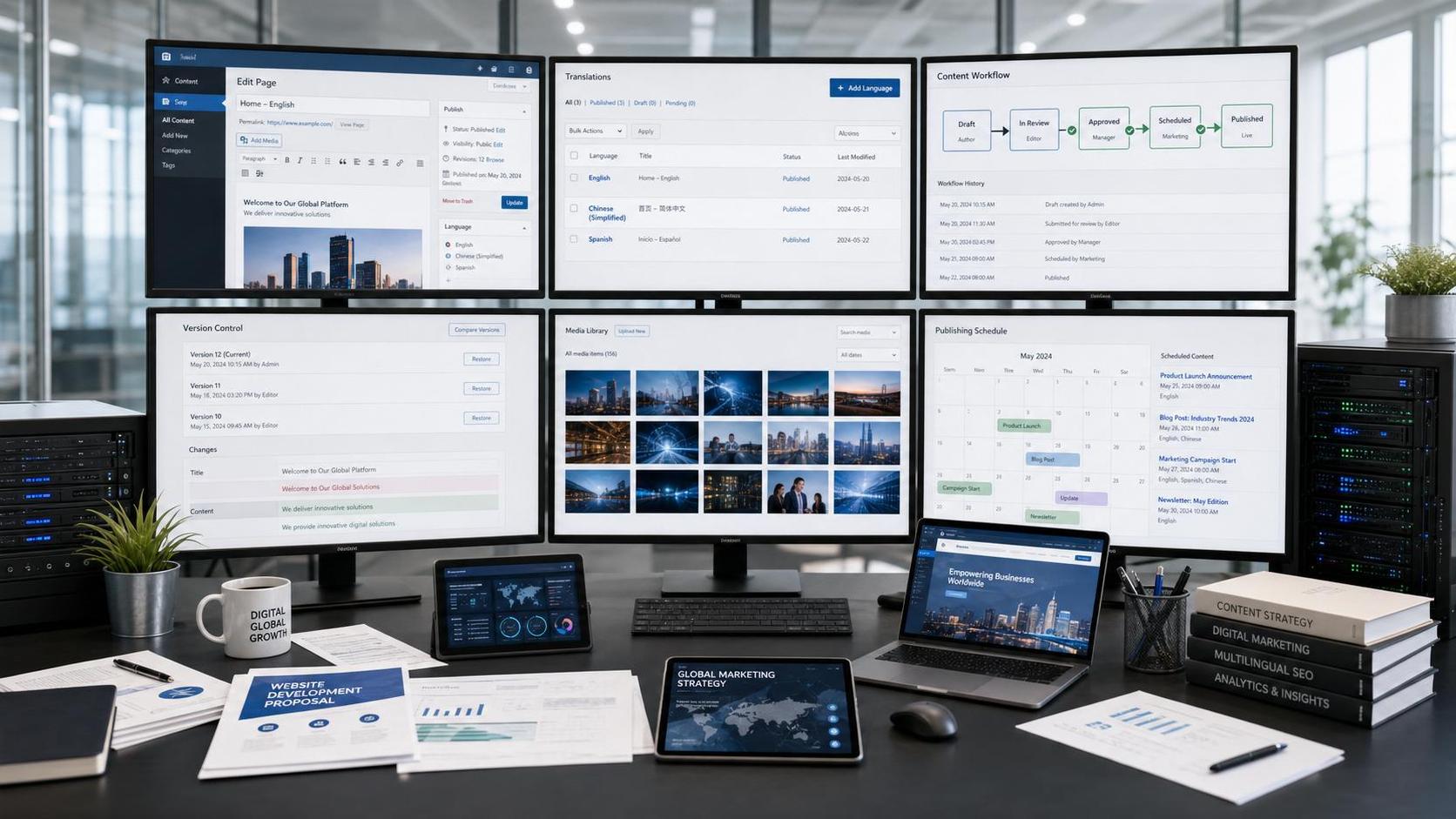
 How to choose a multilingual content management tool? A comparison of version control, collaboration workflows, and release efficiency.
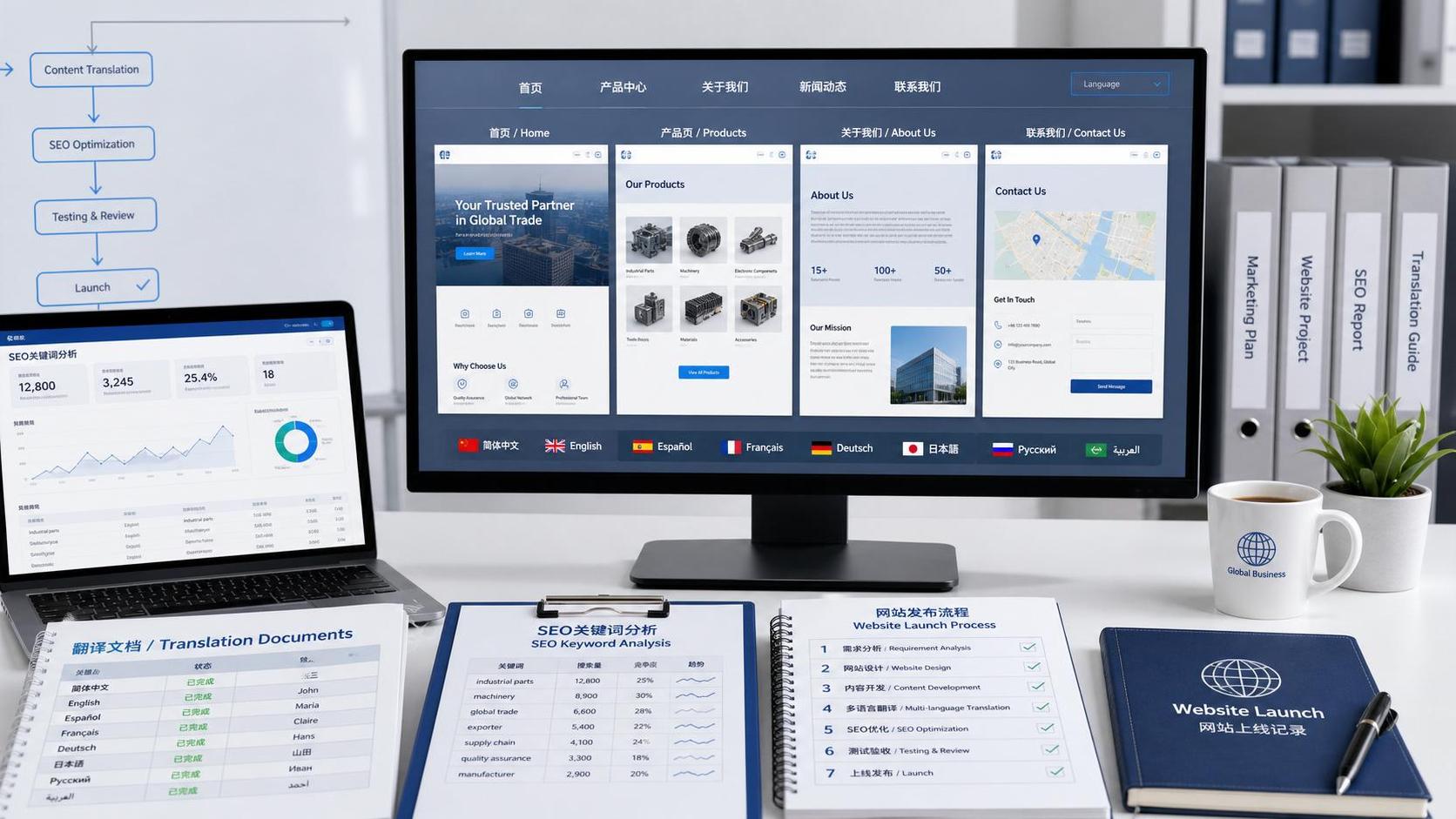
 How to choose a foreign trade multilingual website solution service? Let’s look at translation, SEO, and publishing process together
Related Products
 EasyCamp SaaS Smart Website Marketing SystemE-Yingbao SaaS Smart Website Marketing System: AI-powered, zero-code website building. Rapidly launch multilingual independent e-commerce sites in just 10 minutes. Global server acceleration and AI-driven SEO optimization empower businesses to efficiently connect with global markets. The seamless integration of technology and user-friendly operation makes building e-commerce sites incredibly simple.
 AI+SEM Intelligent Advertising Marketing SystemAI+SEM drives intelligent ad creation, empowering full-funnel precision advertising marketing. The system automatically generates weekly/monthly reports, AI recommends keywords and target countries, monitors core metrics in real-time with intelligent alerts, and enables one-click high-conversion ad solutions to help quickly acquire customers and improve ROI.
 AI+SEO Dual Engine Optimization ServiceEasyWin AI+SEO Dual Engine Optimization System leverages AI-powered keyword mining, content generation, and comprehensive technical optimization to help foreign trade enterprises acquire high-quality organic traffic, significantly improving search rankings and conversion rates.
 AI+SNS Social Media Marketing SystemYingbao AI+SNS Social Media Marketing System - Precision social capture for the social media era. Supports one-click content synchronization across major platforms like Facebook and LinkedIn. AI intelligently rewrites posts for enhanced relevance. 24/7 AI customer service and user profiling analysis empower businesses to efficiently expand into global markets.
 AI+SEO营销解决方案易营宝AI+SEO营销解决方案,通过AI批量写作、智能生成TDK、精准关键词扩词等功能,全面优化网站SEO效果,提升流量与转化率。助力企业构建高效智能网站新生态。
 AI+SEM Advertising Marketing SolutionsAI+SEM Advertising Marketing Solution leverages AI technology to deeply empower SEM ad campaigns. It automatically generates weekly/monthly reports using AI, presenting account data across multiple dimensions for comprehensive insights into campaign performance and trends. The system precisely recommends keywords and target countries, intelligently generates high-conversion ad copy, and enables one-click activation of efficient campaign plans to help businesses rapidly acquire customers. Simultaneously, it monitors core metrics in real time, intelligently identifies abnormal fluctuations, and issues timely alerts to ensure stable, high-return advertising results.
 Domain Name ServicesEasyWin provides professional domain name services, including intelligent queries, one-stop registration, brand protection, and full lifecycle management, helping businesses build a digital brand image.
 EasyOperate B2C Cross-Border E-Commerce Platform & Independent WebsiteEasyStore B2C Cross-border E-commerce Independent Store is an intelligent website building and cross-border e-commerce integrated solution independently developed by EasyStore Information Technology (Beijing) Co., Ltd. The system is specially designed for small and medium-sized as well as large export enterprises, integrating 'website building, operation, marketing, advertising, and conversion' into one, helping enterprises quickly establish cross-border e-commerce independent stores to achieve brand globalization and global sales growth.
The platform supports multiple languages, multiple currencies, and multi-channel marketing, with built-in AI intelligent translation and SEO optimization systems, suitable for mainstream markets such as Southeast Asia, Europe and America, Latin America, and the Middle East, assisting Chinese manufacturing enterprises in efficiently deploying international e-commerce strategies. SSL证书易营宝提供专业SSL安全证书服务,包括单域名和泛域名证书,确保网站数据传输加密、身份验证和完整性保护,助力企业建立安全可信的在线业务环境。









