









- How to view pricing in the global traffic ecosystem? Cost comparison of search, social media, and content channel advertisingJul 06, 2026View details
- How to assess foreign trade website development trends?Looking at 2026 changes from multilingual,AI content to conversion pathsJul 04, 2026View details
- What are the new trends in multilingual marketing data analytics tools in 2026? Focus on attribution、automation and complianceJul 04, 2026View details
- Is Brand Globalization Marketing Consulting Worth Buying? At What Stage Should Companies Bring It InJul 01, 2026View details
- Cross-Border Marketing Trend Research: Why More and More Companies Are Starting to Deploy AI Search and GEO OptimizationJun 30, 2026View details
- Cross-Border Marketing Trend Research: How Independent Sites, AI Content, and Short-Video Customer Acquisition Are ChangingJun 30, 2026View details
How can building materials export website design make customer acquisition easier?Analysis of product categories、case studies and inquiry page layout
For Building Materials Foreign Trade Website Design, Look at the Customer Acquisition Path First, Not the Page Style
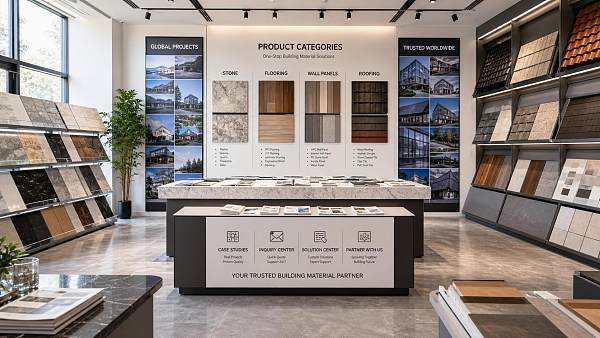
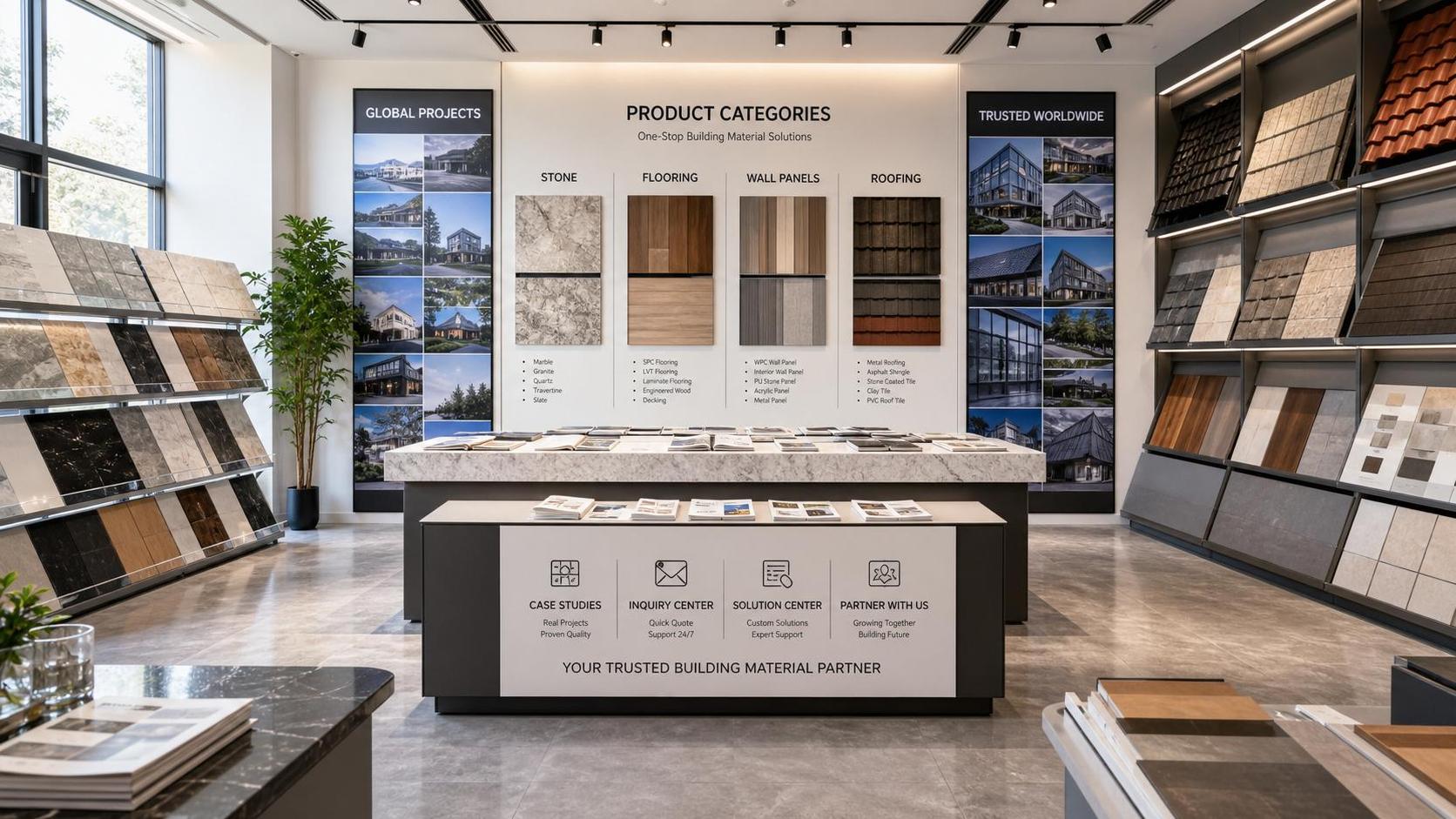
Whether building materials foreign trade website design can make customer acquisition easier does not mainly depend on whether the homepage is visually impressive, but on whether visitors can quickly understand the products, assess capabilities, and complete an inquiry after entering the website. The building materials industry has complex product lines, large differences in specifications, and application environments divided into residential, commercial, engineering, and customized projects. If the website structure only pursues visual consistency, it often compresses the information that truly affects conversion.
In actual business, building materials foreign trade website design also needs to take search indexing, advertising traffic reception, multilingual presentation, and follow-up into account. Especially when an enterprise is doing Google SEO, ad placement, and social media traffic acquisition at the same time, the visitor intent brought by different entry points is not the same, and the page layout cannot use one single approach for everything. A more common way to judge is to first sort out customer acquisition scenarios, and then decide on product categories, case organization, and inquiry page layout.
This is also where the value of website and marketing service integration lies. Platforms such as 易营宝, which have long served foreign trade growth, usually look at website building, SEO, advertising, and data analysis within the same logic, because a website is not an isolated display tool, but the hub for converting overseas traffic.
In Actual Use, Product Categorization Determines Whether Traffic Can Enter the Right Page
Many problems in building materials foreign trade website design come from categorization methods that are too internalized. Naming categories by factory workshops, internal series numbers, or Chinese naming habits may seem convenient for management, but it creates high costs for overseas search and visitor understanding. Visitors often do not look for a brand series first, but first look for use, material, installation method, specification range, or applicable space.
For example, for websites dealing with stone, flooring, wall panels, and roofing materials, if everything is placed only under “Product Center” and then expanded by model, the indexing hierarchy will be relatively weak, and inquiries will also easily concentrate on vague pages. Building materials foreign trade website design that is more suitable for customer acquisition generally adopts a combination of “major product category + application scenario + parameter filtering,” so that search terms naturally correspond to page topics.
For Different Product Structures, the Categorization Focus Is Not the Same
What needs to be confirmed before implementation is that categorization is not only for people to read, but also for search engines to establish topics. A common practice used by 易营宝 in multilingual website building and SEO solutions is to let product pages, category pages, and application pages each undertake different keyword tasks, so that building materials foreign trade website design can more easily form stable indexing.
A Case Page Is Not a Display Wall; the Focus Is to Help Capability Assessment Be Completed Faster
Inquiry conversion in the building materials industry is often held back by trust building. Especially when engineering delivery, long-term supply, certification standards, or custom processing is involved, product images alone can hardly support decision-making. If building materials foreign trade website design turns the case page into a simple stack of images, its value will be greatly weakened.
A more effective case page should help visitors quickly answer several questions: which regions have been served, what types of projects have been handled, what materials were delivered, what difficulties were solved, and whether continuous supply and supporting coordination capabilities are available. Only in this way can cases truly participate in customer acquisition, rather than stopping at the level of “having completed projects.”
Case Content Can Be Organized This Way
- Break it down by project type, such as residential, hotel, commercial complex, and public works.
- Break it down by region to strengthen understanding of export regions and experience in adaptation.
- Supplement material specifications, certifications, delivery cycles, and supporting services.
- Explain project difficulties, such as color difference control, installation matching, and transport packaging.
If the enterprise is also running Google ads or social media placements, the case page can also take on a secondary conversion task. Visits brought by advertising are usually more direct. If the landing page can embed relevant cases into similar product pages, it will be more effective than separately placing a general case section. This kind of site structure better matches the actual needs of website and marketing coordination.
The Inquiry Page Layout Should Segment Traffic Sources, Not Just Place One Form
Many building materials foreign trade website designs lose opportunities at the final step, not because no one visits, but because the inquiry page is too rough. With only one “Contact Us” form, vague fields, and no contextual connection on the page, visitors find it difficult to judge whether it is worth leaving their information before submitting.
In fact, inquiry intent differs greatly across different entry points. Visitors from SEO pay more attention to the completeness of information; visitors from advertising care more about response efficiency; visitors from case pages have usually already entered the comparison stage and want to confirm project fit and execution capability. If building materials foreign trade website design does not make distinctions, the form conversion rate is often not high.
High-Converting Inquiry Pages Usually Include This Information
- The product or solution name related to the current page, reducing bounce.
- Key option fields, such as size, material, purchase quantity, and target market.
- Delivery capability prompts, such as customization, sampling, certification, and packaging support.
- Brief case or qualification information to strengthen trust before submission.
- Clear but restrained response expectation statements, avoiding vague promises.
If the site targets multiple regions at the same time, multilingual inquiry pages also need to pay attention to field expressions and unit-of-measure conversion. The advantage of platforms like 易营宝, which have multilingual, advertising landing page, and AI data analysis capabilities, lies in their ability to look at form sources, page performance, and subsequent conversion together, rather than simply building the pages.
Misjudgments That Are Easily Overlooked Are Often Exactly Why Building Materials Foreign Trade Website Design Fails
One common misjudgment is to understand building materials foreign trade website design as the online version of a corporate brochure. This approach usually emphasizes brand narrative and neglects product entry points. As a result, the homepage contains a lot of information, but there are very few pages that can truly receive search traffic. For sites aimed at inquiries, this structure is not friendly.
Another problem is looking only at product parameters while ignoring application conditions. Building materials products often involve weather resistance, installation methods, certification standards, regional regulations, and packaging and transportation. If the website only lists basic parameters but does not explain applicable scenarios and limitations, visitors will continue comparing elsewhere, and their willingness to inquire will naturally decline.
There is also a situation where all overseas markets are treated as having the same needs. North America, Europe, the Middle East, and Southeast Asia do not have consistent concerns. Page expression, case filtering, certification presentation, and inquiry priorities should all be adjusted accordingly. Especially when building multilingual sites, it is not enough to simply translate the text; localized expression and search habits also need to be handled.
A More Stable Implementation Approach Is to Plan Website Building Together with Subsequent Growth
Building materials foreign trade website design that is more suitable for customer acquisition usually does not start only from visual drafts. Instead, it first confirms three things: how to split and categorize the main promoted products, what proof materials are needed in key markets, and whether subsequent traffic will mainly come from SEO, advertising, or social media. Only when these conditions are aligned will the website structure, content depth, and inquiry path become consistent.
At the execution level, priority can be given to sorting out the relationship among high-value product pages, corresponding case pages, and dedicated inquiry pages, and then completing technical materials, application content, and multilingual versions. For enterprises simultaneously promoting overseas independent websites, SEO optimization, and ad placement, this approach makes it easier to accumulate long-term assets and also makes subsequent continuous page optimization through AI data more convenient.
If you are preparing to re-plan building materials foreign trade website design, the next step can be to conduct a round of page audit first: see whether the categories are close to search intent, whether the cases can support capability assessment, and whether the inquiry pages can receive traffic from different sources. Once these three areas are properly handled, the customer acquisition efficiency of the website will usually show relatively obvious changes.
Related Articles
 Japan launches the J-Global Link program,enterprises connected to the JETRO database can receive priority recommendations
 How can building materials export website design make customer acquisition easier?Analysis of product categories、case studies and inquiry page layout
 What should you pay attention to when building a B2B website for the UAE market? Analysis of language, payment and inquiry habits

Related Products
 EasyCamp SaaS Smart Website Marketing SystemE-Yingbao SaaS Smart Website Marketing System: AI-powered, zero-code website building. Rapidly launch multilingual independent e-commerce sites in just 10 minutes. Global server acceleration and AI-driven SEO optimization empower businesses to efficiently connect with global markets. The seamless integration of technology and user-friendly operation makes building e-commerce sites incredibly simple.
 AI+SEM Intelligent Advertising Marketing SystemAI+SEM drives intelligent ad creation, empowering full-funnel precision advertising marketing. The system automatically generates weekly/monthly reports, AI recommends keywords and target countries, monitors core metrics in real-time with intelligent alerts, and enables one-click high-conversion ad solutions to help quickly acquire customers and improve ROI.
 AI+SEO Dual Engine Optimization ServiceEasyWin AI+SEO Dual Engine Optimization System leverages AI-powered keyword mining, content generation, and comprehensive technical optimization to help foreign trade enterprises acquire high-quality organic traffic, significantly improving search rankings and conversion rates.
 AI+SNS Social Media Marketing SystemYingbao AI+SNS Social Media Marketing System - Precision social capture for the social media era. Supports one-click content synchronization across major platforms like Facebook and LinkedIn. AI intelligently rewrites posts for enhanced relevance. 24/7 AI customer service and user profiling analysis empower businesses to efficiently expand into global markets.
 AI+SEO营销解决方案易营宝AI+SEO营销解决方案,通过AI批量写作、智能生成TDK、精准关键词扩词等功能,全面优化网站SEO效果,提升流量与转化率。助力企业构建高效智能网站新生态。
 AI+SEM Advertising Marketing SolutionsAI+SEM Advertising Marketing Solution leverages AI technology to deeply empower SEM ad campaigns. It automatically generates weekly/monthly reports using AI, presenting account data across multiple dimensions for comprehensive insights into campaign performance and trends. The system precisely recommends keywords and target countries, intelligently generates high-conversion ad copy, and enables one-click activation of efficient campaign plans to help businesses rapidly acquire customers. Simultaneously, it monitors core metrics in real time, intelligently identifies abnormal fluctuations, and issues timely alerts to ensure stable, high-return advertising results.
 Domain Name ServicesEasyWin provides professional domain name services, including intelligent queries, one-stop registration, brand protection, and full lifecycle management, helping businesses build a digital brand image.
 EasyOperate B2C Cross-Border E-Commerce Platform & Independent WebsiteEasyStore B2C Cross-border E-commerce Independent Store is an intelligent website building and cross-border e-commerce integrated solution independently developed by EasyStore Information Technology (Beijing) Co., Ltd. The system is specially designed for small and medium-sized as well as large export enterprises, integrating 'website building, operation, marketing, advertising, and conversion' into one, helping enterprises quickly establish cross-border e-commerce independent stores to achieve brand globalization and global sales growth.
The platform supports multiple languages, multiple currencies, and multi-channel marketing, with built-in AI intelligent translation and SEO optimization systems, suitable for mainstream markets such as Southeast Asia, Europe and America, Latin America, and the Middle East, assisting Chinese manufacturing enterprises in efficiently deploying international e-commerce strategies. SSL证书易营宝提供专业SSL安全证书服务,包括单域名和泛域名证书,确保网站数据传输加密、身份验证和完整性保护,助力企业建立安全可信的在线业务环境。









