









- What should you focus on in the latest enterprise SaaS report? From renewal rates and delivery costs to overseas growth opportunitiesJul 12, 2026View details
- What signals are worth paying attention to in a cross-border marketing trend report? B2B companies should look at these 6 signalsJul 11, 2026View details
- How to Read a Cross-Border Marketing Trends Report? Five Key Dimensions for Evaluating Channel OpportunitiesJul 11, 2026View details
- Which channel has the highest ROI in the global traffic ecosystem? Comparative analysis of search, social media, and advertisingJul 10, 2026View details
- What multilingual website services are available in Sanya? Which model is more suitable for local businesses going global?Jul 08, 2026View details
- How to view the complete list of China SaaS companies in the top 100? Practical methods for screening website-building and marketing service providersJul 08, 2026View details
How to do SEO for German foreign trade websites in the German market? A guide to keyword habits and page structure pitfalls
SEO for German-language foreign trade websites targeting the German market: Don't rush to translate the Chinese site.
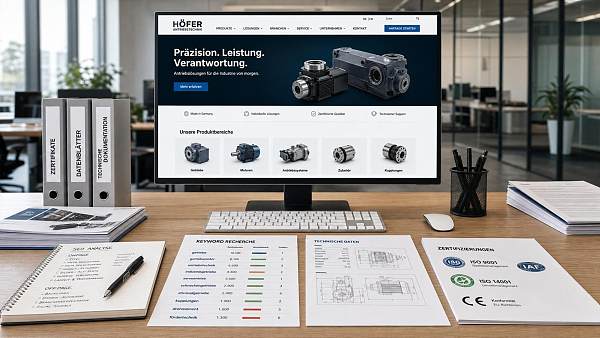
When it comes to SEO for German-language foreign trade websites targeting the German market, many teams go astray from the very first step.
The most common problem is not a lack of technology, but rather that the understanding is still stuck in "multilingual copying".
German users' search habits, reading pace, and page judgment criteria are different from those in the Chinese market.
If you simply translate the Chinese page directly and force keywords into it, you might get indexed, but rankings and conversions are usually unstable.
For truly effective SEO of German-language foreign trade websites targeting the German market, the core elements are three things: keyword localization, clear page structure, and credible and verifiable content.
Recent changes indicate that the German market has higher requirements for professionalism and page logic, which means that a solid foundation for the website must be established first.
First, consider search habits: German users' searches may not be what you wrote.
When doing SEO for a German-language foreign trade website targeting the German market, the first step is not writing content, but rather redoing your understanding of keywords.
German users tend to be more specific in their searches, focusing more on features, parameters, certifications, and application scenarios.
For example, when it comes to industrial products, Chinese search terms often include "direct from the manufacturer," while German searches are more likely to focus on specifications, uses, materials, and standards.
These differences directly determine your category name, title keywords, and landing page layout.
Keyword organization suggestions
- First, break down the main term, then add industry modifiers, application terms, and regional terms.
- Differentiate between three types of search intent: informational, comparative, and purchasing.
- Prioritize long-tail keywords, don't just focus on broad keywords.
- Pay attention to the writing of compound words and avoid awkward word splitting.
In practice, German-language foreign trade websites are particularly wary of "Chinese-thinking keyword selection" when it comes to SEO in the German market.
What may seem like an accurate translation may not be an expression commonly used by local purchasing personnel.
A more reliable approach is to cross-validate using search suggestions, competitor titles, industry terminology, and the wording of real inquiries.
How should a page structure be designed to suit the SEO of a German-language foreign trade website targeting the German market?
After finding the right keywords, the second key point is the page structure.
The German market is very sensitive to page information hierarchy; a messy structure usually results in a high bounce rate.
Especially on B2B foreign trade websites, users often scan the information first after entering the page before deciding whether to continue reading.
Recommended basic page order
- The page title directly states the product or service.
- The first screen explains the applicable scenarios and core advantages.
- The middle section displays parameters, certifications, and delivery capabilities.
- The latter part includes supplementary case studies, frequently asked questions, and contact information.
This structure is more in line with the reading path of German-language foreign trade websites in the German market.
Users first confirm "Do you do this?", then judge "Are you professional and reliable?", and only then will they proceed to make an inquiry.
If the homepage only contains large images and vague slogans, it will be difficult for search engines to understand and users to make a judgment.
Key information to be added to the page
- Product parameters and model range
- Applicable Industries and Usage Environment
- Certification standards and testing information
- Delivery time, customization, packaging and logistics capabilities
- Company qualifications, factory strength, after-sales service
This content affects both ranking and the quality of inquiries.
Three common pitfalls that most easily slow down indexing and conversion.
When many teams are doing SEO for German-language foreign trade websites in the German market, the problem isn't that they haven't done it, but that their approach is too crude.
Category 1: The literal translation is too heavy.
The original Chinese text was overly promotional, and when translated into German, it sounded vague and unnatural.
Even if such pages are indexed, it is difficult for them to achieve a stable ranking.
Category 2: Copying the column structure directly from the Chinese website
Simply copying "About Us," "News Center," and "Product Showcase" verbatim usually doesn't yield good results.
The German market places greater emphasis on product pages, application pages, FAQ pages, and credible proof pages.
Category 3: Technical details not handled
For example, duplicate titles, missing descriptions, excessively deep link hierarchy, inconsistent language tags, and slow page speed.
These issues will directly weaken the fundamental performance of German-language foreign trade websites' SEO in the German market.
A more obvious sign is that many sites have a lot of content, but their index coverage remains low.
An executable optimization plan can be implemented more steadily by following these four steps.
To truly succeed in the German market through SEO for your German-language foreign trade website, you can follow these four steps.
1. First, perform keyword segmentation.
Separate brand terms, product terms, solution terms, and problem terms, and assign them to different pages.
2. Then perform page mapping.
One core keyword corresponds to one main page, avoiding multiple pages competing for rankings.
3. Simultaneously complete the trust information.
Include your factory, certificates, case studies, delivery process, and after-sales service mechanism on your key landing page.
4. Finally, we will continue to update.
Expand content around application scenarios, procurement issues, and selection suggestions to drive long-tail traffic growth.
This method is suitable for manufacturing plants, foreign trade enterprises, cross-border brand independent websites, and also for upgrading multilingual official websites.
Website and marketing integrated service platforms like Yiyingbao typically combine AI website building, SEO optimization, multilingual architecture, and content operation.
The benefit of doing this is straightforward: it reserves the structure for the German market and SEO of a German-language foreign trade website from the website building stage, rather than reworking it later.
Conclusion: The German market is not untouchable, but it cannot be approached in a crude and inefficient manner.
Returning to the core issue, the success of SEO for German-language foreign trade websites in the German market isn't about who posts the most, but about who understands the local search logic better.
Keywords should be localized, pages should be well-organized, content should demonstrate strength, and technical details should be stable.
If you do these things well, your indexing will be more stable, your ranking will be easier to improve, and the quality of inquiries will also be significantly improved.
If the site is already online, it is recommended to start with keyword correction and page structure inspection.
First, address the weaknesses in SEO for German-language foreign trade websites that most negatively impact the German market. Then, gradually expand content and traffic sources. This approach will be more stable and closer to achieving real conversion goals.
Related Articles
 CBP launches TWID verification, new binding requirement for export customs clearance on independent sites
 How to Structure Keywords on a Foreign Trade Website Article Page? Title, Internal Links, and Long-Tail Keyword Placement in Practice
 How to do SEO for German foreign trade websites in the German market? A guide to keyword habits and page structure pitfalls

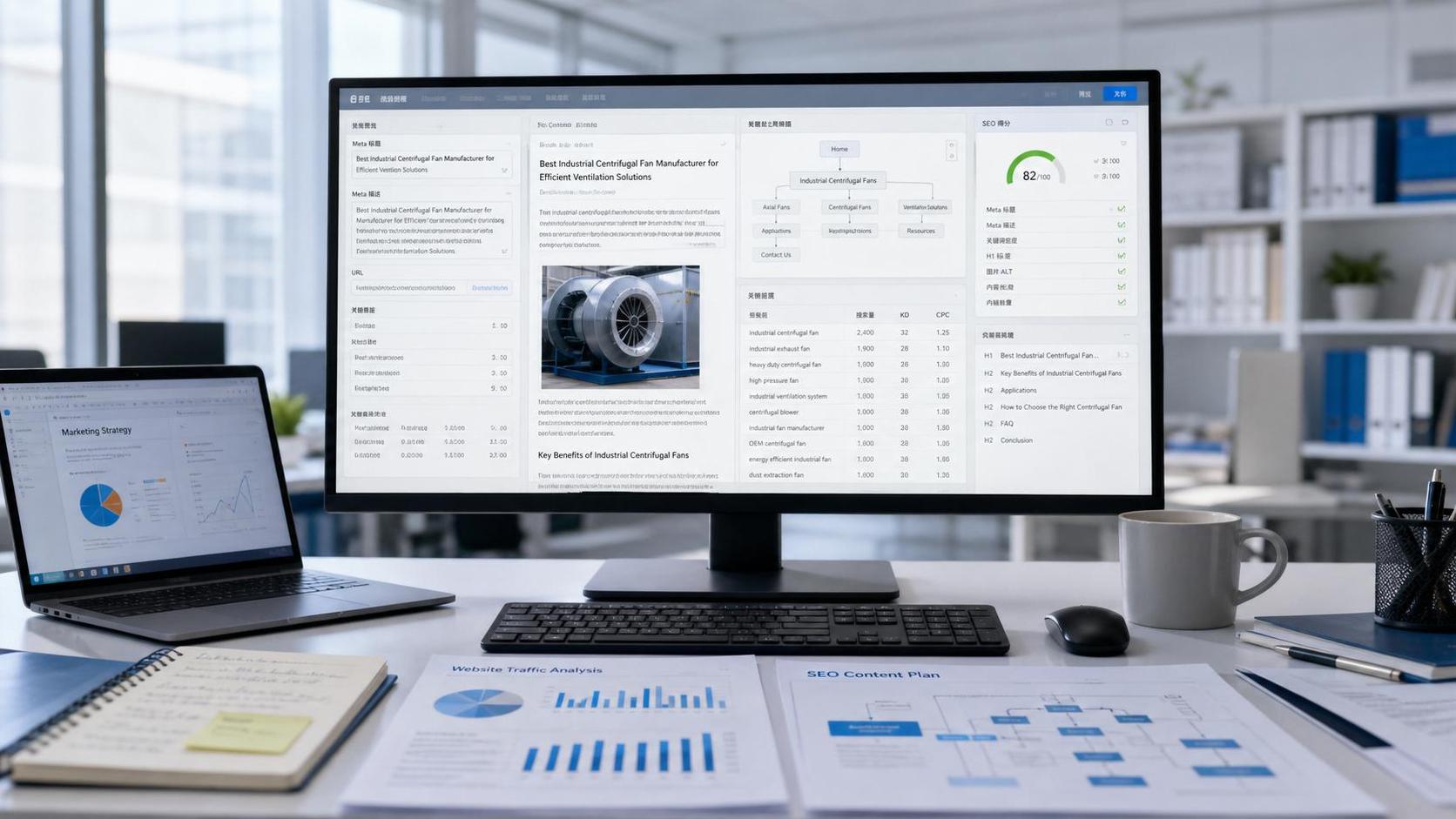
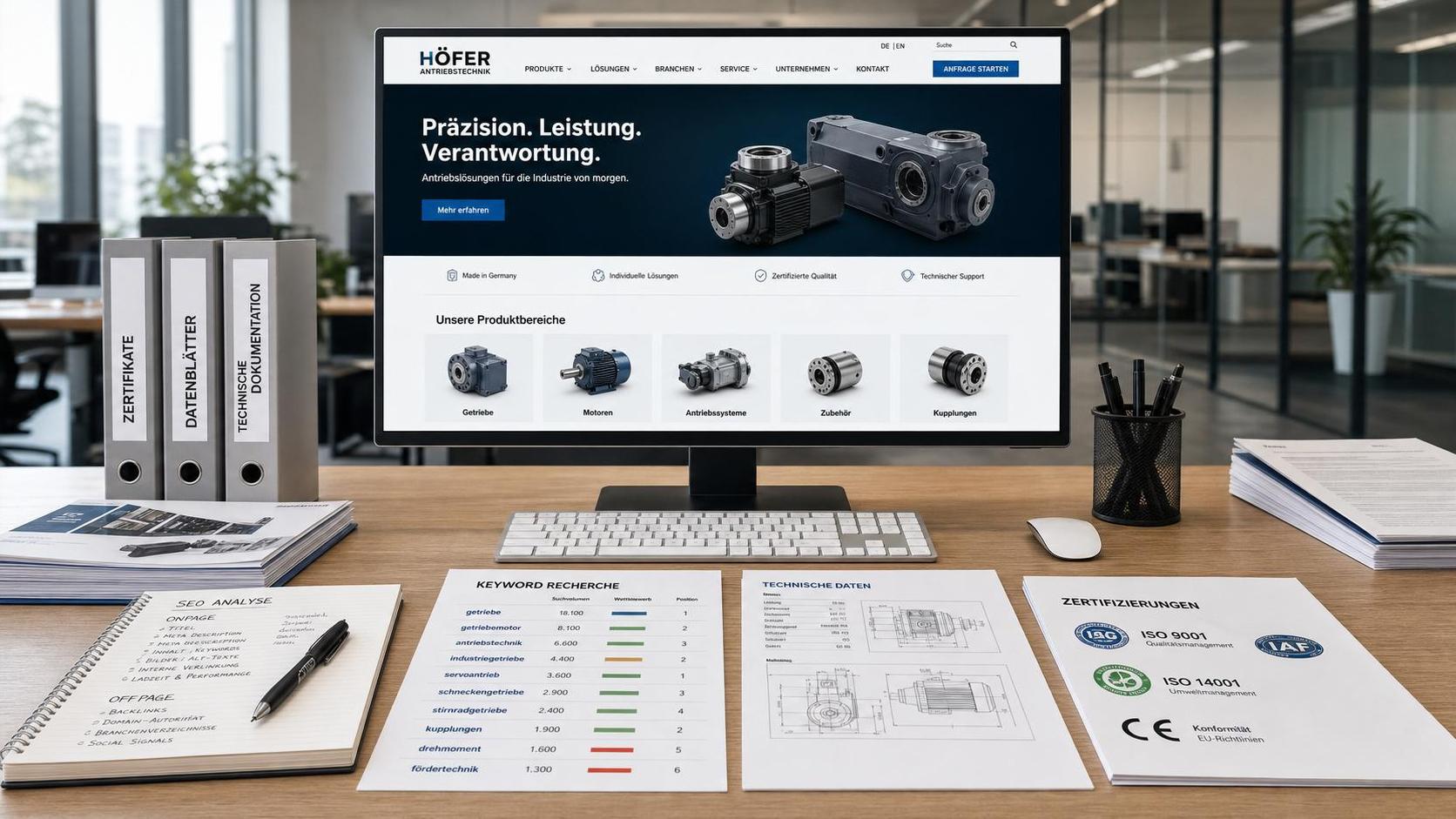
Related Products
 EasyCamp SaaS Smart Website Marketing SystemE-Yingbao SaaS Smart Website Marketing System: AI-powered, zero-code website building. Rapidly launch multilingual independent e-commerce sites in just 10 minutes. Global server acceleration and AI-driven SEO optimization empower businesses to efficiently connect with global markets. The seamless integration of technology and user-friendly operation makes building e-commerce sites incredibly simple.
 AI+SEM Intelligent Advertising Marketing SystemAI+SEM drives intelligent ad creation, empowering full-funnel precision advertising marketing. The system automatically generates weekly/monthly reports, AI recommends keywords and target countries, monitors core metrics in real-time with intelligent alerts, and enables one-click high-conversion ad solutions to help quickly acquire customers and improve ROI.
 AI+SEO Dual Engine Optimization ServiceEasyWin AI+SEO Dual Engine Optimization System leverages AI-powered keyword mining, content generation, and comprehensive technical optimization to help foreign trade enterprises acquire high-quality organic traffic, significantly improving search rankings and conversion rates.
 AI+SNS Social Media Marketing SystemYingbao AI+SNS Social Media Marketing System - Precision social capture for the social media era. Supports one-click content synchronization across major platforms like Facebook and LinkedIn. AI intelligently rewrites posts for enhanced relevance. 24/7 AI customer service and user profiling analysis empower businesses to efficiently expand into global markets.
 AI+SEO营销解决方案易营宝AI+SEO营销解决方案,通过AI批量写作、智能生成TDK、精准关键词扩词等功能,全面优化网站SEO效果,提升流量与转化率。助力企业构建高效智能网站新生态。
 AI+SEM Advertising Marketing SolutionsAI+SEM Advertising Marketing Solution leverages AI technology to deeply empower SEM ad campaigns. It automatically generates weekly/monthly reports using AI, presenting account data across multiple dimensions for comprehensive insights into campaign performance and trends. The system precisely recommends keywords and target countries, intelligently generates high-conversion ad copy, and enables one-click activation of efficient campaign plans to help businesses rapidly acquire customers. Simultaneously, it monitors core metrics in real time, intelligently identifies abnormal fluctuations, and issues timely alerts to ensure stable, high-return advertising results.
 Domain Name ServicesEasyWin provides professional domain name services, including intelligent queries, one-stop registration, brand protection, and full lifecycle management, helping businesses build a digital brand image.
 EasyOperate B2C Cross-Border E-Commerce Platform & Independent WebsiteEasyStore B2C Cross-border E-commerce Independent Store is an intelligent website building and cross-border e-commerce integrated solution independently developed by EasyStore Information Technology (Beijing) Co., Ltd. The system is specially designed for small and medium-sized as well as large export enterprises, integrating 'website building, operation, marketing, advertising, and conversion' into one, helping enterprises quickly establish cross-border e-commerce independent stores to achieve brand globalization and global sales growth.
The platform supports multiple languages, multiple currencies, and multi-channel marketing, with built-in AI intelligent translation and SEO optimization systems, suitable for mainstream markets such as Southeast Asia, Europe and America, Latin America, and the Middle East, assisting Chinese manufacturing enterprises in efficiently deploying international e-commerce strategies. SSL证书易营宝提供专业SSL安全证书服务,包括单域名和泛域名证书,确保网站数据传输加密、身份验证和完整性保护,助力企业建立安全可信的在线业务环境。









