









- What should you focus on in the latest enterprise SaaS report? From renewal rates and delivery costs to overseas growth opportunitiesJul 12, 2026View details
- What signals are worth paying attention to in a cross-border marketing trend report? B2B companies should look at these 6 signalsJul 11, 2026View details
- How to Read a Cross-Border Marketing Trends Report? Five Key Dimensions for Evaluating Channel OpportunitiesJul 11, 2026View details
- Which channel has the highest ROI in the global traffic ecosystem? Comparative analysis of search, social media, and advertisingJul 10, 2026View details
- What multilingual website services are available in Sanya? Which model is more suitable for local businesses going global?Jul 08, 2026View details
- How to view the complete list of China SaaS companies in the top 100? Practical methods for screening website-building and marketing service providersJul 08, 2026View details
Will AI-generated foreign trade content be judged as low quality by Google? The key is not AI, but content standards
Will AI-generated foreign trade content be judged as low quality by Google? The answer often does not lie in the tool itself, but in whether the content is authentic, useful, professional, and aligned with search intent. For operators, what really matters is content standards and conversion value.
In a website + marketing service integrated scenario, foreign trade companies need to handle multilingual pages, product details, industry articles, landing pages, and ad materials every day. AI can indeed increase content production efficiency by 2 to 5 times, but without manual review, industry knowledge, and page strategy, it may still lead to poor indexing, weak rankings, and low inquiry rates.
For users and operators, the real challenge is not “whether AI can be used to write,” but “how to make AI content indexable, readable, and convertible.” Especially for Google SEO, ad landing pages, and overseas independent sites, content quality already directly affects the traffic acquisition cycle, conversion path, and subsequent advertising costs.
What Google focuses on is not the AI label, but whether the content meets user needs
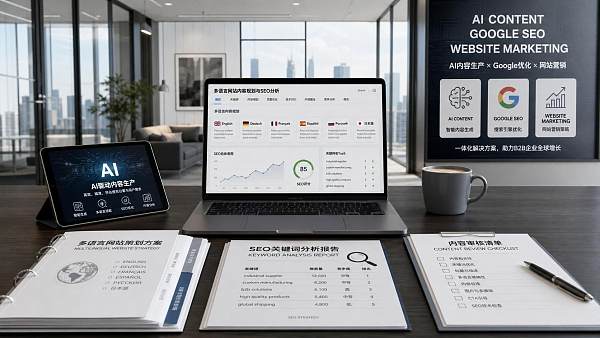
Many operators worry: Will AI-generated foreign trade content be judged as low quality by Google? From the perspective of actual operations, Google pays more attention to whether a page solves a problem, whether it contains professional information, and whether it matches search intent, rather than first judging whether the content was assisted by AI.
In other words, AI itself is not the risk. The real risks usually come from three types of issues: first, content is generic and only has concepts without details; second, the sentences are smooth but lack industry relevance; third, the page structure is messy, and the keywords, scenario terms, and conversion information do not form a closed loop.
Foreign trade content being judged as low quality often comes down to 4 layers
In B2B foreign trade websites, whether a piece of content can bring natural traffic usually depends on four basic dimensions: information authenticity, page completeness, search relevance, and business conversion capability. If two of these are clearly weak, even if the article reaches 1500 words, it may still be difficult to obtain stable exposure.
- Information authenticity: Are there clear product scenarios, service processes, delivery cycles, and applicable markets?
- Page completeness: Does it include heading hierarchy, explanatory paragraphs, FAQ, tables, or key parameters?
- Search relevance: Does it cover the long-tail terms buyers would search for, such as multilingual website building, foreign trade SEO optimization, and overseas promotion solutions?
- Business conversion capability: Does it provide the next action, such as inquiry, trial, solution consultation, or page entry point?
Low quality does not equal poor grammar; it is more likely “lots of words, little value”
Many AI-generated contents are grammatically correct and well-structured, but the problem is that after reading them, users cannot get actionable information. For example, if it only says “we provide professional website building services,” but does not specify how many languages are supported, which markets are covered, whether the website building cycle is 7 days or 30 days, or how the SEO structure is planned, such pages are difficult to build trust with.
The table below can help operators quickly judge whether an AI-generated foreign trade piece of content will drag down the overall site performance due to insufficient quality.
The four items in the table basically cover the core issues of most content pages. For website operators, doing a quality audit first and then batch expansion is often more effective than directly pursuing output volume. Especially for corporate websites, 20 effective pieces of content usually have more long-term value than 100 low-quality pieces.
What are the key standards for using AI to write content on foreign trade websites
If you want to answer “Will AI-generated foreign trade content be judged as low quality by Google?”, a more practical approach is to establish a content review standard. For foreign trade independent sites, B2B marketing sites, and cross-border e-commerce stores, at least 5 aspects should be reviewed, and each page should ideally go through 1 round of machine generation, 1 round of human editing, and 1 round of publishing review before launch.
1. First check whether it is authentic to avoid being disconnected from the business
Authentic does not mean you must write complex case studies; it means the content must be consistent with the services actually provided by the company. For example, when making multilingual website development content, you should clearly state the supported language range, page types, deployment logic, SEO structure, and subsequent maintenance; when making Google Ads content, you should explain whether it is suitable for cold start or conversion promotion, and how the budget is usually allocated by stage.
2. Then check whether it is useful and can answer specific questions
Users search not to read a vague introduction, but to know “how long it takes to go live,” “which countries it is suitable for,” “how long SEO takes to show results,” and “how to avoid duplicate content on multilingual websites.” If an article can directly answer 5 to 8 real questions, its page value is usually much higher than a generic brand promotion post.
3. Professionalism must be reflected in structure and details
Professionalism is not about piling up jargon; it is about presenting actionable information in the content. For example, a website development process can be divided into requirement analysis, site planning, content building, SEO basic deployment, and 5 steps of launch validation; similarly, for an SEO content page, it should cover the main keyword, long-tail terms, application scenario terms, regional terms, and inquiry terms at the same time. Usually, one page should cover one core topic.
4. Search intent must match the page type
News pages, product pages, service pages, and case study pages are written differently. News pages lean toward explanation and education, product pages lean toward functions and parameters, service pages lean toward process and results, and case study pages lean toward problems and solutions. If a service page is written like a news article, or a product page is written like a slogan page, even the best copy will have difficulty absorbing search traffic.
5. Finally, check whether it has conversion support capability
High-quality content is not only for indexing; it also needs to support inquiries. A mature foreign trade page usually needs at least 2 conversion prompts in the text, such as getting a quote, booking a demo, viewing a solution, or submitting requirements. Especially for high-order-value B2B businesses, the content itself is part of pre-sales.
A content review checklist suitable for operators
The table below is more suitable for daily publishing use. It is not a theoretical model, but a checklist that content teams, website operators, and promotion staff can execute quickly.
The value of this checklist lies in turning “content quality” into actionable steps. For teams that publish on a daily, weekly, or multilingual basis, first establishing a unified standard and then speeding up with AI is usually much more stable than letting AI directly produce content in bulk.
In a website + marketing integrated scenario, how can AI content truly deliver value
Simply discussing content generation has limited meaning. In actual business, content does not exist in isolation; it must work together with website architecture, SEO deployment, ad pages, social media traffic, and multilingual strategy. Only when it enters a complete workflow can AI content truly shift from “saving time” to “bringing customers.”
Content should be planned together with the website structure
A promotable overseas independent site should at least include 6 basic page types: homepage, service pages, product pages, application scenario pages, blog pages, and inquiry pages. If AI-generated content is not mapped to these page responsibilities, information duplication, confusing navigation, and keyword cannibalization are likely to occur, ultimately affecting indexing efficiency and user paths.
Content should match the customer acquisition channel
Google organic search values information completeness and long-term value more, ad landing pages value concise expression and conversion actions more, social media content values topicality and interactivity more, and AI search scenarios require clearer answers and structured expression. The length, title style, and CTA layout of copy for different channels usually differ by at least 30% to 50%.
Implementation process suitable for integrated operations
- Step 1: Determine the target markets, such as North America, Europe, Southeast Asia, etc., and distinguish between B2B and B2C.
- Step 2: Plan the site structure and define core categories and keyword assignments.
- Step 3: Use AI to generate drafts, then have operators add business details and localized wording.
- Step 4: Synchronize basic SEO deployment items, such as titles, descriptions, internal links, and image alt text.
- Step 5: Monitor for 2 to 4 weeks after publishing, and continuously optimize based on indexing, dwell time, and inquiry data.
Why an integrated platform is more suitable for foreign trade teams
For enterprises with limited manpower, if content, websites, SEO, advertising, and social media are scattered across multiple systems, execution costs will rise significantly. Operators often need to switch between 3 to 5 back-end systems, which not only affects efficiency but also easily leads to inconsistent versions, delayed page updates, and data feedback disconnection.
An AI-driven enterprise-level SaaS platform like Yiyingbao is more suitable for teams that need long-term overseas growth. Its services cover AI smart website building, multilingual website development, B2B foreign trade marketing websites, cross-border stores, Google SEO optimization, Google Ads, Facebook Ads marketing, overseas social media operations, and GEO generative engine optimization, enabling website building, content, promotion, and conversion to be handled within the same business workflow.
For manufacturing factories, cross-border e-commerce sellers, and brand globalization companies, the advantage of this model is not only time savings, but also the reduction of disconnects between content and channels. Especially when enterprises are targeting multiple markets such as North America, Europe, Japan and Korea, the Middle East, or Latin America, multilingual pages, regional keyword layouts, and channel copy differences all require systematic support rather than handling by a single article.
The 3 misconceptions operators care about most and how to respond
At the operational level, the question of whether AI-generated foreign trade content will be judged as low quality by Google often hides several common misconceptions. As long as they are clearly identified, many content issues can be avoided before publishing.
Misconception 1: The faster AI writes, the higher the content team’s efficiency
If there are no content templates, keyword rules, and manual review process, the faster the speed, the more rework there will be. A more stable approach is to place AI in the stages of outline generation, draft organization, multilingual rewriting, and FAQ expansion, rather than completely replacing review. Usually, controlling the process at “70% machine, 30% human revision” produces a better balance.
Misconception 2: Original content must definitely get indexed
Originality is only the foundation; it does not mean it will necessarily have search value. Although many pages are not copied, they may still fail to rank for a long time because the topic is vague, the page is too shallow, or the intent is unclear. For foreign trade websites, original content must also satisfy four conditions at the same time: industry relevance, clear keywords, reasonable structure, and clear conversion.
Misconception 3: An article is finished once it is written
Truly effective content needs continued observation after going live. It is recommended to track at least 3 types of indicators: whether it is crawled within 7 days, whether it gets impressions within 14 to 30 days, and whether it brings clicks or inquiries within 30 to 60 days. If a piece of content still shows no obvious signal after 90 days, keywords, page entry points, and content depth should be rechecked.
Optimization suggestions suitable for team execution
- First do content layering: brand pages, service pages, product pages, and blog pages should be written separately.
- Do a fixed review once a week, prioritizing pages that already have impressions but low click-through rates.
- Multilingual content should not be translated literally; at least one round of localized semantic revision should be done.
- Keep one main keyword for each article to avoid one page carrying too many topics.
- Unify content with website building, advertising, and social media to reduce information conflicts.
For foreign trade companies, AI content is not unusable; it is just not suitable for chasing speed alone. What truly determines page quality is whether the content is authentic, professional, and aligned with search needs, as well as whether it can serve the company’s customer acquisition goals.
If you are planning an overseas independent site, upgrading a multilingual content system, or hoping to combine Google SEO, ad placement, social media marketing, and AI search visibility, Yiyingbao can provide one-stop support from AI smart website building to content optimization and promotion execution. Contact us now to get a customized solution that better fits your business stage and learn more about our solutions.
Related Articles
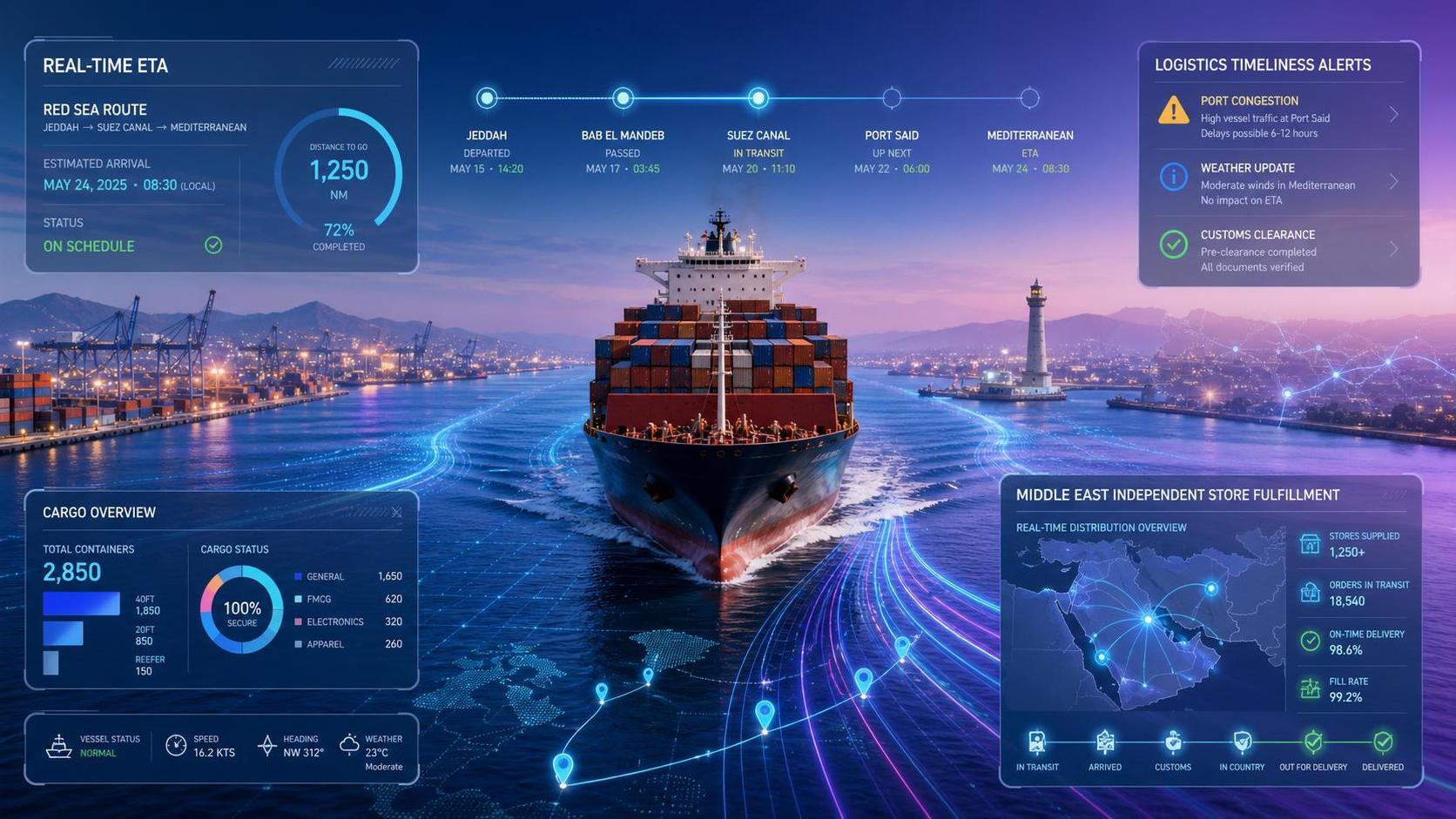
 Red Sea Shipping’s New Agreement Takes Effect, Middle East Independent Site Timeliness Alert Upgrade
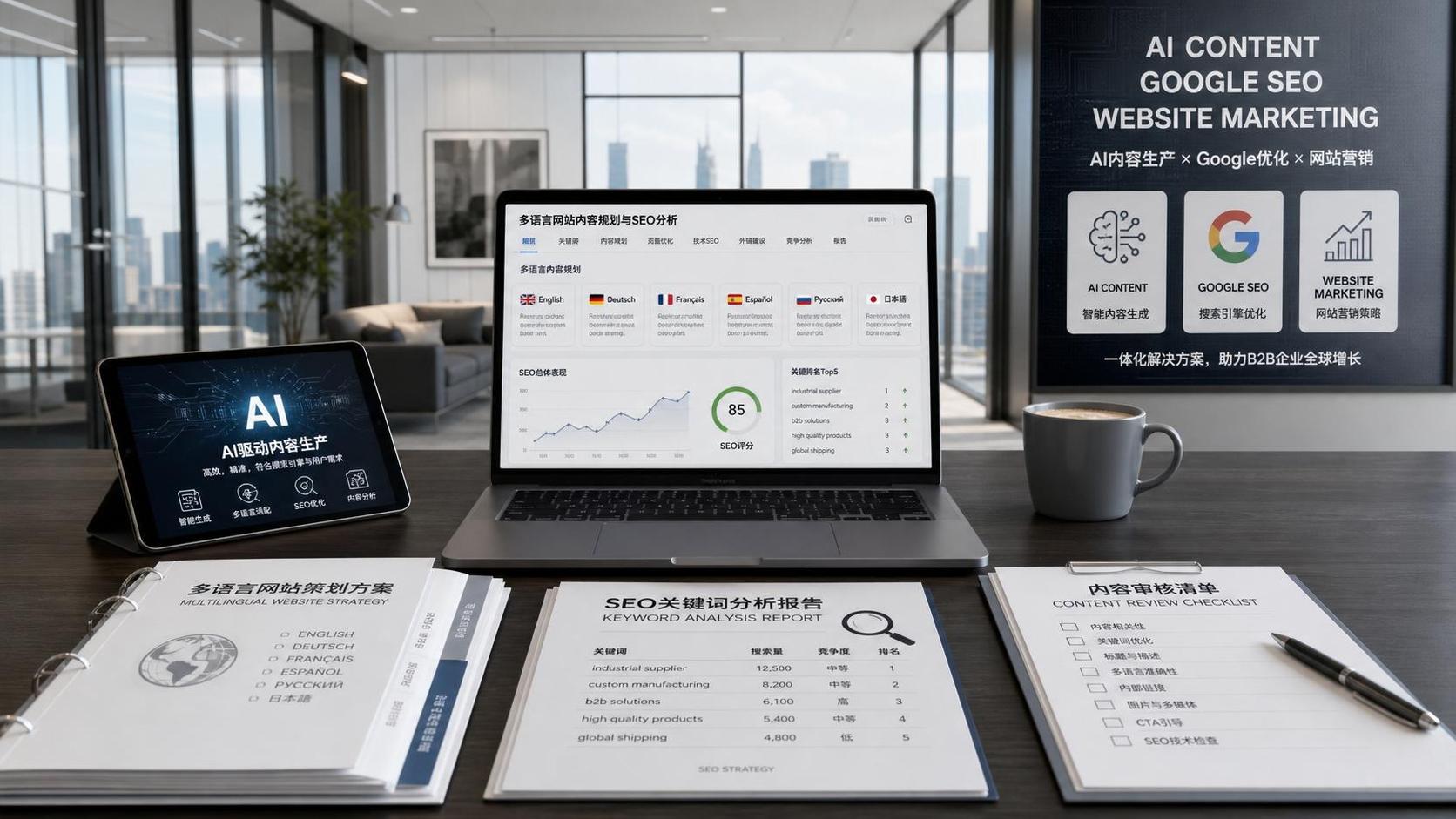
 Will AI-generated foreign trade content be judged as low quality by Google? The key is not AI, but content standards
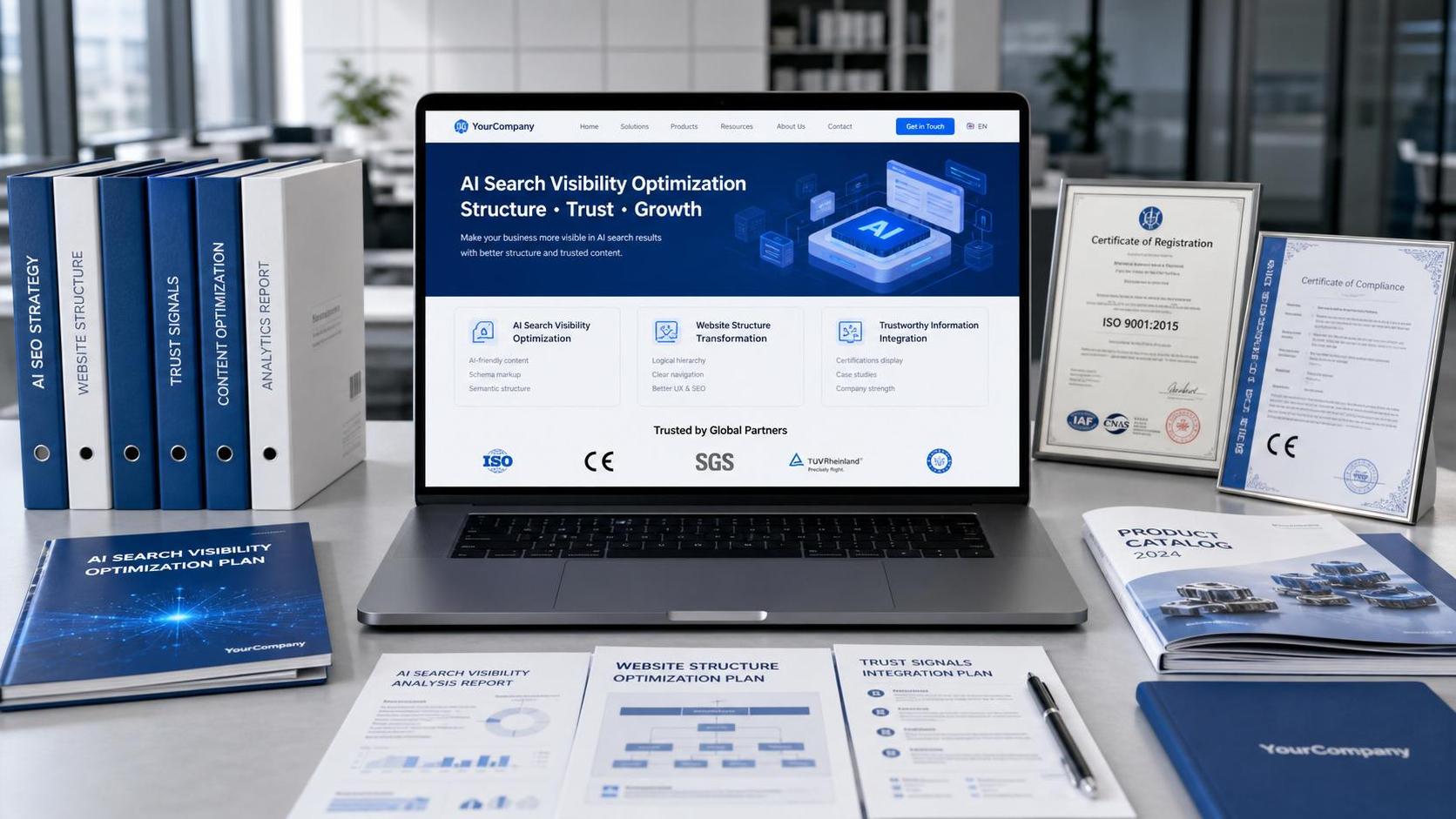
 How to optimize AI search visibility? Page redesign methods to increase citations for foreign trade websites
Related Products
 EasyCamp SaaS Smart Website Marketing SystemE-Yingbao SaaS Smart Website Marketing System: AI-powered, zero-code website building. Rapidly launch multilingual independent e-commerce sites in just 10 minutes. Global server acceleration and AI-driven SEO optimization empower businesses to efficiently connect with global markets. The seamless integration of technology and user-friendly operation makes building e-commerce sites incredibly simple.
 AI+SEM Intelligent Advertising Marketing SystemAI+SEM drives intelligent ad creation, empowering full-funnel precision advertising marketing. The system automatically generates weekly/monthly reports, AI recommends keywords and target countries, monitors core metrics in real-time with intelligent alerts, and enables one-click high-conversion ad solutions to help quickly acquire customers and improve ROI.
 AI+SEO Dual Engine Optimization ServiceEasyWin AI+SEO Dual Engine Optimization System leverages AI-powered keyword mining, content generation, and comprehensive technical optimization to help foreign trade enterprises acquire high-quality organic traffic, significantly improving search rankings and conversion rates.
 AI+SNS Social Media Marketing SystemYingbao AI+SNS Social Media Marketing System - Precision social capture for the social media era. Supports one-click content synchronization across major platforms like Facebook and LinkedIn. AI intelligently rewrites posts for enhanced relevance. 24/7 AI customer service and user profiling analysis empower businesses to efficiently expand into global markets.
 AI+SEO营销解决方案易营宝AI+SEO营销解决方案,通过AI批量写作、智能生成TDK、精准关键词扩词等功能,全面优化网站SEO效果,提升流量与转化率。助力企业构建高效智能网站新生态。
 AI+SEM Advertising Marketing SolutionsAI+SEM Advertising Marketing Solution leverages AI technology to deeply empower SEM ad campaigns. It automatically generates weekly/monthly reports using AI, presenting account data across multiple dimensions for comprehensive insights into campaign performance and trends. The system precisely recommends keywords and target countries, intelligently generates high-conversion ad copy, and enables one-click activation of efficient campaign plans to help businesses rapidly acquire customers. Simultaneously, it monitors core metrics in real time, intelligently identifies abnormal fluctuations, and issues timely alerts to ensure stable, high-return advertising results.
 Domain Name ServicesEasyWin provides professional domain name services, including intelligent queries, one-stop registration, brand protection, and full lifecycle management, helping businesses build a digital brand image.
 EasyOperate B2C Cross-Border E-Commerce Platform & Independent WebsiteEasyStore B2C Cross-border E-commerce Independent Store is an intelligent website building and cross-border e-commerce integrated solution independently developed by EasyStore Information Technology (Beijing) Co., Ltd. The system is specially designed for small and medium-sized as well as large export enterprises, integrating 'website building, operation, marketing, advertising, and conversion' into one, helping enterprises quickly establish cross-border e-commerce independent stores to achieve brand globalization and global sales growth.
The platform supports multiple languages, multiple currencies, and multi-channel marketing, with built-in AI intelligent translation and SEO optimization systems, suitable for mainstream markets such as Southeast Asia, Europe and America, Latin America, and the Middle East, assisting Chinese manufacturing enterprises in efficiently deploying international e-commerce strategies. SSL证书易营宝提供专业SSL安全证书服务,包括单域名和泛域名证书,确保网站数据传输加密、身份验证和完整性保护,助力企业建立安全可信的在线业务环境。









