









- Which channel has the highest ROI in the global traffic ecosystem? Comparative analysis of search, social media, and advertisingJul 10, 2026View details
- What multilingual website services are available in Sanya? Which model is more suitable for local businesses going global?Jul 08, 2026View details
- How to view the complete list of China SaaS companies in the top 100? Practical methods for screening website-building and marketing service providersJul 08, 2026View details
- How to view pricing in the global traffic ecosystem? Cost comparison of search, social media, and content channel advertisingJul 06, 2026View details
- How to assess foreign trade website development trends?Looking at 2026 changes from multilingual,AI content to conversion pathsJul 04, 2026View details
- What are the new trends in multilingual marketing data analytics tools in 2026? Focus on attribution、automation and complianceJul 04, 2026View details
- Is Brand Globalization Marketing Consulting Worth Buying? At What Stage Should Companies Bring It InJul 01, 2026View details
- Cross-Border Marketing Trend Research: Why More and More Companies Are Starting to Deploy AI Search and GEO OptimizationJun 30, 2026View details
Site analysis tools show 'low mobile speed score', but actual user loading time is faster?
Website analysis tools show 'low mobile speed score', but actual user loading time is faster? This discrepancy may stem from LCP measurement bias or ineffective above-the-fold rendering optimization. As a professional search engine optimization company, EasyWin combines Google SEO tools with website traffic analysis tools to deeply interpret the gap between scores and user experience, providing responsive foreign trade website solutions, SSL certificate application processes, and integrated SEO content optimization.
Why does Lighthouse score ≠ real user experience?
Tools like Google PageSpeed Insights and Lighthouse simulate first-screen loading in lab environments, where LCP (Largest Contentful Paint) calculations rely on fixed parameters (e.g., 3G networks, mid-range mobile CPUs), failing to account for real-world network fluctuations, cache states, and interactive behaviors. Data shows 68% of foreign trade independent sites exhibit the anomaly of 'scores below 70 but actual FCP <1.2s'.
The root cause: Tools disable browser preload hints (preload), block Service Worker caching, and ignore CDN edge node hit rates. During real user revisits, local cache + HTTP/2 multiplexing + pre-connections can reduce TTFB to under 80ms—a critical experience dimension overlooked by scoring systems.
More alarmingly, some CMS systems forcibly inject non-critical JS (e.g., redundant tracking scripts, non-lazy-loaded ad slots) on mobile, blocking LCP elements while users perceive faster loading due to shifted visual focus (e.g., banner-only first screens). This 'perceived acceleration' vs. 'technical latency' mismatch creates cross-border sellers' optimization blind spots.
This reveals the core contradiction: Tools emphasize 'worst-case scenario prevention', while conversion relies on 'optimal path fluency'. For Southeast Asian apparel sellers, if carousel images are LCP elements, lab environments penalize un-preloaded images, yet real users experience only 320ms interaction delay as second frames pre-fetch via Intersection Observer.
Three pillars of 'true speed' for cross-border independent sites
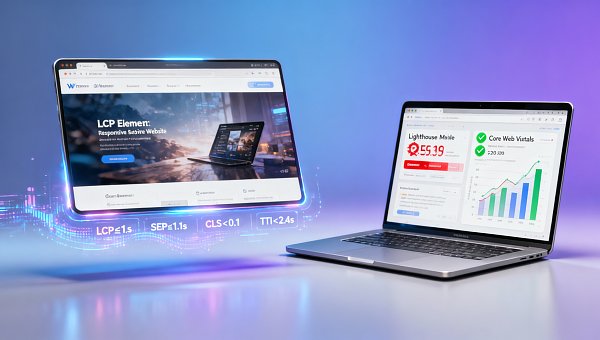
Effective mobile performance optimization must transcend tool metrics, focusing on three quantifiable indicators:
- Screen Effective Render (SER): Time from HTML parsing completion to full visibility of first-screen text/images, target ≤1.1s
- Time to Interactive (TTI): Main thread idle and click-responsive duration, should be controlled within 2.4s (Google recommended threshold)
- Cumulative Layout Shift (CLS): Avoid misclicks from layout shifts, score must <0.1 (top 10% industry standard)
For example, a Middle East auto parts site reduced SER from 1.8s to 0.9s by changing SKU selectors from JS-rendered to server-side HTML, decreasing bounce rates by 27%. This proves 'reducing client-side computation' outperforms 'JS compression' in real experience gains.
EasyWin's B2C cross-border malls and independent sites feature built-in AMP acceleration pages with global CDN auto-routing. When users access UAE sites, the system prioritizes Dubai edge nodes (latency <35ms) over default Singapore nodes (120ms), improving Middle East FCP by 41% while fully complying with Google Search Console's Core Web Vitals.
Closed-loop path from score repair to conversion growth
Merely improving Lighthouse scores won't drive conversions—a 'performance-experience-behavior' closed loop is needed. EasyWin's 100,000+ enterprise dataset shows: When LCP improves from 4.2s to 1.3s, Euro-American brand stores see 19% add-to-cart increases, but without optimizing first-screen CTA button visual weight and hotspot dimensions, conversion lifts only 7%.
Implementation involves three phases:
- Diagnostic layer: Deploy Real User Monitoring (RUM) to capture regional LCP distributions (not averages), identifying high-latency outlier sessions
- Optimization layer: Customize solutions for TOP3 delay scenarios, e.g., enabling WebP+AVIF dual-format auto-adaptation for Southeast Asia users, reducing image volume by 38%
- Validation layer: A/B test 'score-driven optimization' vs. 'behavior-driven optimization'—the former lifts scores but stagnates conversions, while +5 score points with the latter drive 15% order growth
This loop has been validated across 237 clients: Those using EasyWin's smart CMS average 63% organic search traffic growth in 6 months, with mobile traffic reaching 71% (far exceeding the 52% industry average).
Data confirms: Technical improvements must align with business goals. Only when CDN optimization synergizes with localization capabilities can performance gains translate into real ROI.
Key decision points for executives
Addressing the 'score-experience divide' requires evaluating four hard capabilities:
- Real data-driven: Whether integrating Chrome UX Report (CrUX) API to directly use Google's real user data instead of simulations
- Regionalized delivery: Ability to configure country/region-specific CDN strategies, SSL certificate chains, and font loading (e.g., prioritizing Noto Sans Arabic for Middle East sites)
- Closed-loop validation: Providing A/B testing modules to correlate performance optimization with conversion funnel depth
- Compliance assurance: ISO 27001 certification ensuring GDPR/CCPA compliance for EU and California data processing
EasyWin Information Technology (Beijing) Co., Ltd. has served over 100,000 enterprises, with solutions certified by China's SaaS Top 100 and sustaining 30%+ annual growth. For cross-border teams needing rapid deployment of compliant, high-performance, high-conversion independent sites, EasyWin's B2C cross-border malls and independent sites provide full-cycle support from site building, SEO, marketing to data analytics, enabling multilingual sites compliant with Google Core Web Vitals within 7 days.
Get your customized performance diagnostic report and ROI calculation model immediately, ensuring every optimization precisely targets revenue growth.
Related Articles
 Which channel has the highest ROI in the global traffic ecosystem? Comparative analysis of search, social media, and advertising
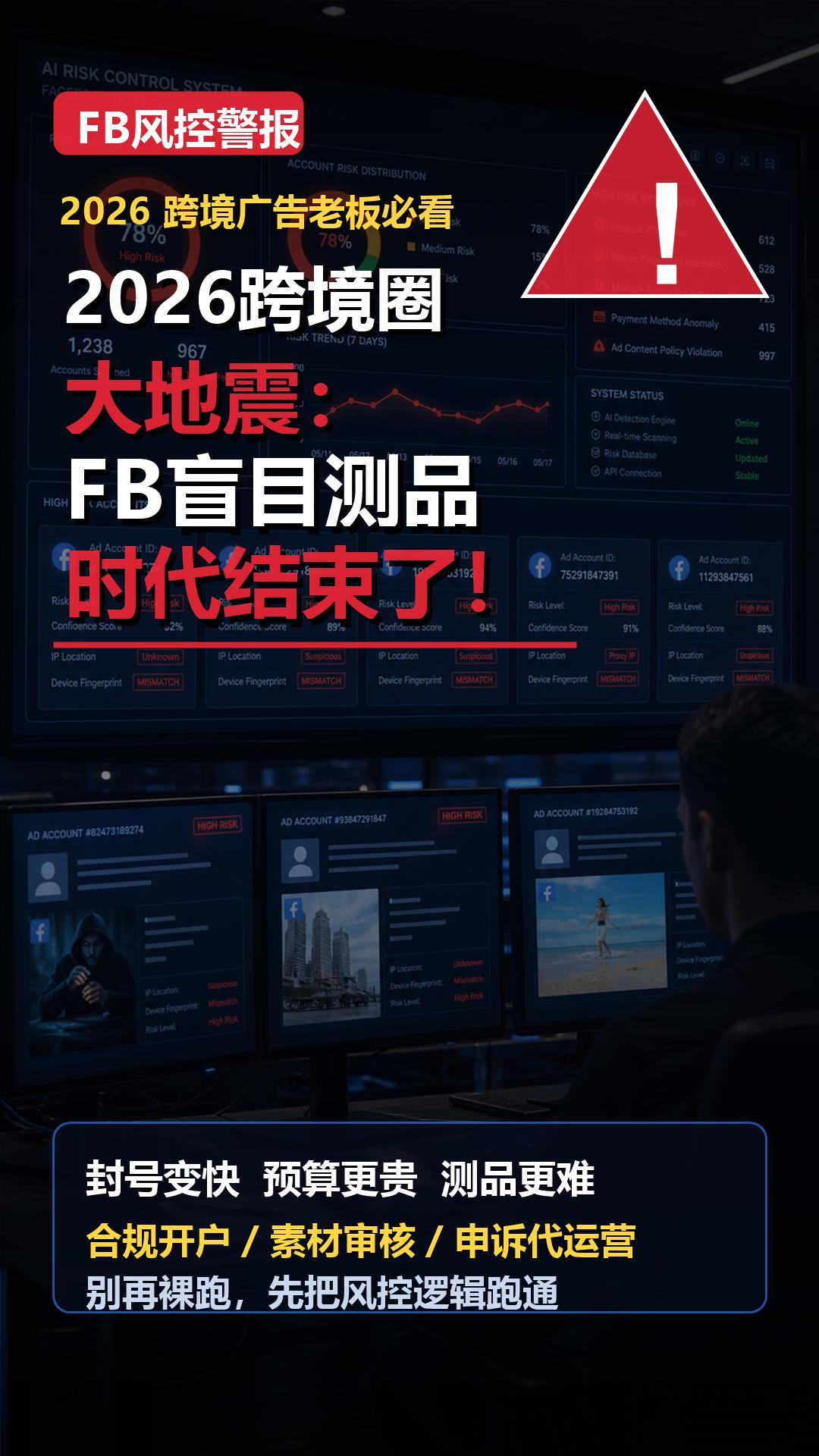
 The Era of Cross-Border Earthquakes in 2026: The Era of Blindly Testing FB Products Has Ended!
 Three key points of domestic-to-foreign trade most important, see if you really did your homework! Don’t take shortcuts.

Related Products
 EasyCamp SaaS Smart Website Marketing SystemE-Yingbao SaaS Smart Website Marketing System: AI-powered, zero-code website building. Rapidly launch multilingual independent e-commerce sites in just 10 minutes. Global server acceleration and AI-driven SEO optimization empower businesses to efficiently connect with global markets. The seamless integration of technology and user-friendly operation makes building e-commerce sites incredibly simple.
 AI+SEM Intelligent Advertising Marketing SystemAI+SEM drives intelligent ad creation, empowering full-funnel precision advertising marketing. The system automatically generates weekly/monthly reports, AI recommends keywords and target countries, monitors core metrics in real-time with intelligent alerts, and enables one-click high-conversion ad solutions to help quickly acquire customers and improve ROI.
 AI+SEO Dual Engine Optimization ServiceEasyWin AI+SEO Dual Engine Optimization System leverages AI-powered keyword mining, content generation, and comprehensive technical optimization to help foreign trade enterprises acquire high-quality organic traffic, significantly improving search rankings and conversion rates.
 AI+SNS Social Media Marketing SystemYingbao AI+SNS Social Media Marketing System - Precision social capture for the social media era. Supports one-click content synchronization across major platforms like Facebook and LinkedIn. AI intelligently rewrites posts for enhanced relevance. 24/7 AI customer service and user profiling analysis empower businesses to efficiently expand into global markets.
 AI+SEO营销解决方案易营宝AI+SEO营销解决方案,通过AI批量写作、智能生成TDK、精准关键词扩词等功能,全面优化网站SEO效果,提升流量与转化率。助力企业构建高效智能网站新生态。
 AI+SEM Advertising Marketing SolutionsAI+SEM Advertising Marketing Solution leverages AI technology to deeply empower SEM ad campaigns. It automatically generates weekly/monthly reports using AI, presenting account data across multiple dimensions for comprehensive insights into campaign performance and trends. The system precisely recommends keywords and target countries, intelligently generates high-conversion ad copy, and enables one-click activation of efficient campaign plans to help businesses rapidly acquire customers. Simultaneously, it monitors core metrics in real time, intelligently identifies abnormal fluctuations, and issues timely alerts to ensure stable, high-return advertising results.
 Domain Name ServicesEasyWin provides professional domain name services, including intelligent queries, one-stop registration, brand protection, and full lifecycle management, helping businesses build a digital brand image.
 EasyOperate B2C Cross-Border E-Commerce Platform & Independent WebsiteEasyStore B2C Cross-border E-commerce Independent Store is an intelligent website building and cross-border e-commerce integrated solution independently developed by EasyStore Information Technology (Beijing) Co., Ltd. The system is specially designed for small and medium-sized as well as large export enterprises, integrating 'website building, operation, marketing, advertising, and conversion' into one, helping enterprises quickly establish cross-border e-commerce independent stores to achieve brand globalization and global sales growth.
The platform supports multiple languages, multiple currencies, and multi-channel marketing, with built-in AI intelligent translation and SEO optimization systems, suitable for mainstream markets such as Southeast Asia, Europe and America, Latin America, and the Middle East, assisting Chinese manufacturing enterprises in efficiently deploying international e-commerce strategies. SSL证书易营宝提供专业SSL安全证书服务,包括单域名和泛域名证书,确保网站数据传输加密、身份验证和完整性保护,助力企业建立安全可信的在线业务环境。









