









- Which channel has the highest ROI in the global traffic ecosystem? Comparative analysis of search, social media, and advertisingJul 10, 2026View details
- What multilingual website services are available in Sanya? Which model is more suitable for local businesses going global?Jul 08, 2026View details
- How to view the complete list of China SaaS companies in the top 100? Practical methods for screening website-building and marketing service providersJul 08, 2026View details
- How to view pricing in the global traffic ecosystem? Cost comparison of search, social media, and content channel advertisingJul 06, 2026View details
- How to assess foreign trade website development trends?Looking at 2026 changes from multilingual,AI content to conversion pathsJul 04, 2026View details
- What are the new trends in multilingual marketing data analytics tools in 2026? Focus on attribution、automation and complianceJul 04, 2026View details
- Is Brand Globalization Marketing Consulting Worth Buying? At What Stage Should Companies Bring It InJul 01, 2026View details
- Cross-Border Marketing Trend Research: Why More and More Companies Are Starting to Deploy AI Search and GEO OptimizationJun 30, 2026View details
Are there any risks with multilingual foreign trade websites, and what are the risk points
Is There Any Risk in a Multilingual Foreign Trade Website? Start with the Core Assessment

Is there any risk in a multilingual foreign trade website? The answer is yes, but the risks do not come from “multilingual” itself. They come from whether translation quality, technical architecture, compliance mechanisms, and operational processes are aligned in place.
For integrated website + marketing service projects, multilingual websites are not only an important entry point for acquiring overseas inquiries, but also key landing pages that carry brand image, data security, and advertising conversion.
If you focus only on launch speed and neglect language review, permission isolation, local compliance, and search optimization, the question of whether a multilingual foreign trade website carries risks will quickly shift from a concern into actual losses.
Why Use a Checklist-Based Approach to Assess Risks
Risk points in multilingual websites are scattered across website building, content, SEO, forms, servers, advertising campaigns, and ongoing maintenance. Relying on experience alone often reveals only surface-level issues while overlooking the truly high-risk links.
The value of checklist-based inspection lies in breaking down “whether a multilingual foreign trade website carries risks” into actions that are verifiable, correctable, and traceable, avoiding responsibility gaps during cross-department communication.
Multilingual Foreign Trade Website Risk Inspection Checklist
- Verify translation accuracy. Focus on checking product specifications, delivery times, after-sales instructions, and restricted sales statements to avoid misleading commitments caused by literal translation, which may affect inquiry quality and subsequent contract fulfillment.
- Standardize the terminology database. Normalize the writing of brand names, industry terms, certification names, and model numbers to prevent inconsistent expression across different language pages, which can lead to confusion in search engine recognition.
- Configure the correct language path. Clearly define the strategy for directories, subdomains, or independent domains, and set canonical links and language tags to reduce indexing conflicts and duplicate content risks.
- Check local compliance content. Privacy policies, Cookie notices, form authorizations, return and exchange policies, and copyright statements must be adjusted according to target market requirements, rather than simply using a Chinese template.
- Strengthen data transmission security. Deploy SSL, restrict backend logins, enable verification codes and log monitoring to prevent form data, customer email addresses, and inquiry records from being intercepted.
- Control plugin and API permissions. Too many third-party translation tools, maps, chat tools, and tracking codes can cause slow loading, data leakage, and compatibility failures.
- Verify the mobile experience. Different countries show clear differences in device preferences. If the mobile layout is misaligned, buttons are hard to tap, or forms are too long, conversions will drop directly.
- Synchronize SEO strategy. Different languages should match local search habits. Do not simply do rigid keyword translation, otherwise rankings will be poor, bounce rates will be high, and even ad traffic will struggle to generate effective inquiries.
- Establish a content update process. After product discontinuation, certification changes, or pricing range adjustments, all language versions must be updated simultaneously to avoid trust crises caused by outdated information.
- Set up an emergency rollback mechanism. Before website redesigns, language pack updates, or server migrations, backups and testing should be completed to prevent site-wide issues from affecting the continuity of overseas promotion.
Under Different Scenarios, the Risk Points Are Not the Same
New Website Launch Stage
The most common issue with a new website is treating multilingual functionality as simple page duplication. It may seem fast to launch, but it actually hides problems such as messy URLs, pages that are not localized, and missing Meta information, making later fixes more costly.
At this stage, when assessing whether a multilingual foreign trade website carries risks, the focus is not on the number of pages, but on whether the underlying architecture supports long-term SEO growth, data accumulation, and regional expansion.
Advertising Landing Stage
After ads bring in traffic, if multilingual pages load slowly, express selling points inaccurately, or contain form fields that do not fit local habits, the budget will be wasted directly, resulting in high clicks and low conversions.
Therefore, whether a multilingual foreign trade website carries risks should also be evaluated from the marketing funnel perspective. Pages are not brochures, but inquiry conversion tools. Language content and trust elements must serve transaction conversion.
Long-Term Operation Stage
In long-term operation, the most easily overlooked issues are permission management and content expiration. Accounts of departed employees that are not deactivated, outdated campaign pages that remain online, and historical documents that are not updated may all become security and compliance loopholes.
In some project management approaches, content such as Research on Comprehensive Budget Management for Administrative Institutions, which emphasizes process control and responsibility boundaries, can also inspire website projects to establish clearer review mechanisms.
Several High-Risk Points That Are Most Easily Overlooked
First, machine translation is not reviewed afterward. Once professional terminology, trade terms, or material descriptions are incorrect, it not only affects the reading experience, but may also constitute false commitments.
Second, only frontend language switching is implemented, without backend security tiering. When multiple people collaborate to update pages, the risks of accidental deletion and tampering increase significantly if there are no role permissions and operation logs.
Third, regional legal differences are ignored. Some markets have stricter requirements for privacy authorization, marketing tracking, and minors’ data, and non-compliant pages may affect the stability of advertising accounts.
Fourth, SEO and website building are handled separately. As a result, although pages have multilingual versions, they lack local keyword layout, internal linking logic, and structured data, making it difficult to build organic traffic assets.
Fifth, periodic audits are lacking. Whether a multilingual foreign trade website carries risks is often not determined on the launch day, but gradually exposed in ongoing maintenance after three months or six months.
Practical Execution Suggestions: Embed Risk Control into Website Building and Marketing Processes
- First, prioritize languages and launch in batches based on target markets, search demand, and conversion value, rather than blindly rolling out a dozen or more language versions.
- Establish a closed loop of “translation—review—publication—recheck” to ensure that every content update has a responsible person, a time point, and traceable records.
- Plan SEO, content, localization, and technical security together to avoid repeated redesigns later, which raise promotion costs and maintenance difficulty.
- Regularly conduct form testing, page speed testing, link inspections, and log checks, and prioritize fixing issues that affect inquiries and indexing.
- Choose a service system that integrates website building, optimization, advertising, and data analysis, so that the website becomes a continuous growth asset rather than a one-time delivered page.
Summary and Next Actions
Returning to the original question, is there any risk in a multilingual foreign trade website? Yes, and the risk points usually concentrate in five areas: translation errors, compliance gaps, data security, technical architecture, and ongoing operations.
The truly effective approach is not to halt international expansion out of fear of risk, but to use a checklist-based mechanism to identify issues in advance, rectify them one by one, and continuously review them, turning risk into a controllable variable.
For projects that require integrated website + marketing service support, it is advisable to first sort out the current language versions, traffic sources, form flow paths, and compliance documents, and then arrange a systematic audit to clarify what to fix first and what to invest in later.
Only by placing website building, SEO, localization, and secure operations within the same growth framework can multilingual foreign trade websites truly reduce risks and steadily capture opportunities in the global market.
Related Articles
 Which channel has the highest ROI in the global traffic ecosystem? Comparative analysis of search, social media, and advertising
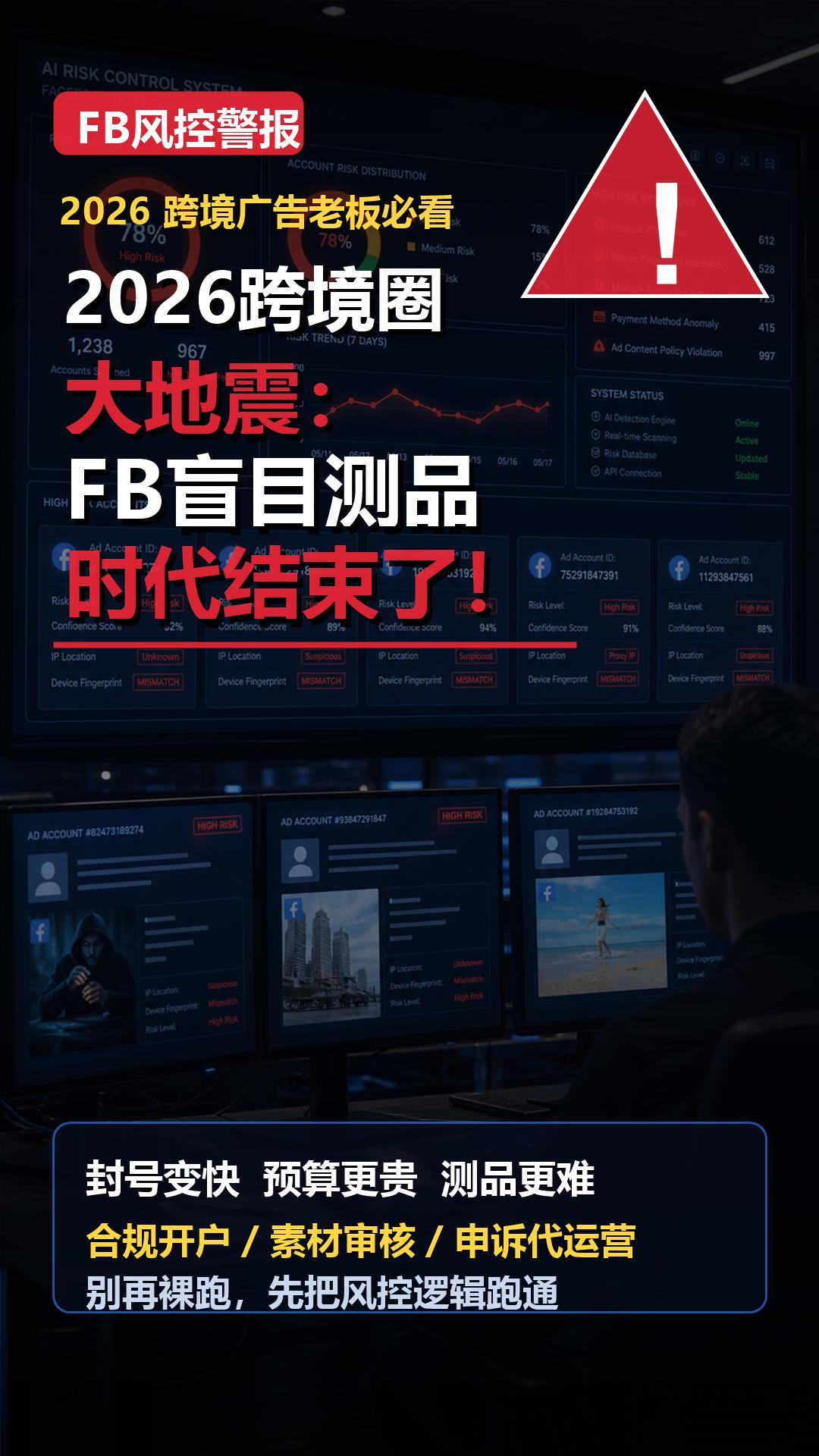
 The Era of Cross-Border Earthquakes in 2026: The Era of Blindly Testing FB Products Has Ended!
 Three key points of domestic-to-foreign trade most important, see if you really did your homework! Don’t take shortcuts.


Related Products
 EasyCamp SaaS Smart Website Marketing SystemE-Yingbao SaaS Smart Website Marketing System: AI-powered, zero-code website building. Rapidly launch multilingual independent e-commerce sites in just 10 minutes. Global server acceleration and AI-driven SEO optimization empower businesses to efficiently connect with global markets. The seamless integration of technology and user-friendly operation makes building e-commerce sites incredibly simple.
 AI+SEM Intelligent Advertising Marketing SystemAI+SEM drives intelligent ad creation, empowering full-funnel precision advertising marketing. The system automatically generates weekly/monthly reports, AI recommends keywords and target countries, monitors core metrics in real-time with intelligent alerts, and enables one-click high-conversion ad solutions to help quickly acquire customers and improve ROI.
 AI+SEO Dual Engine Optimization ServiceEasyWin AI+SEO Dual Engine Optimization System leverages AI-powered keyword mining, content generation, and comprehensive technical optimization to help foreign trade enterprises acquire high-quality organic traffic, significantly improving search rankings and conversion rates.
 AI+SNS Social Media Marketing SystemYingbao AI+SNS Social Media Marketing System - Precision social capture for the social media era. Supports one-click content synchronization across major platforms like Facebook and LinkedIn. AI intelligently rewrites posts for enhanced relevance. 24/7 AI customer service and user profiling analysis empower businesses to efficiently expand into global markets.
 AI+SEO营销解决方案易营宝AI+SEO营销解决方案,通过AI批量写作、智能生成TDK、精准关键词扩词等功能,全面优化网站SEO效果,提升流量与转化率。助力企业构建高效智能网站新生态。
 AI+SEM Advertising Marketing SolutionsAI+SEM Advertising Marketing Solution leverages AI technology to deeply empower SEM ad campaigns. It automatically generates weekly/monthly reports using AI, presenting account data across multiple dimensions for comprehensive insights into campaign performance and trends. The system precisely recommends keywords and target countries, intelligently generates high-conversion ad copy, and enables one-click activation of efficient campaign plans to help businesses rapidly acquire customers. Simultaneously, it monitors core metrics in real time, intelligently identifies abnormal fluctuations, and issues timely alerts to ensure stable, high-return advertising results.
 Domain Name ServicesEasyWin provides professional domain name services, including intelligent queries, one-stop registration, brand protection, and full lifecycle management, helping businesses build a digital brand image.
 EasyOperate B2C Cross-Border E-Commerce Platform & Independent WebsiteEasyStore B2C Cross-border E-commerce Independent Store is an intelligent website building and cross-border e-commerce integrated solution independently developed by EasyStore Information Technology (Beijing) Co., Ltd. The system is specially designed for small and medium-sized as well as large export enterprises, integrating 'website building, operation, marketing, advertising, and conversion' into one, helping enterprises quickly establish cross-border e-commerce independent stores to achieve brand globalization and global sales growth.
The platform supports multiple languages, multiple currencies, and multi-channel marketing, with built-in AI intelligent translation and SEO optimization systems, suitable for mainstream markets such as Southeast Asia, Europe and America, Latin America, and the Middle East, assisting Chinese manufacturing enterprises in efficiently deploying international e-commerce strategies. SSL证书易营宝提供专业SSL安全证书服务,包括单域名和泛域名证书,确保网站数据传输加密、身份验证和完整性保护,助力企业建立安全可信的在线业务环境。









