









- Which channel has the highest ROI in the global traffic ecosystem? Comparative analysis of search, social media, and advertisingJul 10, 2026View details
- What multilingual website services are available in Sanya? Which model is more suitable for local businesses going global?Jul 08, 2026View details
- How to view the complete list of China SaaS companies in the top 100? Practical methods for screening website-building and marketing service providersJul 08, 2026View details
- How to view pricing in the global traffic ecosystem? Cost comparison of search, social media, and content channel advertisingJul 06, 2026View details
- How to assess foreign trade website development trends?Looking at 2026 changes from multilingual,AI content to conversion pathsJul 04, 2026View details
- What are the new trends in multilingual marketing data analytics tools in 2026? Focus on attribution、automation and complianceJul 04, 2026View details
- Is Brand Globalization Marketing Consulting Worth Buying? At What Stage Should Companies Bring It InJul 01, 2026View details
- Cross-Border Marketing Trend Research: Why More and More Companies Are Starting to Deploy AI Search and GEO OptimizationJun 30, 2026View details
How long does a foreign trade independent website redesign cycle generally take? Learn more about the scheduling details
How long does a foreign trade independent site redesign usually take? First look at the project scope
How long does a foreign trade independent site redesign usually take? This question seems simple, but in practice it is very rare to give a fixed number of days. Because the target, content foundation, technical status, and coordination efficiency of different companies will directly affect the schedule.
If it is only homepage visual optimization, the cycle is usually shorter. If it involves multilingual reconstruction, inquiry path adjustment, SEO structure migration, or shopping mall function reconstruction, the time will clearly be longer. This is also why many projects have relatively large deviations in early estimation.
From actual project experience, a foreign trade independent site redesign usually takes 3 weeks to 12 weeks. Lightweight redesigns tend to take 3 weeks to 5 weeks, medium-complexity projects usually take 6 weeks to 8 weeks, and projects involving system-level restructuring may take more than 10 weeks.
When judging the timeline, you cannot only look at the number of pages. You also need to consider whether it includes content organization, technical migration, form logic, tracking deployment, ad landing page linkage, and data verification work before and after launch.
Needs analysis stage: the starting point that determines whether the schedule is accurate
Many people care about how long a foreign trade independent site redesign usually takes, but the real watershed often appears in the needs analysis stage. The clearer the requirements in the early stage, the fewer revisions later, and the more controllable the overall launch time.
This stage usually takes 3 days to 10 days, mainly depending on whether the needs are concentrated, whether the decision chain is clear, and whether the existing materials are complete. If the company has inconsistent internal opinions on brand, market, sales, and technical direction, the schedule is very easy to be extended.
What does needs analysis usually include
- Audit of existing website issues, such as loading speed, bounce rate, inquiry quality, and indexing fluctuations.
- Confirmation of redesign goals, such as improving conversions, strengthening brand perception, and balancing SEO growth.
- Confirmation of page scope, such as homepage, product pages, case pages, blog pages, and multilingual pages.
- Confirmation of functional list, such as inquiry forms, online customer service, material downloads, and shopping cart modules.
- Audit of content assets, such as copy, images, videos, certification materials, and case data.
In actual business, needs analysis is not about following a process mechanically, but about setting the baseline for the later schedule. As long as the requirements boundary is not locked, the subsequent design, development, and testing time will be unstable.
Page planning and prototype confirmation: usually 1 week to 2 weeks
Once the requirements are clear, the project enters the page planning and prototype stage. This stage determines whether the website information structure is smooth, and it also affects the efficiency of subsequent development. For a foreign trade independent site redesign, this step is a key node in understanding how long it usually takes.
If the website goal is more inquiry generation oriented, product categories, application scenario pages, trust-building sections, and form entry positions all need to be confirmed in the prototype stage in advance. Otherwise, even if the visual draft looks good, conversion after launch may still be unsatisfactory.
Generally speaking, page planning and prototype confirmation take 5 days to 12 days. The more pages there are, and the more complex the multilingual versions are, the longer the confirmation time will be. If there are too many internal feedback rounds, the cycle will continue to increase.
Reasons why this stage is most likely to be delayed
- The page goal is unclear, and only style is discussed, not the conversion path.
- Product materials are scattered, and the copy cannot be supplemented in time.
- Feedback from multiple departments is inconsistent, causing repeated version changes.
- Temporary new pages are added, disrupting the original structure.
Visual design and front-end development: the most time-consuming part of most projects
If we continue to ask how long a foreign trade independent site redesign usually takes, the development stage is often the most time-consuming part. Because this stage includes not only page production, but also responsive adaptation, interactive implementation, form logic, and SEO basic deployment.
Visual design usually takes 5 days to 10 days. If the brand upgrade requirements are high, or if multiple versions need to be proposed based on the browsing habits of overseas users, the time will be further extended. The development stage usually takes 7 days to 20 days, depending on the complexity of the functions.
There is a point here that is often ignored: redesigning a foreign trade independent site is not just about "making pages". What really affects launch value is whether the site has subsequent promotion capabilities, including indexability, page speed, mobile experience, embedding capability, and content extensibility.
Key checks recommended at the development stage
- Whether old link rules are retained to avoid large fluctuations in SEO traffic.
- Whether multilingual independent management and later expansion are supported.
- Whether ad landing pages and campaign pages are reserved for rapid setup.
- Whether the inquiry conversion experience is balanced for both PC and mobile.
Testing, launch, and migration: seemingly short, but actually not to be overly compressed
When many projects are nearing the end, they all hope to go live as soon as possible. But from a risk-control perspective, testing and migration are not suitable for being excessively compressed. How long a foreign trade independent site redesign usually takes ultimately depends on whether this step is sufficiently prepared.
Routine testing and launch preparation generally take 3 days to 7 days. If it involves old-site data migration, 301 redirects, form email integration, analytics code verification, or switching CDN and analytics services, the time needs to be increased accordingly.
A more obvious signal is that many delays are not because development is unfinished, but because the launch checklist is incomplete. For example, certificates are not configured, domain permissions are incomplete, old-site backups were not kept, or the email interface has not been verified; all of these will directly affect the official release time.
Launch pre-checklist
- Whether the core pages have all completed content replacement.
- Whether forms, buttons, and online consultation can be triggered normally.
- Whether old link redirect rules have passed testing.
- Whether analytics tools, conversion tracking, and ad code have been fully deployed.
- Whether mobile display, loading speed, and browser compatibility meet the standard.
How long does a foreign trade independent site redesign usually take? Estimate it this way
If you need an answer that is more suitable for procurement evaluation, you can break down how long a foreign trade independent site redesign usually takes into three categories. This makes budgeting and resource allocation easier, and also facilitates internal communication.
This also means that when judging the schedule, you cannot only ask the service provider "how long will it take to finish"; you also need to synchronously confirm the number of pages, language versions, content readiness, whether SEO assets are retained, and whether promotion will continue after launch.
How to shorten the redesign cycle while avoiding rework
If you want to control how long a foreign trade independent site redesign usually takes within a reasonable range, the core is not to blindly compress the schedule, but to reduce repeated confirmations and later rescue work. Good schedule management is often more effective than simply pushing for progress.
- Define the goal first, then define the pages, to avoid changing direction while building.
- Organize copy, images, product parameters, and case materials in advance.
- Assign a single project owner to reduce multi-party feedback.
- Confirm the conversion path at the prototype stage, and do not leave issues until after development.
- Choose a service team with both website building and marketing coordination capabilities.
For enterprises that need long-term overseas traffic, the redesign itself is not the endpoint. A more realistic approach is to plan the website structure, SEO foundation, ad receiving, and multilingual expansion at one time, avoiding a second rebuild half a year later.
Back to the original question, how long does a foreign trade independent site redesign usually take? Most projects can be completed within 3 weeks to 12 weeks, but the premise is that the requirements are clear, the materials are in place, and the process coordination is smooth. If you want the schedule to be more stable and to enter customer acquisition status faster after launch, it is recommended to make the scope, goals, and acceptance criteria clear in one go before the project starts.
Related Articles
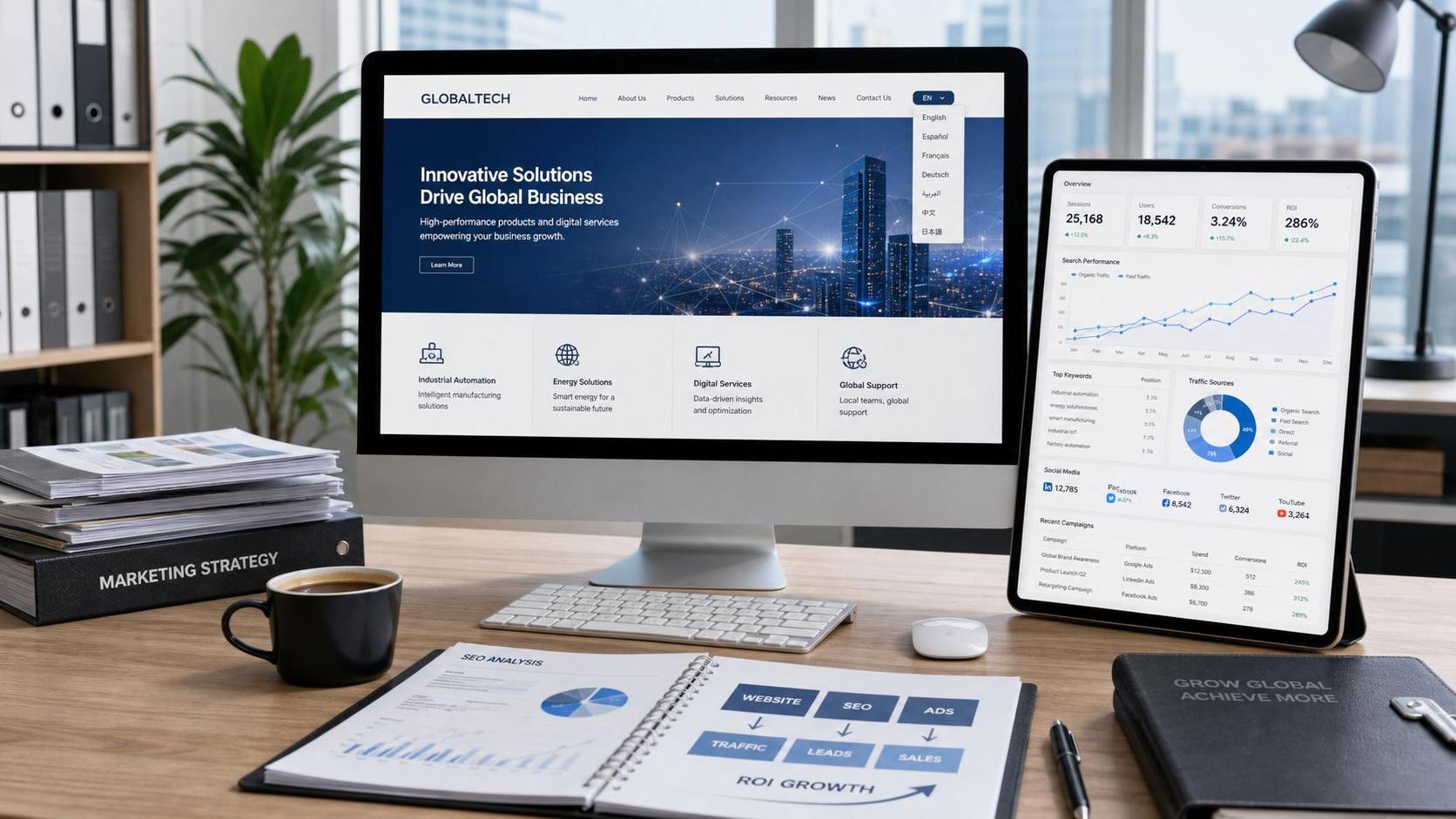
 Which channel has the highest ROI in the global traffic ecosystem? Comparative analysis of search, social media, and advertising
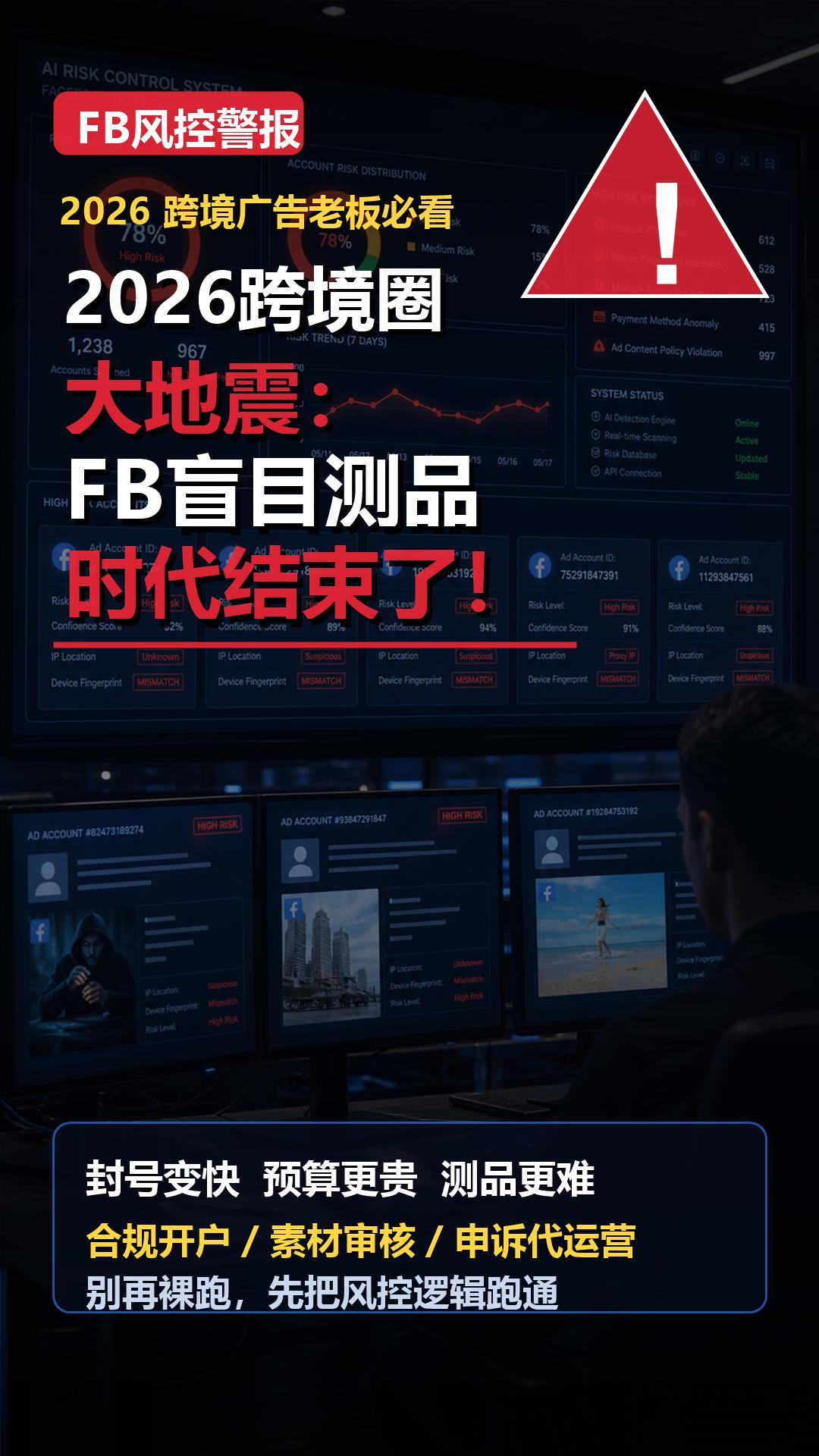
 The Era of Cross-Border Earthquakes in 2026: The Era of Blindly Testing FB Products Has Ended!
 Three key points of domestic-to-foreign trade most important, see if you really did your homework! Don’t take shortcuts.

Related Products
 EasyCamp SaaS Smart Website Marketing SystemE-Yingbao SaaS Smart Website Marketing System: AI-powered, zero-code website building. Rapidly launch multilingual independent e-commerce sites in just 10 minutes. Global server acceleration and AI-driven SEO optimization empower businesses to efficiently connect with global markets. The seamless integration of technology and user-friendly operation makes building e-commerce sites incredibly simple.
 AI+SEM Intelligent Advertising Marketing SystemAI+SEM drives intelligent ad creation, empowering full-funnel precision advertising marketing. The system automatically generates weekly/monthly reports, AI recommends keywords and target countries, monitors core metrics in real-time with intelligent alerts, and enables one-click high-conversion ad solutions to help quickly acquire customers and improve ROI.
 AI+SEO Dual Engine Optimization ServiceEasyWin AI+SEO Dual Engine Optimization System leverages AI-powered keyword mining, content generation, and comprehensive technical optimization to help foreign trade enterprises acquire high-quality organic traffic, significantly improving search rankings and conversion rates.
 AI+SNS Social Media Marketing SystemYingbao AI+SNS Social Media Marketing System - Precision social capture for the social media era. Supports one-click content synchronization across major platforms like Facebook and LinkedIn. AI intelligently rewrites posts for enhanced relevance. 24/7 AI customer service and user profiling analysis empower businesses to efficiently expand into global markets.
 AI+SEO营销解决方案易营宝AI+SEO营销解决方案,通过AI批量写作、智能生成TDK、精准关键词扩词等功能,全面优化网站SEO效果,提升流量与转化率。助力企业构建高效智能网站新生态。
 AI+SEM Advertising Marketing SolutionsAI+SEM Advertising Marketing Solution leverages AI technology to deeply empower SEM ad campaigns. It automatically generates weekly/monthly reports using AI, presenting account data across multiple dimensions for comprehensive insights into campaign performance and trends. The system precisely recommends keywords and target countries, intelligently generates high-conversion ad copy, and enables one-click activation of efficient campaign plans to help businesses rapidly acquire customers. Simultaneously, it monitors core metrics in real time, intelligently identifies abnormal fluctuations, and issues timely alerts to ensure stable, high-return advertising results.
 Domain Name ServicesEasyWin provides professional domain name services, including intelligent queries, one-stop registration, brand protection, and full lifecycle management, helping businesses build a digital brand image.
 EasyOperate B2C Cross-Border E-Commerce Platform & Independent WebsiteEasyStore B2C Cross-border E-commerce Independent Store is an intelligent website building and cross-border e-commerce integrated solution independently developed by EasyStore Information Technology (Beijing) Co., Ltd. The system is specially designed for small and medium-sized as well as large export enterprises, integrating 'website building, operation, marketing, advertising, and conversion' into one, helping enterprises quickly establish cross-border e-commerce independent stores to achieve brand globalization and global sales growth.
The platform supports multiple languages, multiple currencies, and multi-channel marketing, with built-in AI intelligent translation and SEO optimization systems, suitable for mainstream markets such as Southeast Asia, Europe and America, Latin America, and the Middle East, assisting Chinese manufacturing enterprises in efficiently deploying international e-commerce strategies. SSL证书易营宝提供专业SSL安全证书服务,包括单域名和泛域名证书,确保网站数据传输加密、身份验证和完整性保护,助力企业建立安全可信的在线业务环境。









