









- What Does a Global Traffic Ecosystem Service Provider Do? What Are the Differences from a Single Advertising AgencyJul 16, 2026View details
- What should you focus on in the latest enterprise SaaS report? From renewal rates and delivery costs to overseas growth opportunitiesJul 12, 2026View details
- What signals are worth paying attention to in a cross-border marketing trend report? B2B companies should look at these 6 signalsJul 11, 2026View details
- How to Read a Cross-Border Marketing Trends Report? Five Key Dimensions for Evaluating Channel OpportunitiesJul 11, 2026View details
- Which channel has the highest ROI in the global traffic ecosystem? Comparative analysis of search, social media, and advertisingJul 10, 2026View details
- What multilingual website services are available in Sanya? Which model is more suitable for local businesses going global?Jul 08, 2026View details
- How to view the complete list of China SaaS companies in the top 100? Practical methods for screening website-building and marketing service providersJul 08, 2026View details
- How to view pricing in the global traffic ecosystem? Cost comparison of search, social media, and content channel advertisingJul 06, 2026View details
Why is it becoming increasingly difficult for technical teams to handle routine maintenance after search engine optimization services are outsourced?
Why do technical teams frequently encounter obstacles in daily maintenance after outsourcing search engine optimization (SEO) services? This article provides an in-depth analysis of the gaps in key aspects such as SEO keyword research, SEO analysis using webmaster tools, and the SSL certificate application process. It also addresses practical issues such as the reliability of the YiYingBao website building platform and how to choose a platform for multilingual website construction, offering actionable collaborative optimization solutions for enterprise decision-makers and project managers.
I. Three typical handover gaps after outsourcing SEO services
According to the 2023 "China Enterprise Digital Marketing Operation and Maintenance White Paper," over 68% of technical teams, after taking over outsourced SEO projects, need to invest an additional 7-15 days for knowledge reconstruction and data verification. The gaps are concentrated in three scenarios: First, keyword strategies are not documented into executable files, leading to a 42% decrease in long-tail keyword coverage; second, account permissions, historical data, and verification records for webmaster tools (such as Google Search Console and Baidu Resource Platform) are not transferred, with an average reset cycle of 3-5 working days; and third, the lack of an SSL certificate renewal mechanism has resulted in nearly 30% of enterprises experiencing HTTPS ranking penalties due to expired certificates, affecting the stability of organic traffic.
A deeper problem lies in the fact that outsourcing providers often deliver "performance reports" instead of "operation manuals," making it impossible for the technical team to reproduce the optimization path. For example, a manufacturing client reported that the outsourcing team adjusted the H1 tag structure of 127 pages, but failed to explain the basis for the adjustments (such as search intent matching, competitor structure reference, semantic weight distribution), resulting in a lack of benchmarks for subsequent A/B testing.
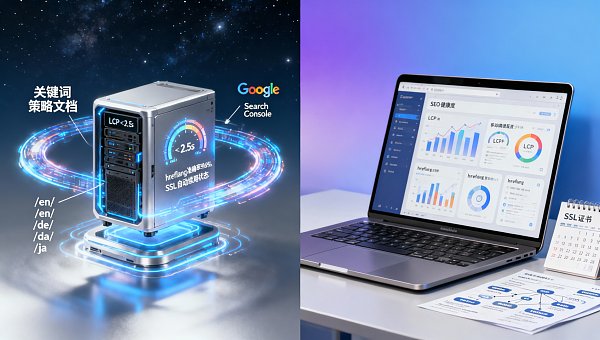
Since its establishment in 2013, Yiyingbao Information Technology (Beijing) Co., Ltd. has provided full-chain digital marketing services to over 100,000 enterprises. In its service delivery, it has implemented a mandatory "dual-track document standard"—that is, each SEO report must be accompanied by a "Technology Transferable Operation Package," which includes a keyword mapping table, tool configuration screenshots, certificate management calendar, and API call instructions, to ensure that the technical team can complete a seamless takeover within 2 working days.
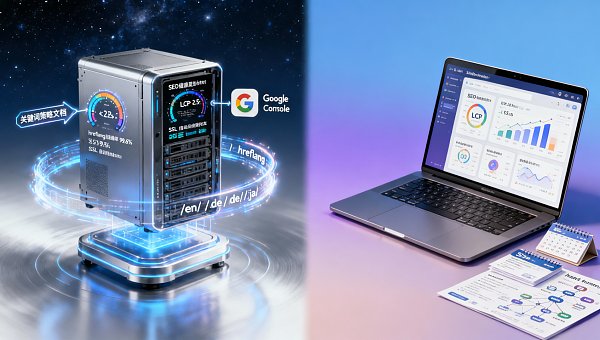
The table reveals that the handover gap is not due to insufficient technical capabilities, but rather a systemic manifestation of inadequate service delivery granularity. It is recommended that companies include "transferable documentation completeness rate" as a key contract acceptance criterion when purchasing SEO outsourcing services (recommended threshold ≥95%), and require service providers to offer at least two on-site knowledge transfer training sessions.
II. How the choice of website building platform affects the sustainability of SEO maintenance
Behind the frequently asked question, "Is the YiYingBao website building platform reliable?" lies a deep concern among businesses regarding the platform's underlying SEO friendliness. A website building platform is not only a content carrier but also the foundation for executing SEO strategies. Taking multilingual website construction as an example, if the platform does not natively support automatic injection of hreflang tags, regionalized URL routing, and localized sitemap generation, the technical team needs to manually write over 300 lines of code and continuously maintain it, resulting in an error rate as high as 23% (based on 2023 audit data from cross-border SaaS platforms).
YiYingBao Intelligent Website Building Platform adopts an AI-driven semantic architecture engine, supporting one-click generation of multilingual SEO configuration packages that comply with both Google and Baidu standards. It encompasses 12 core capabilities, including automatic canonical processing, dynamic structured data embedding, and intelligent CDN node scheduling. Its backend provides a "Real-time SEO Health Dashboard," which intuitively presents six key metrics, including page load speed (LCP < 2.5s compliance rate), mobile adaptation score (≥ 90 points), and internal link depth (≤ 3 hops).
It's worth noting that whether the platform supports "no-code SEO rule configuration" directly impacts maintenance efficiency. For example, the technical team can configure settings through a visual interface: automatically bind en-US hreflang when the URL contains the "/en/" prefix; force the use of the Schema.org/Product tag when the page title contains the keyword "price". Such configurations reduce the need for manual coding by an average of 87%.
Choosing a website building platform essentially means choosing a cost structure for long-term SEO maintenance. Data shows that companies using the YiYingBao platform reduce their daily SEO maintenance manpower by an average of 63%, and shorten the mean time to repair (MTTR) to less than 1.8 hours.
III. Establishing a collaborative governance mechanism between the technology team and the marketing team
Solving handover challenges cannot rely solely on "better documentation," but requires establishing a regular collaborative mechanism. The "3+2+1" model, proven effective in YiYingBao's service practice, is worth learning from: three cross-functional synchronous meetings per month (SEO strategy meeting, technical implementation meeting, and data review meeting), two rounds of joint drills per quarter (simulating certificate expiration emergency response and algorithm update response), and one full-chain audit per year (covering four core assets: keyword database, tool permissions, certificate status, and platform configuration).
It is particularly recommended that enterprises transfer the cost driver analysis method from the application and optimization of management accounting in the financial management of public institutions to digital marketing management—break down SEO maintenance actions into "fixed cost items" (such as platform annual fees) and "variable cost items" (such as keyword optimization time), and promote rational decision-making by quantifying the cost differences of different handover methods.
For distributors and agents, EasyCare provides a "Partner Empowerment Certification System" which includes 12 types of standardized assets such as an SEO technology briefing sandbox, a multilingual site diagnostic toolkit, and an SSL certificate lifecycle management SOP, helping channel teams quickly take on customer operation and maintenance needs.
IV. Action Recommendations: From Passive Reception to Active Control
Enterprise decision-makers should immediately initiate three actions: First, review existing outsourcing contracts and supplement them with "technology transferability" clauses; second, require service providers to provide SEO operation logs for the past 6 months (including timestamps, operators, changed content, and scope of impact); and third, connect to the YiYingBao SEO Health Monitoring System to obtain a digital profile of the entire website's SEO assets.
As a global digital marketing service provider with ten years of experience in the industry, EasyMarket leverages artificial intelligence and big data as its core driving forces, helping over 100,000 companies achieve global growth. In 2023, it was selected as one of the "Top 100 Chinese SaaS Companies," with an average annual growth rate exceeding 30%. We promise that all SEO service deliverables are certified by the ISO 27001 information security management system, ensuring the security and controllability of our technical assets.
Contact us now to obtain a customized SEO handover audit plan and website platform selection evaluation report.
Related Articles

Related Products
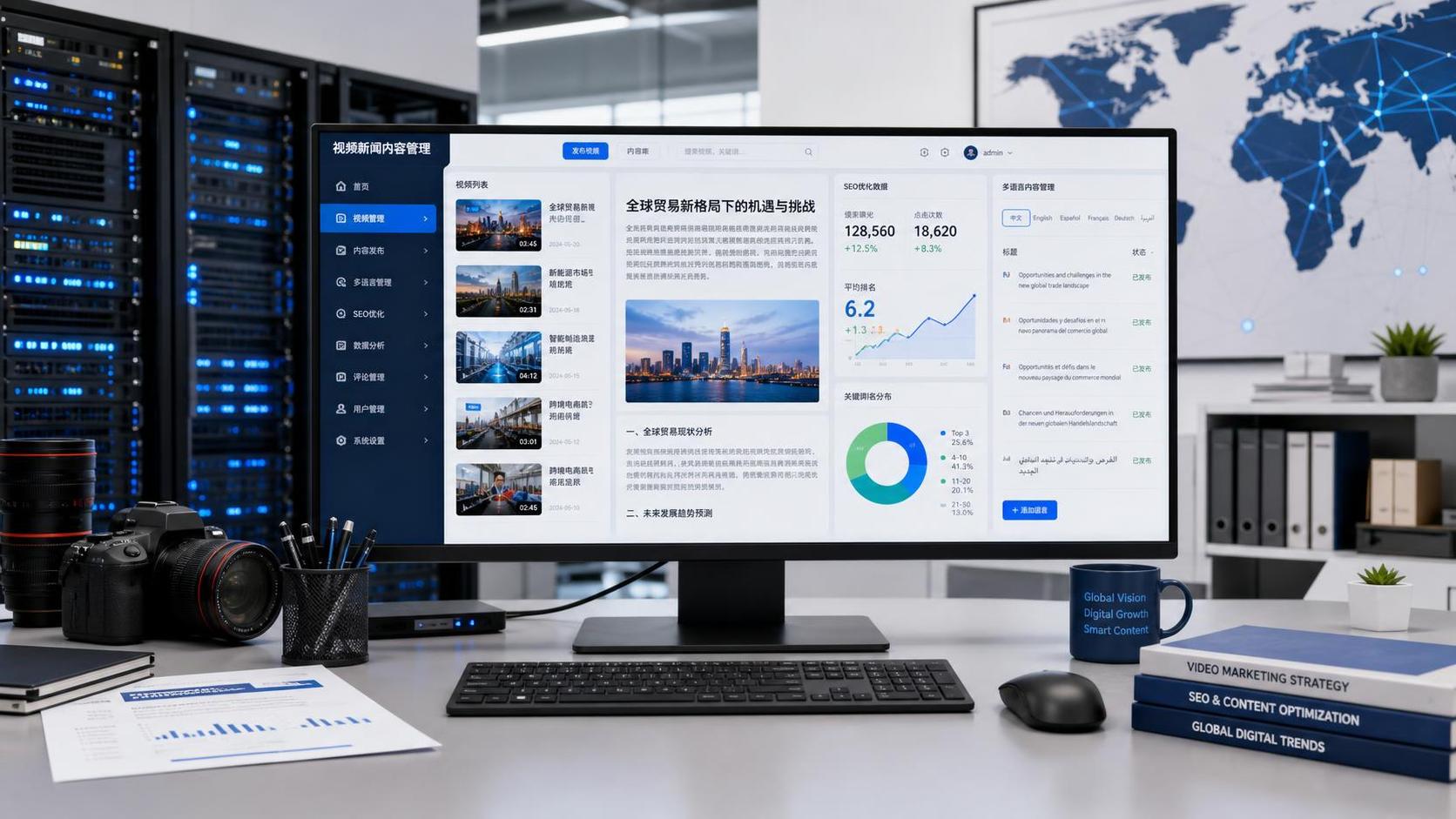
 EasyCamp SaaS Smart Website Marketing SystemE-Yingbao SaaS Smart Website Marketing System: AI-powered, zero-code website building. Rapidly launch multilingual independent e-commerce sites in just 10 minutes. Global server acceleration and AI-driven SEO optimization empower businesses to efficiently connect with global markets. The seamless integration of technology and user-friendly operation makes building e-commerce sites incredibly simple.
 AI+SEM Intelligent Advertising Marketing SystemAI+SEM drives intelligent ad creation, empowering full-funnel precision advertising marketing. The system automatically generates weekly/monthly reports, AI recommends keywords and target countries, monitors core metrics in real-time with intelligent alerts, and enables one-click high-conversion ad solutions to help quickly acquire customers and improve ROI.
 AI+SEO Dual Engine Optimization ServiceEasyWin AI+SEO Dual Engine Optimization System leverages AI-powered keyword mining, content generation, and comprehensive technical optimization to help foreign trade enterprises acquire high-quality organic traffic, significantly improving search rankings and conversion rates.
 AI+SNS Social Media Marketing SystemYingbao AI+SNS Social Media Marketing System - Precision social capture for the social media era. Supports one-click content synchronization across major platforms like Facebook and LinkedIn. AI intelligently rewrites posts for enhanced relevance. 24/7 AI customer service and user profiling analysis empower businesses to efficiently expand into global markets.
 AI+SEO营销解决方案易营宝AI+SEO营销解决方案,通过AI批量写作、智能生成TDK、精准关键词扩词等功能,全面优化网站SEO效果,提升流量与转化率。助力企业构建高效智能网站新生态。
 AI+SEM Advertising Marketing SolutionsAI+SEM Advertising Marketing Solution leverages AI technology to deeply empower SEM ad campaigns. It automatically generates weekly/monthly reports using AI, presenting account data across multiple dimensions for comprehensive insights into campaign performance and trends. The system precisely recommends keywords and target countries, intelligently generates high-conversion ad copy, and enables one-click activation of efficient campaign plans to help businesses rapidly acquire customers. Simultaneously, it monitors core metrics in real time, intelligently identifies abnormal fluctuations, and issues timely alerts to ensure stable, high-return advertising results.
 Domain Name ServicesEasyWin provides professional domain name services, including intelligent queries, one-stop registration, brand protection, and full lifecycle management, helping businesses build a digital brand image.
 EasyOperate B2C Cross-Border E-Commerce Platform & Independent WebsiteEasyStore B2C Cross-border E-commerce Independent Store is an intelligent website building and cross-border e-commerce integrated solution independently developed by EasyStore Information Technology (Beijing) Co., Ltd. The system is specially designed for small and medium-sized as well as large export enterprises, integrating 'website building, operation, marketing, advertising, and conversion' into one, helping enterprises quickly establish cross-border e-commerce independent stores to achieve brand globalization and global sales growth.
The platform supports multiple languages, multiple currencies, and multi-channel marketing, with built-in AI intelligent translation and SEO optimization systems, suitable for mainstream markets such as Southeast Asia, Europe and America, Latin America, and the Middle East, assisting Chinese manufacturing enterprises in efficiently deploying international e-commerce strategies. SSL证书易营宝提供专业SSL安全证书服务,包括单域名和泛域名证书,确保网站数据传输加密、身份验证和完整性保护,助力企业建立安全可信的在线业务环境。









