









- What Does a Global Traffic Ecosystem Service Provider Do? What Are the Differences from a Single Advertising AgencyJul 16, 2026View details
- What should you focus on in the latest enterprise SaaS report? From renewal rates and delivery costs to overseas growth opportunitiesJul 12, 2026View details
- What signals are worth paying attention to in a cross-border marketing trend report? B2B companies should look at these 6 signalsJul 11, 2026View details
- How to Read a Cross-Border Marketing Trends Report? Five Key Dimensions for Evaluating Channel OpportunitiesJul 11, 2026View details
- Which channel has the highest ROI in the global traffic ecosystem? Comparative analysis of search, social media, and advertisingJul 10, 2026View details
- What multilingual website services are available in Sanya? Which model is more suitable for local businesses going global?Jul 08, 2026View details
- How to view the complete list of China SaaS companies in the top 100? Practical methods for screening website-building and marketing service providersJul 08, 2026View details
- How to view pricing in the global traffic ecosystem? Cost comparison of search, social media, and content channel advertisingJul 06, 2026View details
How to determine a more reliable advertising placement strategy?
A Sound Definition of Advertising Strategy and Where to Start

How can an advertising strategy be defined more soundly?For enterprises,the key is not simply to spend more money,but to first align growth goals,channel selection,content messaging,and data evaluation。Only by establishing a clear,executable,and reviewable advertising strategy can enterprises strike a balance among customer acquisition efficiency,brand building,and return on investment。
In a website + marketing service integration scenario,an advertising strategy is no longer a single-point action,but a systematic project that works in coordination with official website conversion,SEO optimization,social media communication,and sales lead management。Especially against the backdrop of continuously rising traffic costs,being sound means taking fewer detours,reducing trial-and-error costs,and continuously improving advertising quality through data-driven methods。
Yiyingbao Information Technology(Beijing)Co., Ltd. has long built full-chain service capabilities around intelligent website building,SEO optimization,social media marketing,and advertising。With artificial intelligence and big data at its core,the company helps enterprises move from “launching ads” to “achieving better conversions”,which is also a methodological foundation worth emphasizing when formulating an advertising strategy。
Basic Overview:What Key Elements Does an Advertising Strategy Include
A sound advertising strategy usually revolves around four questions:who to target,where to advertise,what to promote,and how to measure results。These may seem simple,but many issues with unstable performance often arise because these four links are not connected。
The first is goal definition。If the goal is customer acquisition,attention should be paid to lead volume,form cost,and conversion rate;if the goal is brand exposure,greater emphasis should be placed on audience coverage,reach frequency,and search growth。Different goals determine different advertising strategies and should not be treated as the same。
The second is audience identification。An audience is not only about age and region,but also includes search intent,decision-making stage,industry attributes,and content preferences。A common problem for website + marketing service integration enterprises is that ads bring users in,but the landing page fails to match their needs,ultimately causing waste。
The third is coordination between content and landing pages。What the ad copy promises should be presented on the page;what the page aims to convert should be pre-filtered by the ad。If an advertising strategy only focuses on clicks and ignores the receiving experience,conversions are often unstable。
The fourth is data evaluation。Enterprises should not only focus on impressions and clicks,but also look at bounce rate,time on page,inquiry rate,deal cycle,and repeat purchase value。A truly sound advertising strategy must include both short-term metrics and long-term value。
Industry Background:Why Current Advertising Strategies Emphasize Systematization More
Digital marketing has now entered a refined operation stage,and the dividends of a single channel have weakened significantly。If enterprises still mainly rely on extensive traffic buying,they often face issues such as cost fluctuations,distorted lead quality,and uncontrollable advertising performance。Therefore,advertising strategy is being upgraded from “channel selection” to “business system design”。
- Rising traffic prices require more cautious budget allocation。
- Fragmented user touchpoints require coordination among websites,search,and social media。
- Longer decision-making paths require multiple rounds of reach and layered content。
- Enhanced data tracking capabilities require greater emphasis on attribution in advertising。
For enterprises providing integrated website and marketing services,an advertising strategy is no longer an isolated media action,but an entry point where front-end customer acquisition collaborates with back-end conversion。For example,official website structure,page speed,form design,and content layout all directly affect advertising performance。
This is also why more and more enterprises,when discussing advertising,pay attention to intelligent website building,SEO,and social media layout at the same time。What advertising brings is not simple website traffic,but higher-quality business opportunities。Only when an advertising strategy is incorporated into the overall growth system can results become more stable。
Business Value:What a Sound Advertising Strategy Can Bring
From a business perspective,a scientific advertising strategy can first improve budget utilization。When budgets are allocated to more suitable channels and audiences,invalid clicks decrease,lead quality becomes more stable,and the advertising pace becomes easier to control。
Second,it helps balance brand building and performance。Many enterprises set brand advertising and performance advertising against each other,but in fact the two can work together。In the early stage,brand content builds awareness;in the middle stage,search and remarketing capture intent;in the later stage,conversion is further advanced。This is a more complete advertising strategy。
Furthermore,a sound advertising strategy helps form a replicable growth model。Which keywords are effective,which creatives better stimulate inquiries,and which pages are more likely to close deals can all be accumulated as long-term assets。In this process,enterprises will also attach greater importance to knowledge-based management,for example,by drawing on research content such as Analysis of the Development Path for the Integration of Enterprise Artificial Intelligence and Accounting Informatization to improve internal decision-making frameworks and data collaboration thinking。
Typical Application Scenarios:Differences in Advertising Strategies Under Different Goals
If an enterprise is in the stage of website upgrading,its advertising strategy should also consider page structure reconstruction simultaneously。For example,the homepage is responsible for building trust,solution pages are responsible for explaining capabilities,case pages are responsible for strengthening persuasiveness,and the conversion path is responsible for shortening inquiry actions。
This is also where the advantage of website + marketing service integration lies。Advertising is not about sending traffic to any page,but about sending users with specific needs to the most suitable receiving scenario,thereby improving the overall conversion efficiency。
Practical Suggestions:Execution Methods to Make Advertising Strategies More Sound
- First clarify one core goal,and avoid carrying too many tasks at once。
- Allocate budgets by channel and audience,rather than distributing resources evenly。
- Keep ad creatives consistent with landing page information to reduce drop-offs。
- Establish a weekly review mechanism to continuously optimize bids,materials,and pages。
- Incorporate SEO,social media,and advertising into a unified data standard。
In addition,do not equate short-term conversion fluctuations with strategy failure。A sound advertising strategy requires an observation cycle,especially in businesses with high transaction values or long decision-making chains,where there is often a time gap between first reach,return visits,and final inquiries。
If an enterprise already has a certain data foundation,it can further introduce artificial intelligence to assist in judging audience quality,creative performance,and advertising rhythm。For business management upgrades,ideas related to Analysis of the Development Path for the Integration of Enterprise Artificial Intelligence and Accounting Informatization can also be referenced to promote stronger linkage between marketing data and operational data。
Call to Action:Improve Advertising Strategy from an Integrated Perspective
To define an advertising strategy more soundly,the key is not to chase hotspots in a single channel,but to plan synchronously across five levels:goals,audience,content,website,and data。Only when advertising,official website conversion,SEO layout,and social media operations form a closed loop can enterprises convert every budget into growth outcomes with greater certainty。
For enterprises hoping to improve global marketing efficiency,they can start with three steps:diagnosing existing accounts,optimizing landing pages,and sorting out data attribution。First identify waste points,then optimize the receiving surface,and finally establish a long-term review mechanism。In this way,the advertising strategy will naturally become more stable,more accurate,and more capable of delivering sustained returns。
Related Articles
 Attention! Builders' must-see: Yibingbao AI components updated, design efficiency directly doubled!
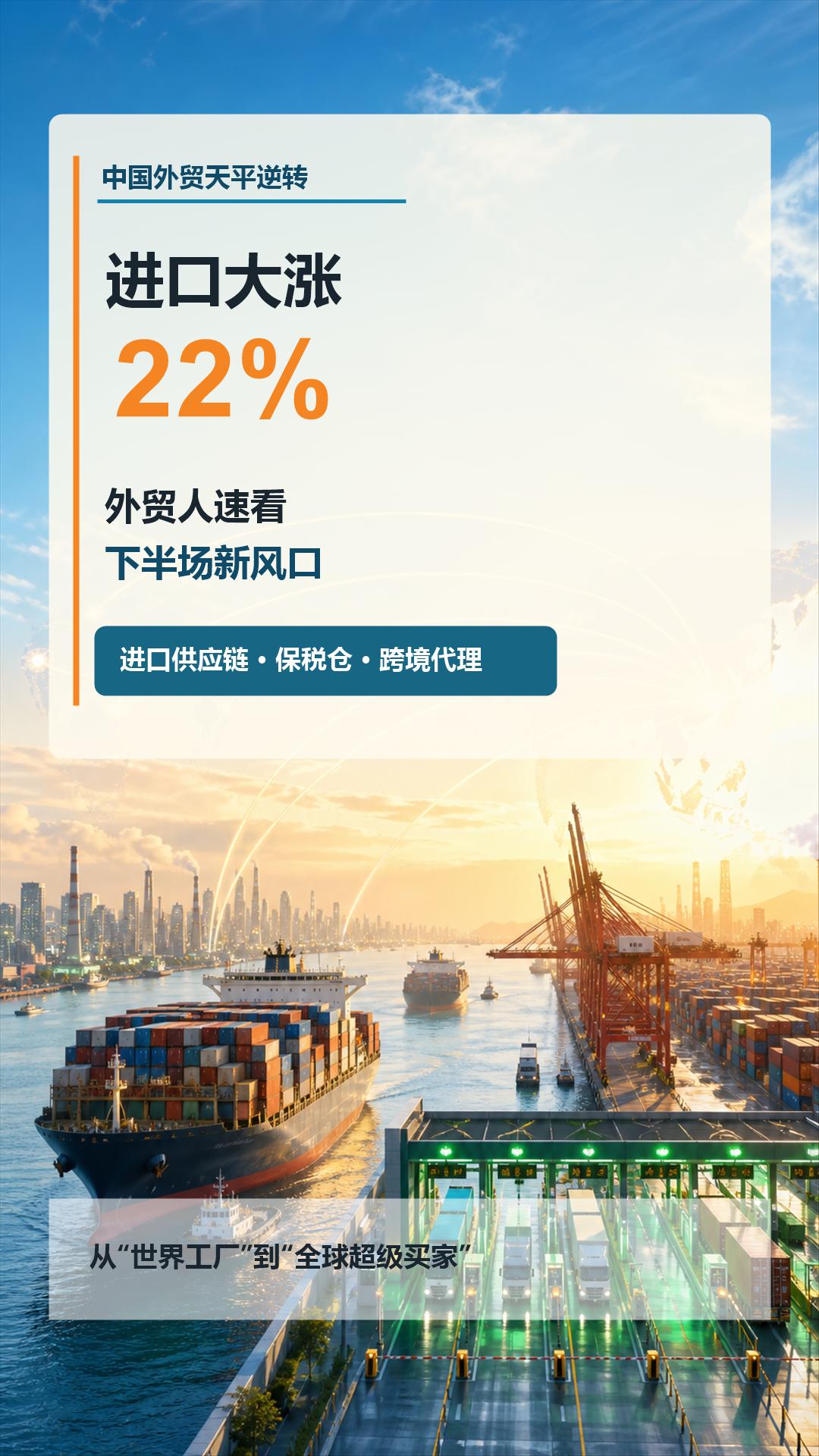
 China's foreign trade sees a turnaround: imports surge by 22%! Foreign trade professionals should quickly take note of the new trends in the second half of the year
 What Does a Global Traffic Ecosystem Service Provider Do? What Are the Differences from a Single Advertising Agency


Related Products
 EasyCamp SaaS Smart Website Marketing SystemE-Yingbao SaaS Smart Website Marketing System: AI-powered, zero-code website building. Rapidly launch multilingual independent e-commerce sites in just 10 minutes. Global server acceleration and AI-driven SEO optimization empower businesses to efficiently connect with global markets. The seamless integration of technology and user-friendly operation makes building e-commerce sites incredibly simple.
 AI+SEM Intelligent Advertising Marketing SystemAI+SEM drives intelligent ad creation, empowering full-funnel precision advertising marketing. The system automatically generates weekly/monthly reports, AI recommends keywords and target countries, monitors core metrics in real-time with intelligent alerts, and enables one-click high-conversion ad solutions to help quickly acquire customers and improve ROI.
 AI+SEO Dual Engine Optimization ServiceEasyWin AI+SEO Dual Engine Optimization System leverages AI-powered keyword mining, content generation, and comprehensive technical optimization to help foreign trade enterprises acquire high-quality organic traffic, significantly improving search rankings and conversion rates.
 AI+SNS Social Media Marketing SystemYingbao AI+SNS Social Media Marketing System - Precision social capture for the social media era. Supports one-click content synchronization across major platforms like Facebook and LinkedIn. AI intelligently rewrites posts for enhanced relevance. 24/7 AI customer service and user profiling analysis empower businesses to efficiently expand into global markets.
 AI+SEO营销解决方案易营宝AI+SEO营销解决方案,通过AI批量写作、智能生成TDK、精准关键词扩词等功能,全面优化网站SEO效果,提升流量与转化率。助力企业构建高效智能网站新生态。
 AI+SEM Advertising Marketing SolutionsAI+SEM Advertising Marketing Solution leverages AI technology to deeply empower SEM ad campaigns. It automatically generates weekly/monthly reports using AI, presenting account data across multiple dimensions for comprehensive insights into campaign performance and trends. The system precisely recommends keywords and target countries, intelligently generates high-conversion ad copy, and enables one-click activation of efficient campaign plans to help businesses rapidly acquire customers. Simultaneously, it monitors core metrics in real time, intelligently identifies abnormal fluctuations, and issues timely alerts to ensure stable, high-return advertising results.
 Domain Name ServicesEasyWin provides professional domain name services, including intelligent queries, one-stop registration, brand protection, and full lifecycle management, helping businesses build a digital brand image.
 EasyOperate B2C Cross-Border E-Commerce Platform & Independent WebsiteEasyStore B2C Cross-border E-commerce Independent Store is an intelligent website building and cross-border e-commerce integrated solution independently developed by EasyStore Information Technology (Beijing) Co., Ltd. The system is specially designed for small and medium-sized as well as large export enterprises, integrating 'website building, operation, marketing, advertising, and conversion' into one, helping enterprises quickly establish cross-border e-commerce independent stores to achieve brand globalization and global sales growth.
The platform supports multiple languages, multiple currencies, and multi-channel marketing, with built-in AI intelligent translation and SEO optimization systems, suitable for mainstream markets such as Southeast Asia, Europe and America, Latin America, and the Middle East, assisting Chinese manufacturing enterprises in efficiently deploying international e-commerce strategies. SSL证书易营宝提供专业SSL安全证书服务,包括单域名和泛域名证书,确保网站数据传输加密、身份验证和完整性保护,助力企业建立安全可信的在线业务环境。









