









- What Does a Global Traffic Ecosystem Service Provider Do? What Are the Differences from a Single Advertising AgencyJul 16, 2026View details
- What should you focus on in the latest enterprise SaaS report? From renewal rates and delivery costs to overseas growth opportunitiesJul 12, 2026View details
- What signals are worth paying attention to in a cross-border marketing trend report? B2B companies should look at these 6 signalsJul 11, 2026View details
- How to Read a Cross-Border Marketing Trends Report? Five Key Dimensions for Evaluating Channel OpportunitiesJul 11, 2026View details
- Which channel has the highest ROI in the global traffic ecosystem? Comparative analysis of search, social media, and advertisingJul 10, 2026View details
- What multilingual website services are available in Sanya? Which model is more suitable for local businesses going global?Jul 08, 2026View details
AI Website Building System Procurement Guide: 5 Integration Capabilities Your Technical Team Must Evaluate
The AI website building system procurement guide is a crucial starting point for technical teams' selection decisions. Faced with a complex and ever-changing digital marketing environment, focusing solely on the interface and templates is far from sufficient—what truly determines implementation efficiency and long-term scalability are the system's five core integration capabilities: API integration, CMS compatibility, SEO toolchain, advertising platform integration, and data analysis layer.
Website building systems are evolving from "visual building" to "intelligent collaborative hubs".
Over the past three years, more than 68% of enterprise website building needs have moved beyond single-point page generation to real-time integration with CRM, advertising backends, social media matrix, and multilingual SEO platforms. Yiyingbao Information Technology's tracking of deployment data from 100,000 clients revealed that AI website building projects failing to complete five key integrations experienced an average 210% increase in secondary development costs within six months. Conversely, for every 15 percentage point increase in integration completeness, marketing content reuse rate increased by 37%, and overseas inquiry response time was reduced to within 15 minutes.
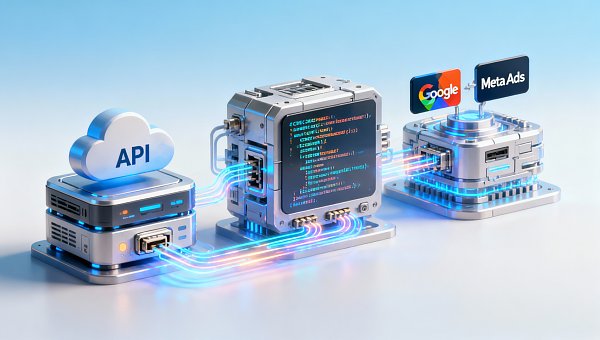
Five key integration capabilities are indispensable: Technical evaluation must go beyond the surface-level functions.
The following capabilities are not parallel options, but rather form a hierarchical structure with strong dependencies:
- API stability: Does it support Webhook event-driven APIs, and can it tolerate changes to third-party platform interfaces (such as the Facebook Graph API v19 upgrade)?
- CMS compatibility: Whether it is natively compatible with mainstream engines such as WordPress, Shopify, and Magento, or only provides static export;
- SEO toolchain embedding: Can we directly call APIs such as Ahrefs and SE Ranking to generate structured tags, instead of manually configuring the schema?
- Direct connection to advertising platforms: Whether it is officially certified to connect to Google Ads and Meta Ads Manager, and supports dynamic budget synchronization and conversion attribution feedback;
- Data analytics layer integration: Whether to inject website user behavior, social media interaction, and ad clicks into the same data lake to support cross-channel funnel attribution.
A typical scenario of integration failure: It's not that the system is faulty, but that the connection is broken in the middle.
One cross-border e-commerce client experienced a 4.2-hour error in Instagram post posting time due to the website building system only supporting batch export of social media content in CSV format, causing them to miss the golden traffic window. Another client experienced a 29% drop in organic traffic because the SEO plugin could not read the JSON-LD generated by the website building system, resulting in the lack of rich media tags for product prices in Google search results.
The fundamental problem lies in the fact that website building systems are being treated as "endpoints" rather than "hubs." A true guide to purchasing AI website building systems is essentially about assessing their ability to function as the central nervous system of digital marketing.
The depth of localization services determines the quality of integration and implementation.
Global platform interface specifications are constantly evolving. For example, LinkedIn mandated the adoption of OAuth 2.1 in Q4 2023, while most domestic website building systems remain in the OAuth 2.0 compatibility stage. Yiyingbao Information Technology, relying on its localized technical support center in Beijing, provides customers with triple protection: interface change alerts, sandbox environment pre-verification, and canary release support.
Its AI+SNS social media marketing system adopts the OAuth2.0 protocol, and the encrypted storage of sensitive data complies with GDPR standards. It has also passed ISO27001 information security certification. These are not just promotional claims, but the underlying contracts for integrated stability.
How to verify integration capabilities? A three-step testing method.
- Trigger test : After simulating a Facebook ad click, check whether the website building system automatically adds a UTM tag and triggers the corresponding landing page A/B version;
- Interruption test : Temporarily disable Meta Business Suite permissions and observe whether the website creation backend actively pushes an alert instead of failing silently;
- Attribution testing : Post content with tracking parameters on LinkedIn to verify whether the website platform completes user profile completion and sales lead classification within 72 hours.
Key signals for the evolution of integration capabilities in the next six months
Recommendations for immediate action
Before submitting the procurement approval, the technical lead must complete three actions:
- Request the supplier to provide the interface change processing records for each platform over the past 3 months (not a commitment letter);
- The requirement is to demonstrate the end-to-end workflow from "LinkedIn profile data → website user tags → email marketing groups";
- Verify whether its ISO27001 certification scope explicitly includes the API gateway and OAuth authorization center modules.
The value of the AI website building system procurement guide lies not in listing parameters, but in helping technical teams distinguish between "usable" and "safe to use." Only when a system can autonomously adapt to changes in platform rules, proactively repair data gaps, and contribute to the closed-loop business decision-making process can it truly become a growth infrastructure.
With a decade of practical experience, E-Creative Information Technology consistently delivers verifiable integration methodologies. Its end-to-end solutions have helped businesses achieve a 220% increase in high-quality LinkedIn inquiries and a 40% reduction in Facebook ad CPC. Choosing a partner with genuine integration depth is far more reliable in the long run than chasing single-feature highlights.
Related Articles

Related Products
 EasyCamp SaaS Smart Website Marketing SystemE-Yingbao SaaS Smart Website Marketing System: AI-powered, zero-code website building. Rapidly launch multilingual independent e-commerce sites in just 10 minutes. Global server acceleration and AI-driven SEO optimization empower businesses to efficiently connect with global markets. The seamless integration of technology and user-friendly operation makes building e-commerce sites incredibly simple.
 AI+SEM Intelligent Advertising Marketing SystemAI+SEM drives intelligent ad creation, empowering full-funnel precision advertising marketing. The system automatically generates weekly/monthly reports, AI recommends keywords and target countries, monitors core metrics in real-time with intelligent alerts, and enables one-click high-conversion ad solutions to help quickly acquire customers and improve ROI.
 AI+SEO Dual Engine Optimization ServiceEasyWin AI+SEO Dual Engine Optimization System leverages AI-powered keyword mining, content generation, and comprehensive technical optimization to help foreign trade enterprises acquire high-quality organic traffic, significantly improving search rankings and conversion rates.
 AI+SNS Social Media Marketing SystemYingbao AI+SNS Social Media Marketing System - Precision social capture for the social media era. Supports one-click content synchronization across major platforms like Facebook and LinkedIn. AI intelligently rewrites posts for enhanced relevance. 24/7 AI customer service and user profiling analysis empower businesses to efficiently expand into global markets.
 AI+SEO营销解决方案易营宝AI+SEO营销解决方案,通过AI批量写作、智能生成TDK、精准关键词扩词等功能,全面优化网站SEO效果,提升流量与转化率。助力企业构建高效智能网站新生态。
 AI+SEM Advertising Marketing SolutionsAI+SEM Advertising Marketing Solution leverages AI technology to deeply empower SEM ad campaigns. It automatically generates weekly/monthly reports using AI, presenting account data across multiple dimensions for comprehensive insights into campaign performance and trends. The system precisely recommends keywords and target countries, intelligently generates high-conversion ad copy, and enables one-click activation of efficient campaign plans to help businesses rapidly acquire customers. Simultaneously, it monitors core metrics in real time, intelligently identifies abnormal fluctuations, and issues timely alerts to ensure stable, high-return advertising results.
 Domain Name ServicesEasyWin provides professional domain name services, including intelligent queries, one-stop registration, brand protection, and full lifecycle management, helping businesses build a digital brand image.
 EasyOperate B2C Cross-Border E-Commerce Platform & Independent WebsiteEasyStore B2C Cross-border E-commerce Independent Store is an intelligent website building and cross-border e-commerce integrated solution independently developed by EasyStore Information Technology (Beijing) Co., Ltd. The system is specially designed for small and medium-sized as well as large export enterprises, integrating 'website building, operation, marketing, advertising, and conversion' into one, helping enterprises quickly establish cross-border e-commerce independent stores to achieve brand globalization and global sales growth.
The platform supports multiple languages, multiple currencies, and multi-channel marketing, with built-in AI intelligent translation and SEO optimization systems, suitable for mainstream markets such as Southeast Asia, Europe and America, Latin America, and the Middle East, assisting Chinese manufacturing enterprises in efficiently deploying international e-commerce strategies. SSL证书易营宝提供专业SSL安全证书服务,包括单域名和泛域名证书,确保网站数据传输加密、身份验证和完整性保护,助力企业建立安全可信的在线业务环境。









