









- Which channel has the highest ROI in the global traffic ecosystem? Comparative analysis of search, social media, and advertisingJul 10, 2026View details
- What multilingual website services are available in Sanya? Which model is more suitable for local businesses going global?Jul 08, 2026View details
- How to view the complete list of China SaaS companies in the top 100? Practical methods for screening website-building and marketing service providersJul 08, 2026View details
- How to view pricing in the global traffic ecosystem? Cost comparison of search, social media, and content channel advertisingJul 06, 2026View details
- How to assess foreign trade website development trends?Looking at 2026 changes from multilingual,AI content to conversion pathsJul 04, 2026View details
- What are the new trends in multilingual marketing data analytics tools in 2026? Focus on attribution、automation and complianceJul 04, 2026View details
- Is Brand Globalization Marketing Consulting Worth Buying? At What Stage Should Companies Bring It InJul 01, 2026View details
- Cross-Border Marketing Trend Research: Why More and More Companies Are Starting to Deploy AI Search and GEO OptimizationJun 30, 2026View details
Enterprise Self-Service Website Builder Tutorial: Practical Steps from Planning to Launch
Enterprise Self-Service Website Building System Tutorial: First Clarify the Sections and Objectives
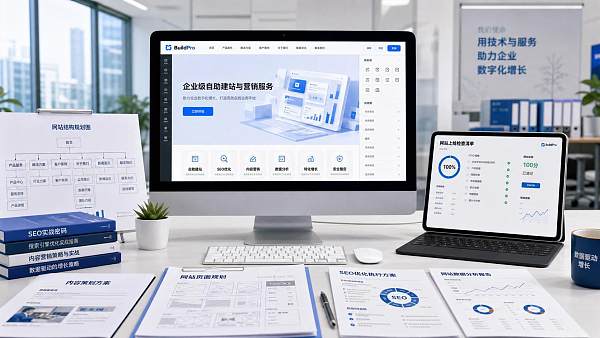
In this enterprise self-service website building system tutorial, the focus is not on “whether you can click buttons,” but on how to get the website’s underlying structure right in one go. Once the section planning is clear, the subsequent page building, content entry, indexing optimization, and launch release will go much more smoothly.
In actual business operations, many websites go live slowly not because the tools are complicated, but because the early-stage information is chaotic. The product description is unclear, the sections are duplicated, there is no conversion path on the pages, and even if the website can be opened, it is still difficult to generate inquiries.
If you are using an enterprise self-service website building system, you can follow this process directly. It is suitable for common scenarios such as foreign trade official websites, multilingual corporate websites, marketing websites, independent site landing pages, and more—especially for website projects that need to balance presentation, promotion, and ongoing operations.
First determine the website objective, then decide the number of sections
When making an enterprise self-service website building system tutorial, the most common mistake is choosing a template first and then thinking about the content. A more stable order should be reversed: first clarify the website objective, then arrange the sections and pages.
Usually, you can first answer four questions: who the website is for, what you want visitors to do, what the core selling point is, and through which channels follow-up traffic will come. Different answers mean the website structure will be clearly different.
- Brand showcase type: the focus is on credibility, cases, and company strength.
- Inquiry lead generation type: the focus is on product pages, forms, and SEO layout.
- E-commerce conversion type: the focus is on categories, payment, logistics, and campaign pages.
- Advertising landing type: the focus is on landing page speed and conversion path.
For section planning, it is recommended to start small and then expand. Homepage, Product Center, Solutions, Case Center, News, About Us, and Contact Us are usually enough for a first-level section structure. Later, you can expand according to operational data; there is no need to make the layout too full from the start.
Page Building Steps in an Enterprise Self-Service Website Building System Tutorial
Once the sections are determined, the page-building stage begins. The advantage of an enterprise self-service website building system is that it can separate and handle page structure, component configuration, and later maintenance, with much higher efficiency than traditional custom development.
Step 1: Set up the basic site information
First, complete the basic settings such as the site name, domain binding, language versions, time zone, and contact information. This may seem simple, but it determines whether search engine recognition, email reception, and multilingual switching are smooth.
If the site is intended for overseas markets, you should also synchronize the currency, form fields, map information, and privacy statement. Many minor issues after launch often arise at this stage.
Step 2: Choose a page template suitable for the business
A template is not just about whether it looks good; it is about whether it fits the business expression. For example, a manufacturing website needs more emphasis on parameters, certifications, application industries, and production capacity; a cross-border e-commerce store focuses more on product filtering, detail pages, and the ordering process.
Platforms like 易营宝, which integrate website + marketing services, usually prepare the marketing-oriented structure in advance. In this way, when building a corporate website, it is not only about completing page display, but also about taking SEO indexing, ad landing, and inquiry conversion into account.
Step 3: Assemble page modules according to the conversion path
The homepage is recommended to be arranged in the order of “value proposition - product capabilities - case studies - call to action.” Do not pile everything on the first screen; the key is to let visitors know who you are, what problems you can solve, and where they should click next.
Product pages are more suitable for a structure of “product overview - core specifications - application scenarios - delivery capabilities - FAQ - inquiry button.” This enterprise self-service website building system tutorial approach better matches real business browsing habits.
How to Configure Content So the Website Can Be Easily Indexed and Converted After Launch
Building the page is only the beginning; content configuration is what truly determines website quality. Many sites are already visually complete, but the titles, descriptions, product copy, and image captions are too empty, making it hard for search engines and visitors to quickly understand the page value.
Product content should be specific, not just conceptual
When writing product pages, try to use fewer generic statements like “high quality,” “professional,” or “efficient.” A more effective approach is to write directly about materials, specifications, applicable industries, lead time, certifications, and customization range, so the page has real purchasing decision value.
If it is a multilingual site, the content should not be translated mechanically. Different markets care about different things: North American customers care more about efficiency and compliance, European customers care more about standards and service, while the Middle East and Southeast Asian markets care more about response speed and communication convenience.
SEO basics should be completed at the time of content entry
In an enterprise self-service website building system tutorial, one very critical action is to complete SEO settings at the same time as content entry. This includes page titles, descriptions, URL aliases, image alt text, breadcrumb hierarchy, and internal link recommendations.
The benefit of doing this is very direct. After the website goes live, there is no need for large-scale rework, and search engines can more quickly understand the section relationships and page topics, which is more helpful for subsequent organic traffic growth.
Forms and conversion entry points should be placed where users are willing to act
Many websites place contact information only in the footer, which is not conducive to conversion. A better approach is to set up lightweight forms or inquiry buttons on product detail pages, solution pages, case pages, and article pages to reduce the cost of moving on to the next step.
Do not make the form fields too many either. Name, email, country, and need description are usually enough. The more complex the fields, the lower the submission rate tends to be; this is a very common issue in real operations.
Run Through This Checklist Before Launching
When it comes to the publishing stage, the focus of the enterprise self-service website building system tutorial shifts from “building” to “debugging.” The more carefully this step is done, the better the stability, indexing speed, and promotional landing results will be after launch.
- Check whether all navigation links can jump normally and avoid empty section entries.
- Check mobile layout, especially the button, form, and image ratios.
- Check page loading speed and compress overly large images and videos.
- Check whether titles and descriptions are duplicated to avoid indexing confusion.
- Check whether forms, online consultation, and email notifications are truly usable.
- Check whether tracking code, conversion code, and ad tracking have been deployed.
- Check robots, sitemap, and indexing submission settings.
From recent changes, website launch is no longer the end of a project, but the starting point of marketing. Especially in an environment where Google SEO, advertising, overseas social media, and AI search run in parallel, the site itself must have continuous updating and continuous optimization capabilities.
If You Want the Website to Truly Work, You Also Need to Consider Ongoing Operations
A truly valuable enterprise self-service website building system tutorial will not only talk about launch, but will also consider later operational actions. Whether the website can bring in effective customers depends on whether there is continuous content, continuous promotion, and continuous data review after launch.
This is also the real significance of a platform like 易营宝. It is not just a website-building tool, but a growth path that connects AI intelligent website building, multilingual website construction, SEO optimization, ad placement, social media operations, and GEO optimization, allowing the website to upgrade from “displayable” to “promotable, indexable, and convertible.”
If this enterprise self-service website building system tutorial is followed, it is basically possible to complete the full closed loop from section planning, page building, and content configuration to launch and publishing. First get the structure right, then deepen the content, and finally keep optimizing with data; only then can the website truly become a business growth asset.
Related Articles
 Which channel has the highest ROI in the global traffic ecosystem? Comparative analysis of search, social media, and advertising
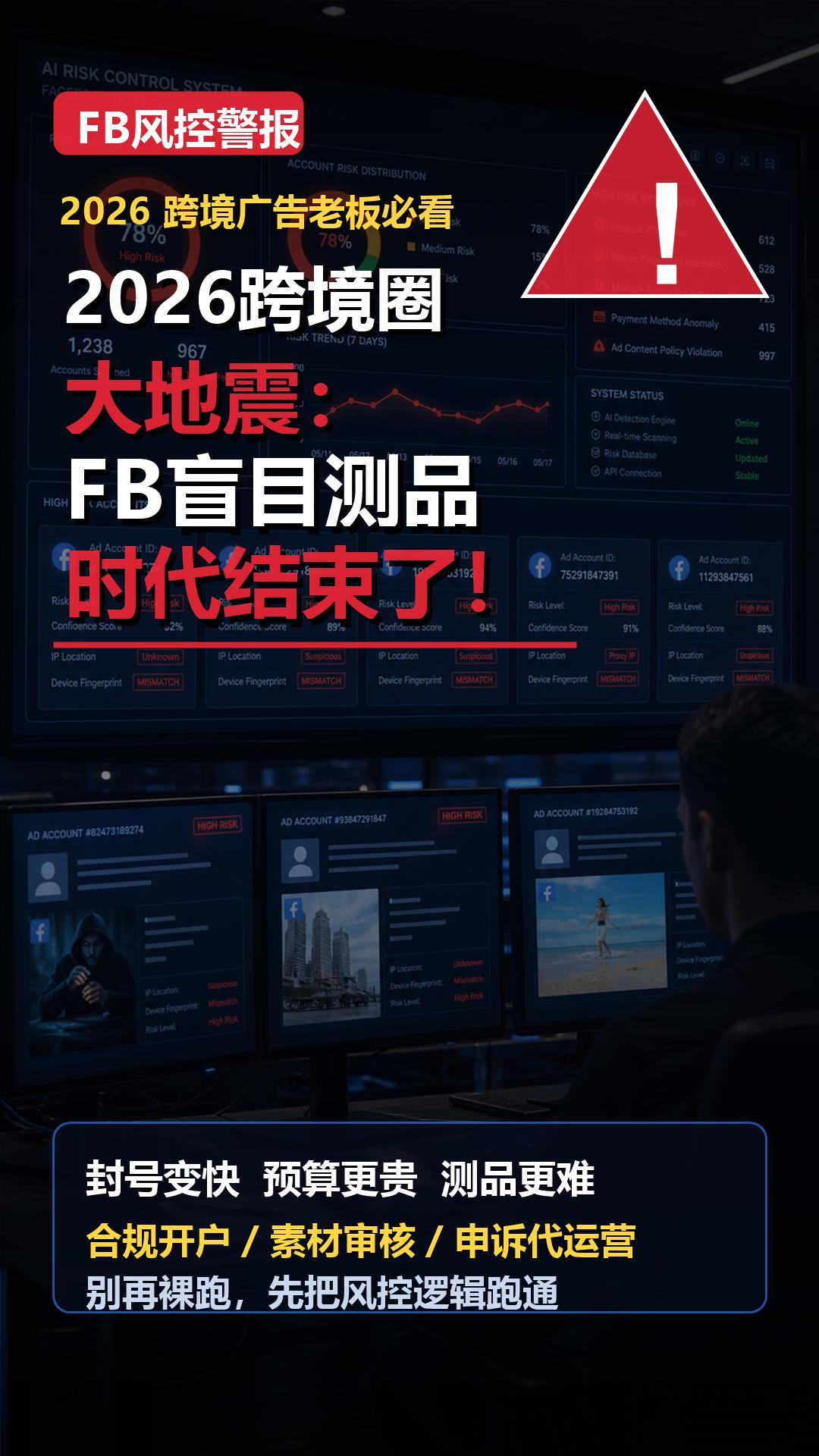
 The Era of Cross-Border Earthquakes in 2026: The Era of Blindly Testing FB Products Has Ended!
 Three key points of domestic-to-foreign trade most important, see if you really did your homework! Don’t take shortcuts.

Related Products
 EasyCamp SaaS Smart Website Marketing SystemE-Yingbao SaaS Smart Website Marketing System: AI-powered, zero-code website building. Rapidly launch multilingual independent e-commerce sites in just 10 minutes. Global server acceleration and AI-driven SEO optimization empower businesses to efficiently connect with global markets. The seamless integration of technology and user-friendly operation makes building e-commerce sites incredibly simple.
 AI+SEM Intelligent Advertising Marketing SystemAI+SEM drives intelligent ad creation, empowering full-funnel precision advertising marketing. The system automatically generates weekly/monthly reports, AI recommends keywords and target countries, monitors core metrics in real-time with intelligent alerts, and enables one-click high-conversion ad solutions to help quickly acquire customers and improve ROI.
 AI+SEO Dual Engine Optimization ServiceEasyWin AI+SEO Dual Engine Optimization System leverages AI-powered keyword mining, content generation, and comprehensive technical optimization to help foreign trade enterprises acquire high-quality organic traffic, significantly improving search rankings and conversion rates.
 AI+SNS Social Media Marketing SystemYingbao AI+SNS Social Media Marketing System - Precision social capture for the social media era. Supports one-click content synchronization across major platforms like Facebook and LinkedIn. AI intelligently rewrites posts for enhanced relevance. 24/7 AI customer service and user profiling analysis empower businesses to efficiently expand into global markets.
 AI+SEO营销解决方案易营宝AI+SEO营销解决方案,通过AI批量写作、智能生成TDK、精准关键词扩词等功能,全面优化网站SEO效果,提升流量与转化率。助力企业构建高效智能网站新生态。
 AI+SEM Advertising Marketing SolutionsAI+SEM Advertising Marketing Solution leverages AI technology to deeply empower SEM ad campaigns. It automatically generates weekly/monthly reports using AI, presenting account data across multiple dimensions for comprehensive insights into campaign performance and trends. The system precisely recommends keywords and target countries, intelligently generates high-conversion ad copy, and enables one-click activation of efficient campaign plans to help businesses rapidly acquire customers. Simultaneously, it monitors core metrics in real time, intelligently identifies abnormal fluctuations, and issues timely alerts to ensure stable, high-return advertising results.
 Domain Name ServicesEasyWin provides professional domain name services, including intelligent queries, one-stop registration, brand protection, and full lifecycle management, helping businesses build a digital brand image.
 EasyOperate B2C Cross-Border E-Commerce Platform & Independent WebsiteEasyStore B2C Cross-border E-commerce Independent Store is an intelligent website building and cross-border e-commerce integrated solution independently developed by EasyStore Information Technology (Beijing) Co., Ltd. The system is specially designed for small and medium-sized as well as large export enterprises, integrating 'website building, operation, marketing, advertising, and conversion' into one, helping enterprises quickly establish cross-border e-commerce independent stores to achieve brand globalization and global sales growth.
The platform supports multiple languages, multiple currencies, and multi-channel marketing, with built-in AI intelligent translation and SEO optimization systems, suitable for mainstream markets such as Southeast Asia, Europe and America, Latin America, and the Middle East, assisting Chinese manufacturing enterprises in efficiently deploying international e-commerce strategies. SSL证书易营宝提供专业SSL安全证书服务,包括单域名和泛域名证书,确保网站数据传输加密、身份验证和完整性保护,助力企业建立安全可信的在线业务环境。









