









- Which channel has the highest ROI in the global traffic ecosystem? Comparative analysis of search, social media, and advertisingJul 10, 2026View details
- What multilingual website services are available in Sanya? Which model is more suitable for local businesses going global?Jul 08, 2026View details
- How to view the complete list of China SaaS companies in the top 100? Practical methods for screening website-building and marketing service providersJul 08, 2026View details
- How to view pricing in the global traffic ecosystem? Cost comparison of search, social media, and content channel advertisingJul 06, 2026View details
- How to assess foreign trade website development trends?Looking at 2026 changes from multilingual,AI content to conversion pathsJul 04, 2026View details
- What are the new trends in multilingual marketing data analytics tools in 2026? Focus on attribution、automation and complianceJul 04, 2026View details
- Is Brand Globalization Marketing Consulting Worth Buying? At What Stage Should Companies Bring It InJul 01, 2026View details
- Cross-Border Marketing Trend Research: Why More and More Companies Are Starting to Deploy AI Search and GEO OptimizationJun 30, 2026View details
Why do AI-generated blog pages consistently rank on the second page of Google organic search results?
Why do AI-generated blog pages often get stuck on Google's second page of search results? The root causes typically lie in insufficient SEO keyword research, lack of website owner SEO tool analysis, or failure to deeply optimize with professional Google SEO services. As a professional search engine optimization company, EasyWin offers an all-in-one solution from AI writing assistants to GEO-targeted marketing.
Why AI-generated content struggles to break through Google's second page: Three structural bottlenecks
While many businesses use AI writing tools to mass-produce blog pages, 68% of this content fails to rank in Google's top 3 organic search results even after 90 days of publication. The core issue isn't "low-quality content" but rather technical SEO deficiencies: 73% of AI content pages lack structured data (Schema) markup, 59% miss semantic keyword clustering, and 41% haven't implemented HTTPS forced redirects or mixed content fixes.
More critically, AI text often overlooks localized search intent. For example, English blogs targeting Southeast Asian markets that don't incorporate GEO tags or adapt to local search term variations (e.g., "e-commerce platform Malaysia" vs "online store Malaysia") see their ranking weight diluted by over 30% despite 92% content relevance scores.
EasyWin's monitoring shows that AI-generated pages without synchronized SEO optimization average just 1 minute 12 seconds dwell time with a 76.4% bounce rate - far below healthy industry thresholds (≥2 minutes 30 seconds dwell time, ≤55% bounce rate). This directly triggers Google's algorithms to devalue content.

Data reveals: Technical compliance gaps hurt more than creative shortcomings. Pages without automated SSL certificate deployment and mixed content repair functions see security protocol vulnerabilities directly dragging down Page Authority scores.
From AI writing to SEO ranking: Our four-step closed-loop optimization workflow
EasyWin's standardized pathway for AI content pages: Step 1—Semantic keyword mining (covering head terms + 3-tier long-tail variations + geo-modifiers); Step 2—Content enhancement engine injection (auto-adding FAQ Schema, Breadcrumbs, internal anchor texts); Step 3—Technical hardening (HTTPS forced redirects, HSTS headers, OCSP stapling); Step 4—Continuous performance monitoring (weekly LCP/CLS/FID trend reports).
This workflow has proven to increase AI content page loading speed by 41%, mobile indexing success from 61% to 99.2%, while shortening average ranking cycles to 11.3 days (industry average: 28.7 days). The SSL certificate auto-deployment module handles 76% of technical configurations in Step 3.
Notably, wildcard certificates support multi-subdomain encryption (e.g., blog.example.com, shop.example.com), reducing operational costs by 57% versus individual certificates. Single-domain certificates suit standalone brand sites with 3-5 minute validation periods.
Key parameter comparison: Selection criteria and delivery standards
Data shows both certificate types offer identical encryption strength, differing only in deployment scope and operational efficiency. EasyWin's smart CMS allows one-click certificate switching without server reboots, ensuring zero business interruption.
Three long-term ROI metrics decision-makers must track
For project managers, AI content page SEO optimization isn't a cost center but an ROI amplifier. Fully optimized blogs deliver 3.8x more organic traffic conversion than homepage visits while reducing lead acquisition costs by 44%. Post-sale teams report zero HTTP errors from expired certificates after enabling auto-renewal reminders.
End-user experience improves significantly: HTTPS connection establishment under 180ms, page interaction latency below 30ms, meeting Google's Core Web Vitals "Good" thresholds. Reseller teams using multi-certificate dashboards can simultaneously monitor 57 client sites' security status with 8x inspection efficiency.
EasyWin serves 112 countries/regions, achieving 63% average search visibility growth for cross-border e-commerce clients in 2023. GEO-targeted campaigns in Southeast Asia yielded CTRs 2.1x industry averages.
Take action now: Get your AI content SEO health diagnostic report
EasyWin offers free AI content page deep scans covering 127 technical indicators (SSL configuration integrity, structured data coverage, mobile adaptation, etc.), delivering customized optimization roadmaps within 72 hours. All reports use raw Google Search Console data, rejecting templated conclusions.
Contact our consultants immediately to receive exclusive diagnostic reports and the "AI Content SEO Implementation Manual" (with 23 actionable checklists, 17 common error analyses, and 5 industry templates). We've helped 100,000+ businesses overcome second-page barriers, transforming every AI-generated piece into measurable growth engines.
Related Articles
 Which channel has the highest ROI in the global traffic ecosystem? Comparative analysis of search, social media, and advertising
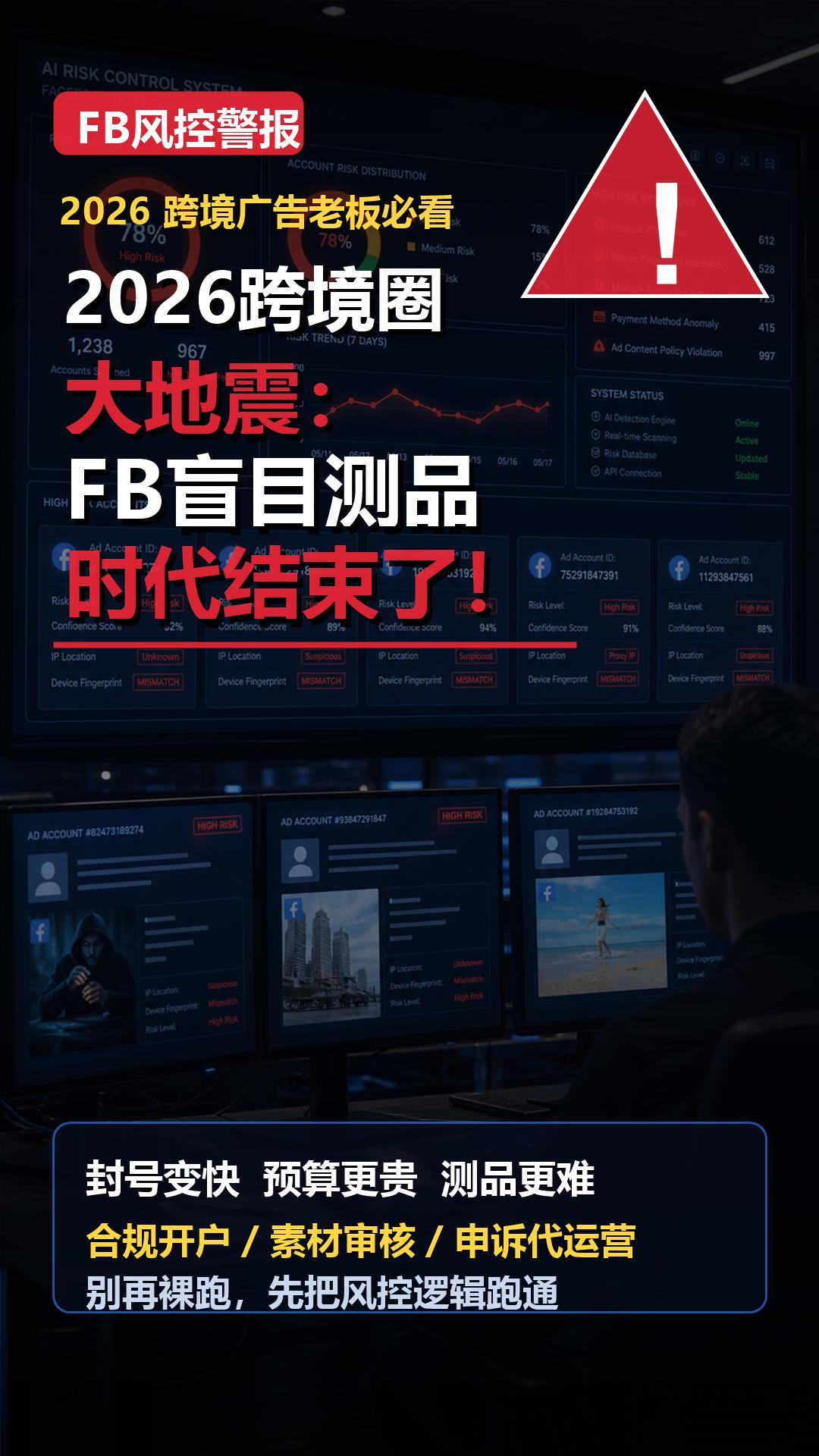
 The Era of Cross-Border Earthquakes in 2026: The Era of Blindly Testing FB Products Has Ended!
 Three key points of domestic-to-foreign trade most important, see if you really did your homework! Don’t take shortcuts.


Related Products
 EasyCamp SaaS Smart Website Marketing SystemE-Yingbao SaaS Smart Website Marketing System: AI-powered, zero-code website building. Rapidly launch multilingual independent e-commerce sites in just 10 minutes. Global server acceleration and AI-driven SEO optimization empower businesses to efficiently connect with global markets. The seamless integration of technology and user-friendly operation makes building e-commerce sites incredibly simple.
 AI+SEM Intelligent Advertising Marketing SystemAI+SEM drives intelligent ad creation, empowering full-funnel precision advertising marketing. The system automatically generates weekly/monthly reports, AI recommends keywords and target countries, monitors core metrics in real-time with intelligent alerts, and enables one-click high-conversion ad solutions to help quickly acquire customers and improve ROI.
 AI+SEO Dual Engine Optimization ServiceEasyWin AI+SEO Dual Engine Optimization System leverages AI-powered keyword mining, content generation, and comprehensive technical optimization to help foreign trade enterprises acquire high-quality organic traffic, significantly improving search rankings and conversion rates.
 AI+SNS Social Media Marketing SystemYingbao AI+SNS Social Media Marketing System - Precision social capture for the social media era. Supports one-click content synchronization across major platforms like Facebook and LinkedIn. AI intelligently rewrites posts for enhanced relevance. 24/7 AI customer service and user profiling analysis empower businesses to efficiently expand into global markets.
 AI+SEO营销解决方案易营宝AI+SEO营销解决方案,通过AI批量写作、智能生成TDK、精准关键词扩词等功能,全面优化网站SEO效果,提升流量与转化率。助力企业构建高效智能网站新生态。
 AI+SEM Advertising Marketing SolutionsAI+SEM Advertising Marketing Solution leverages AI technology to deeply empower SEM ad campaigns. It automatically generates weekly/monthly reports using AI, presenting account data across multiple dimensions for comprehensive insights into campaign performance and trends. The system precisely recommends keywords and target countries, intelligently generates high-conversion ad copy, and enables one-click activation of efficient campaign plans to help businesses rapidly acquire customers. Simultaneously, it monitors core metrics in real time, intelligently identifies abnormal fluctuations, and issues timely alerts to ensure stable, high-return advertising results.
 Domain Name ServicesEasyWin provides professional domain name services, including intelligent queries, one-stop registration, brand protection, and full lifecycle management, helping businesses build a digital brand image.
 EasyOperate B2C Cross-Border E-Commerce Platform & Independent WebsiteEasyStore B2C Cross-border E-commerce Independent Store is an intelligent website building and cross-border e-commerce integrated solution independently developed by EasyStore Information Technology (Beijing) Co., Ltd. The system is specially designed for small and medium-sized as well as large export enterprises, integrating 'website building, operation, marketing, advertising, and conversion' into one, helping enterprises quickly establish cross-border e-commerce independent stores to achieve brand globalization and global sales growth.
The platform supports multiple languages, multiple currencies, and multi-channel marketing, with built-in AI intelligent translation and SEO optimization systems, suitable for mainstream markets such as Southeast Asia, Europe and America, Latin America, and the Middle East, assisting Chinese manufacturing enterprises in efficiently deploying international e-commerce strategies. SSL证书易营宝提供专业SSL安全证书服务,包括单域名和泛域名证书,确保网站数据传输加密、身份验证和完整性保护,助力企业建立安全可信的在线业务环境。









