









- What Does a Global Traffic Ecosystem Service Provider Do? What Are the Differences from a Single Advertising AgencyJul 16, 2026View details
- What should you focus on in the latest enterprise SaaS report? From renewal rates and delivery costs to overseas growth opportunitiesJul 12, 2026View details
- What signals are worth paying attention to in a cross-border marketing trend report? B2B companies should look at these 6 signalsJul 11, 2026View details
- How to Read a Cross-Border Marketing Trends Report? Five Key Dimensions for Evaluating Channel OpportunitiesJul 11, 2026View details
- Which channel has the highest ROI in the global traffic ecosystem? Comparative analysis of search, social media, and advertisingJul 10, 2026View details
- What multilingual website services are available in Sanya? Which model is more suitable for local businesses going global?Jul 08, 2026View details
- How to view the complete list of China SaaS companies in the top 100? Practical methods for screening website-building and marketing service providersJul 08, 2026View details
- How to view pricing in the global traffic ecosystem? Cost comparison of search, social media, and content channel advertisingJul 06, 2026View details
A comprehensive analysis of the advantages and disadvantages of AI website templates: 3 typical scenarios suitable for foreign trade enterprises with annual revenue below 5 million.
What are the advantages and disadvantages of using AI website templates? For foreign trade distributors/agents with annual revenue of less than 5 million, it may not be a panacea for saving time or money. This article focuses on three highly adaptable practical scenarios to help you make a rational decision.
Why is it that choosing a website template is not a guaranteed win, but rather a matter of "using the right template to win"?
Foreign trade companies with annual revenue below 5 million often face the triple constraints of tight manpower, limited budgets, and slow response times. At this time, AI website templates, which seem to offer "launch in 72 hours" and "zero-code operation," actually have hidden adaptation gaps: the stronger the template's generality, the lower its adaptability to industry characteristics; the faster the website is built, the more difficult it is to improve SEO and inquiry conversion rates later on.
What truly determines success or failure is not "whether you have a website," but rather "whether the website can handle proactive inquiries from buyers on the first page of Google search results," "whether Spanish customers can submit inquiries in their native language," and "whether Facebook ad clicks can be accurately redirected to matching product pages." These capabilities require a robust technological foundation, not just drag-and-drop components.
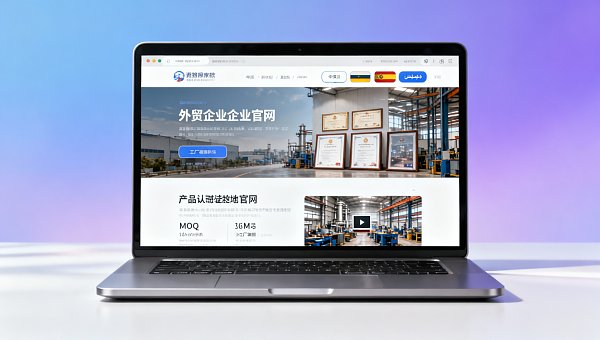
Scenario 1: A fledgling export startup – successfully completing its first order from scratch.
Typical characteristics: no independent website, no SEO experience, focusing on 1-2 emerging markets (such as Mexico and Vietnam), team of ≤3 people, and the goal for the first year is to verify the overseas acceptance of the product.
In this scenario, the AI website template offers significant advantages: automatic multi-language switching and a Google PageSpeed score of 90+ ensure that buyers stay immediately upon opening the page; the intelligent website building system comes pre-installed with high-frequency B2B structures (MOQ display area, certification wall, factory video embedding), eliminating the need for repeated UI adjustments; more importantly, the B2B foreign trade solution incorporates AI buyer profiling technology, which can automatically recommend matching product pages based on visitor behavior, reducing the first-visit bounce rate to 63% of the industry average.
Scenario 2: Mid-sized distributors with stable shipments but sluggish growth – Breaking through the inquiry bottleneck
Typical characteristics: annual revenue of 2-5 million yuan, basic website but stagnant inquiry volume, repurchase rate of old customers exceeding 50% but difficulty in acquiring new customers, and reliance on trade shows and referrals from old customers.
At this point, template-based website building, if merely a "reskin," has limited value; however, if it is equipped with a full-chain closed-loop service, it becomes the key to breaking the deadlock: the buyer behavior tracking and analysis module can identify high-intent visitors who "repeatedly view the parameters of a certain product but did not inquire"; the dynamic advertising material generation system automatically generates remarketing ads with discount codes based on this; the multi-time zone automatic follow-up function pushes customized quotations one hour before the customer leaves work—data shows that companies using this solution have seen an average increase of 320% in inquiries, and the invalid inquiry rate is lower than the industry average of 80%.
Scenario 3: Asset-light service provider for multi-brand operation – rapid delivery of client projects
Typical characteristics: serving 3-8 foreign trade brands simultaneously, requiring separate website setup for each client, delivery cycle often compressed to within 10 days, and client requirements for support in English, Spanish, and Arabic.
Traditional website building processes are prone to spiraling out of control in this scenario. However, a responsive template library, unified multilingual management, and Google's neural intelligent translation system (ISO 18587:2017 certified) enable the generation of three-language versions of content in seconds; the customer management system supports brand-based data access control; and the inquiry conversion tracking function allows service providers to clearly present customers with "the source of each inquiry, response time, and transaction cycle." Experience serving over 3700 foreign trade companies shows that this model can reduce single-site delivery time to 5.2 days, and increase the first-year inquiry success rate to 91.4%.
Comparison of core requirements in three scenarios
- Emerging companies should focus on "rapid launch + low barriers to entry + first-order verification data feedback".
- Mid-sized agencies need "high conversion paths + in-depth insights into buyer behavior + activation of repeat purchases from existing customers"
- Carrier-on-demand services should include "multi-brand parallel delivery + language/data isolation + transparent attribution of results".
Common Misjudgments: Never Do These 3 Things
- Equating "good-looking templates" with "high Google rankings"—90% of templates lack pre-embedded schema data, causing product pages to fail to trigger rich media summaries.
- Ignoring the underlying logic of multilingual SEO—automatic translation ≠ localized SEO; Spanish-language websites require independent keyword databases and backlink strategies.
- Separating website building from marketing – Independent websites that fail to integrate Google Ads and inquiry notifications experience a traffic loss rate exceeding 47%.
Next steps recommended: 3 steps to identify the starting point for adaptation
- Self-checking the current official website's Google Search Console data : If the percentage of "product keywords + country keywords" in organic traffic is less than 35%, it indicates that the template is not adapted to the actual search intent of buyers.
- Test the inquiry funnel : from Google search → product page → inquiry form → receiving email, does the entire process take ≤2 minutes? A timeout indicates a break in the user experience.
- Assess the quality of language coverage : Randomly select 3 pages and have native speakers verify the translation accuracy—an accuracy below 90% will directly lower trust levels.
The essence of the advantages and disadvantages of AI website templates lies not in the technology itself, but in whether they match the real bottlenecks of business growth stages. With 15 years of industry experience, Yiyingbao Information Technology has elevated AI website building from a "page generation tool" to a "foreign trade growth operating system." When technical parameters are transformed into measurable results—a 320% increase in inquiries, a 2.8-fold increase in average order value, and a 58% repeat purchase rate from existing customers—decision-making is no longer based on intuition, but on facts.
If you are in any of the above scenarios, you can now initiate a free diagnostic: get a personalized "Foreign Trade Independent Website Health Report", including Google organic traffic potential assessment, multilingual SEO gap scanning, and a first-month inquiry improvement roadmap.
Related Articles
 Attention! Builders' must-see: Yibingbao AI components updated, design efficiency directly doubled!
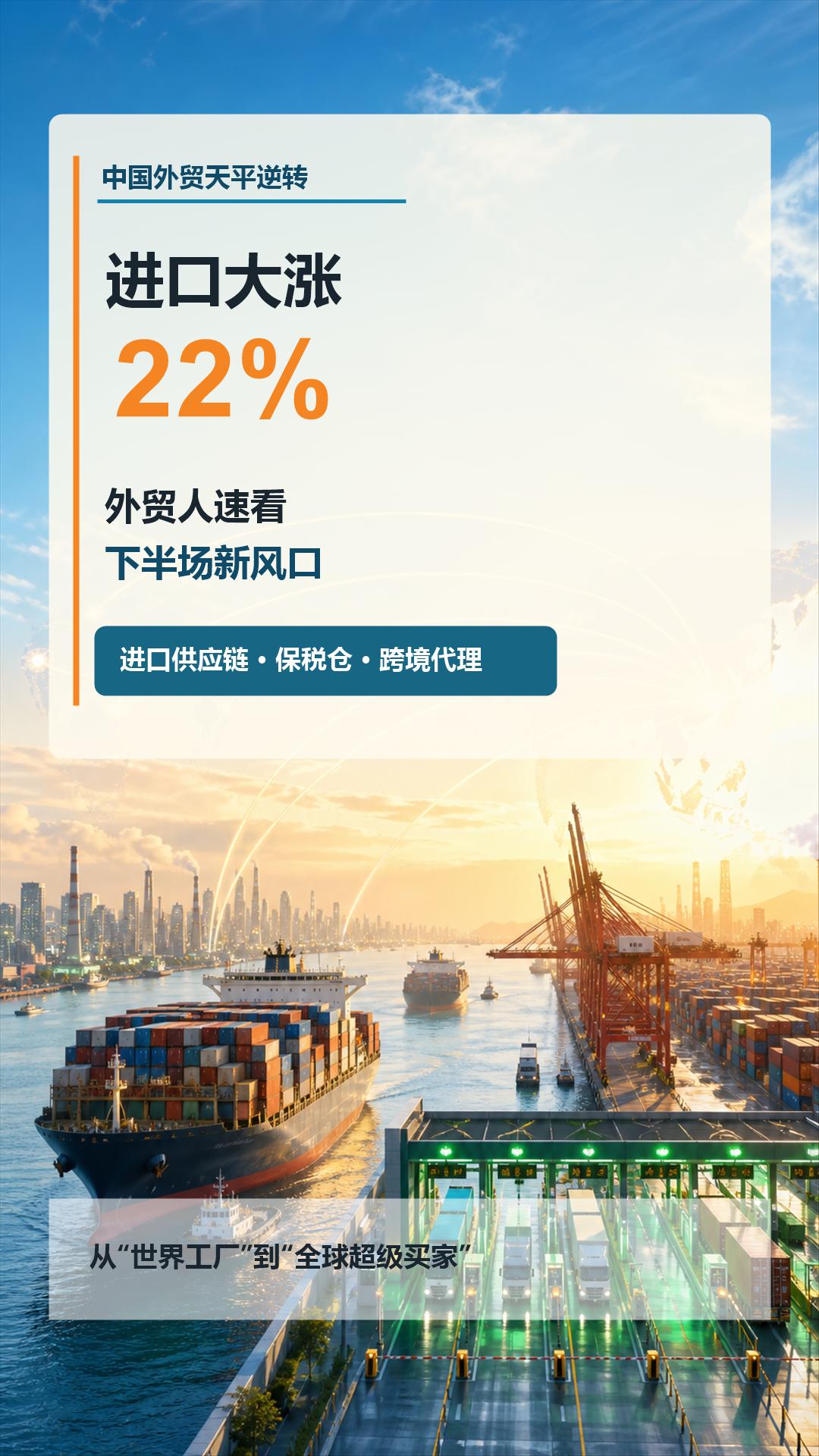
 China's foreign trade sees a turnaround: imports surge by 22%! Foreign trade professionals should quickly take note of the new trends in the second half of the year
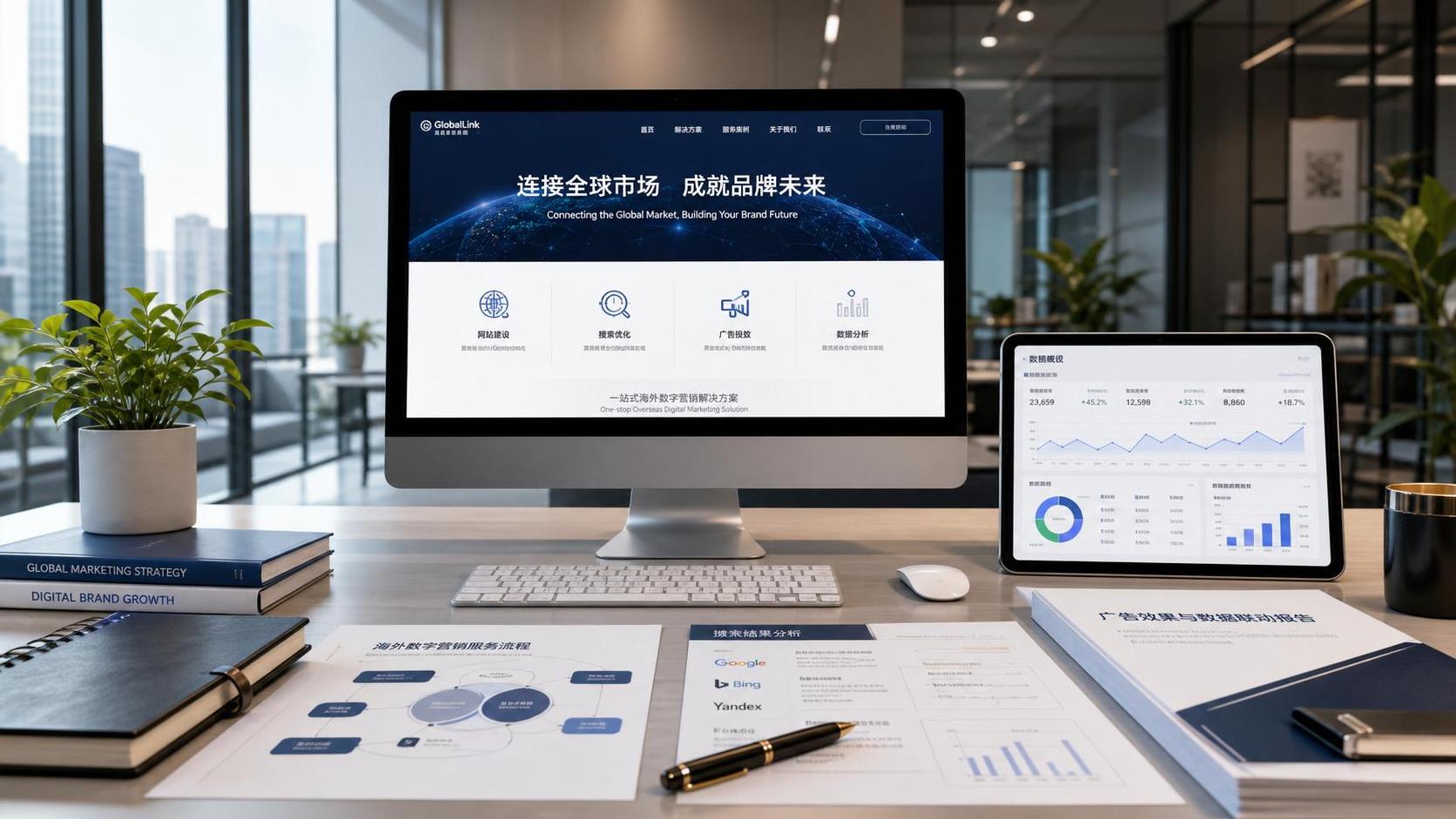
 What Does a Global Traffic Ecosystem Service Provider Do? What Are the Differences from a Single Advertising Agency

Related Products
 EasyCamp SaaS Smart Website Marketing SystemE-Yingbao SaaS Smart Website Marketing System: AI-powered, zero-code website building. Rapidly launch multilingual independent e-commerce sites in just 10 minutes. Global server acceleration and AI-driven SEO optimization empower businesses to efficiently connect with global markets. The seamless integration of technology and user-friendly operation makes building e-commerce sites incredibly simple.
 AI+SEM Intelligent Advertising Marketing SystemAI+SEM drives intelligent ad creation, empowering full-funnel precision advertising marketing. The system automatically generates weekly/monthly reports, AI recommends keywords and target countries, monitors core metrics in real-time with intelligent alerts, and enables one-click high-conversion ad solutions to help quickly acquire customers and improve ROI.
 AI+SEO Dual Engine Optimization ServiceEasyWin AI+SEO Dual Engine Optimization System leverages AI-powered keyword mining, content generation, and comprehensive technical optimization to help foreign trade enterprises acquire high-quality organic traffic, significantly improving search rankings and conversion rates.
 AI+SNS Social Media Marketing SystemYingbao AI+SNS Social Media Marketing System - Precision social capture for the social media era. Supports one-click content synchronization across major platforms like Facebook and LinkedIn. AI intelligently rewrites posts for enhanced relevance. 24/7 AI customer service and user profiling analysis empower businesses to efficiently expand into global markets.
 AI+SEO营销解决方案易营宝AI+SEO营销解决方案,通过AI批量写作、智能生成TDK、精准关键词扩词等功能,全面优化网站SEO效果,提升流量与转化率。助力企业构建高效智能网站新生态。
 AI+SEM Advertising Marketing SolutionsAI+SEM Advertising Marketing Solution leverages AI technology to deeply empower SEM ad campaigns. It automatically generates weekly/monthly reports using AI, presenting account data across multiple dimensions for comprehensive insights into campaign performance and trends. The system precisely recommends keywords and target countries, intelligently generates high-conversion ad copy, and enables one-click activation of efficient campaign plans to help businesses rapidly acquire customers. Simultaneously, it monitors core metrics in real time, intelligently identifies abnormal fluctuations, and issues timely alerts to ensure stable, high-return advertising results.
 Domain Name ServicesEasyWin provides professional domain name services, including intelligent queries, one-stop registration, brand protection, and full lifecycle management, helping businesses build a digital brand image.
 EasyOperate B2C Cross-Border E-Commerce Platform & Independent WebsiteEasyStore B2C Cross-border E-commerce Independent Store is an intelligent website building and cross-border e-commerce integrated solution independently developed by EasyStore Information Technology (Beijing) Co., Ltd. The system is specially designed for small and medium-sized as well as large export enterprises, integrating 'website building, operation, marketing, advertising, and conversion' into one, helping enterprises quickly establish cross-border e-commerce independent stores to achieve brand globalization and global sales growth.
The platform supports multiple languages, multiple currencies, and multi-channel marketing, with built-in AI intelligent translation and SEO optimization systems, suitable for mainstream markets such as Southeast Asia, Europe and America, Latin America, and the Middle East, assisting Chinese manufacturing enterprises in efficiently deploying international e-commerce strategies. SSL证书易营宝提供专业SSL安全证书服务,包括单域名和泛域名证书,确保网站数据传输加密、身份验证和完整性保护,助力企业建立安全可信的在线业务环境。









