









- What multilingual website services are available in Sanya? Which model is more suitable for local businesses going global?Jul 08, 2026View details
- How to view the complete list of China SaaS companies in the top 100? Practical methods for screening website-building and marketing service providersJul 08, 2026View details
- How to view pricing in the global traffic ecosystem? Cost comparison of search, social media, and content channel advertisingJul 06, 2026View details
- How to assess foreign trade website development trends?Looking at 2026 changes from multilingual,AI content to conversion pathsJul 04, 2026View details
- What are the new trends in multilingual marketing data analytics tools in 2026? Focus on attribution、automation and complianceJul 04, 2026View details
- Is Brand Globalization Marketing Consulting Worth Buying? At What Stage Should Companies Bring It InJul 01, 2026View details
- Cross-Border Marketing Trend Research: Why More and More Companies Are Starting to Deploy AI Search and GEO OptimizationJun 30, 2026View details
- Cross-Border Marketing Trend Research: How Independent Sites, AI Content, and Short-Video Customer Acquisition Are ChangingJun 30, 2026View details
China implements comprehensive unilateral zero-tariff treatment for 53 African countries with diplomatic relations
Effective May 1, 2026, China will implement a comprehensive unilateral zero-tariff policy for all 53 African countries with which it has diplomatic relations(including 33 least developed countries and 20 non-least developed countries), covering more than 98% of tariff lines. This policy directly affects the import costs of quota-covered categories such as agricultural products, minerals, and light industrial goods, and has a substantive impact on manufacturing, procurement, distribution, and supply chain service enterprises engaged in China-Africa trade.
Event Overview
According to publicly available information, effective May 1, 2026, China will implement unilateral zero-tariff arrangements for 53 African countries that have diplomatic relations with China. This measure covers more than 98% of tariff items across all tariff schedule headings and applies to quota-covered categories such as agricultural products, mineral resources, and light industrial manufactured goods. The policy is aimed at African exporters and is intended to reduce the tariff burden on their goods exported to China, thereby lowering compliance costs and landed prices.
Which Market Segments Will Be Affected
Direct trading enterprises: including foreign trade companies engaged in bilateral import and export between China and Africa, as well as operators of cross-border platforms. As tariffs on African export goods fall to zero, the overall cost for Chinese importers sourcing African raw materials or primary products will decline, potentially driving changes in order structures, especially in categories such as cotton, coffee, sesame, chromite ore, and cobalt intermediates.
Raw material sourcing enterprises: mainly referring to domestic processing enterprises that rely on African resources, such as textile printing and dyeing mills(cotton yarn/lint cotton), battery material manufacturers(cobalt salts/lithium ore), stainless steel smelters(ferronickel), and food processing enterprises(oilseeds/nuts). Tariff reductions will directly lower their duty-paid costs for imported raw materials, but the actual degree of benefit will depend on whether African suppliers pass on the concession through procurement prices.
Processing and manufacturing enterprises: manufacturing entities that use imported African raw materials as intermediate inputs, such as companies producing plywood from African logs and footwear and apparel manufacturers using African leather as raw material. Zero tariffs shorten the price adjustment cycle on the raw material side, helping stabilize BOM(bill of materials)cost expectations, but it is also necessary to simultaneously assess the risks of African supply stability and quality consistency.
Channel and distribution enterprises: covering bonded logistics, international freight forwarders, cross-border e-commerce service providers, and others. After the policy takes effect, customs clearance procedures for African goods entering the country may be simplified and declaration requirements reduced, potentially improving clearance efficiency;however, attention should be paid to whether customs will simultaneously strengthen its review of certificates of origin, product classification, and quota utilization.
Supply chain service enterprises: including service institutions providing China-Africa trade compliance consulting, tax planning, and standards certification(such as SASO and SONCAP compatibility). Zero tariffs do not change the requirements of technical trade barriers, and related service demand may shift from “tariff planning” to “origin compliance management” and “African localization certification support.”
What Key Points Should Relevant Enterprises or Practitioners Focus On, and How Should They Respond at Present
Pay attention to subsequent official wording or policy changes
The current policy is clearly defined as “unilateral zero tariff” and does not mention whether reciprocal arrangements for African countries' exports to China will be introduced. Enterprises should continue tracking the implementation rules issued by the Ministry of Commerce and the General Administration of Customs, especially operational documents concerning quota allocation mechanisms, applicable interpretations of rules of origin, and transitional arrangements.
Pay attention to changes in key product categories, key markets, or key business links
Priority should be given to sorting out the HS codes involving African sources within your own supply chain and checking against the “Zero-Tariff Product List for Africa” published by the General Administration of Customs to confirm whether they are included in the coverage scope;for categories not yet included in the list but with potential(such as certain deeply processed agricultural products), companies may conduct preliminary research on the production capacity and certification capabilities of African exporting countries to leave room for subsequent expansion.
Distinguish policy signals from actual business implementation
Zero tariffs only eliminate tariff-related costs and do not replace other costs such as transportation, insurance, inspection, exchange rates, and local customs clearance in Africa. Enterprises should not simply equate the policy with a “substantial reduction in procurement costs,” but should instead carry out full-chain cost modeling to identify the links that can truly be optimized.
Prepare procurement, supply chain, communication, or contingency plans in advance
It is recommended to initiate advance communication with existing African suppliers on matters such as price renegotiation, updates to origin documentation, and adjustments to minimum order quantities;at the same time, review the tariff fields, customs declaration templates, and financial accounting subjects for relevant products in the internal ERP system to ensure timely switching of system parameters after May 1.
Editorial Viewpoint / Industry Observation
Observably, this policy is best understood as a structural signal rather than an immediate market catalyst. It reflects a long-term recalibration of China’s trade engagement with Africa—shifting from project-based infrastructure cooperation toward deeper integration of African inputs into domestic industrial chains. Analysis shows that its near-term impact will be most visible in procurement departments and customs compliance units, not boardroom-level strategy shifts. From an industry perspective, the real test lies not in tariff removal itself, but in whether African exporters can scale up certified, bankable supply capacity to meet Chinese quality and delivery expectations. Current more relevant interpretation is: this is an enabler—not a trigger—for supply chain diversification.

Conclusion: This policy marks the entry of China-Africa economic and trade relations into a new stage characterized by institutional openness. Its industry significance lies in providing a more stable cost foundation for coordination across China-Africa industrial chains, but it does not automatically translate into market share growth or profit improvement. At present, it is more appropriate to understand it as a long-term institutional arrangement that requires the joint realization of localized execution capabilities, speed of compliance response, and upstream supply resilience.
Source note:
Mainly based on policy announcements publicly issued by the Chinese government and supporting notices from the General Administration of Customs(released in April 2026). Areas requiring continued observation include: the certificate of origin issuance capacity of various African countries, detailed rules for specific product quota allocations, and the operational interpretation adopted by Chinese customs for identifying the status of “African countries with diplomatic relations.”
Related Articles
 What multilingual website services are available in Sanya? Which model is more suitable for local businesses going global?
 How to view the complete list of China SaaS companies in the top 100? Practical methods for screening website-building and marketing service providers
 There are so many used heavy-duty construction machines for foreign trade. How exactly should we acquire customers?


Related Products
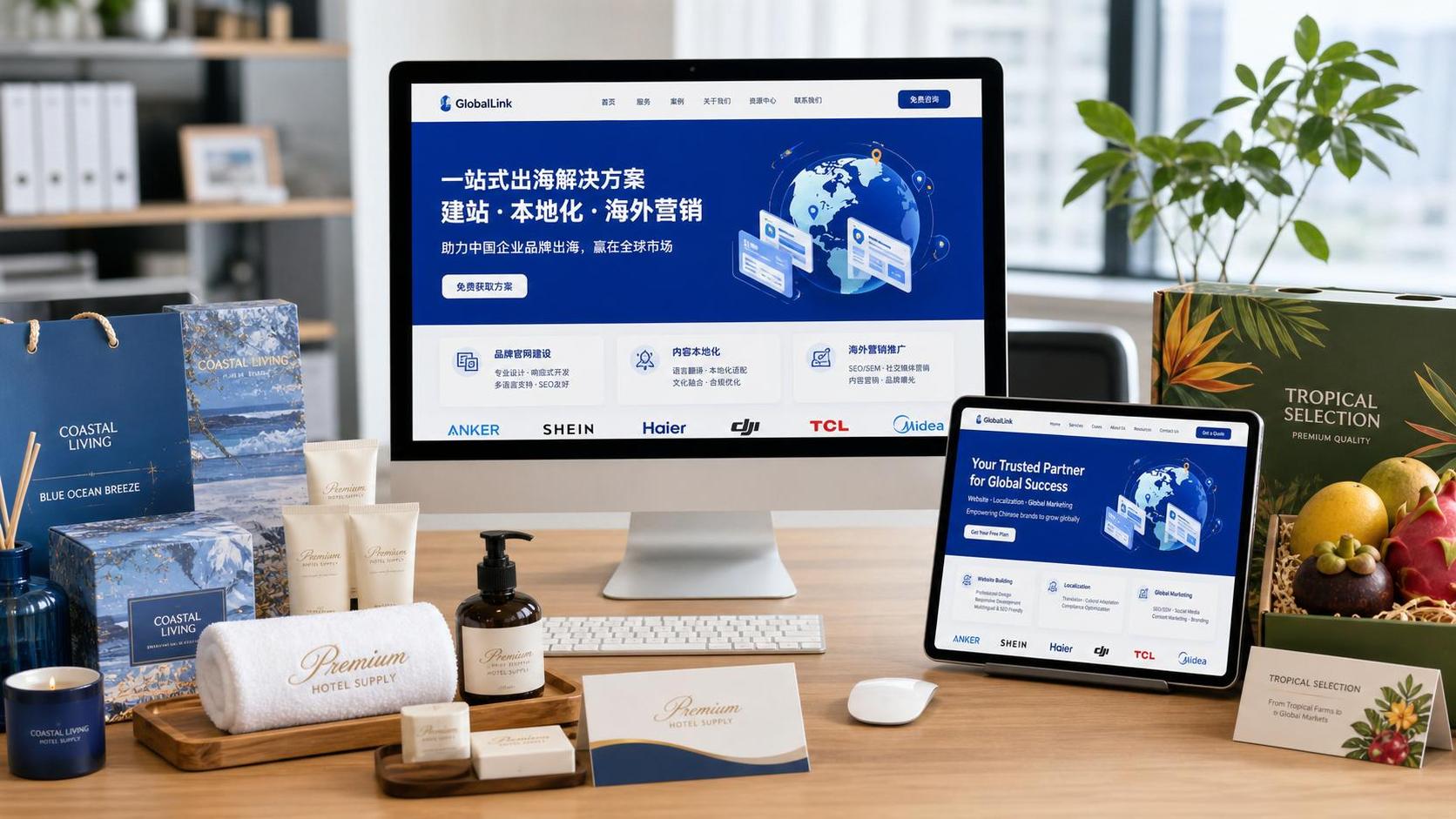
 EasyCamp SaaS Smart Website Marketing SystemE-Yingbao SaaS Smart Website Marketing System: AI-powered, zero-code website building. Rapidly launch multilingual independent e-commerce sites in just 10 minutes. Global server acceleration and AI-driven SEO optimization empower businesses to efficiently connect with global markets. The seamless integration of technology and user-friendly operation makes building e-commerce sites incredibly simple.
 AI+SEM Intelligent Advertising Marketing SystemAI+SEM drives intelligent ad creation, empowering full-funnel precision advertising marketing. The system automatically generates weekly/monthly reports, AI recommends keywords and target countries, monitors core metrics in real-time with intelligent alerts, and enables one-click high-conversion ad solutions to help quickly acquire customers and improve ROI.
 AI+SEO Dual Engine Optimization ServiceEasyWin AI+SEO Dual Engine Optimization System leverages AI-powered keyword mining, content generation, and comprehensive technical optimization to help foreign trade enterprises acquire high-quality organic traffic, significantly improving search rankings and conversion rates.
 AI+SNS Social Media Marketing SystemYingbao AI+SNS Social Media Marketing System - Precision social capture for the social media era. Supports one-click content synchronization across major platforms like Facebook and LinkedIn. AI intelligently rewrites posts for enhanced relevance. 24/7 AI customer service and user profiling analysis empower businesses to efficiently expand into global markets.
 AI+SEO营销解决方案易营宝AI+SEO营销解决方案,通过AI批量写作、智能生成TDK、精准关键词扩词等功能,全面优化网站SEO效果,提升流量与转化率。助力企业构建高效智能网站新生态。
 AI+SEM Advertising Marketing SolutionsAI+SEM Advertising Marketing Solution leverages AI technology to deeply empower SEM ad campaigns. It automatically generates weekly/monthly reports using AI, presenting account data across multiple dimensions for comprehensive insights into campaign performance and trends. The system precisely recommends keywords and target countries, intelligently generates high-conversion ad copy, and enables one-click activation of efficient campaign plans to help businesses rapidly acquire customers. Simultaneously, it monitors core metrics in real time, intelligently identifies abnormal fluctuations, and issues timely alerts to ensure stable, high-return advertising results.
 Domain Name ServicesEasyWin provides professional domain name services, including intelligent queries, one-stop registration, brand protection, and full lifecycle management, helping businesses build a digital brand image.
 EasyOperate B2C Cross-Border E-Commerce Platform & Independent WebsiteEasyStore B2C Cross-border E-commerce Independent Store is an intelligent website building and cross-border e-commerce integrated solution independently developed by EasyStore Information Technology (Beijing) Co., Ltd. The system is specially designed for small and medium-sized as well as large export enterprises, integrating 'website building, operation, marketing, advertising, and conversion' into one, helping enterprises quickly establish cross-border e-commerce independent stores to achieve brand globalization and global sales growth.
The platform supports multiple languages, multiple currencies, and multi-channel marketing, with built-in AI intelligent translation and SEO optimization systems, suitable for mainstream markets such as Southeast Asia, Europe and America, Latin America, and the Middle East, assisting Chinese manufacturing enterprises in efficiently deploying international e-commerce strategies. SSL证书易营宝提供专业SSL安全证书服务,包括单域名和泛域名证书,确保网站数据传输加密、身份验证和完整性保护,助力企业建立安全可信的在线业务环境。









