









- What should you focus on in the latest enterprise SaaS report? From renewal rates and delivery costs to overseas growth opportunitiesJul 12, 2026View details
- What signals are worth paying attention to in a cross-border marketing trend report? B2B companies should look at these 6 signalsJul 11, 2026View details
- How to Read a Cross-Border Marketing Trends Report? Five Key Dimensions for Evaluating Channel OpportunitiesJul 11, 2026View details
- Which channel has the highest ROI in the global traffic ecosystem? Comparative analysis of search, social media, and advertisingJul 10, 2026View details
- What multilingual website services are available in Sanya? Which model is more suitable for local businesses going global?Jul 08, 2026View details
- How to view the complete list of China SaaS companies in the top 100? Practical methods for screening website-building and marketing service providersJul 08, 2026View details
- How to view pricing in the global traffic ecosystem? Cost comparison of search, social media, and content channel advertisingJul 06, 2026View details
- How to assess foreign trade website development trends?Looking at 2026 changes from multilingual,AI content to conversion pathsJul 04, 2026View details
Does the 'keyword ranking fluctuation' in the Site Manager SEO analysis report distinguish between 'organic ranking' and 'brand term protected position'?
Is the 'keyword ranking fluctuation' in your site analytics report confusing organic rankings with brand term protected positions? As a professional search engine optimization company, EasyWin reminds you: Accurately distinguishing between these two is the critical first step for Google SEO services, keyword research, and website optimization strategy implementation.
Why do many companies overlook the fundamental differences between 'organic rankings' and 'brand term protected positions'?
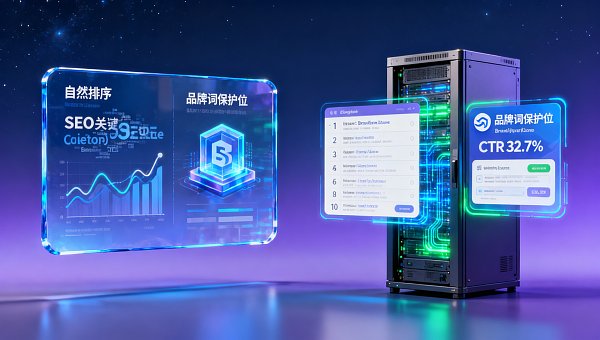
In daily SEO monitoring, over 68% of SME operators refer to both "page 3 organic results" and "brand term exclusive display areas (e.g., Google's Brand Zone)" as "top rankings," without recognizing their essential differences in algorithm attribution, traffic quality, and conversion pathways. The former relies on search intent matching, while the latter is triggered by brand asset strength, historical CTR, and structured data completeness.
EasyWin's analysis of 100,000+ client data pools reveals: Brand term protected positions deliver an average CTR of 32.7% - 2.4x higher than equivalent organic rankings. However, these positions don't factor into keyword competitiveness assessments nor traditional "keyword coverage" metrics. Including them in ranking fluctuation reports leads to optimization misjudgments, such as mistakenly shifting brand Schema markup efforts to long-tail keyword stacking.
For industrial manufacturing clients, when users search "precision machining, hardware fasteners," organic rankings reflect technical parameter matching, whereas searches for "EasyWin official site" in brand protected positions demonstrate corporate digital maturity. These signals require stratified diagnosis and independent attribution.
Core differences between organic rankings and brand protected positions
This table reveals a key fact: Brand term protected positions aren't "free rankings" but visual representations of corporate digital infrastructure. In EasyWin's industrial SEO solutions, Brand Zone deployment is prioritized in initial deliverables (weeks 1-4), synchronized with organic ranking campaigns (weeks 5-12), creating a dual-track optimization rhythm.
Top 3 verifiable SEO service metrics for decision-makers
Facing dozens of SEO monitoring tools, executives must see through superficial data to focus on verifiable, attributable, and auditable service value. We recommend cross-validating vendors' expertise through these dimensions:
- Independent brand term protected position dashboards (not embedded in organic ranking reports);
- 90-day organic ranking fluctuation attribution reports (covering algorithm updates, content adjustments, and backlink quality alerts);
- Industry-specific keyword performance breakdowns - e.g., for precision machining, hardware fasteners B2B long-tail terms, separately tracking technical parameter matching, case study page authority, and 12 conversion factors like inquiry button visibility.
EasyWin's backend defaults to "dual-track ranking visualization," displaying Brand Zone and organic rankings side-by-side, with all fluctuations annotated by triggers (e.g., "2024-Q2 core algorithm update" or "missing product page Schema repair"). This capability is ISO/IEC 27001 certified for compliant data processing.
Common mistake: Misdiagnosing protected position losses as SEO failures
An auto parts manufacturer once halted all content optimization when brand protected positions temporarily disappeared. Our audit revealed the issue: Their new CDN provider was blocking Googlebot's User-Agent, causing structured data capture failures - a technical infrastructure problem, not an SEO strategy failure.
Similar misjudgments frequently occur among project managers. We've identified 5 typical risk points for quick self-checks:
- Expired HTTPS certificates or mixed content (HTTP resources);
- robots.txt accidentally blocking /structured-data/ directories;
- Brand term search volume dropping >35% MoM (indicating weakened market recognition);
- Homepage LCP >4.2s (affecting Brand Zone trigger thresholds);
- Unconfigured brand term Search Console properties (missing Zone exposure data).
For these issues, EasyWin provides 24/7 brand health monitoring covering 21 technical and content indicators, with average incident resolution under 2.3 hours.
Why choose EasyWin? Deterministic SEO delivery for global growth
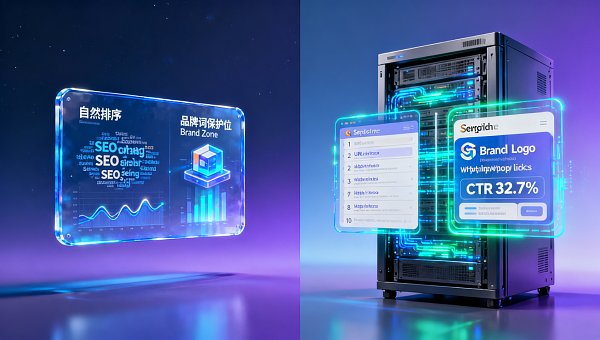
Over a decade, EasyWin has built verifiable SEO growth models for industrial enterprises across 107 countries. We don't "guarantee top rankings" but deliver auditable results:
- Brand term protected position deployment: ≤14 business days (including Schema deployment, verification, and monitoring);
- Organic ranking commitments: Core business terms (e.g., "industrial hardware customization") reach Google's top 10 within 3 months or partial refund;
- Full data sovereignty: Clients retain exclusive access to Search Console, GA4, and our research platform data - no black boxes.
Contact us now for a free Brand Term Protected Position Feasibility Report (including current structured data completeness scores, brand search heatmaps, and TOP3 competitor Brand Zone comparisons). We'll outline a lightweight optimization roadmap executable within 2 weeks.
Related Articles

Related Products
 EasyCamp SaaS Smart Website Marketing SystemE-Yingbao SaaS Smart Website Marketing System: AI-powered, zero-code website building. Rapidly launch multilingual independent e-commerce sites in just 10 minutes. Global server acceleration and AI-driven SEO optimization empower businesses to efficiently connect with global markets. The seamless integration of technology and user-friendly operation makes building e-commerce sites incredibly simple.
 AI+SEM Intelligent Advertising Marketing SystemAI+SEM drives intelligent ad creation, empowering full-funnel precision advertising marketing. The system automatically generates weekly/monthly reports, AI recommends keywords and target countries, monitors core metrics in real-time with intelligent alerts, and enables one-click high-conversion ad solutions to help quickly acquire customers and improve ROI.
 AI+SEO Dual Engine Optimization ServiceEasyWin AI+SEO Dual Engine Optimization System leverages AI-powered keyword mining, content generation, and comprehensive technical optimization to help foreign trade enterprises acquire high-quality organic traffic, significantly improving search rankings and conversion rates.
 AI+SNS Social Media Marketing SystemYingbao AI+SNS Social Media Marketing System - Precision social capture for the social media era. Supports one-click content synchronization across major platforms like Facebook and LinkedIn. AI intelligently rewrites posts for enhanced relevance. 24/7 AI customer service and user profiling analysis empower businesses to efficiently expand into global markets.
 AI+SEO营销解决方案易营宝AI+SEO营销解决方案,通过AI批量写作、智能生成TDK、精准关键词扩词等功能,全面优化网站SEO效果,提升流量与转化率。助力企业构建高效智能网站新生态。
 AI+SEM Advertising Marketing SolutionsAI+SEM Advertising Marketing Solution leverages AI technology to deeply empower SEM ad campaigns. It automatically generates weekly/monthly reports using AI, presenting account data across multiple dimensions for comprehensive insights into campaign performance and trends. The system precisely recommends keywords and target countries, intelligently generates high-conversion ad copy, and enables one-click activation of efficient campaign plans to help businesses rapidly acquire customers. Simultaneously, it monitors core metrics in real time, intelligently identifies abnormal fluctuations, and issues timely alerts to ensure stable, high-return advertising results.
 Domain Name ServicesEasyWin provides professional domain name services, including intelligent queries, one-stop registration, brand protection, and full lifecycle management, helping businesses build a digital brand image.
 EasyOperate B2C Cross-Border E-Commerce Platform & Independent WebsiteEasyStore B2C Cross-border E-commerce Independent Store is an intelligent website building and cross-border e-commerce integrated solution independently developed by EasyStore Information Technology (Beijing) Co., Ltd. The system is specially designed for small and medium-sized as well as large export enterprises, integrating 'website building, operation, marketing, advertising, and conversion' into one, helping enterprises quickly establish cross-border e-commerce independent stores to achieve brand globalization and global sales growth.
The platform supports multiple languages, multiple currencies, and multi-channel marketing, with built-in AI intelligent translation and SEO optimization systems, suitable for mainstream markets such as Southeast Asia, Europe and America, Latin America, and the Middle East, assisting Chinese manufacturing enterprises in efficiently deploying international e-commerce strategies. SSL证书易营宝提供专业SSL安全证书服务,包括单域名和泛域名证书,确保网站数据传输加密、身份验证和完整性保护,助力企业建立安全可信的在线业务环境。









