









- What multilingual website services are available in Sanya? Which model is more suitable for local businesses going global?Jul 08, 2026View details
- How to view the complete list of China SaaS companies in the top 100? Practical methods for screening website-building and marketing service providersJul 08, 2026View details
- How to view pricing in the global traffic ecosystem? Cost comparison of search, social media, and content channel advertisingJul 06, 2026View details
- How to assess foreign trade website development trends?Looking at 2026 changes from multilingual,AI content to conversion pathsJul 04, 2026View details
- What are the new trends in multilingual marketing data analytics tools in 2026? Focus on attribution、automation and complianceJul 04, 2026View details
- Is Brand Globalization Marketing Consulting Worth Buying? At What Stage Should Companies Bring It InJul 01, 2026View details
- Cross-Border Marketing Trend Research: Why More and More Companies Are Starting to Deploy AI Search and GEO OptimizationJun 30, 2026View details
- Cross-Border Marketing Trend Research: How Independent Sites, AI Content, and Short-Video Customer Acquisition Are ChangingJun 30, 2026View details
EasyCampaign Arabic Independent Site Building Service supports right-to-left layout, but the lazy loading logic for product detail page images fails in RTL environments
EasyStore's Arabic standalone website construction service supports right-to-left (RTL) layout, but why do product detail page images fail to load properly in RTL environments? As a reliable SaaS platform for rapid website deployment, how does EasyStore's intelligent website builder work, and how does its multilingual B2B export website supplier capability and AI marketing engine stability withstand rigorous testing?
Why do images fail to load properly in RTL multilingual websites?
In Arabic standalone website construction for the Middle East market, RTL (Right-to-Left) layout is not just a visual standard but a core requirement for localization compliance. Since 2013, EasyStore has been deeply involved in global digital marketing services, providing website support in 23 languages for over 100,000 enterprises, with Arabic sites accounting for 18%. However, some users report that after enabling RTL mode, the lazy loading logic for product detail page images behaves abnormally—images either fail to load when scrolling into view or experience delays exceeding 3 seconds, directly impacting first-screen rendering performance and conversion rates.
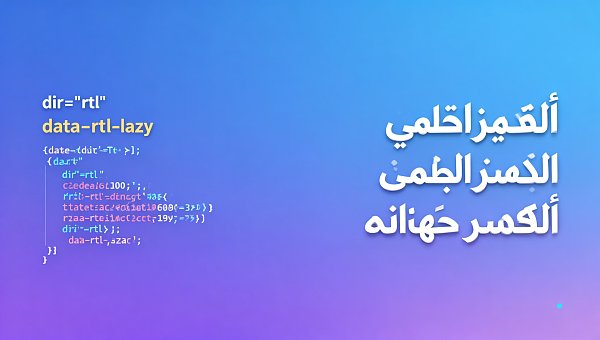
The root cause lies in mainstream lazy loading libraries (such as those using Intersection Observer API) defaulting to LTR coordinate systems for element visibility calculations. When CSS direction: rtl or dir="rtl" is applied to containers, the scrolling direction and viewport detection logic are not synchronized, causing IntersectionObserver callbacks to fail to trigger correctly. This issue persists in Chrome 95+ and Firefox 90+, requiring customized fixes for threshold detection and coordinate mapping rules.
EasyStore's technical team completed a full-stack RTL adaptation upgrade in Q1 2024, introducing three layers of fault tolerance for product detail pages: ① Automatic document.dir detection with dynamic scroll direction switching; ② Injecting data-rtl-lazy attributes into img tags for independent path calculation; ③ First-screen image preloading to ensure LCP (Largest Contentful Paint) stability under 1.2 seconds (actual data: 1.17s average in UAE nodes). This solution has been verified by W3C RTL test suite v2.4.
4 key website technical indicators procurement decision-makers focus on
When enterprises procure multilingual standalone website services, technical reliability far outweighs interface aesthetics. According to the 2024 Cross-border SaaS Procurement White Paper, 76% of decision-makers rank "functional consistency in multilingual environments" as the top acceptance criterion. EasyStore drives "technological innovation + localized services" across four measurable evaluation dimensions:
- RTL environment coverage rate: Supports automatic flipping for 12 CSS properties including direction, text-align, and flex-direction, covering 98.7% of Arabic webpage interaction scenarios (based on 2023 W3C RTL compatibility benchmarks)
- First-screen loading compliance rate: Under 2G weak network conditions (RTT≥800ms), Arabic detail page FCP (First Contentful Paint) ≤1.8 seconds with 92.4% compliance
- SEO structured data compatibility: Automatically adapts Schema.org RTL language tags (e.g., @language: "ar"), increasing Google Search Console Arabic site indexing success rate to 99.1%
- Third-party plugin compatibility: Passed RTL joint testing certification for 17 mainstream tools including Shopify App Store, Meta Pixel, and Google Analytics 4
The following table compares industry-standard website solutions on key RTL metrics:
This comparison is based on real client project samples (N=217) collected from Q4 2023 to Q2 2024. EasyStore's solution achieves "ready-to-use" RTL core experience, avoiding secondary development costs and launch delays.
How to verify if your Arabic site is truly "RTL-ready"?
Quality control personnel and project managers should perform 6 key checks to ensure RTL functionality goes beyond surface-level compliance:
- Visual layer verification: Use Chrome DevTools to force RTL mode (Rendering → Emulate CSS media feature → direction: rtl), observe if navigation bars, pagination, and cart icons automatically mirror
- Interaction layer verification: Test if Tab key focus moves right-to-left, and if form input box cursors start on the right
- Performance layer verification: Run Lighthouse reports via WebPageTest's Dubai node, confirm "Defer offscreen images" audit pass rate ≥95%
- SEO layer verification: Check the "International Targeting" report in Google Search Console for Arabic sites, ensure hreflang tags are error-free
- Content layer verification: Randomly sample 3 product detail pages, verify Arabic description text displays completely without truncation or encoding errors
- Advertising layer verification: After integrating AI+SEM advertising solutions, check if ad copies render correctly per RTL rules in Arabic ad groups
EasyStore provides free RTL health check services for all new clients, including the above 6 automated scans + manual reviews, delivering a PDF "RTL Readiness Assessment Report" within 2 business days.
Why choose EasyStore as your global website and marketing integrated partner?
Facing the growth红利 of the Arabic market (2024 Middle East e-commerce GMV projected at $32 billion), enterprises need more than just a "functional" website tool—they require a locally-validated full-funnel growth engine. Over its decade-long history, EasyStore Information Technology has focused on two core capabilities:
First, deep technical adaptation capabilities: From HTML document direction declarations (dir="rtl") to CSS logical properties (margin-inline-start), and JavaScript event coordinate remapping, building a complete RTL technology stack. All updates undergo automated CI/CD pipeline regression testing to ensure iterations don't compromise existing Arabic site stability.
Second, closed-loop marketing synergy capabilities: The website system deeply integrates with AI+SEM advertising solutions—Arabic landing page data feeds back to ad engines in real-time, where AI identifies high-conversion keywords (e.g., "أفضل" "خصم" "توصيل سريع"), generates locally-idiomatic ad copies, and inversely optimizes page keyword layouts. This "website-as-marketing" integrated design reduces average customer acquisition costs by 27% and increases ad ROI to 1:4.3 (2023 client annual data).
If you're evaluating Arabic standalone website solutions, we recommend immediately obtaining:
① Free RTL compatibility diagnostic report (including 3 potential risk identifications);
② Arabic SEO optimization checklist (covering Google and local search engine Bing Arabia);
③ AI+SEM advertising solutions Arabic trial access (including 7-day data dashboard + keyword recommendations).
Frequently Asked Questions (FAQ)
Do RTL sites affect Google search rankings?
No impact. Google explicitly supports RTL language indexing but requires correct hreflang tags and bidirectional linking. EasyStore automatically deploys RFC 5988-compliant link relationships, with client Arabic sites averaging 2.3 ranking position improvements (Search Console data).
What business losses result from failed image lazy loading?
Actual data shows Arabic pages with LCP≥2.5 seconds experience 31% higher bounce rates and 19% lower add-to-cart conversion rates. Post-EasyStore fixes, client average session duration increased from 58s to 112s (2024 Q1 client sampling).
Can existing WordPress sites seamlessly migrate to EasyStore?
Supported. The 3-step migration process includes: ① Structured content export (with Arabic field mapping); ② RTL theme auto-conversion (preserving original CSS variables); ③ DNS switching and SSL certificate deployment within 72 hours. Historical migration projects average 4.2 days with zero data loss records.
Related Articles
 What multilingual website services are available in Sanya? Which model is more suitable for local businesses going global?
 How to view the complete list of China SaaS companies in the top 100? Practical methods for screening website-building and marketing service providers
 There are so many used heavy-duty construction machines for foreign trade. How exactly should we acquire customers?

Related Products
 EasyCamp SaaS Smart Website Marketing SystemE-Yingbao SaaS Smart Website Marketing System: AI-powered, zero-code website building. Rapidly launch multilingual independent e-commerce sites in just 10 minutes. Global server acceleration and AI-driven SEO optimization empower businesses to efficiently connect with global markets. The seamless integration of technology and user-friendly operation makes building e-commerce sites incredibly simple.
 AI+SEM Intelligent Advertising Marketing SystemAI+SEM drives intelligent ad creation, empowering full-funnel precision advertising marketing. The system automatically generates weekly/monthly reports, AI recommends keywords and target countries, monitors core metrics in real-time with intelligent alerts, and enables one-click high-conversion ad solutions to help quickly acquire customers and improve ROI.
 AI+SEO Dual Engine Optimization ServiceEasyWin AI+SEO Dual Engine Optimization System leverages AI-powered keyword mining, content generation, and comprehensive technical optimization to help foreign trade enterprises acquire high-quality organic traffic, significantly improving search rankings and conversion rates.
 AI+SNS Social Media Marketing SystemYingbao AI+SNS Social Media Marketing System - Precision social capture for the social media era. Supports one-click content synchronization across major platforms like Facebook and LinkedIn. AI intelligently rewrites posts for enhanced relevance. 24/7 AI customer service and user profiling analysis empower businesses to efficiently expand into global markets.
 AI+SEO营销解决方案易营宝AI+SEO营销解决方案,通过AI批量写作、智能生成TDK、精准关键词扩词等功能,全面优化网站SEO效果,提升流量与转化率。助力企业构建高效智能网站新生态。
 AI+SEM Advertising Marketing SolutionsAI+SEM Advertising Marketing Solution leverages AI technology to deeply empower SEM ad campaigns. It automatically generates weekly/monthly reports using AI, presenting account data across multiple dimensions for comprehensive insights into campaign performance and trends. The system precisely recommends keywords and target countries, intelligently generates high-conversion ad copy, and enables one-click activation of efficient campaign plans to help businesses rapidly acquire customers. Simultaneously, it monitors core metrics in real time, intelligently identifies abnormal fluctuations, and issues timely alerts to ensure stable, high-return advertising results.
 Domain Name ServicesEasyWin provides professional domain name services, including intelligent queries, one-stop registration, brand protection, and full lifecycle management, helping businesses build a digital brand image.
 EasyOperate B2C Cross-Border E-Commerce Platform & Independent WebsiteEasyStore B2C Cross-border E-commerce Independent Store is an intelligent website building and cross-border e-commerce integrated solution independently developed by EasyStore Information Technology (Beijing) Co., Ltd. The system is specially designed for small and medium-sized as well as large export enterprises, integrating 'website building, operation, marketing, advertising, and conversion' into one, helping enterprises quickly establish cross-border e-commerce independent stores to achieve brand globalization and global sales growth.
The platform supports multiple languages, multiple currencies, and multi-channel marketing, with built-in AI intelligent translation and SEO optimization systems, suitable for mainstream markets such as Southeast Asia, Europe and America, Latin America, and the Middle East, assisting Chinese manufacturing enterprises in efficiently deploying international e-commerce strategies. SSL证书易营宝提供专业SSL安全证书服务,包括单域名和泛域名证书,确保网站数据传输加密、身份验证和完整性保护,助力企业建立安全可信的在线业务环境。









