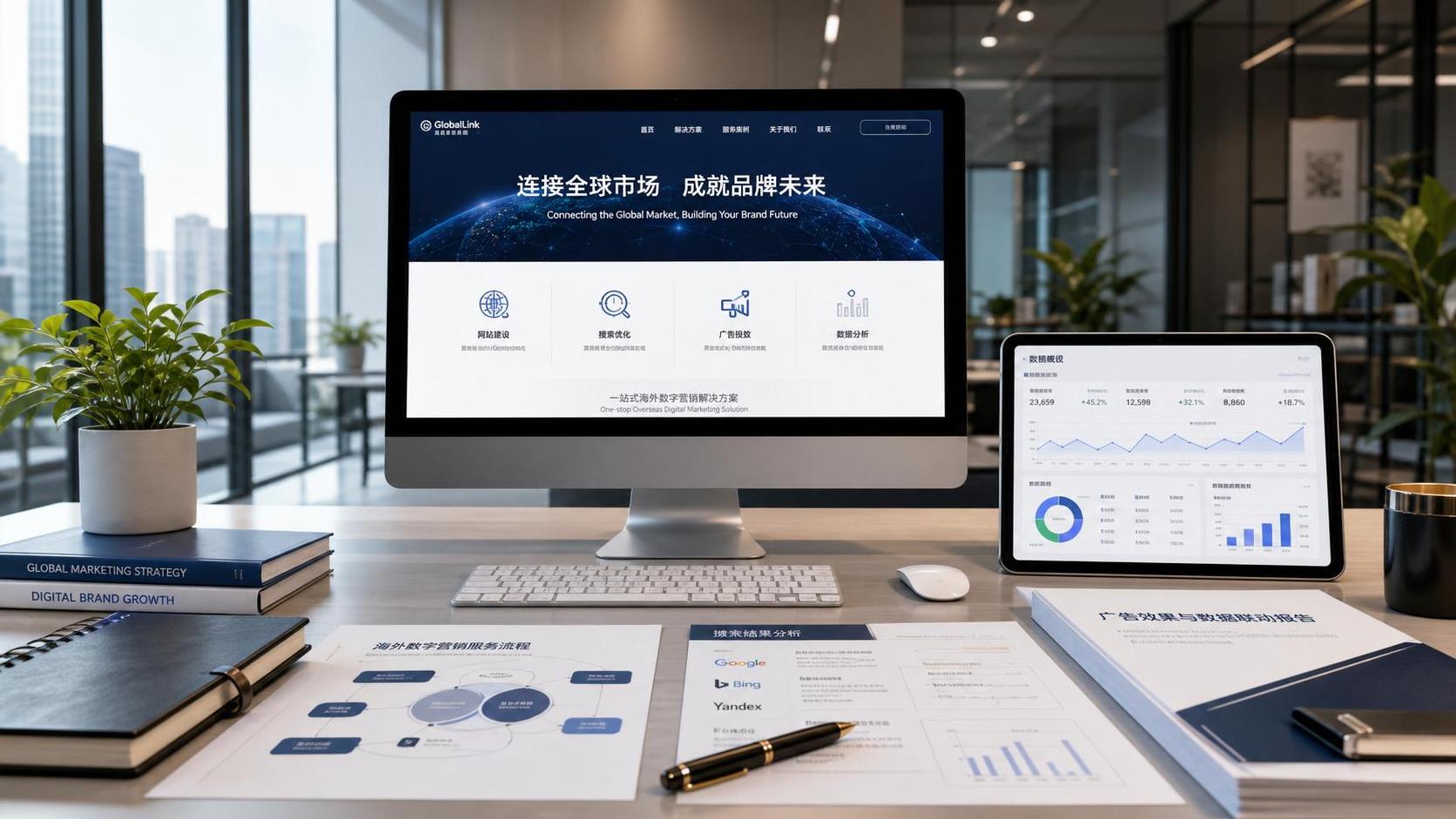
Free websites may seem low-cost, but are they suitable for corporate websites? The key factors are brand image, marketing conversion, and long-term growth needs.
To summarize: Free websites can be used as a trial, but they are not suitable as core official websites.
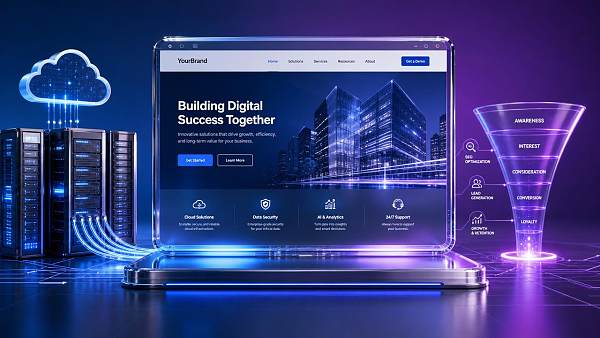
For business decision-makers, judging whether a free website is suitable for a company website should not only focus on whether the website building cost is zero, but also on whether it can support customer acquisition, build trust, conversion, and long-term operation.
If a business is only validating a temporary project or showcasing event information, a free website can indeed reduce initial costs. However, if the official website needs to handle brand searches, customer inquiries, and sales conversions, a free solution is often not reliable enough.
A company website is not just an online business card, but a crucial entry point for customers to learn about the company, assess its capabilities, and submit their needs. The biggest problem with free website creation services is usually not that they are "unusable," but rather that they are "unable to support growth."
What businesses really care about isn't whether it's free, but whether their official website can bring business results.
Many businesses choose free websites due to limited budgets or urgent launch needs. However, management ultimately focuses on whether the website can gain customer trust, be found in search results, and generate effective leads.
If an official website has a poorly designed page template, loads slowly, features prominent advertisements, and has an unprofessional domain name, even without any website building costs, it may lower potential customers' judgment of the company and affect subsequent transactions.
Especially for businesses targeting B2B clients, foreign trade clients, franchisees, or those offering high-priced services, their official websites often serve as a form of "credibility endorsement." A poor website experience directly reduces the conversion rate of the sales team.
The hidden costs of free websites are often higher than the explicit costs.
Free websites typically have limitations in terms of domain name, hosting, templates, functionality, data permissions, and brand display. While they may seem to save money initially, the cost of upgrading or migrating later could be much higher.
For example, some free websites cannot be linked to an independent domain name, or they display a platform logo at the bottom of the page. For corporate websites, this can negatively impact brand professionalism and hinder the long-term development of search assets.
Some free tools also have limited capabilities in SEO settings, page structure, loading speed, and form management. Even with content investment, businesses may struggle to consistently generate search traffic and effective inquiries.
More critically, there's the issue of data ownership. If customer browsing behavior, form leads, and page conversion data cannot be fully collected, businesses will struggle to assess the return on their marketing investment, making continuous optimization even more difficult.
Which businesses should consider using free websites?
Free websites are not entirely without value. For start-up personal projects, temporary event pages, internal showcase pages, or non-core business testing, they can serve as low-cost validation tools.
If a business does not currently have a customer acquisition goal, a basic website can meet the most basic information publishing needs by displaying the address, phone number, and a brief introduction on a single page.
However, businesses need to be clear about the boundaries: it's suitable for short-term trials, but not for long-term brand equity building. The more a business relies on search, advertising, and social media traffic, the more controllable its website system needs to be.
Which companies are advised against using free websites for their official websites?
If a business has already started advertising, doing SEO, managing social media accounts, or hopes to collect customer leads through its official website, it is not recommended to use a free website as its main site.
Because ad click costs, content production costs, and sales follow-up costs are all real expenses. If the landing page experience is poor and the conversion rate is low, so-called free website building will actually waste more of your marketing budget.
For foreign trade companies, industrial product companies, SaaS companies, and professional service organizations, the official website also involves multilingual displays, product structure, inquiry forms, case endorsements, and compliance explanations.
In international business, companies also need to pay attention to transaction risks, market compliance, and customer credit management. For further information, please refer to the exploration of risk management and prevention in international trading companies , which helps companies understand the value of their official website from the perspective of their business chain.
These five indicators should be the focus when making decisions.
First, assess brand credibility. A company's official website should at least have an independent domain name, clear navigation, real-world case studies, contact information, and a stable user experience to help customers quickly build trust.
Second, assess the marketing conversion capabilities. An official website should not only display information but also support conversion actions such as inquiry forms, online communication, downloadable materials, and appointment scheduling.
Third, examine the SEO fundamentals. Page titles, descriptions, URL structure, loading speed, mobile compatibility, and content expansion capabilities all influence whether a free website can gain organic search exposure.
Fourth, assess their data analytics capabilities. Businesses need to know where customers come from, which pages they view, and at what stage they drop off; only then can they continuously optimize their advertising and sales pitches.
Fifth, consider the costs of future expansion. The official website may add features such as multilingual support, product catalogs, blogs, membership systems, and marketing automation later on, which free platforms may not be able to smoothly support.
A better option for businesses: Shifting from website building costs to growth assets
Mature businesses shouldn't just ask "How much will it cost to build a website?", but rather "How much value will this website create for our business?" Website development should be planned in conjunction with SEO, content, advertising, and lead management.
From the perspective of integrating website and marketing services, the official website is the infrastructure of digital marketing. Page design, search engine optimization, content layout, and conversion paths should all serve the same growth goal.
Yiyingbao Information Technology specializes in intelligent website building, SEO optimization, social media marketing, and advertising because businesses need more than just a webpage; they need a sustainable customer acquisition system.
By leveraging artificial intelligence and big data capabilities, businesses can more accurately identify customer needs, optimize page content and advertising strategies, and transform their official websites from mere display windows into growth entry points.
How to create a more reliable website plan when budget is limited
If budget is limited, businesses can start with a "minimum viable website," but should not sacrifice core assets. Independent domain name, brand visuals, mobile experience, and basic SEO should be prioritized.
The sections don't need to be too complicated at the beginning. You can start by building the homepage, product services, case studies, about us, contact information, and content sections, and then iterate gradually based on the data.
At the same time, businesses should design conversion paths in advance. Each key page should answer customer questions and provide clear action points, such as inquiries, quotes, appointments, or document downloads.
This approach controls initial investment while preserving room for future growth. Compared to completely free temporary solutions, this kind of planning is more suitable for long-term business operations.
In conclusion: Free websites aren't unusable; it depends on what task they serve.
Free websites are suitable for low-risk, short-term, and non-core scenarios, but not for carrying a company's long-term brand, customer acquisition, and conversion goals. The value of a company's official website should be measured by business results.
For decision-makers, the most important thing is not to save on website building costs, but to avoid losing customer trust and marketing opportunities due to an unprofessional, uncontrollable, and unoptimizable website.
If an official website is to become an integral part of a company's growth, it should be built using a more stable, scalable, and optimizable approach, ensuring that the website truly serves the brand image, search traffic, and sales conversion.