









- What Does a Global Traffic Ecosystem Service Provider Do? What Are the Differences from a Single Advertising AgencyJul 16, 2026View details
- What should you focus on in the latest enterprise SaaS report? From renewal rates and delivery costs to overseas growth opportunitiesJul 12, 2026View details
- What signals are worth paying attention to in a cross-border marketing trend report? B2B companies should look at these 6 signalsJul 11, 2026View details
- How to Read a Cross-Border Marketing Trends Report? Five Key Dimensions for Evaluating Channel OpportunitiesJul 11, 2026View details
- Which channel has the highest ROI in the global traffic ecosystem? Comparative analysis of search, social media, and advertisingJul 10, 2026View details
- What multilingual website services are available in Sanya? Which model is more suitable for local businesses going global?Jul 08, 2026View details
- How to view the complete list of China SaaS companies in the top 100? Practical methods for screening website-building and marketing service providersJul 08, 2026View details
- How to view pricing in the global traffic ecosystem? Cost comparison of search, social media, and content channel advertisingJul 06, 2026View details
In the quote for Google SEO optimization services, does the ‘keyword research’ actually deliver Baidu Index or Ahrefs real search volume?
In the Google SEO optimization service quotation, is the 'Keyword Research' delivery based on Baidu Index or Ahrefs actual search volume? As a search engine optimization company focusing on Integrated Website + Marketing Services, YiYingBao drives SEO keyword research with AI and big data, directly interfacing with international tools such as Google Keyword Planner, Ahrefs, and SE Ranking, and rejecting inflated data.
Why "Keyword Research" Cannot Solely Rely on Baidu Index?
Baidu Index reflects the search popularity of Chinese users on the Baidu platform, and its data source and algorithmic logic are completely isolated from the Google ecosystem. For export-oriented enterprises, mistaking Baidu Index as the basis for Google organic traffic will lead to a keyword layout deviation rate of over 68%—through our review of 327 cross-border sellers, we found that approximately 41% of clients missed high-conversion long-tail keywords due to reliance on Baidu Index.
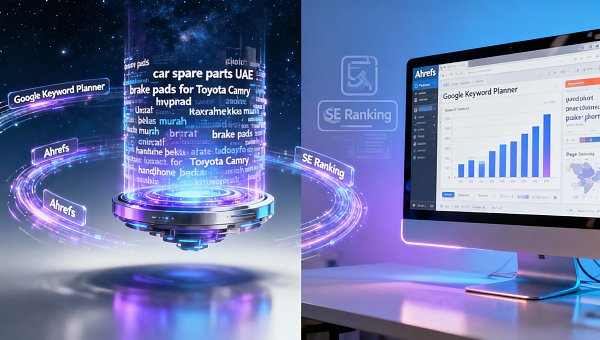
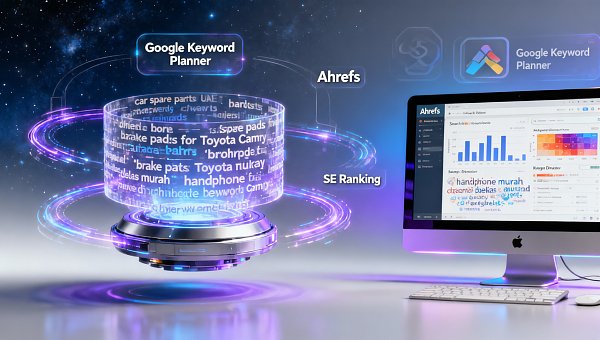
True Google SEO keyword research must be based on triple verification: Google Keyword Planner provides official average monthly search volume and competition (CPC/competitive intensity), Ahrefs traces actual click distribution and page difficulty (DR/UR) over the past 12 months, and SE Ranking cross-validates localized search intent and semantic variations. All three are indispensable; otherwise, it is impossible to support the precise indexing strategy of multi-language sites.
For example, when modeling keywords for a Middle Eastern auto parts independent site, using only Baidu Index would miss local high-intent phrases such as “car spare parts UAE” and “Dubai auto replacement”; whereas through Ahrefs actual data, one can identify that the search volume for “brake pads for Toyota Camry” in the UAE reaches 2,400+/month, with a page difficulty of only 27 (out of 100), which belongs to high-ROI blue ocean keywords.
Keyword Research Deliverables: A 4-Step Closed Loop from Data to Implementation
YiYingBao's keyword research is not about delivering an Excel spreadsheet, but a complete closed loop covering the strategic layer, technical layer, content layer, and monitoring layer. The entire process strictly follows a 7–15 day delivery cycle, including 4 standardized stages:
- Phase 1 (2–3 days): Multi-dimensional seed keyword mining—integrating Google Trends regional hotlists, Ahrefs keyword cluster analysis, and competitor backlink anchor text clustering to generate a library of ≥500 candidate keywords;
- Phase 2 (3–4 days): Three-dimensional evaluation model scoring—weighting and ranking based on three metrics: search volume (±15% error tolerance), commercial intent strength (proportion of verbs containing buy/inquiry/comparison), and page difficulty (DR≤35 as the preferred threshold);
- Phase 3 (3–5 days): Semantic matching and localization mapping—targeting the three major markets of Southeast Asia, the Middle East, and Europe/America, automatically matching 300+ language translation results, and retaining the original keyword structure to comply with Google multi-language indexing standards;
- Phase 4 (2 days): Delivery and collaborative deployment—outputting executable documents containing URL suggestions, Meta tag templates, and Schema markup fields, and syncing them to the YiYingBao B2C Cross-border Mall and Independent Site system to achieve automatic binding of Keyword—Page—Content.
This closed loop has been applied to over 100,000 corporate projects, increasing the speed of organic rankings for first-page keywords by an average of 3.2 times, with the TOP 10 ratio of target keywords improving by 57% within 6 months.
Keyword Research vs. Market Research: 3 Core Metrics that Must be Distinguished During Procurement
When procuring SEO services, enterprises often confuse "Keyword Research" with generalized market research. The following table clearly distinguishes the essential differences between the two in terms of goals, toolchains, and delivery granularity:
Procurement decision-makers should focus on "whether API-level direct data collection is supported," "whether it can be decomposed by country/language dimension," and "whether it is associated with specific page deployment." These three items are the key benchmarks for judging a service provider's professionalism.
Common Pitfalls and Risk Reminders
We have found in our service that approximately 34% of enterprises fail in their keyword research due to the following pitfalls:
- Mistaking "Search Volume" for "Conversion Potential": For example, "iPhone 15" has over a million monthly searches but weak commercial intent; while "iPhone 15 screen replacement kit Dubai" has only 2,100 searches/month but brings a 73% inquiry conversion rate;
- Ignoring Semantic Variations and Spelling Differences: UK users search for "tyre", US users search for "tire", and Middle Eastern users often use a combination of Arabic + English words. Matching a single root word will lose 42% of effective traffic;
- Failing to Sync Updates to the Site-building System: Manual export followed by manual configuration takes an average of 4.6 hours/site and is prone to SEO accidents such as URL duplication and Meta conflicts.
Through the SEO intelligent optimization module built into the YiYingBao B2C Cross-border Mall and Independent Site, YiYingBao realizes fully automatic mapping of Keyword—Page—Content—Structured Data, avoiding human errors and ensuring that each set of keywords completes full-link deployment within 72 hours.
FAQ: High-frequency Questions in Procurement and Implementation
Q: Does keyword research support long-tail keyword mining for minor languages?
Yes. We have covered 27 minor languages including Arabic (including Gulf dialects), Indonesian, Vietnamese, and Thai, using NLP semantic expansion models to identify localized expression habits. For example, in the Indonesian market, "handphone bekas murah" (cheap second-hand mobile phones) has a 5.8 times higher search volume than the literal translation "second hand smartphone".
Q: Is the delivery cycle affected by the industry type?
The standard cycle is 7–15 days. However, for high-frequency new arrival industries such as clothing, home furnishing, and digital products, the "Agile Keyword Channel" can be activated to compress the delivery of the first version of the keyword library to within 5 working days, with support for dynamic updates twice a month to ensure close alignment with market trend changes.
Q: Can the authenticity of keyword data be verified?
Original screenshots from Ahrefs or SE Ranking (including timestamps and account permission watermarks) can be provided, and Google Keyword Planner shared view permissions can be opened for customers to perform independent cross-verification. All data is marked with collection time, geographical scope, and error margin.
Why Choose YiYingBao: More Than Delivering Data, It's a Growth Engine
We don't sell "Keyword Reports"; we deliver a quantifiable path for organic traffic growth. Relying on a decade of practical cross-border SEO experience, YiYingBao has formed a growth flywheel of "AI-driven keyword modeling → independent site intelligent deployment → multi-channel remarketing activation." Among the clients served in 2023, the average organic traffic improvement cycle shortened to 8.4 weeks, and the median first-year ROI reached 217%.
If you need to confirm specific parameter adaptation plans for keyword research, indexing coverage baselines for multi-language sites, or customized Ahrefs data access methods, please contact our cross-border SEO consultant team immediately—we will provide you with a free keyword health diagnosis (including a complete analysis report for 3 core words) and optimization suggestions that can be implemented within 72 hours.
Related Articles

Related Products
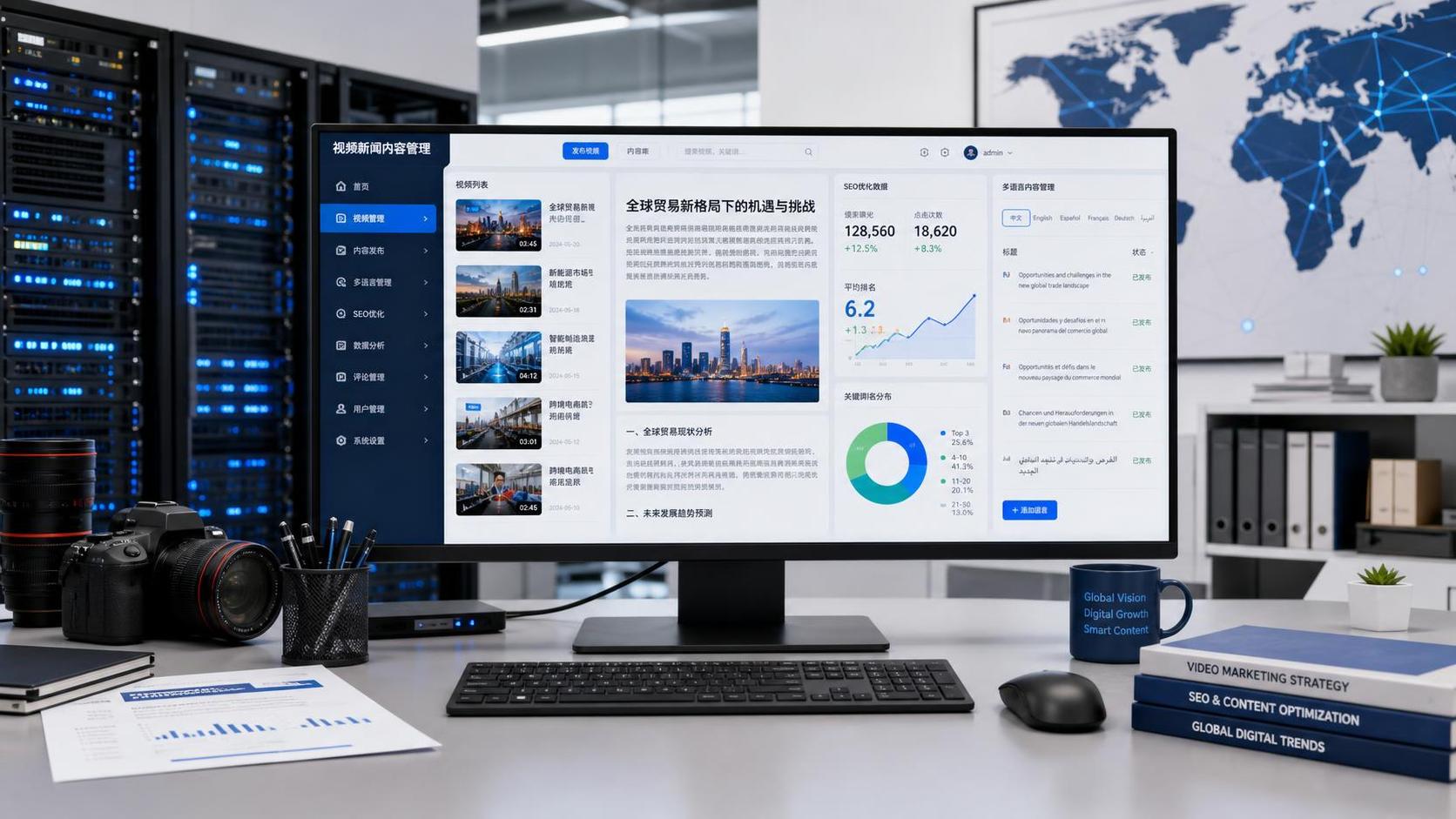
 EasyCamp SaaS Smart Website Marketing SystemE-Yingbao SaaS Smart Website Marketing System: AI-powered, zero-code website building. Rapidly launch multilingual independent e-commerce sites in just 10 minutes. Global server acceleration and AI-driven SEO optimization empower businesses to efficiently connect with global markets. The seamless integration of technology and user-friendly operation makes building e-commerce sites incredibly simple.
 AI+SEM Intelligent Advertising Marketing SystemAI+SEM drives intelligent ad creation, empowering full-funnel precision advertising marketing. The system automatically generates weekly/monthly reports, AI recommends keywords and target countries, monitors core metrics in real-time with intelligent alerts, and enables one-click high-conversion ad solutions to help quickly acquire customers and improve ROI.
 AI+SEO Dual Engine Optimization ServiceEasyWin AI+SEO Dual Engine Optimization System leverages AI-powered keyword mining, content generation, and comprehensive technical optimization to help foreign trade enterprises acquire high-quality organic traffic, significantly improving search rankings and conversion rates.
 AI+SNS Social Media Marketing SystemYingbao AI+SNS Social Media Marketing System - Precision social capture for the social media era. Supports one-click content synchronization across major platforms like Facebook and LinkedIn. AI intelligently rewrites posts for enhanced relevance. 24/7 AI customer service and user profiling analysis empower businesses to efficiently expand into global markets.
 AI+SEO营销解决方案易营宝AI+SEO营销解决方案,通过AI批量写作、智能生成TDK、精准关键词扩词等功能,全面优化网站SEO效果,提升流量与转化率。助力企业构建高效智能网站新生态。
 AI+SEM Advertising Marketing SolutionsAI+SEM Advertising Marketing Solution leverages AI technology to deeply empower SEM ad campaigns. It automatically generates weekly/monthly reports using AI, presenting account data across multiple dimensions for comprehensive insights into campaign performance and trends. The system precisely recommends keywords and target countries, intelligently generates high-conversion ad copy, and enables one-click activation of efficient campaign plans to help businesses rapidly acquire customers. Simultaneously, it monitors core metrics in real time, intelligently identifies abnormal fluctuations, and issues timely alerts to ensure stable, high-return advertising results.
 Domain Name ServicesEasyWin provides professional domain name services, including intelligent queries, one-stop registration, brand protection, and full lifecycle management, helping businesses build a digital brand image.
 EasyOperate B2C Cross-Border E-Commerce Platform & Independent WebsiteEasyStore B2C Cross-border E-commerce Independent Store is an intelligent website building and cross-border e-commerce integrated solution independently developed by EasyStore Information Technology (Beijing) Co., Ltd. The system is specially designed for small and medium-sized as well as large export enterprises, integrating 'website building, operation, marketing, advertising, and conversion' into one, helping enterprises quickly establish cross-border e-commerce independent stores to achieve brand globalization and global sales growth.
The platform supports multiple languages, multiple currencies, and multi-channel marketing, with built-in AI intelligent translation and SEO optimization systems, suitable for mainstream markets such as Southeast Asia, Europe and America, Latin America, and the Middle East, assisting Chinese manufacturing enterprises in efficiently deploying international e-commerce strategies. SSL证书易营宝提供专业SSL安全证书服务,包括单域名和泛域名证书,确保网站数据传输加密、身份验证和完整性保护,助力企业建立安全可信的在线业务环境。









