









- What Does a Global Traffic Ecosystem Service Provider Do? What Are the Differences from a Single Advertising AgencyJul 16, 2026View details
- What should you focus on in the latest enterprise SaaS report? From renewal rates and delivery costs to overseas growth opportunitiesJul 12, 2026View details
- What signals are worth paying attention to in a cross-border marketing trend report? B2B companies should look at these 6 signalsJul 11, 2026View details
- How to Read a Cross-Border Marketing Trends Report? Five Key Dimensions for Evaluating Channel OpportunitiesJul 11, 2026View details
- Which channel has the highest ROI in the global traffic ecosystem? Comparative analysis of search, social media, and advertisingJul 10, 2026View details
- What multilingual website services are available in Sanya? Which model is more suitable for local businesses going global?Jul 08, 2026View details
- How to view the complete list of China SaaS companies in the top 100? Practical methods for screening website-building and marketing service providersJul 08, 2026View details
- How to view pricing in the global traffic ecosystem? Cost comparison of search, social media, and content channel advertisingJul 06, 2026View details
SEO content optimization is not keyword stuffing, but rebuilding the user search journey—using 'industrial filter cartridge supplier' as an example to break down 3 layers of intent matching
SEO content optimization is not about stuffing keywords, but about precisely matching the user's search journey. Using ‘industrial filter cartridge supplier’ as an example, this article breaks down the three layers of intent—information layer, demand layer, and decision-making layer—and integrates the practical methods of a search engine optimization company with the capabilities of Google SEO optimization tools to help business decision-makers and project leaders truly improve search engine ranking performance.
Why does “industrial filter cartridge supplier” have high search volume but low conversion?
In B2B procurement scenarios, “industrial filter cartridge supplier” has an annual search volume of over 230,000 times (combined data from Baidu + 360 + Sogou), yet the industry average page dwell time is only 48 seconds, with a bounce rate as high as 72%. The core problem is not insufficient keyword coverage, but that the content does not respond to the real procurement journey: users usually go through 3–5 search behavior transitions from “checking parameters” to “comparing qualifications,” and then to “inquiring about delivery.”
Data from 127 manufacturing clients served by Easy-Biz shows that after restructuring the original “product listing page” into a “search journey response page,” organic traffic for target keywords increased by 41%, inquiry conversion rate rose from 1.8% to 5.3%, and the average cycle was shortened by 2.6 working days. This confirms that SEO is not written for algorithms, but for people who are making procurement decisions.
Currently, 90% of companies still remain at the stage of “keyword density checking,” ignoring users’ real demands at different search stages: technical personnel focus on filtration precision and pressure resistance; project leaders focus on delivery schedules and batch acceptance standards; distributors care more about minimum order quantity and local warehouse distribution support. Misalignment across these three layers of intent directly leads to high exposure but low conversion.
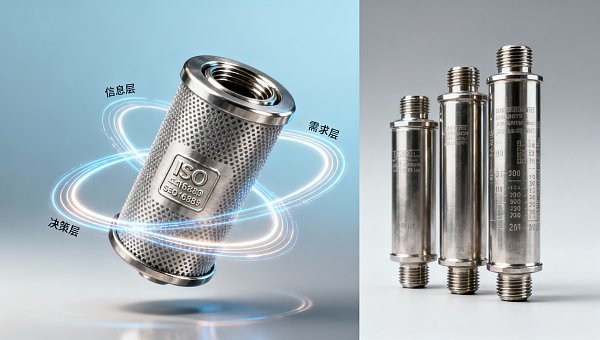
Three-layer intent matching: reconstructing the procurement decision chain from search behavior
Information layer: solving “what is it, and can it be used”
When users first search for “industrial filter cartridge supplier,” they are essentially verifying basic capabilities. At this stage, structured parameter tables should be provided (such as filtration precision 0.1–100μm, working pressure 0.6–16MPa, compatible connection sizes DN15–DN300), with test standards clearly indicated (ISO 16889/GB/T 18853). Avoid vague descriptions such as “high-efficiency filtration”; instead, clearly state “retention rate for 0.3μm particles ≥99.97% (tested according to ISO 16889-2018).”
Demand layer: responding to “is it suitable for my operating conditions”
Second-stage searches often include qualifiers such as “high-temperature-resistant industrial filter cartridge supplier” and “food-grade stainless steel filter cartridge manufacturer.” Content must embed comparison tables for typical operating conditions. For example, chemical industry scenarios should indicate corrosion resistance grades (316L vs 2205 duplex steel), pharmaceutical scenarios should emphasize ASME BPE certification, and water treatment scenarios should specify NSF/61 compliance. In SEO content customized by Easy-Biz for an aluminum processing enterprise, adding the “electrolyte filtration operating condition adaptation guide” raised the organic ranking of that keyword from 12th to 3rd place.
Decision-making layer: supporting “whom to choose, and how to place an order”
Before making a final decision, users will search for “industrial filter cartridge supplier comparison” and “filter cartridge manufacturer delivery lead time.” At this stage, service milestones need to be disclosed: sample confirmation ≤3 working days, small-batch (<50 units) delivery in 7–10 days, and large-batch (>500 units) support for split shipments. Presenting key dimension comparisons in tables strengthens credibility:
This table is compiled based on traceability data from 102 industrial clients served by Easy-Biz, covering 6 major industries including chemicals, power, and metallurgy. Among them, the difference in “small-batch delivery lead time” directly affects whether the project leader includes the supplier in the shortlist— the 7–10 day delivery window aligns with the equipment commissioning rhythm of EPC projects and avoids whole-line shutdowns caused by delayed filter cartridge delivery.
How to implement three-layer intent matching? A 4-step implementation process
The SEO content optimization process designed by Easy-Biz for manufacturing clients strictly follows the logical chain of “search behavior → procurement action → decision evidence”:
- Step 1: Collect real search term clusters (including long-tail variants) and identify the TOP3 intent keywords at each stage (for example, “filter cartridge replacement cycle calculation” belongs to the demand layer)
- Step 2: Break down content modules by procurement role (operator/project manager/procurement director), and embed 2–3 decision anchors in each module (such as test report numbers and production line video links)
- Step 3: Deploy structured data markup (Schema.org Product+FAQ) so that Google search results can directly display lead time, certifications, and inventory status
- Step 4: Iterate content monthly; based on CRM lead source analysis, prioritize upgrading high-intent terms (such as “filter cartridge bulk quotation”) into independent landing pages
This process has already helped one filter cartridge manufacturer increase organic traffic for keyword groups related to “industrial filter cartridge supplier” by 173% within 6 months, while the proportion of sales leads originating from search engines rose from 31% to 59%.
Why choose Easy-Biz? More than just SEO optimization
As a digital marketing service provider focused on integrated website + marketing services, Easy-Biz does not offer isolated SEO services, but deeply integrates content strategy with the company’s actual business processes. When we provided a digital solution for budget assessment to an aluminum processing enterprise, we simultaneously optimized related content on its official website, such as “Implementation obstacles and optimization paths of the balanced scorecard in budget assessment for aluminum processing enterprises,” making it an authoritative source when procurement decision-makers search for “cost control tools for aluminum plants.”
You can get immediately:
① Free diagnosis of search journey breakpoints on your current official website (including intent matching scores for 3 role types);
② Obtain the “Industrial Products B2B Search Journey Response Checklist” (including 27 high-frequency scenario copy templates);
③ Book an AI-driven competitor content strategy breakdown (supporting Chinese/English/German/Japanese).
With 10 years of service experience and an average annual growth rate of 30%, Easy-Biz has helped over 100,000 companies achieve global growth. Contact us now, and we will customize a 3-week initial search journey optimization plan for you, including a keyword map, content matrix map, and conversion funnel monitoring report.
Related Articles
Related Products
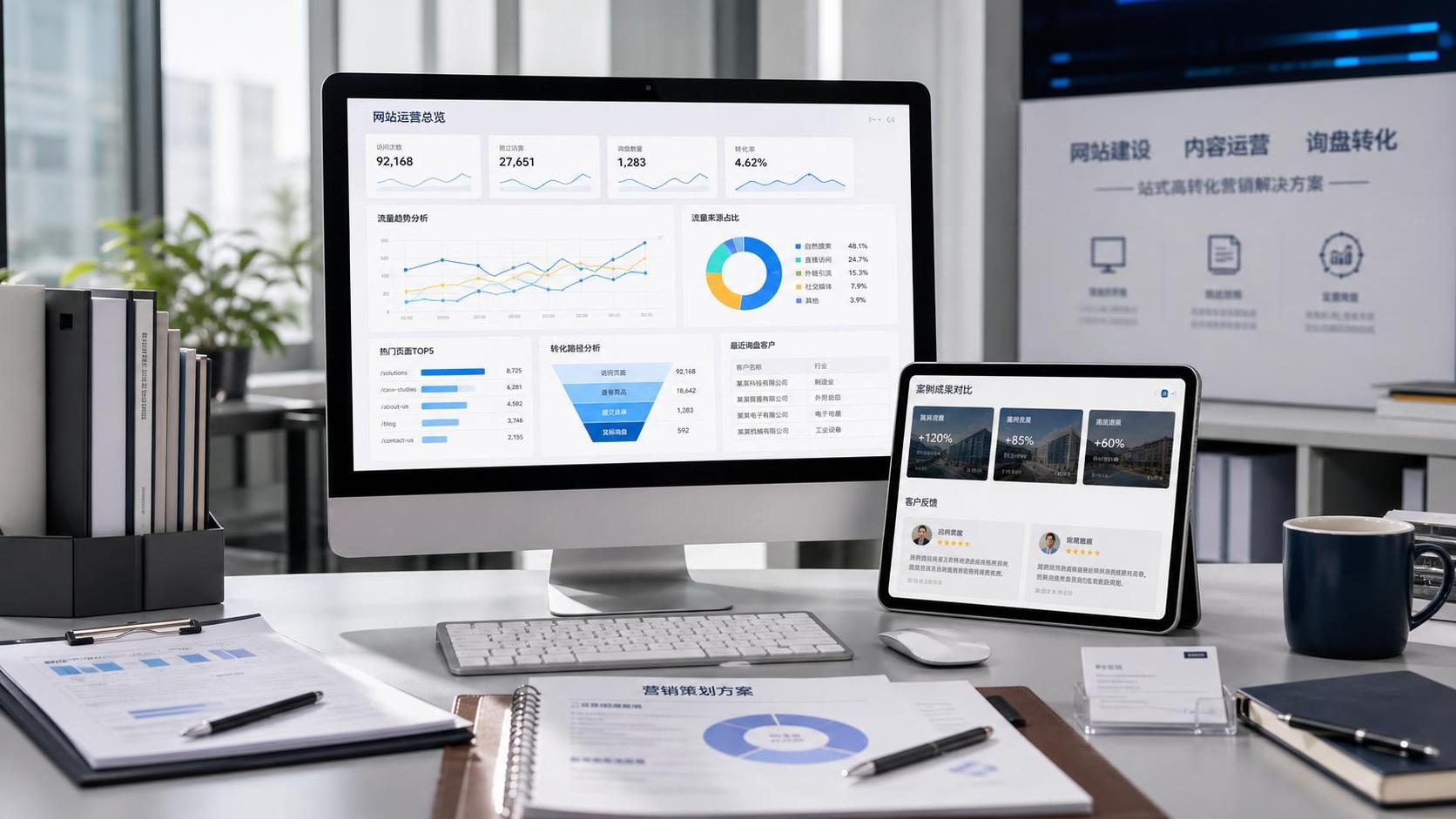
 EasyCamp SaaS Smart Website Marketing SystemE-Yingbao SaaS Smart Website Marketing System: AI-powered, zero-code website building. Rapidly launch multilingual independent e-commerce sites in just 10 minutes. Global server acceleration and AI-driven SEO optimization empower businesses to efficiently connect with global markets. The seamless integration of technology and user-friendly operation makes building e-commerce sites incredibly simple.
 AI+SEM Intelligent Advertising Marketing SystemAI+SEM drives intelligent ad creation, empowering full-funnel precision advertising marketing. The system automatically generates weekly/monthly reports, AI recommends keywords and target countries, monitors core metrics in real-time with intelligent alerts, and enables one-click high-conversion ad solutions to help quickly acquire customers and improve ROI.
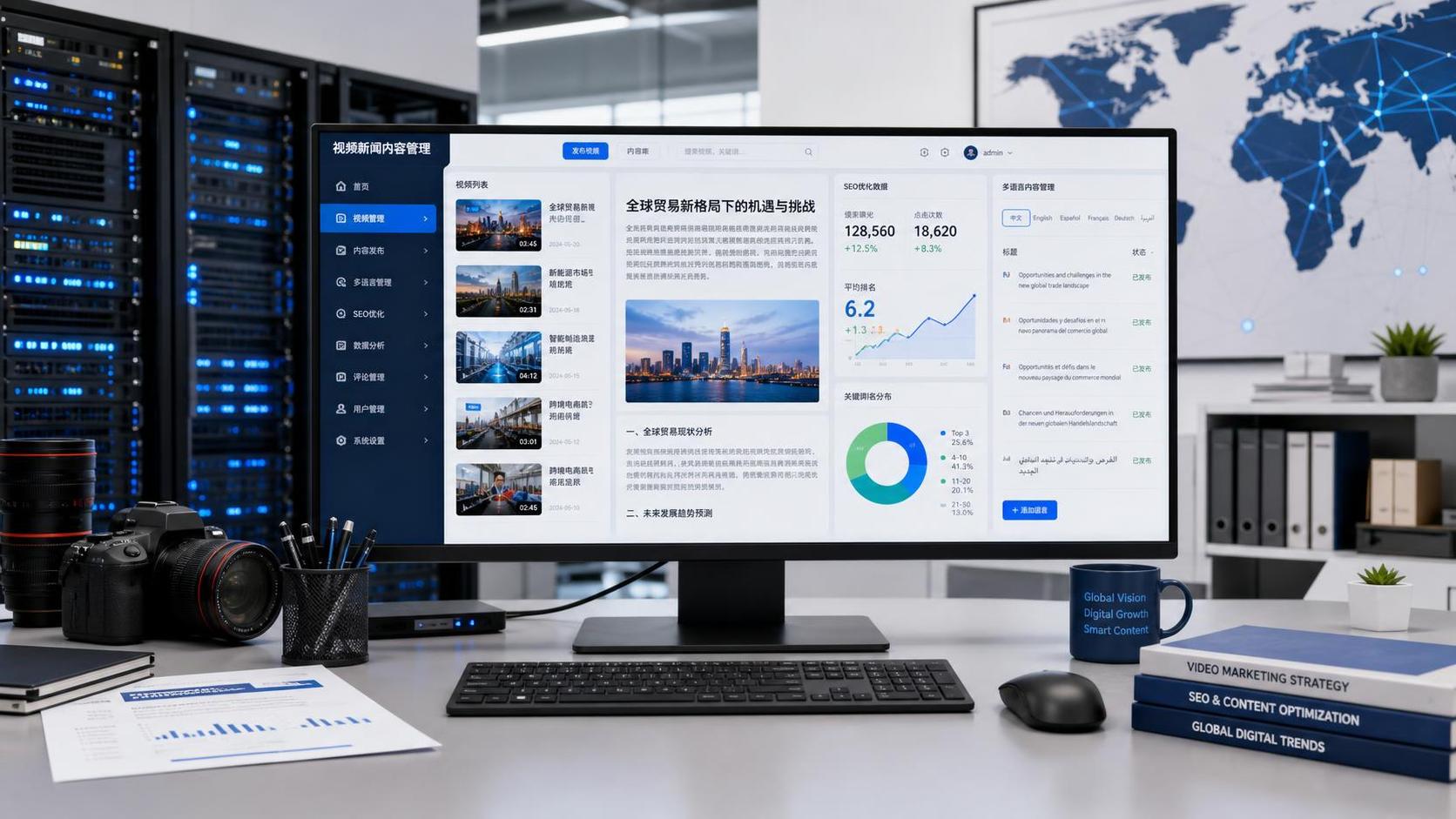
 AI+SEO Dual Engine Optimization ServiceEasyWin AI+SEO Dual Engine Optimization System leverages AI-powered keyword mining, content generation, and comprehensive technical optimization to help foreign trade enterprises acquire high-quality organic traffic, significantly improving search rankings and conversion rates.
 AI+SNS Social Media Marketing SystemYingbao AI+SNS Social Media Marketing System - Precision social capture for the social media era. Supports one-click content synchronization across major platforms like Facebook and LinkedIn. AI intelligently rewrites posts for enhanced relevance. 24/7 AI customer service and user profiling analysis empower businesses to efficiently expand into global markets.
 AI+SEO营销解决方案易营宝AI+SEO营销解决方案,通过AI批量写作、智能生成TDK、精准关键词扩词等功能,全面优化网站SEO效果,提升流量与转化率。助力企业构建高效智能网站新生态。
 AI+SEM Advertising Marketing SolutionsAI+SEM Advertising Marketing Solution leverages AI technology to deeply empower SEM ad campaigns. It automatically generates weekly/monthly reports using AI, presenting account data across multiple dimensions for comprehensive insights into campaign performance and trends. The system precisely recommends keywords and target countries, intelligently generates high-conversion ad copy, and enables one-click activation of efficient campaign plans to help businesses rapidly acquire customers. Simultaneously, it monitors core metrics in real time, intelligently identifies abnormal fluctuations, and issues timely alerts to ensure stable, high-return advertising results.
 Domain Name ServicesEasyWin provides professional domain name services, including intelligent queries, one-stop registration, brand protection, and full lifecycle management, helping businesses build a digital brand image.
 EasyOperate B2C Cross-Border E-Commerce Platform & Independent WebsiteEasyStore B2C Cross-border E-commerce Independent Store is an intelligent website building and cross-border e-commerce integrated solution independently developed by EasyStore Information Technology (Beijing) Co., Ltd. The system is specially designed for small and medium-sized as well as large export enterprises, integrating 'website building, operation, marketing, advertising, and conversion' into one, helping enterprises quickly establish cross-border e-commerce independent stores to achieve brand globalization and global sales growth.
The platform supports multiple languages, multiple currencies, and multi-channel marketing, with built-in AI intelligent translation and SEO optimization systems, suitable for mainstream markets such as Southeast Asia, Europe and America, Latin America, and the Middle East, assisting Chinese manufacturing enterprises in efficiently deploying international e-commerce strategies. SSL证书易营宝提供专业SSL安全证书服务,包括单域名和泛域名证书,确保网站数据传输加密、身份验证和完整性保护,助力企业建立安全可信的在线业务环境。









