









- What Does a Global Traffic Ecosystem Service Provider Do? What Are the Differences from a Single Advertising AgencyJul 16, 2026View details
- What should you focus on in the latest enterprise SaaS report? From renewal rates and delivery costs to overseas growth opportunitiesJul 12, 2026View details
- What signals are worth paying attention to in a cross-border marketing trend report? B2B companies should look at these 6 signalsJul 11, 2026View details
- How to Read a Cross-Border Marketing Trends Report? Five Key Dimensions for Evaluating Channel OpportunitiesJul 11, 2026View details
- Which channel has the highest ROI in the global traffic ecosystem? Comparative analysis of search, social media, and advertisingJul 10, 2026View details
- What multilingual website services are available in Sanya? Which model is more suitable for local businesses going global?Jul 08, 2026View details
What compliance configurations does a foreign trade website need? An analysis of Privacy Policy, Cookie, and SSL
What compliance configurations does a foreign trade website need? From privacy policies and Cookie to SSL, the security and quality control teams need to check these in advance to reduce overseas compliance risks.
What compliance configurations does a foreign trade website need: Why use a checklist

A foreign trade website is not just a display page.
It connects inquiries, advertising, data tracking, payments, and customer information.
If compliance configurations are missing, the consequences may be as minor as reduced conversions or as serious as complaints, account suspension, or legal risks.
A checklist-based review can keep website building, SEO, ad placement, and data operations aligned.
When serving companies going global, EasyYingbao usually treats compliance as a prerequisite before website launch.
Core checklist: privacy policy, Cookie, and SSL
- Confirm that the privacy policy covers the purpose of collection, data types, retention period, third-party sharing, user rights, and contact methods, instead of simply copying a generic template.
- Set up a Cookie banner, distinguish between necessary, analytics, advertising, and functional Cookie, and provide options to reject, consent, and manage preferences.
- Enable an SSL certificate, enforce HTTPS access across the entire site, and check whether forms, images, and scripts contain mixed content to prevent browser security warnings.
- Review form fields and collect only the information necessary to complete an inquiry, while indicating the purpose of the data and the legal basis for processing near the submit button.
- Check third-party tools, such as analytics code, online customer service, remarketing pixels, and email subscription plugins, to ensure they are consistent with the descriptions in the privacy policy.
- Establish logging and backup mechanisms, restrict backend permissions, and regularly update the system, themes, and plugins to reduce the risk of information leakage and malicious tampering.
The above checklist is the foundation for determining what compliance configurations a foreign trade website needs.
It can also help the marketing team explain data sources and improve the stability of advertising accounts.
Privacy policy: do not just write “we value privacy”
A privacy policy should be understandable to customers.
It is recommended to write it according to business processes rather than stacking legal terms.
For example, an inquiry form may collect name, email, company, and requirement details.
This information is used for quotations, communication, after-sales service, and customer relationship management.
If the website integrates email marketing, the unsubscribe method should also be explained.
When targeting users in the EU, the UK, or California, it is also necessary to add explanations of rights such as access, correction, deletion, and restriction of processing.
Cookie configuration: make tracking lawful and controllable

Cookie is directly related to SEO analysis, ad attribution, and remarketing.
Therefore, when considering what compliance configurations a foreign trade website needs, Cookie management must be reviewed separately.
- Label necessary Cookie to preserve functions such as login, security, and fraud prevention, so the website remains accessible even if users reject non-essential Cookie.
- Delay loading analytics and advertising scripts, and do not trigger tracking code before user consent, reducing data compliance disputes and platform review risks.
- Provide an entry for preference changes, allow users to withdraw consent at any time, and retain consent records for later audits and customer service explanations.
If the website runs search ads or social media ads, Cookie notices are even more indispensable.
Otherwise, conversion data may become inaccurate, and ad optimization will also be affected.
SSL and security configuration: trust starts with access
An SSL certificate is a basic configuration for a foreign trade website.
Without HTTPS, the browser will display “Not secure”.
This will directly reduce the submission rate of inquiry forms.
During configuration, check the certificate validity period, automatic renewal, redirect rules, and old links.
Also confirm that backend login, file upload, payment redirects, and email subscription pages all use HTTPS.
For SEO, HTTPS is also one of the signals search engines use to judge website credibility.
Additional configurations for different scenarios
B2B inquiry website
Focus on checking forms, email notifications, and CRM integration.
Each field should have a clear business purpose.
If drawings or attachments are uploaded, file formats should be restricted and the file handling method should be indicated.
Independent e-commerce website scenario
In addition to the privacy policy, return and exchange policies, shipping, payment security, and terms and conditions should also be improved.
The checkout page should explain fees, taxes, logistics timelines, and after-sales contacts.
Advertising landing page scenario
Landing pages are often launched quickly and are the most likely to overlook compliance.
The privacy policy link, Cookie banner, brand entity, and contact information must be visible.
Common omissions and risk reminders
Overlooking third-party plugins is a common risk.
Many live chat, heatmap, and popup tools collect visitor behavior.
If the policy does not disclose this, it creates a compliance gap.
Overlooking multilingual consistency can also affect trust.
The policy content on English, German, and Spanish pages should remain consistent in core aspects.
Overlooking the data deletion process will increase customer service pressure.
When customers request deletion of their information, the backend, email, and CRM should all be processed in sync.
Practical implementation advice: do this before going live
- Create a compliance register to record privacy policy versions, Cookie categories, SSL certificate validity periods, plugin lists, and responsible persons.
- Conduct pre-launch testing by simulating access from different regions and checking popups, redirects, form submissions, and the triggering status of tracking scripts.
- Review configurations regularly, checking plugin updates, advertising code, policy links, and certificate renewal status once every quarter.
In intelligent website building, SEO optimization, social media marketing, and advertising, EasyYingbao embeds compliance checks into the delivery process.
This can both improve website credibility and reduce later rework.
Summary and action guide
What compliance configurations does a foreign trade website need? The core is not just writing a few pages of statements.
The key is to ensure that the privacy policy, Cookie, SSL, forms, plugins, and data processes are truly consistent.
It is recommended to first complete a full-site scan, then fix high-risk items according to the checklist.
If website building and marketing campaigns are being advanced at the same time, it is even more important to confirm what compliance configurations a foreign trade website needs before launch, so that growth plans are not slowed down by underlying risks.
Related Articles
 Japan JIS T 2304:2026 takes effect, introducing new AI content audit requirements for standalone medical device websites
 What Core Capabilities Should You Look for in SaaS Website Builder Security Backups?
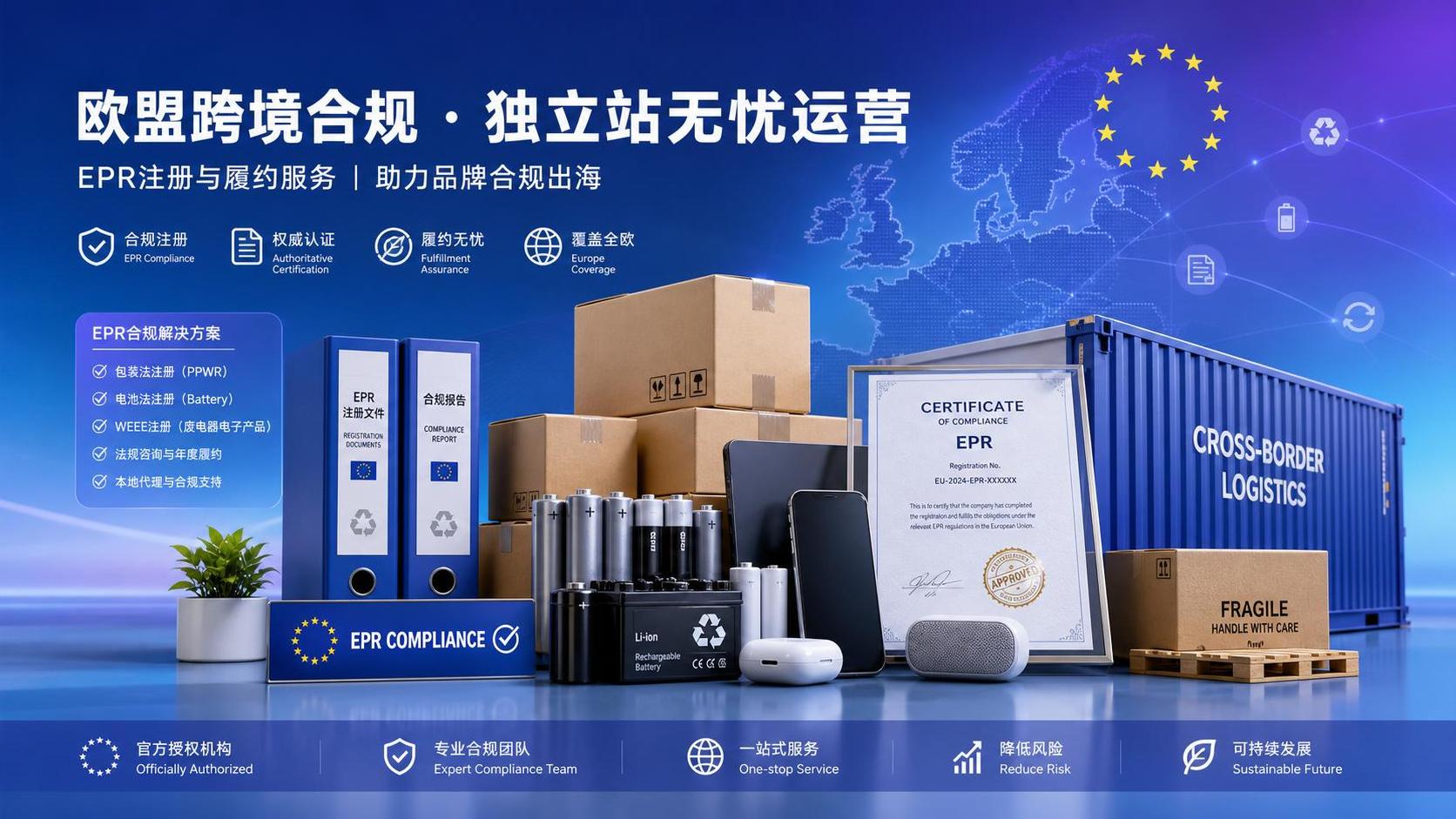
 New EU EPR regulations take effect on the 19th, and independent website sellers must complete registration


Related Products
 EasyCamp SaaS Smart Website Marketing SystemE-Yingbao SaaS Smart Website Marketing System: AI-powered, zero-code website building. Rapidly launch multilingual independent e-commerce sites in just 10 minutes. Global server acceleration and AI-driven SEO optimization empower businesses to efficiently connect with global markets. The seamless integration of technology and user-friendly operation makes building e-commerce sites incredibly simple.
 AI+SEM Intelligent Advertising Marketing SystemAI+SEM drives intelligent ad creation, empowering full-funnel precision advertising marketing. The system automatically generates weekly/monthly reports, AI recommends keywords and target countries, monitors core metrics in real-time with intelligent alerts, and enables one-click high-conversion ad solutions to help quickly acquire customers and improve ROI.
 AI+SEO Dual Engine Optimization ServiceEasyWin AI+SEO Dual Engine Optimization System leverages AI-powered keyword mining, content generation, and comprehensive technical optimization to help foreign trade enterprises acquire high-quality organic traffic, significantly improving search rankings and conversion rates.
 AI+SNS Social Media Marketing SystemYingbao AI+SNS Social Media Marketing System - Precision social capture for the social media era. Supports one-click content synchronization across major platforms like Facebook and LinkedIn. AI intelligently rewrites posts for enhanced relevance. 24/7 AI customer service and user profiling analysis empower businesses to efficiently expand into global markets.
 AI+SEO营销解决方案易营宝AI+SEO营销解决方案,通过AI批量写作、智能生成TDK、精准关键词扩词等功能,全面优化网站SEO效果,提升流量与转化率。助力企业构建高效智能网站新生态。
 AI+SEM Advertising Marketing SolutionsAI+SEM Advertising Marketing Solution leverages AI technology to deeply empower SEM ad campaigns. It automatically generates weekly/monthly reports using AI, presenting account data across multiple dimensions for comprehensive insights into campaign performance and trends. The system precisely recommends keywords and target countries, intelligently generates high-conversion ad copy, and enables one-click activation of efficient campaign plans to help businesses rapidly acquire customers. Simultaneously, it monitors core metrics in real time, intelligently identifies abnormal fluctuations, and issues timely alerts to ensure stable, high-return advertising results.
 Domain Name ServicesEasyWin provides professional domain name services, including intelligent queries, one-stop registration, brand protection, and full lifecycle management, helping businesses build a digital brand image.
 EasyOperate B2C Cross-Border E-Commerce Platform & Independent WebsiteEasyStore B2C Cross-border E-commerce Independent Store is an intelligent website building and cross-border e-commerce integrated solution independently developed by EasyStore Information Technology (Beijing) Co., Ltd. The system is specially designed for small and medium-sized as well as large export enterprises, integrating 'website building, operation, marketing, advertising, and conversion' into one, helping enterprises quickly establish cross-border e-commerce independent stores to achieve brand globalization and global sales growth.
The platform supports multiple languages, multiple currencies, and multi-channel marketing, with built-in AI intelligent translation and SEO optimization systems, suitable for mainstream markets such as Southeast Asia, Europe and America, Latin America, and the Middle East, assisting Chinese manufacturing enterprises in efficiently deploying international e-commerce strategies. SSL证书易营宝提供专业SSL安全证书服务,包括单域名和泛域名证书,确保网站数据传输加密、身份验证和完整性保护,助力企业建立安全可信的在线业务环境。









