









- What multilingual website services are available in Sanya? Which model is more suitable for local businesses going global?Jul 08, 2026View details
- How to view the complete list of China SaaS companies in the top 100? Practical methods for screening website-building and marketing service providersJul 08, 2026View details
- How to view pricing in the global traffic ecosystem? Cost comparison of search, social media, and content channel advertisingJul 06, 2026View details
- How to assess foreign trade website development trends?Looking at 2026 changes from multilingual,AI content to conversion pathsJul 04, 2026View details
- What are the new trends in multilingual marketing data analytics tools in 2026? Focus on attribution、automation and complianceJul 04, 2026View details
- Is Brand Globalization Marketing Consulting Worth Buying? At What Stage Should Companies Bring It InJul 01, 2026View details
- Cross-Border Marketing Trend Research: Why More and More Companies Are Starting to Deploy AI Search and GEO OptimizationJun 30, 2026View details
- Cross-Border Marketing Trend Research: How Independent Sites, AI Content, and Short-Video Customer Acquisition Are ChangingJun 30, 2026View details
Why Mobile Digital Marketing Websites Are Becoming Increasingly Important
Today, as traffic has comprehensively shifted to mobile, mobile digital marketing websites have become a key entry point for enterprises to acquire customers, improve conversions, and build brand competitiveness, and they are also an important foundation that business decision-makers cannot ignore when planning growth strategies.
For business decision-makers, the core issue behind searching for “mobile digital marketing website” is not whether a website should be built, but whether it truly affects customer acquisition efficiency, advertising ROI, brand image, and long-term growth. The answer is becoming increasingly clear: it is important, and it is becoming infrastructure within the growth system.
Why enterprises must now attach importance to mobile digital marketing websites

Users’ searching, browsing, consulting, price comparison, and ordering behaviors have already shifted to mobile on a large scale. Whether for B2B lead generation or B2C conversion and transactions, mobile is often the first point of contact between customers and a business, and also the first threshold that determines whether they will continue learning more.
What many enterprises lack is not a website, but a digital marketing website truly adapted to mobile scenarios. Slow page loading, complex structure, difficult forms, and unfocused content will all directly lead to a higher bounce rate, preventing traffic that has already been paid for from turning into effective conversions.
From a management perspective, the importance of a mobile digital marketing website also lies in the fact that it is not just a display window, but a unified landing point for search traffic, advertising traffic, social media traffic, and private-domain traffic. Without this landing point, it is difficult for a company’s marketing investment to form a closed loop.
Therefore, the reason mobile digital marketing websites are becoming increasingly important is not because “mobile” itself is a trend, but because customers’ decision-making paths, touchpoint structures, and conversion logic have all changed around mobile devices.
What enterprise decision-makers care about most is not technology, but results
Business managers usually do not focus only on whether a page looks good, but care more about several practical questions: can it bring in more customers, can it improve inquiry conversion, can it reduce wasted ad spend, can it support brand upgrading, and how long it will take to see returns on the investment.
This is also the key to judging whether a mobile digital marketing website has value. A truly effective website should quickly convey corporate value, build trust, and provide a clear action path within the first few seconds after a user enters, rather than making users repeatedly search for information.
If an enterprise is already doing SEO, advertising, or social media promotion, but lead costs keep rising and conversion rates remain low, the problem often does not lie in the traffic itself, but in the insufficient capability of the landing page. A poor mobile experience will amplify front-end customer acquisition costs and weaken overall ROI.
Therefore, decision-makers need to regard the mobile website as part of the marketing system rather than an isolated IT project. What it carries is business results, not just technical delivery.
What value can a high-quality mobile digital marketing website actually bring
First, it improves customer acquisition efficiency. A mobile website can more accurately receive organic search and advertising traffic, helping users find core information faster and reducing loss. Especially in the context of fragmented search behavior, the shorter the path, the easier it is to generate inquiries and leads.
Second, it improves conversion rates. Excellent mobile pages are structured around user decision-making actions, such as one-click calling, quick forms, instant consultation, case displays, and trust endorsements, enabling customers to complete the next step in the shortest possible time.
Third, it enhances brand credibility. Today’s customers do not only read company introductions, but also judge a company’s professionalism through its website. A mobile digital marketing website with a stable experience, complete content, and clear logic can significantly improve the brand’s first impression.
Fourth, it improves marketing collaboration efficiency. When enterprises do SEO, content marketing, advertising, and social media communication, they ultimately all need high-quality landing pages to receive the traffic. The stronger the website capability, the easier it is to amplify the effectiveness of front-end channels.
In some professional service industries, content depth also affects conversion. For example, when users browse industry research materials, if they can naturally access valuable extended content on the website, such as Research on Tax Planning Issues for Power Grid Enterprises, it is often easier to strengthen professional recognition and trust.
Why many enterprises invest in websites but still see no results
One common reason is treating the website as a one-time construction project. After launch, it is not updated, optimized, or tracked with data for a long time, resulting in a website that cannot adapt to changes in search rules or match evolving user needs, and eventually becomes an “online brochure.”
The second problem is that the mobile side only receives superficial adaptation without being restructured around marketing goals. Although many websites can be opened on mobile phones, their information hierarchy is confusing, core selling points are not highlighted, and CTA buttons are unclear, making it difficult for users to take action in a short time.
The third problem is a mismatch between content and traffic. When users enter a page through keywords, they hope to quickly get clear answers, but the page content is either too vague or too display-oriented, causing search intent to go unmet and naturally keeping bounce rates high.
The fourth problem is a lack of data-driven operations. If an enterprise does not know where users come from, at which step they are lost, or which pages have high inquiry rates, it is difficult to judge website problems, let alone continuously improve conversion efficiency.
How enterprises should judge whether they need to upgrade their mobile digital marketing website
The most direct method is to work backward from business results. If an enterprise has growing traffic but not growing leads, keeps increasing ad investment but still sees unsatisfactory conversions, or gets lots of brand exposure but only average inquiry quality, this usually means the website receiving end has already become the growth bottleneck.
Secondly, it can be judged from user experience indicators, such as whether the mobile loading speed is fast enough, whether core information is clearly visible on the first screen, whether the inquiry entry is easy to click, whether the form is concise, and whether the page has clear trust proof and action guidance.
Going further, the website should be evaluated at the strategic level to see whether it supports the company’s future growth. If the enterprise plans to expand into multiple regional markets, carry out global marketing, advance SEO deployment, or increase social media advertising, then the mobile digital marketing website must have stronger scalability and content operation capabilities.
For many growth-oriented enterprises, a website upgrade is not just “changing the design,” but an optimization of the customer acquisition system. The earlier it is done, the more obvious the amplification effect of subsequent marketing actions will be.
What capabilities should a mobile digital marketing website focus on building
The first is speed and stability. Mobile users have extremely low patience. If a page loads a few seconds slower, what is often lost is not just page views, but direct business opportunities. Technical architecture, image optimization, server configuration, and streamlined front-end code all directly affect results.
The second is content architecture capability. The homepage, product pages, solution pages, case pages, and landing pages should all be designed around different search intents, rather than simply piling up company information. Who comes, what they look at, and what they do—every step must be clear.
The third is conversion design capability. Button placement, form fields, consultation paths, trust endorsements, customer reviews, qualification certificates, and FAQ settings all affect the final lead capture rate. Mobile is not a shrunken PC version, but a completely different decision-making scenario.
The fourth is search and data capability. A truly valuable mobile digital marketing website should balance an SEO-friendly structure, keyword layout, content updating mechanisms, and a data tracking system, so that the website can both be found and be continuously optimized.
In the construction of knowledge-based content in certain industries, appropriately adding entry points to professional materials also helps increase page dwell time and professionalism, but the premise is that the integration is natural and serves user decision-making rather than being mechanically piled up. For example, a related topic section can reasonably be extended to specific content such as Research on Tax Planning Issues for Power Grid Enterprises.
For enterprise decision-makers, what should they look at when choosing a service provider
When choosing a provider for website building or upgrading, one cannot look only at price quotations and design drafts, but must look at the provider’s ability to understand the business. Whether the provider truly understands the enterprise’s industry characteristics, customer decision-making chain, search intent, and conversion goals determines whether the website can ultimately generate commercial value.
Secondly, it is necessary to see whether they have integrated “website building + marketing” capabilities. Because a mobile digital marketing website does not exist in isolation; it must coordinate with SEO optimization, advertising, content operations, social media communication, and more in order to continuously create returns.
Furthermore, it is necessary to see whether they have data and technical support capabilities. An excellent service provider can not only deliver a website, but also continuously optimize page structure, content direction, and conversion paths based on user behavior data, allowing the website to keep upgrading as the business grows.
Integrated service companies represented by E-Marketingbao Information Technology (Beijing) Co., Ltd., by leveraging artificial intelligence and big data capabilities, connect intelligent website building, SEO optimization, social media marketing, and advertising, making them more suitable for enterprises hoping to achieve growth through a systematic approach.
Conclusion: mobile websites are transforming from display tools into a growth foundation
The essential reason why mobile digital marketing websites are becoming increasingly important is that they have already been deeply embedded in the entire process of enterprise customer acquisition and conversion. They are not decorative brand pages, but key infrastructure connecting traffic, content, trust, and transactions.
For enterprise decision-makers, what is more worth considering now is not whether to build a mobile digital marketing website, but whether the existing website is sufficient to support future growth. If the answer is no, then the time to upgrade is often now.
When enterprises place their websites back into the growth system for re-evaluation, they will find that a website truly oriented toward mobile scenarios, search intent, and conversion results is often not a cost item, but one of the most worthwhile digital assets for long-term investment.
Related Articles
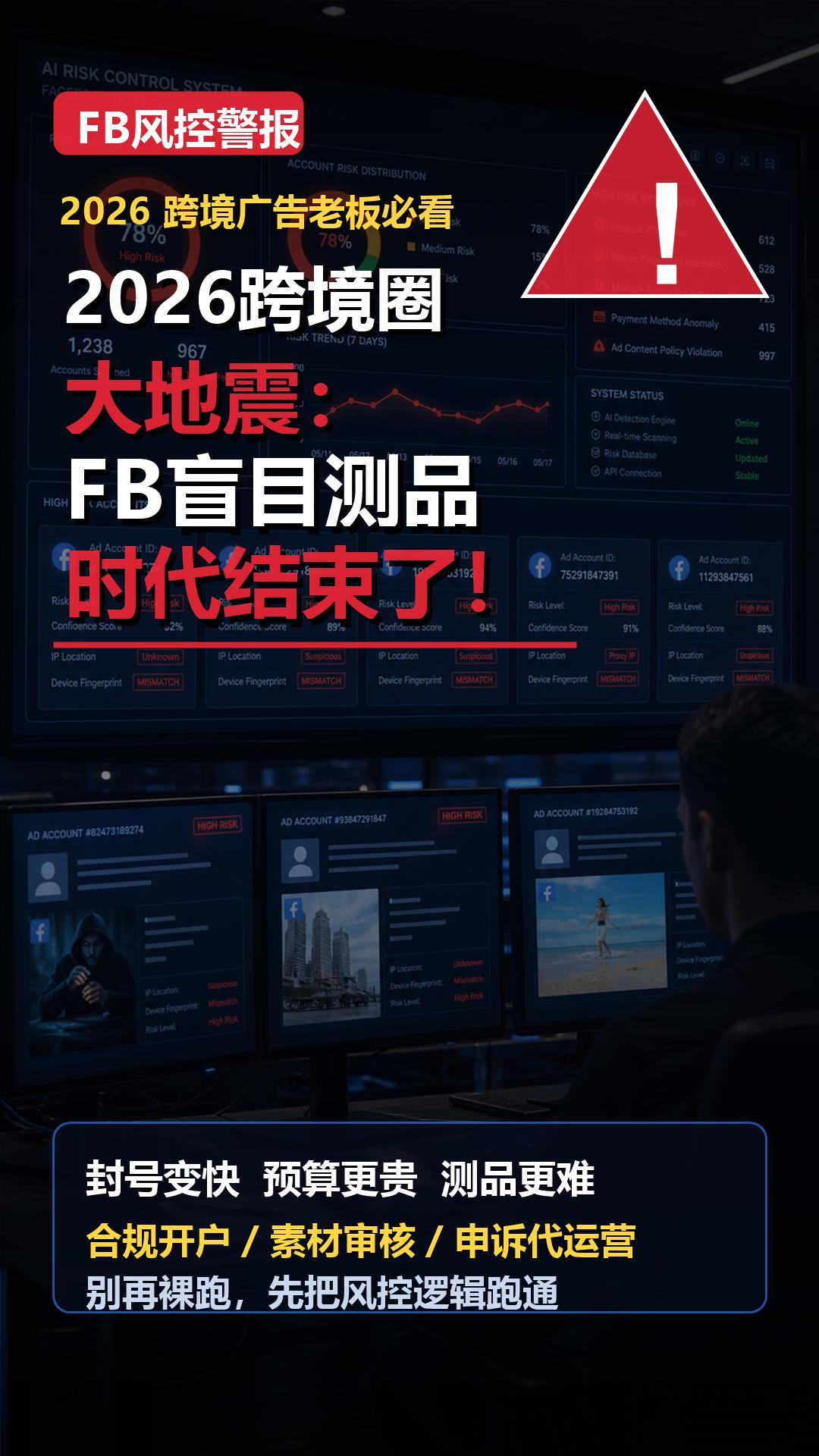
 The Era of Cross-Border Earthquakes in 2026: The Era of Blindly Testing FB Products Has Ended!
 Three key points of domestic-to-foreign trade most important, see if you really did your homework! Don’t take shortcuts.
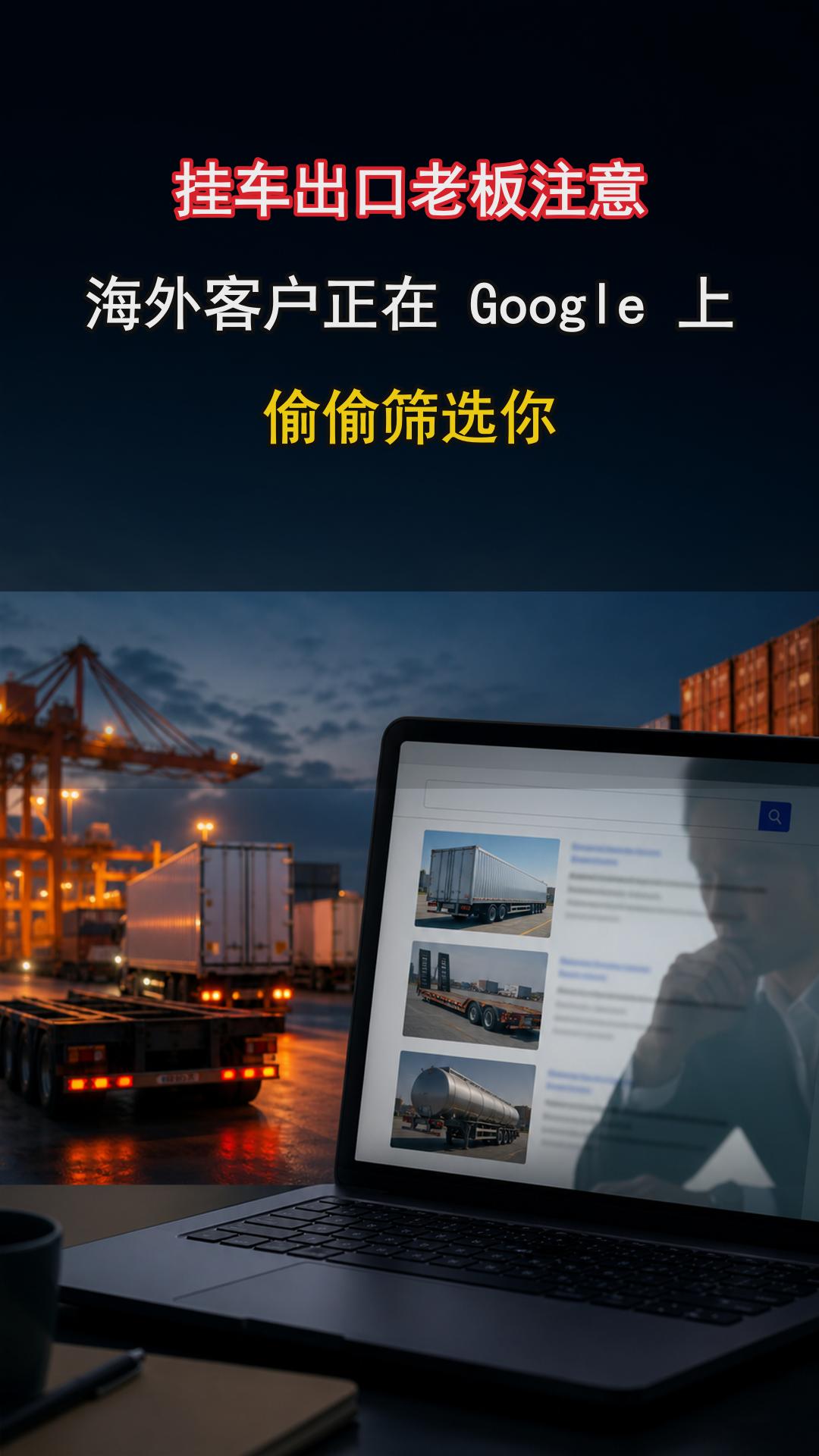
 Note for dealers exporting cars: overseas customers are “quietly screening” you on Google

Related Products
 EasyCamp SaaS Smart Website Marketing SystemE-Yingbao SaaS Smart Website Marketing System: AI-powered, zero-code website building. Rapidly launch multilingual independent e-commerce sites in just 10 minutes. Global server acceleration and AI-driven SEO optimization empower businesses to efficiently connect with global markets. The seamless integration of technology and user-friendly operation makes building e-commerce sites incredibly simple.
 AI+SEM Intelligent Advertising Marketing SystemAI+SEM drives intelligent ad creation, empowering full-funnel precision advertising marketing. The system automatically generates weekly/monthly reports, AI recommends keywords and target countries, monitors core metrics in real-time with intelligent alerts, and enables one-click high-conversion ad solutions to help quickly acquire customers and improve ROI.
 AI+SEO Dual Engine Optimization ServiceEasyWin AI+SEO Dual Engine Optimization System leverages AI-powered keyword mining, content generation, and comprehensive technical optimization to help foreign trade enterprises acquire high-quality organic traffic, significantly improving search rankings and conversion rates.
 AI+SNS Social Media Marketing SystemYingbao AI+SNS Social Media Marketing System - Precision social capture for the social media era. Supports one-click content synchronization across major platforms like Facebook and LinkedIn. AI intelligently rewrites posts for enhanced relevance. 24/7 AI customer service and user profiling analysis empower businesses to efficiently expand into global markets.
 AI+SEO营销解决方案易营宝AI+SEO营销解决方案,通过AI批量写作、智能生成TDK、精准关键词扩词等功能,全面优化网站SEO效果,提升流量与转化率。助力企业构建高效智能网站新生态。
 AI+SEM Advertising Marketing SolutionsAI+SEM Advertising Marketing Solution leverages AI technology to deeply empower SEM ad campaigns. It automatically generates weekly/monthly reports using AI, presenting account data across multiple dimensions for comprehensive insights into campaign performance and trends. The system precisely recommends keywords and target countries, intelligently generates high-conversion ad copy, and enables one-click activation of efficient campaign plans to help businesses rapidly acquire customers. Simultaneously, it monitors core metrics in real time, intelligently identifies abnormal fluctuations, and issues timely alerts to ensure stable, high-return advertising results.
 Domain Name ServicesEasyWin provides professional domain name services, including intelligent queries, one-stop registration, brand protection, and full lifecycle management, helping businesses build a digital brand image.
 EasyOperate B2C Cross-Border E-Commerce Platform & Independent WebsiteEasyStore B2C Cross-border E-commerce Independent Store is an intelligent website building and cross-border e-commerce integrated solution independently developed by EasyStore Information Technology (Beijing) Co., Ltd. The system is specially designed for small and medium-sized as well as large export enterprises, integrating 'website building, operation, marketing, advertising, and conversion' into one, helping enterprises quickly establish cross-border e-commerce independent stores to achieve brand globalization and global sales growth.
The platform supports multiple languages, multiple currencies, and multi-channel marketing, with built-in AI intelligent translation and SEO optimization systems, suitable for mainstream markets such as Southeast Asia, Europe and America, Latin America, and the Middle East, assisting Chinese manufacturing enterprises in efficiently deploying international e-commerce strategies. SSL证书易营宝提供专业SSL安全证书服务,包括单域名和泛域名证书,确保网站数据传输加密、身份验证和完整性保护,助力企业建立安全可信的在线业务环境。









