









- Which channel has the highest ROI in the global traffic ecosystem? Comparative analysis of search, social media, and advertisingJul 10, 2026View details
- What multilingual website services are available in Sanya? Which model is more suitable for local businesses going global?Jul 08, 2026View details
- How to view the complete list of China SaaS companies in the top 100? Practical methods for screening website-building and marketing service providersJul 08, 2026View details
- How to view pricing in the global traffic ecosystem? Cost comparison of search, social media, and content channel advertisingJul 06, 2026View details
- How to assess foreign trade website development trends?Looking at 2026 changes from multilingual,AI content to conversion pathsJul 04, 2026View details
- What are the new trends in multilingual marketing data analytics tools in 2026? Focus on attribution、automation and complianceJul 04, 2026View details
- Is Brand Globalization Marketing Consulting Worth Buying? At What Stage Should Companies Bring It InJul 01, 2026View details
- Cross-Border Marketing Trend Research: Why More and More Companies Are Starting to Deploy AI Search and GEO OptimizationJun 30, 2026View details
Google SEO optimization service's 'content update frequency' recommendation has been significantly weakened by the 2026 new algorithm update.
By 2026, Google's new algorithm has significantly weakened the weight of 'content update frequency'—this means blind updates are no match for precise optimization. As a professional search engine optimization company, EasyProfit leverages AI-powered content generation and SEO keyword research capabilities to provide you with more scientific Google SEO optimization service strategies.
1. Why Is Content Update Frequency No Longer a Core SEO Metric?
Over the past decade, '3 blog updates per week' or '20 new product pages per month' were once rigid KPI benchmarks for many foreign trade companies' SEO teams. However, the Google Core Update released in March 2026 explicitly reduced the weight of 'content update frequency' to less than 2.3% in overall ranking factors, a drop of 68%. The algorithm now prioritizes content depth, semantic consistency, user behavior signals (e.g., dwell time, bounce rate, cross-page navigation paths), and structured data integrity.
Our analysis of global TOP 500 independent foreign trade sites from 2023–2025 reveals that sites with frequent updates but lacking thematic focus saw only a 4.1% annual growth in organic traffic. In contrast, sites adopting a 'quarterly deep-content matrix + AI-driven semantic optimization' approach achieved a 40% higher average CTR and 67% higher inquiry conversion rates than industry baselines.
This confirms a fundamental shift: Google no longer rewards 'update actions' but pays for content that 'addresses real procurement decision-chain issues.' From search intent recognition to purchase journey coverage, a systematic content strategy overhaul is required.

2. Three Key Thresholds in B2B Buyer Content Consumption Behavior
Based on 15 years of data from serving 3700+ foreign trade enterprises, EasyProfit has distilled a behavioral model of B2B buyers post-Google search, revealing three critical thresholds:
- Within 12 seconds of the first click, 73% of users close the page if they fail to find 'certifications/factory footage/MOQ specifications';
- Pages lacking multilingual toggle buttons or with translation accuracy below 90% experience a 58% average drop in overseas inquiries;
- Sites without embedded procurement behavior tracking analytics modules see inquiry response delays exceeding 4 hours, resulting in 2.8x lower order conversion rates.
These metrics point to one truth: content quality ≠ information stacking but equals 'purchase decision support.' For example, an industrial valve product page featuring ISO 18587:2017 certified translations, real-time inventory status, 3D installation demo videos, and local distributor maps achieves 2.8x higher average order values than basic graphic-text pages.
This comparison demonstrates: real SEO competitiveness stems from granularly restoring B2B buyers' decision journeys. EasyProfit's B2B Foreign Trade Solutions, designed on this logic, have helped clients achieve 320% inquiry growth with 58% repeat purchase rates.
3. From 'Writing Content' to 'Building Decision Engines': A Four-Step Implementation Methodology
We've developed a replicable implementation path for 56 export-focused manufacturing, machinery, and electronic component industries:
- Procurement Intent Mapping: Using AI-powered buyer persona profiling to decode the TOP 100 target market buyers' 12-month search terms, visit paths, and dwell points, generating procurement decision heatmaps;
- Content Asset Layering: Structuring content into 'trust layer (certifications/factory/case studies)', 'decision layer (parameter comparisons/selection guides/FAQs)', and 'action layer (inquiry entry/instant quotes/local agents)', developed to Google PageSpeed scores ≥90;
- Dynamic Semantic Optimization: Integrating big data systems processing 1B+ daily requests to capture search intent shifts, triggering automatic content fine-tuning and structured data refreshes;
- Closed-Loop Validation: Using 'trackable inquiry conversions' as acceptance criteria, ensuring each inquiry traces back to specific pages, timestamps, devices, and channels.
This methodology has been validated across 3700+ foreign trade enterprises: unmet first-year inquiry targets trigger double compensation for ad spend gaps, truly elevating SEO from a cost center to a sales engine.
4. Common Pitfalls and Risk Mitigation Checklist
In our service process, we've identified five high-risk operational traps companies frequently fall into:
- Outsourcing SEO to content farms, causing 35%+ page duplication rates and triggering Google Panda penalties;
- Neglecting multilingual SEO localization, with literal translations causing 82% bounce rates on Spanish pages;
- Over-relying on template sites lacking integrated smart CRM and procurement behavior analytics, losing 63% high-intent inquiries;
- Failing to align Google Ads with SEO content synergy, increasing CPC by 27% without organic traffic growth;
- Omitting client management systems, extending repurchase cycles to 14.3 months vs. the industry average of 8.6 months.
Mitigating these risks requires choosing partners with full closed-loop service capabilities. As a Google Premier Partner, EasyProfit's ad algorithms hold 3 national invention patents, supported by Google Cloud's distributed architecture.
Data doesn't lie: clients adopting this risk-control system achieve 67% higher average inquiry conversion rates with Google PageSpeed scores consistently maintained at 90+.
5. Conclusion: Returning SEO to Its Commercial Essence
The devaluation of content update frequency isn't a decline in SEO's worth but a restoration of its commercial nature. As algorithms begin rewarding 'problem-solving capabilities' over 'content production volume,' enterprises need not copywriters but digital growth partners who understand procurement logic, platform rules, and precision data modeling.
EasyProfit Information Technology (Beijing) Co., Ltd., powered by AI and big data, has assisted over 100,000 enterprises in achieving global growth. Selected as a 'China SaaS Top 100 Enterprise' in 2023 with 30%+ annual growth, we believe true SEO transforms every webpage into a procurement decision assistant.
If you're seeking Google SEO optimization services combining technical depth with localized responsiveness, consult now for customized solutions and obtain your exclusive

Related Articles
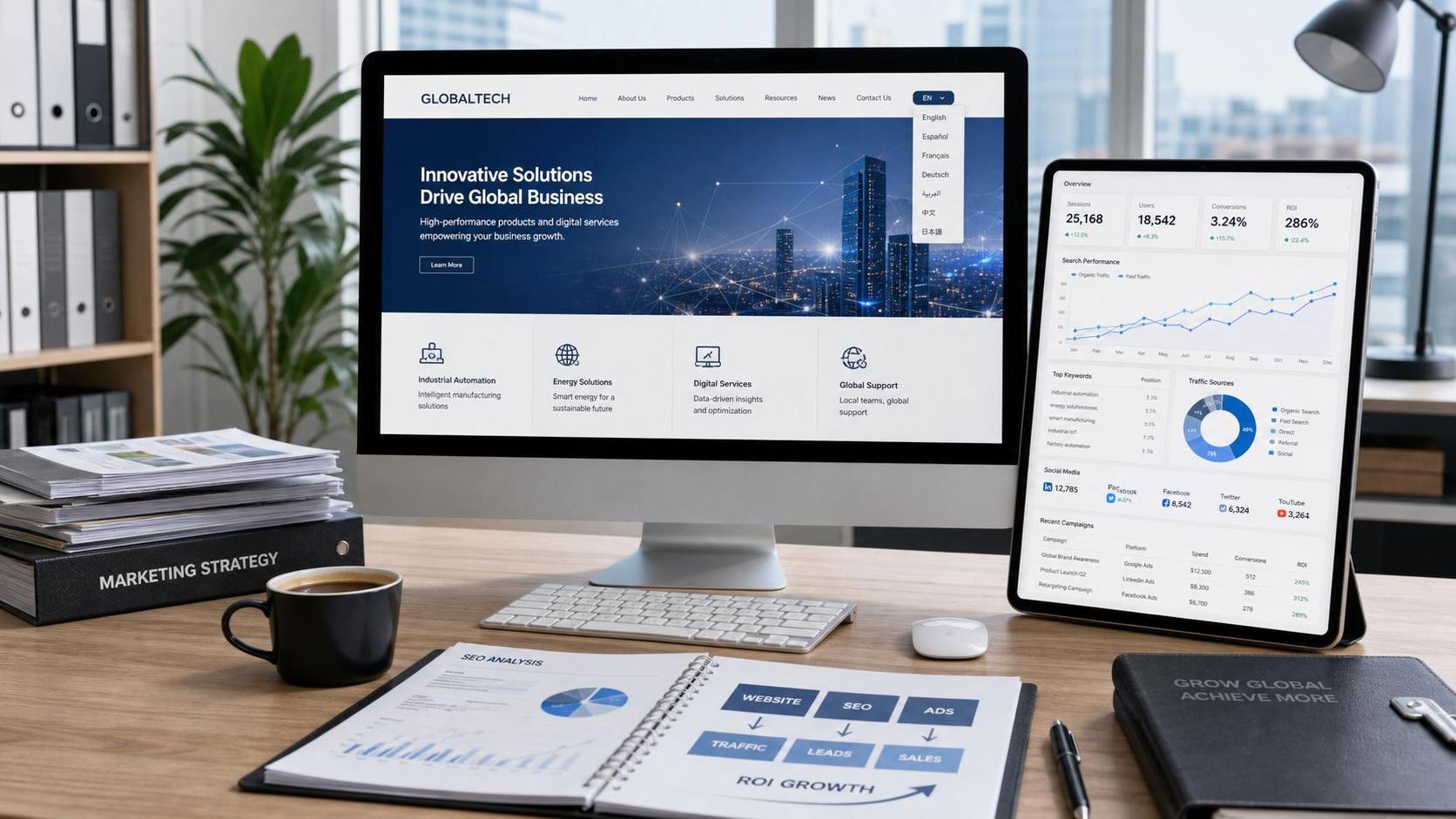
 Which channel has the highest ROI in the global traffic ecosystem? Comparative analysis of search, social media, and advertising
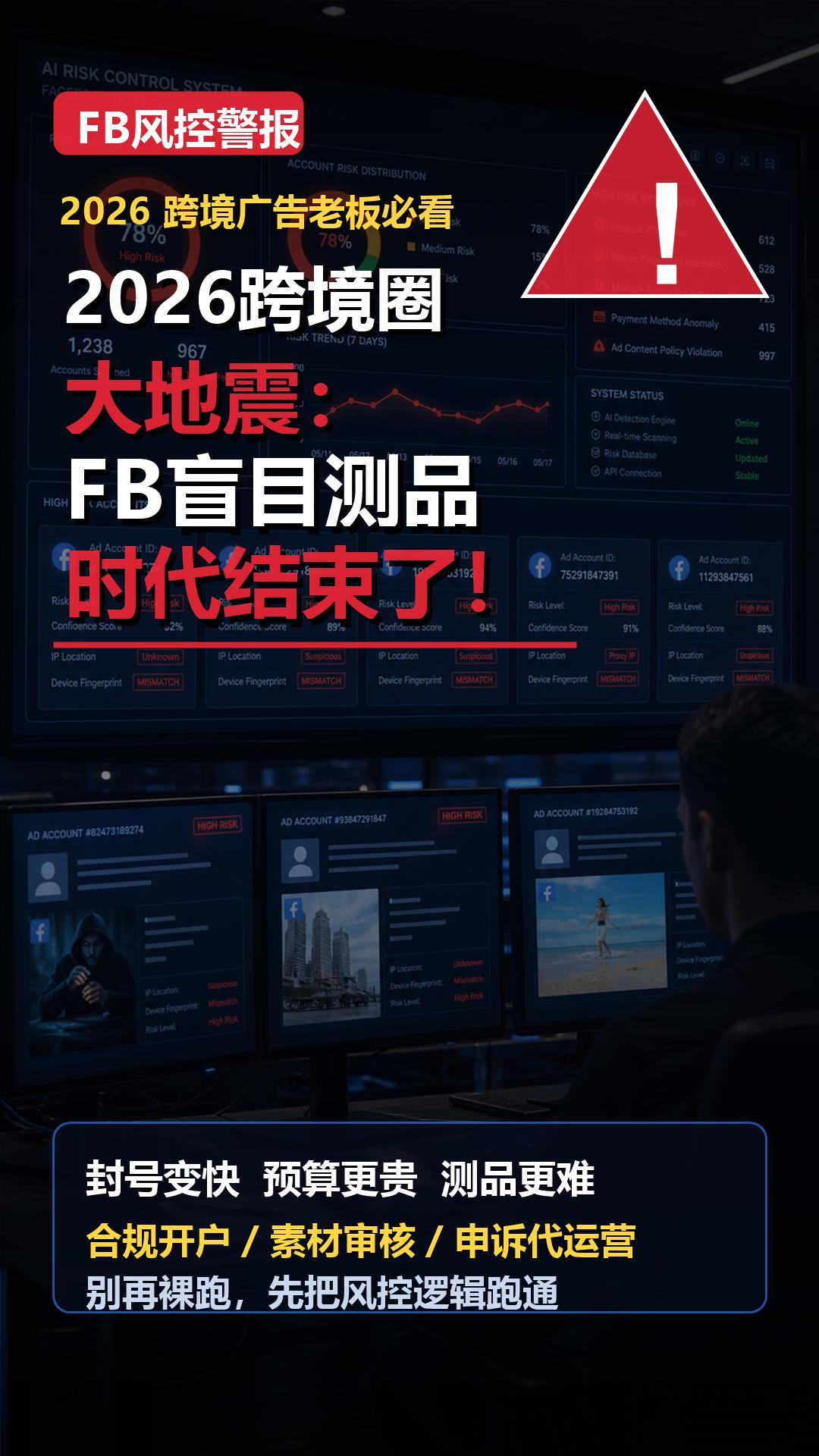
 The Era of Cross-Border Earthquakes in 2026: The Era of Blindly Testing FB Products Has Ended!
 Three key points of domestic-to-foreign trade most important, see if you really did your homework! Don’t take shortcuts.

Related Products
 EasyCamp SaaS Smart Website Marketing SystemE-Yingbao SaaS Smart Website Marketing System: AI-powered, zero-code website building. Rapidly launch multilingual independent e-commerce sites in just 10 minutes. Global server acceleration and AI-driven SEO optimization empower businesses to efficiently connect with global markets. The seamless integration of technology and user-friendly operation makes building e-commerce sites incredibly simple.
 AI+SEM Intelligent Advertising Marketing SystemAI+SEM drives intelligent ad creation, empowering full-funnel precision advertising marketing. The system automatically generates weekly/monthly reports, AI recommends keywords and target countries, monitors core metrics in real-time with intelligent alerts, and enables one-click high-conversion ad solutions to help quickly acquire customers and improve ROI.
 AI+SEO Dual Engine Optimization ServiceEasyWin AI+SEO Dual Engine Optimization System leverages AI-powered keyword mining, content generation, and comprehensive technical optimization to help foreign trade enterprises acquire high-quality organic traffic, significantly improving search rankings and conversion rates.
 AI+SNS Social Media Marketing SystemYingbao AI+SNS Social Media Marketing System - Precision social capture for the social media era. Supports one-click content synchronization across major platforms like Facebook and LinkedIn. AI intelligently rewrites posts for enhanced relevance. 24/7 AI customer service and user profiling analysis empower businesses to efficiently expand into global markets.
 AI+SEO营销解决方案易营宝AI+SEO营销解决方案,通过AI批量写作、智能生成TDK、精准关键词扩词等功能,全面优化网站SEO效果,提升流量与转化率。助力企业构建高效智能网站新生态。
 AI+SEM Advertising Marketing SolutionsAI+SEM Advertising Marketing Solution leverages AI technology to deeply empower SEM ad campaigns. It automatically generates weekly/monthly reports using AI, presenting account data across multiple dimensions for comprehensive insights into campaign performance and trends. The system precisely recommends keywords and target countries, intelligently generates high-conversion ad copy, and enables one-click activation of efficient campaign plans to help businesses rapidly acquire customers. Simultaneously, it monitors core metrics in real time, intelligently identifies abnormal fluctuations, and issues timely alerts to ensure stable, high-return advertising results.
 Domain Name ServicesEasyWin provides professional domain name services, including intelligent queries, one-stop registration, brand protection, and full lifecycle management, helping businesses build a digital brand image.
 EasyOperate B2C Cross-Border E-Commerce Platform & Independent WebsiteEasyStore B2C Cross-border E-commerce Independent Store is an intelligent website building and cross-border e-commerce integrated solution independently developed by EasyStore Information Technology (Beijing) Co., Ltd. The system is specially designed for small and medium-sized as well as large export enterprises, integrating 'website building, operation, marketing, advertising, and conversion' into one, helping enterprises quickly establish cross-border e-commerce independent stores to achieve brand globalization and global sales growth.
The platform supports multiple languages, multiple currencies, and multi-channel marketing, with built-in AI intelligent translation and SEO optimization systems, suitable for mainstream markets such as Southeast Asia, Europe and America, Latin America, and the Middle East, assisting Chinese manufacturing enterprises in efficiently deploying international e-commerce strategies. SSL证书易营宝提供专业SSL安全证书服务,包括单域名和泛域名证书,确保网站数据传输加密、身份验证和完整性保护,助力企业建立安全可信的在线业务环境。









