









- What Does a Global Traffic Ecosystem Service Provider Do? What Are the Differences from a Single Advertising AgencyJul 16, 2026View details
- What should you focus on in the latest enterprise SaaS report? From renewal rates and delivery costs to overseas growth opportunitiesJul 12, 2026View details
- What signals are worth paying attention to in a cross-border marketing trend report? B2B companies should look at these 6 signalsJul 11, 2026View details
- How to Read a Cross-Border Marketing Trends Report? Five Key Dimensions for Evaluating Channel OpportunitiesJul 11, 2026View details
- Which channel has the highest ROI in the global traffic ecosystem? Comparative analysis of search, social media, and advertisingJul 10, 2026View details
- What multilingual website services are available in Sanya? Which model is more suitable for local businesses going global?Jul 08, 2026View details
Case Study Breakdown: An Export-Oriented Manufacturing Company’s International Trade Website
Case Study Analysis of a Foreign Trade Website for Manufacturing Export Enterprises
This article focuses on foreign trade website case studies for manufacturing export enterprises. It analyzes how high-quality websites balance brand presentation, inquiry conversion, and overseas promotion, helping business decision-makers understand the key strategies and growth paths involved in foreign trade website development.
When manufacturing enterprises build foreign trade websites, the most common pitfall is not that “the website was not completed,” but that “it was completed yet nobody visits it, and even those who visit do not submit inquiries.” I have seen many websites of manufacturing export enterprises: the homepage looks impressive, the product pages are comprehensive, and even multiple languages are available. Yet after six months, Google still has not indexed them consistently, advertising landing pages have high bounce rates, and sales teams still rely on trade-show business cards and referrals from existing customers.
If you are currently evaluating a foreign trade website service provider or planning to rebuild your official website, you can use this checklist for direct comparison. This is not a theoretical analysis. Instead, it examines the issue from the perspective of whether manufacturing export enterprises should invest, how they should invest, and what kind of website can truly compete.
First, Determine Whether It Is a “Business-Oriented Website” Rather Than Just a Corporate Brochure
Many foreign trade website case studies look acceptable on the surface. The real difference lies in whether the website supports sales. For manufacturing export enterprises, a website should perform at least three functions: enable overseas buyers to quickly determine whether you can meet their needs, help search engines understand what you do, and encourage potential customers to submit inquiries.
- Does the homepage clearly explain the product categories, application industries, and service regions within the first three screens?
- Can visitors see specifications, materials, processes, certifications, and applications on the product pages, rather than just a few images?
- Is the inquiry entry point clear enough? This is especially important on mobile devices, where customers should not have to search for contact information.
- Is content designed for key markets? For example, customers in Europe and the United States often focus on compliance and quality systems, while customers in the Middle East and Southeast Asia tend to care more about lead times, minimum order quantities, and communication efficiency.
If a website mainly talks about “the year the company was founded, the size of its factory, and how much its management values quality,” but does not put the information most important to purchasers first, it is more like a brochure than a customer acquisition tool.
When Reviewing a Case, Do Not Focus Only on the Design Draft; First Check Whether the Content Architecture Follows the Purchasing Decision Process
A manufacturing website is not the same as a brand showcase website. After entering a website, buyers usually do not slowly appreciate its visual style. Instead, they screen suppliers within a few minutes. At this stage, content architecture is more important than whether the website looks attractive.
I recommend checking the following layers in particular:
- Are product categories aligned with overseas search habits rather than simply copied from internal categories?
- Are there application scenario pages, such as automotive components, architectural hardware, industrial packaging, and food machinery components?
- Does the website distinguish between “standard products” and “customization capabilities”? Manufacturing customers care greatly about whether you can modify dimensions, change materials, and provide surface treatment.
- Is there a “Certifications and Quality Control” section? Its content must be authentic and verifiable. Expired certificates, unclear scans, and certifications without a corresponding product scope can all undermine trust.
There is a common misconception here: putting all products into a single download directory. Purchasers are not willing to guess the relationships between product models themselves, and search engines do not favor this type of information organization. A good foreign trade website case study often shows that the pages are connected through a logical chain—from products to applications, from applications to case studies, and then to inquiries.
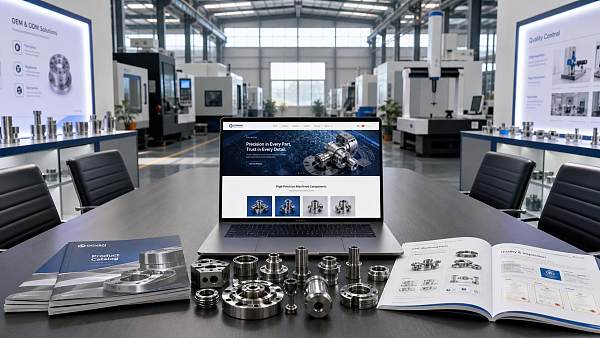
A Product Page Is Not a Collection of Materials; The Key Is to “Make Customers Feel Confident Enough to Submit an Inquiry”
The problems with product pages of many manufacturing export enterprises are very similar: incomplete information, inconsistent images, and non-standard parameter descriptions. Customers are not necessarily uninterested; they simply do not feel confident enough to ask, because they worry that their questions will reveal a lack of professionalism.
A qualified product page should answer at least the following questions: What is the product? What are its main parameters? Which industries is it suitable for? What changes in materials or specifications are supported? Which standards does it comply with 【to be displayed after verification】? Can the minimum order quantity and sampling method be discussed? What are the packaging and delivery capabilities?
If the page involves CE, RoHS, REACH, FDA, ISO, or similar information, extra caution is required. Not all manufacturing products require the same types of certifications, and having a factory system certificate does not mean that an individual product is compliant. This must be verified according to the product category, target market, and available documentation. It is better to describe the information cautiously than to add unsupported claims merely to make the list look complete.
Next, Examine the Promotion Foundation: Is the Website Naturally Easy for Google to Understand?
When reviewing foreign trade website case studies, many enterprises focus only on the page appearance while overlooking a more practical question: Can the website support SEO, work with advertising campaigns, and be updated conveniently in the future?
If the technical foundation is inadequate, promotion costs will continue to rise. You can ask the service provider the following questions directly:
- Can page titles, descriptions, and URLs be customized?
- Can products, case studies, blogs, and landing pages be optimized independently rather than being restricted to a fixed template?
- How are multilingual websites handled? Does each language have an independent path and clear structure?
- What is the website’s loading speed, mobile compatibility, image compression capability, and structured data support? 【Some technical details require project testing】
- Is it convenient to integrate form tracking, advertising conversion statistics, and search engine webmaster tools?
The value of an integrated “website + marketing services” solution such as Yiyingbao is particularly evident here. For many manufacturing enterprises, a website is not an isolated project, but infrastructure for subsequent SEO, advertising, social media traffic acquisition, and improved visibility in AI search. If the website development system is disconnected from the promotion system, the initial savings often result in more time spent fixing gaps later.
Multilingualism Is Not Just Adding Several Translation Buttons; Differences in Target Markets Must Be Reflected in the Pages
Once a manufacturing export enterprise targets markets such as North America, Europe, Southeast Asia, the Middle East, Japan and South Korea, Russian-speaking regions, and Latin America, its website content cannot simply transfer Chinese thinking into other languages. What truly affects conversion is often found in the details.
For example, buyers in Europe and the United States are generally more accustomed to reviewing detailed specifications, downloading materials, learning about factory capabilities, and checking compliance information. In Southeast Asia, customers more commonly assess product suitability first and then send a quick message. Some customers in the Middle East place greater emphasis on customization support, delivery schedules, and business response times. You will find that for the same manufacturing export enterprise, the focus of landing pages can be completely different across regions.
Therefore, when evaluating foreign trade website case studies, be sure to clarify the following: Is multilingual content manually proofread or generated directly by machines? Are keyword strategies handled separately for different markets? Do the form fields take into account the completion habits of customers from different countries? All of these factors directly affect inquiry quality.
Do Not Overlook Trust-Building Details; Manufacturing Websites Often Lose Customers Because of These Minor Issues
What causes customers to close a page is often not a major problem, but some small yet conspicuous signals. For example, the company name is inconsistent in different places, the email address is still a public mailbox, the telephone number has no country or area code, certification images are unclear, factory photos look like stock images, and the case study page contains only empty statements such as “our customers are located all over the world.”
When reviewing a website, business decision-makers can use a simple standard: If you were an overseas purchaser, would you be willing to forward this website to a colleague as a potential alternative supplier? If you hesitate, the problem is usually not the design, but that the trust-building information is still incomplete.
Evaluate the Website Development Plan Together with Future Growth; Do Not Compare Only One-Time Quotes
When a foreign trade website case study is analyzed to its conclusion, one practical question cannot be avoided: Who will continue operating the website after it is completed? Many websites look complete when they go live, but three months later their news has stopped being updated, their products have not been revised, and nobody is reviewing inquiry data. Eventually, the conclusion returns to “the website is useless.”
A more reliable approach is to view the website as part of the entire overseas customer acquisition process. Is there a content update mechanism? Can industry pages and advertising landing pages be added quickly? Can SEO and advertising data flow back into the system? Is there a corresponding landing page for social media traffic? If AI search visibility optimization is required later, does the website’s content structure support continuous expansion?
From this perspective, solutions such as Yiyingbao’s, which combine AI-powered website development, multilingual websites, Google SEO, advertising, social media operations, and GEO generative engine optimization within one service system, are more suitable for manufacturing enterprises without large-scale overseas digital teams. Their value does not lie in having “more features,” but in helping enterprises avoid the repeated detours of rebuilding, migrating, and redesigning their websites.
A Final Checklist for Business Decision-Makers
If you are selecting a service provider or reviewing your existing official website, you can directly check whether all of the following requirements are met:
- Is the website designed around “product understanding + trust building + inquiry conversion”?
- Is the content structure suitable for manufacturing export enterprises rather than being a generic template website?
- Are the product pages professional enough to support a purchaser’s initial assessment?
- Does the technical foundation support long-term SEO, advertising, and multilingual expansion?
- Are differences between target markets reflected in the content and conversion paths?
- Does the service provider understand both website development and subsequent overseas promotion coordination?
The more foreign trade website case studies you review, the easier it is to discover one fact: Websites that generate effective inquiries are usually not the most elaborate ones, but the ones that best understand the buyer’s decision-making process. For manufacturing export enterprises, a website should function like an overseas salesperson who can continuously receive customers—explaining clearly, responding promptly, providing sufficient evidence, and making contact convenient. When you analyze cases according to this standard, many choices become much easier.
Related Articles
 Case Study Breakdown: An Export-Oriented Manufacturing Company’s International Trade Website
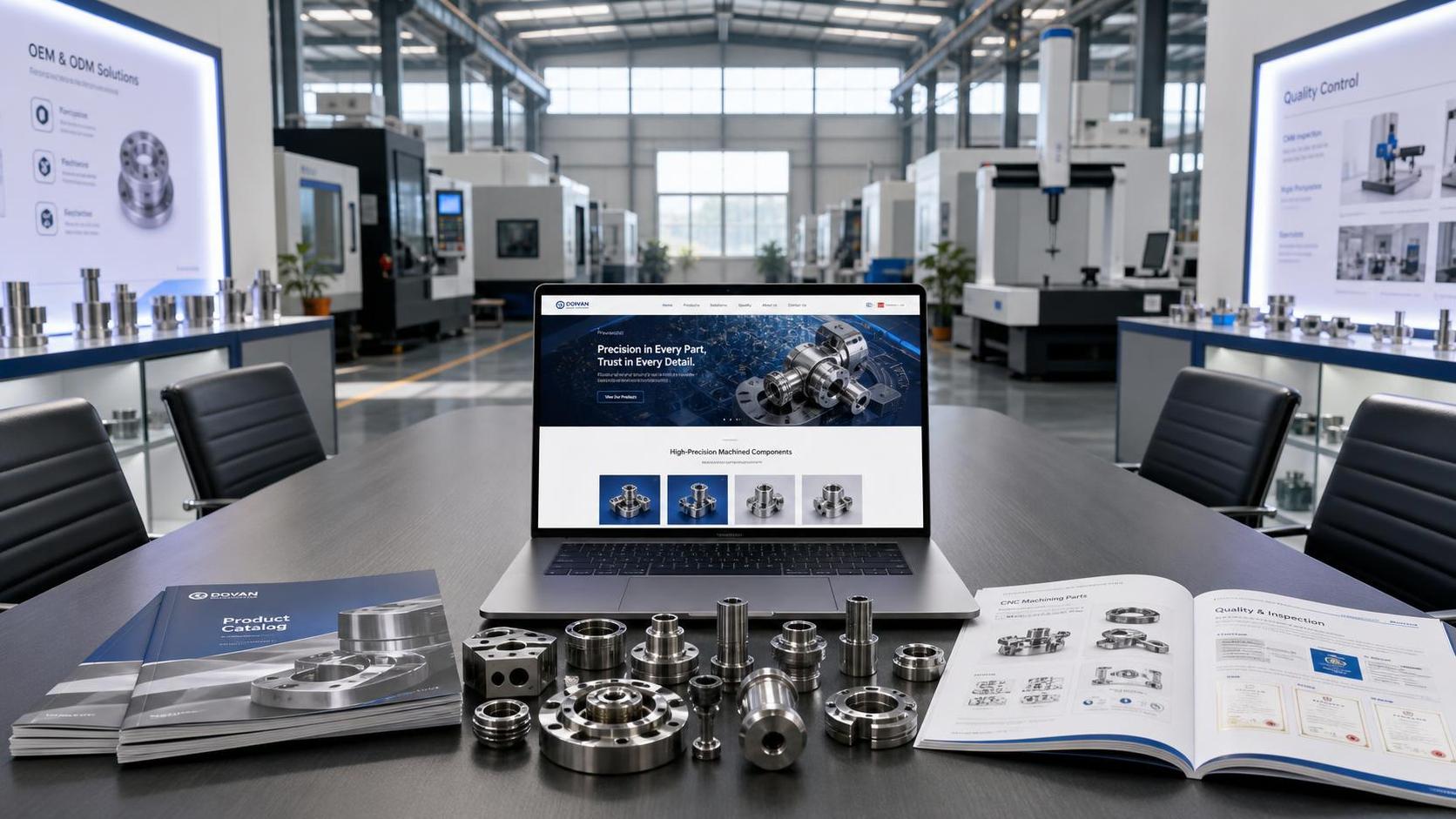
 SEACOM Launches an Independent Website Compliance Certification Program
 Successful Case of a Building Materials Industry Foreign Trade Independent Website: How High-Value Leads Products Improve Inquiry Conversion Rate

Related Products
 EasyCamp SaaS Smart Website Marketing SystemE-Yingbao SaaS Smart Website Marketing System: AI-powered, zero-code website building. Rapidly launch multilingual independent e-commerce sites in just 10 minutes. Global server acceleration and AI-driven SEO optimization empower businesses to efficiently connect with global markets. The seamless integration of technology and user-friendly operation makes building e-commerce sites incredibly simple.
 AI+SEM Intelligent Advertising Marketing SystemAI+SEM drives intelligent ad creation, empowering full-funnel precision advertising marketing. The system automatically generates weekly/monthly reports, AI recommends keywords and target countries, monitors core metrics in real-time with intelligent alerts, and enables one-click high-conversion ad solutions to help quickly acquire customers and improve ROI.
 AI+SEO Dual Engine Optimization ServiceEasyWin AI+SEO Dual Engine Optimization System leverages AI-powered keyword mining, content generation, and comprehensive technical optimization to help foreign trade enterprises acquire high-quality organic traffic, significantly improving search rankings and conversion rates.
 AI+SNS Social Media Marketing SystemYingbao AI+SNS Social Media Marketing System - Precision social capture for the social media era. Supports one-click content synchronization across major platforms like Facebook and LinkedIn. AI intelligently rewrites posts for enhanced relevance. 24/7 AI customer service and user profiling analysis empower businesses to efficiently expand into global markets.
 AI+SEO营销解决方案易营宝AI+SEO营销解决方案,通过AI批量写作、智能生成TDK、精准关键词扩词等功能,全面优化网站SEO效果,提升流量与转化率。助力企业构建高效智能网站新生态。
 AI+SEM Advertising Marketing SolutionsAI+SEM Advertising Marketing Solution leverages AI technology to deeply empower SEM ad campaigns. It automatically generates weekly/monthly reports using AI, presenting account data across multiple dimensions for comprehensive insights into campaign performance and trends. The system precisely recommends keywords and target countries, intelligently generates high-conversion ad copy, and enables one-click activation of efficient campaign plans to help businesses rapidly acquire customers. Simultaneously, it monitors core metrics in real time, intelligently identifies abnormal fluctuations, and issues timely alerts to ensure stable, high-return advertising results.
 Domain Name ServicesEasyWin provides professional domain name services, including intelligent queries, one-stop registration, brand protection, and full lifecycle management, helping businesses build a digital brand image.
 EasyOperate B2C Cross-Border E-Commerce Platform & Independent WebsiteEasyStore B2C Cross-border E-commerce Independent Store is an intelligent website building and cross-border e-commerce integrated solution independently developed by EasyStore Information Technology (Beijing) Co., Ltd. The system is specially designed for small and medium-sized as well as large export enterprises, integrating 'website building, operation, marketing, advertising, and conversion' into one, helping enterprises quickly establish cross-border e-commerce independent stores to achieve brand globalization and global sales growth.
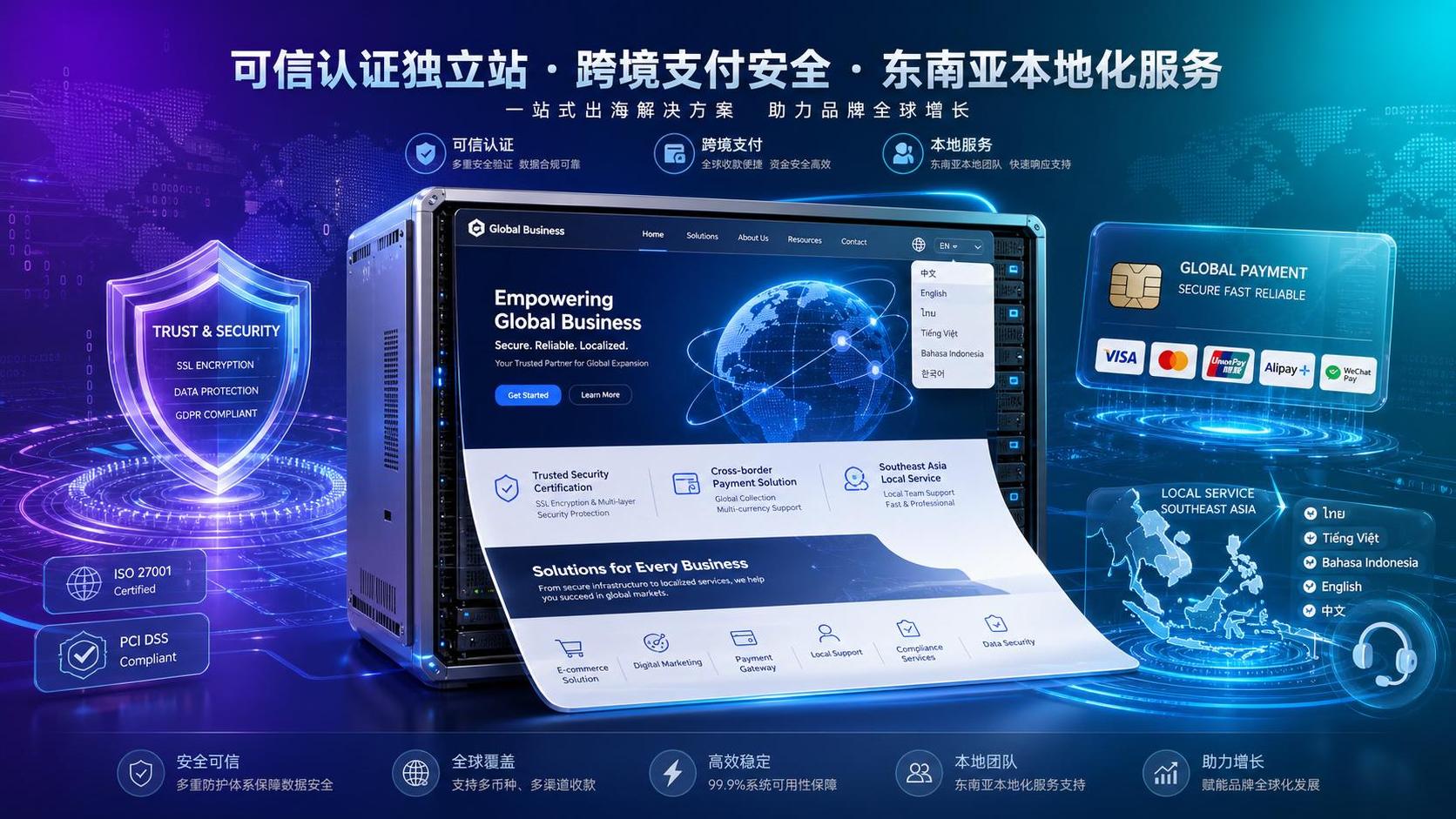
The platform supports multiple languages, multiple currencies, and multi-channel marketing, with built-in AI intelligent translation and SEO optimization systems, suitable for mainstream markets such as Southeast Asia, Europe and America, Latin America, and the Middle East, assisting Chinese manufacturing enterprises in efficiently deploying international e-commerce strategies. SSL证书易营宝提供专业SSL安全证书服务,包括单域名和泛域名证书,确保网站数据传输加密、身份验证和完整性保护,助力企业建立安全可信的在线业务环境。









