









- What should you focus on in the latest enterprise SaaS report? From renewal rates and delivery costs to overseas growth opportunitiesJul 12, 2026View details
- What signals are worth paying attention to in a cross-border marketing trend report? B2B companies should look at these 6 signalsJul 11, 2026View details
- How to Read a Cross-Border Marketing Trends Report? Five Key Dimensions for Evaluating Channel OpportunitiesJul 11, 2026View details
- Which channel has the highest ROI in the global traffic ecosystem? Comparative analysis of search, social media, and advertisingJul 10, 2026View details
- What multilingual website services are available in Sanya? Which model is more suitable for local businesses going global?Jul 08, 2026View details
- How to view the complete list of China SaaS companies in the top 100? Practical methods for screening website-building and marketing service providersJul 08, 2026View details
- How to view pricing in the global traffic ecosystem? Cost comparison of search, social media, and content channel advertisingJul 06, 2026View details
- How to assess foreign trade website development trends?Looking at 2026 changes from multilingual,AI content to conversion pathsJul 04, 2026View details
China-Mongolia AEO Mutual Recognition Enters Full Operational Phase in June
Effective 1 June 2026, the China–Mongolia Authorized Economic Operator (AEO) mutual recognition arrangement has transitioned into its full operational phase, delivering tangible trade facilitation benefits for certified enterprises engaged in bilateral commerce—particularly in fast-moving consumer goods, construction materials, and machinery sectors.
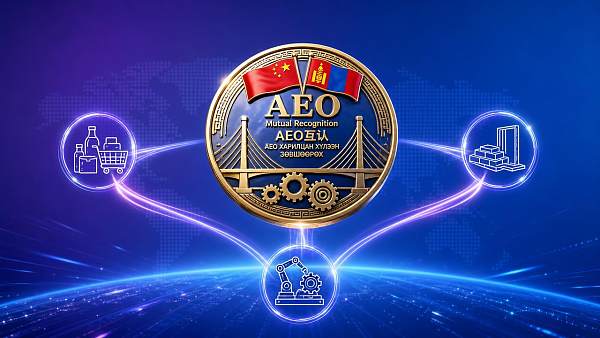
Factual Overview of the AEO Mutual Recognition Arrangement
The China–Mongolia AEO mutual recognition arrangement entered into force on 1 June 2025. As of June 2026, it operates under standardized, routine implementation across all Mongolian border crossings and 18 designated ports in China. Certified AEO enterprises from both countries are now entitled to reduced inspection rates, priority customs clearance, and simplified documentation procedures.
Operational Impact Across Supply Chain Roles
Direct Exporters and Importers
These enterprises experience shorter border dwell times and greater predictability in delivery scheduling. The benefit manifests most directly at customs release stages—especially for time-sensitive consignments such as perishable FMCG or just-in-time machinery components.
Raw Material Sourcing Companies
Procurement teams sourcing inputs from Mongolia—including minerals, raw steel, or processed timber—may observe improved shipment reliability and lower demurrage risk. However, eligibility for benefits is contingent upon AEO certification status, not product origin alone.
Manufacturers and Equipment Assemblers
Domestic manufacturers exporting finished equipment to Mongolia face fewer documentary delays and enhanced visibility into customs processing timelines. This supports more accurate production planning and inventory deployment—particularly where modular or CKD (completely knocked down) shipments require synchronized component arrivals.
Logistics and Customs Brokerage Providers
Third-party service providers must verify clients’ AEO status prior to filing declarations and align internal compliance workflows with updated customs requirements. Certification validation, documentation harmonization, and real-time status monitoring become critical service differentiators.
Key Corporate Considerations and Practical Responses
Verify and Maintain AEO Certification Validity
Only enterprises holding active AEO status in their respective jurisdictions qualify. Companies should confirm current certification validity, review renewal deadlines, and assess whether subsidiary or joint-venture entities meet independent AEO eligibility criteria.
Align Documentation Practices with Dual-Jurisdiction Requirements
AEO-related simplifications apply only when supporting documents—including commercial invoices, packing lists, and certificates of origin—are fully compliant with both Chinese and Mongolian customs formats and data fields. Pre-submission validation tools are recommended.
Optimize Port Selection and Transit Planning
Since benefits apply exclusively at the 18 designated Chinese ports and all Mongolian border points, routing decisions must reflect this coverage map—not just proximity or cost. Transit time models should be recalibrated using verified AEO clearance performance data where available.
Integrate AEO Status into Supplier Qualification Frameworks
For buyers relying on Mongolian-sourced inputs or Chinese OEM partners, AEO certification should be elevated from a ‘nice-to-have’ to a formal procurement criterion—especially where supply continuity, customs responsiveness, or bonded logistics support are contractually required.
Industry Perspective: Beyond Compliance Toward Strategic Integration
Analysis shows that the June 2026 milestone marks a shift from transitional adoption to embedded operational reliance on AEO status. From an industry perspective, this signals growing convergence in customs governance standards—and increasing pressure on non-certified SMEs to either pursue AEO alignment or consolidate through certified logistics partners. What deserves closer attention is how rapidly customs authorities refine verification protocols and whether future phases extend mutual recognition to additional trade facilitation instruments, such as self-assessment or trusted trader data sharing.
Strategic Significance for Cross-Border Trade Infrastructure
This development reinforces the role of AEO certification not merely as a regulatory checkbox, but as a foundational enabler of resilient, responsive, and scalable trade infrastructure between China and Mongolia. Its impact remains bounded by certification uptake and administrative consistency—neither of which is guaranteed—but represents one of the most concrete steps toward reducing systemic friction in regional supply chains.
Source Attribution and Ongoing Monitoring Guidance
This article synthesizes information provided in the original briefing: title, event date (1 June 2026), and factual summary. Specific official source links were not provided in the input and should be verified continuously. Stakeholders are advised to monitor updates from the General Administration of Customs of China (GACC), the Customs Authority of Mongolia, and official AEO certification portals for implementation guidelines, port-specific operating procedures, and revised declaration templates. Continued observation is warranted regarding certification audit frequency, cross-border data exchange mechanisms, and sectoral feedback on actual clearance time reductions.
Related Articles


Related Products
 EasyCamp SaaS Smart Website Marketing SystemE-Yingbao SaaS Smart Website Marketing System: AI-powered, zero-code website building. Rapidly launch multilingual independent e-commerce sites in just 10 minutes. Global server acceleration and AI-driven SEO optimization empower businesses to efficiently connect with global markets. The seamless integration of technology and user-friendly operation makes building e-commerce sites incredibly simple.
 AI+SEM Intelligent Advertising Marketing SystemAI+SEM drives intelligent ad creation, empowering full-funnel precision advertising marketing. The system automatically generates weekly/monthly reports, AI recommends keywords and target countries, monitors core metrics in real-time with intelligent alerts, and enables one-click high-conversion ad solutions to help quickly acquire customers and improve ROI.
 AI+SEO Dual Engine Optimization ServiceEasyWin AI+SEO Dual Engine Optimization System leverages AI-powered keyword mining, content generation, and comprehensive technical optimization to help foreign trade enterprises acquire high-quality organic traffic, significantly improving search rankings and conversion rates.
 AI+SNS Social Media Marketing SystemYingbao AI+SNS Social Media Marketing System - Precision social capture for the social media era. Supports one-click content synchronization across major platforms like Facebook and LinkedIn. AI intelligently rewrites posts for enhanced relevance. 24/7 AI customer service and user profiling analysis empower businesses to efficiently expand into global markets.
 AI+SEO营销解决方案易营宝AI+SEO营销解决方案,通过AI批量写作、智能生成TDK、精准关键词扩词等功能,全面优化网站SEO效果,提升流量与转化率。助力企业构建高效智能网站新生态。
 AI+SEM Advertising Marketing SolutionsAI+SEM Advertising Marketing Solution leverages AI technology to deeply empower SEM ad campaigns. It automatically generates weekly/monthly reports using AI, presenting account data across multiple dimensions for comprehensive insights into campaign performance and trends. The system precisely recommends keywords and target countries, intelligently generates high-conversion ad copy, and enables one-click activation of efficient campaign plans to help businesses rapidly acquire customers. Simultaneously, it monitors core metrics in real time, intelligently identifies abnormal fluctuations, and issues timely alerts to ensure stable, high-return advertising results.
 Domain Name ServicesEasyWin provides professional domain name services, including intelligent queries, one-stop registration, brand protection, and full lifecycle management, helping businesses build a digital brand image.
 EasyOperate B2C Cross-Border E-Commerce Platform & Independent WebsiteEasyStore B2C Cross-border E-commerce Independent Store is an intelligent website building and cross-border e-commerce integrated solution independently developed by EasyStore Information Technology (Beijing) Co., Ltd. The system is specially designed for small and medium-sized as well as large export enterprises, integrating 'website building, operation, marketing, advertising, and conversion' into one, helping enterprises quickly establish cross-border e-commerce independent stores to achieve brand globalization and global sales growth.
The platform supports multiple languages, multiple currencies, and multi-channel marketing, with built-in AI intelligent translation and SEO optimization systems, suitable for mainstream markets such as Southeast Asia, Europe and America, Latin America, and the Middle East, assisting Chinese manufacturing enterprises in efficiently deploying international e-commerce strategies. SSL证书易营宝提供专业SSL安全证书服务,包括单域名和泛域名证书,确保网站数据传输加密、身份验证和完整性保护,助力企业建立安全可信的在线业务环境。









